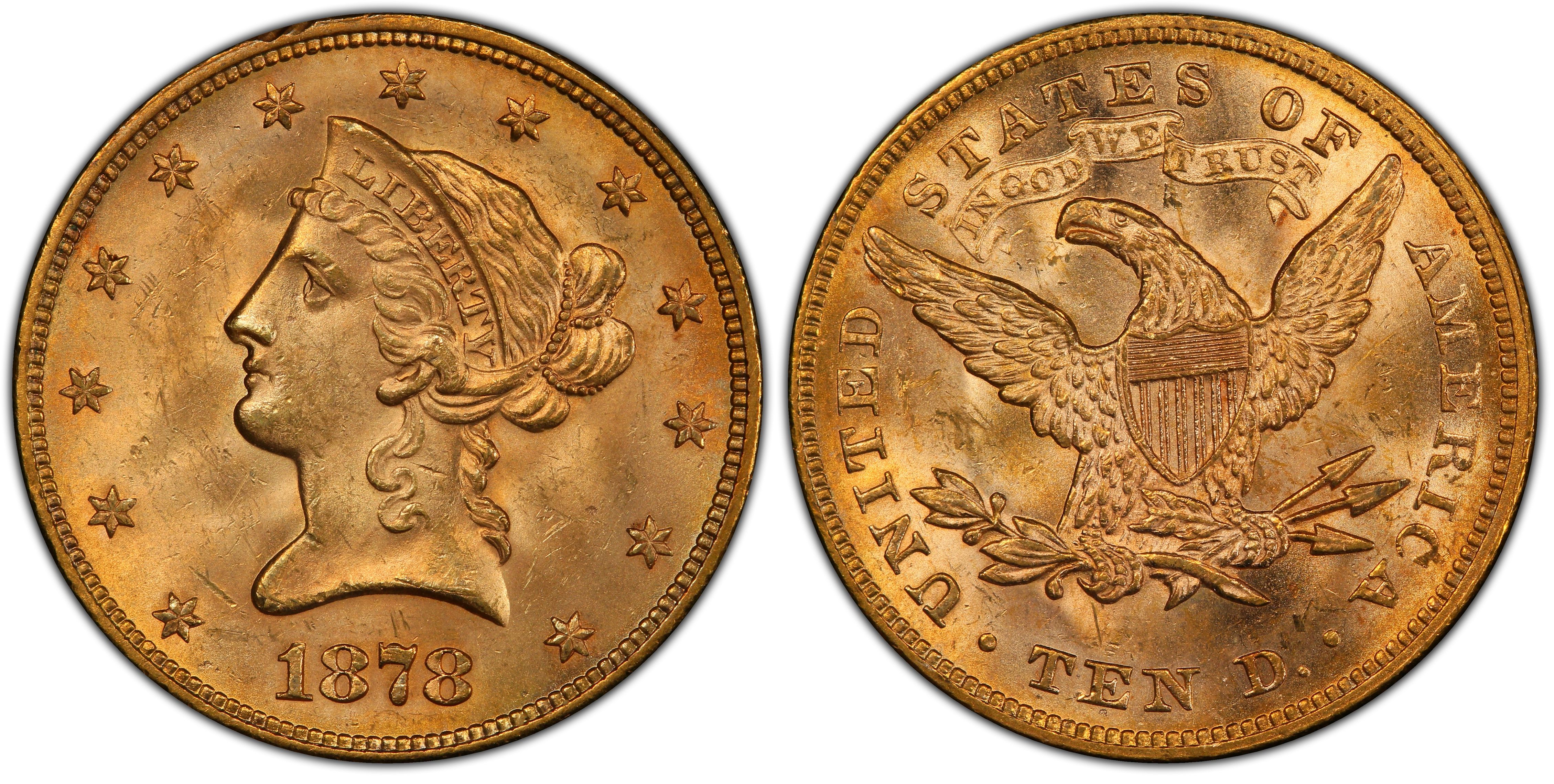
PCGS MS64+

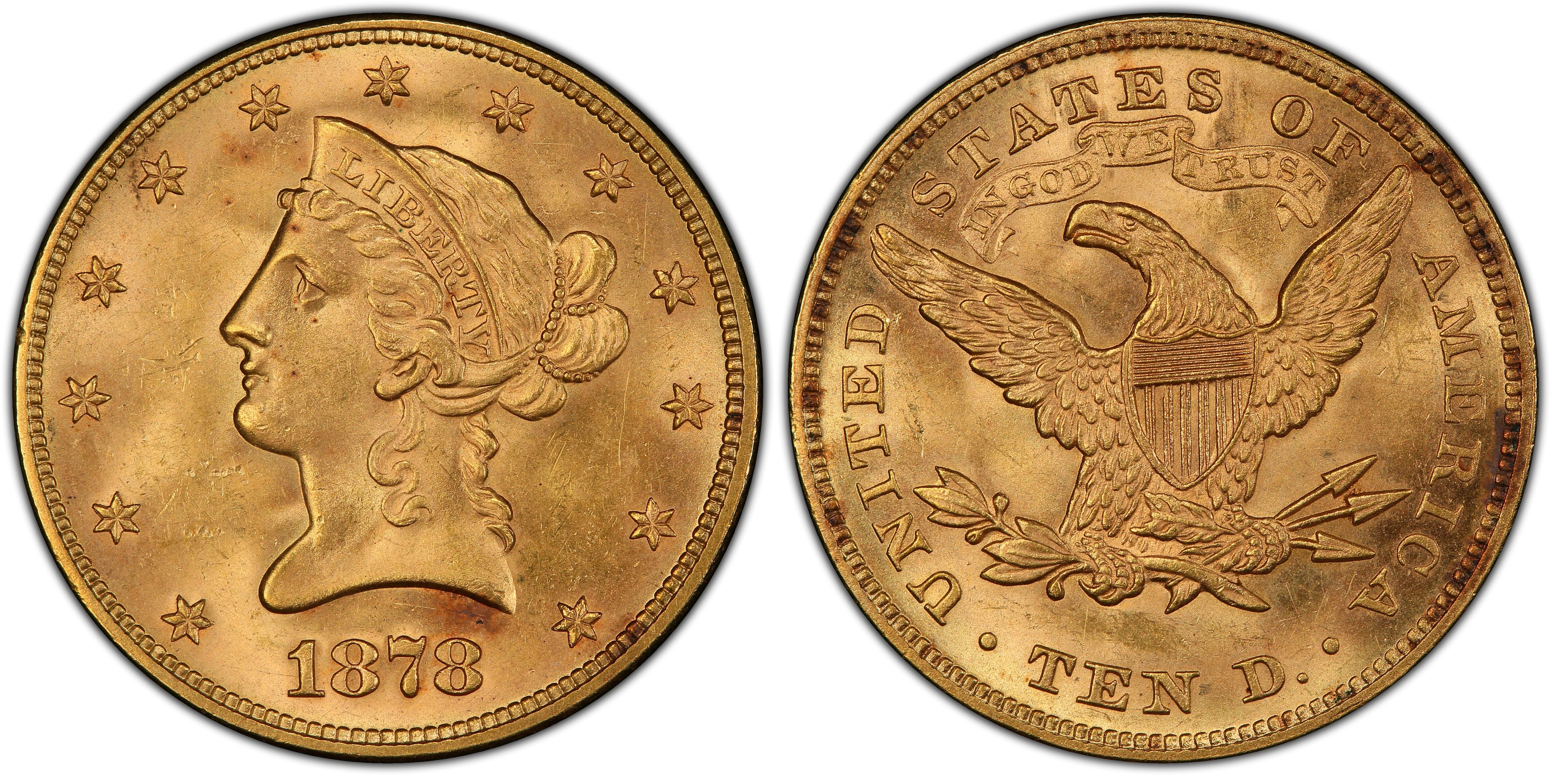
PCGS MS62
- PCGS #:
- 8680
- Designer:
- Christian Gobrecht
- Edge:
- Reeded
- Diameter:
- 26.80 millimeters
- Weight:
- 16.70 grams
- Mintage:
- 73,780
- Mint:
- Philadelphia
- Metal:
- 90% Gold, 10% Copper
- Auction Record:
- $24,150 • MS65 • 09-19-1999 • Goldberg Auctioneers
Major Varieties
- 1878 $10
Go To Grade
Current Auctions - PCGS Graded
Current Auctions - NGC Graded
For Sale Now at Collectors Corner - PCGS Graded
For Sale Now at Collectors Corner - NGC Graded
Rarity and Survival Estimates Learn More
| Survival Estimate | |
|---|---|
| All Grades | 700 |
| 60 or Better | 137 |
| 65 or Better | 1 |
| Numismatic Rarity | |
|---|---|
| All Grades | R-5.6 |
| 60 or Better | R-7.6 |
| 65 or Better | R-10.0 |
| Relative Rarity By Type All Specs in this Type | |
|---|---|
| All Grades | 57 / 117 TIE |
| 60 or Better | 36 / 117 TIE |
| 65 or Better | 1 / 117 TIE |
| Relative Rarity By Series All Specs in this Series | |
|---|---|
| All Grades | 120 / 183 TIE |
| 60 or Better | 89 / 183 TIE |
| 65 or Better | 1 / 183 TIE |
Condition Census What Is This?
| #1 MS65 PCGS grade |
|
#2 MS64 PCGS grade
Ellen D Collection (PCGS Set Registry) - Simpson Collection |
| #2 MS64 PCGS grade |
| #2 MS64 PCGS grade |
| #2 MS64 PCGS grade |
| #2 MS64 PCGS grade |
| #2 MS64 PCGS grade |
| #2 MS64 PCGS grade |
| #2 MS64 PCGS grade |
| #2 MS64 PCGS grade |
David Akers (1975/88):
The 1878 is considered to be a common date in all standard pricing guides but it is not really common at all. In full mint state, and especially in choice or gem condition, the 1878 is rare, roughly comparable to the lower mintage 1874.