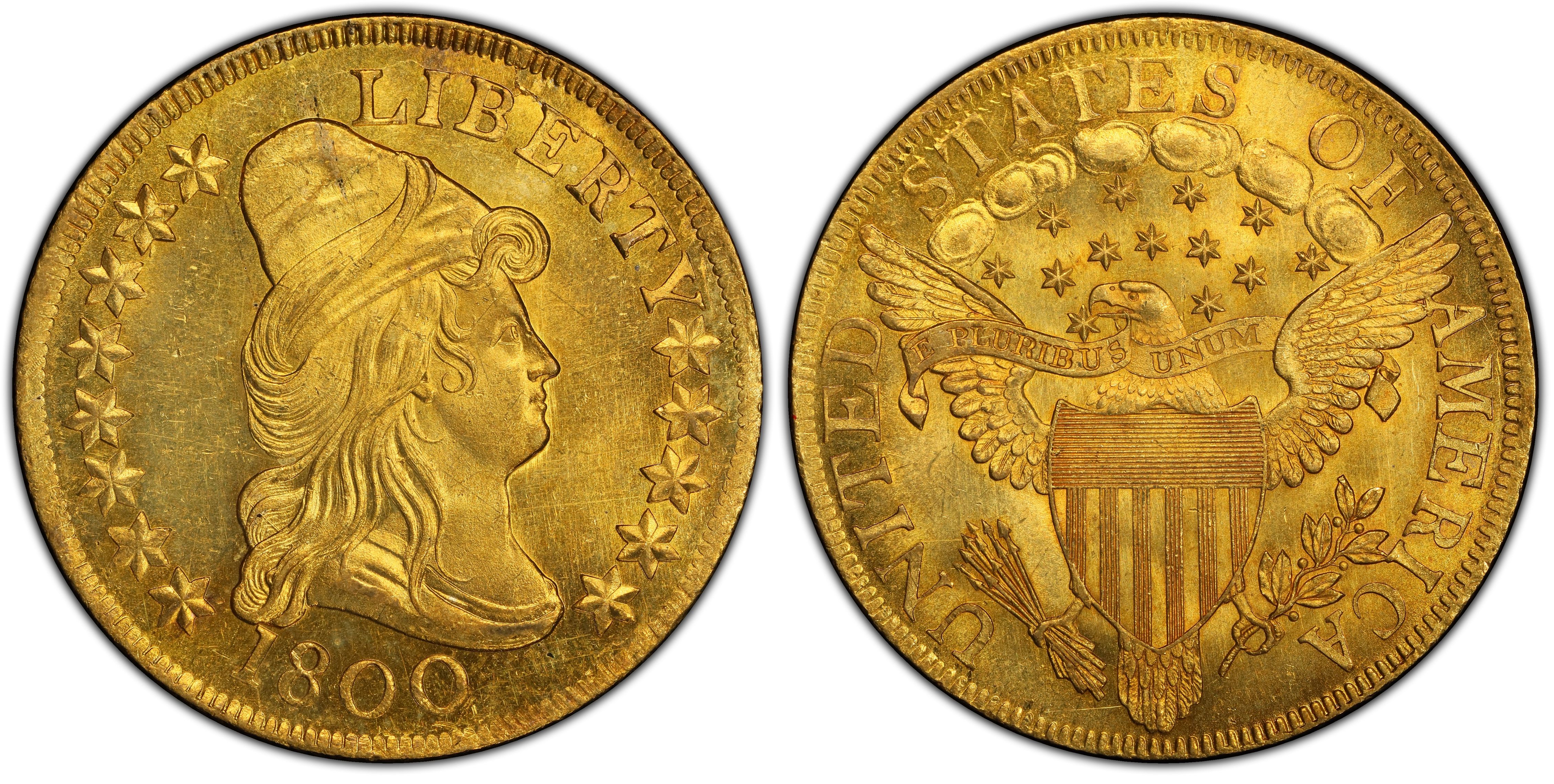
PCGS MS64
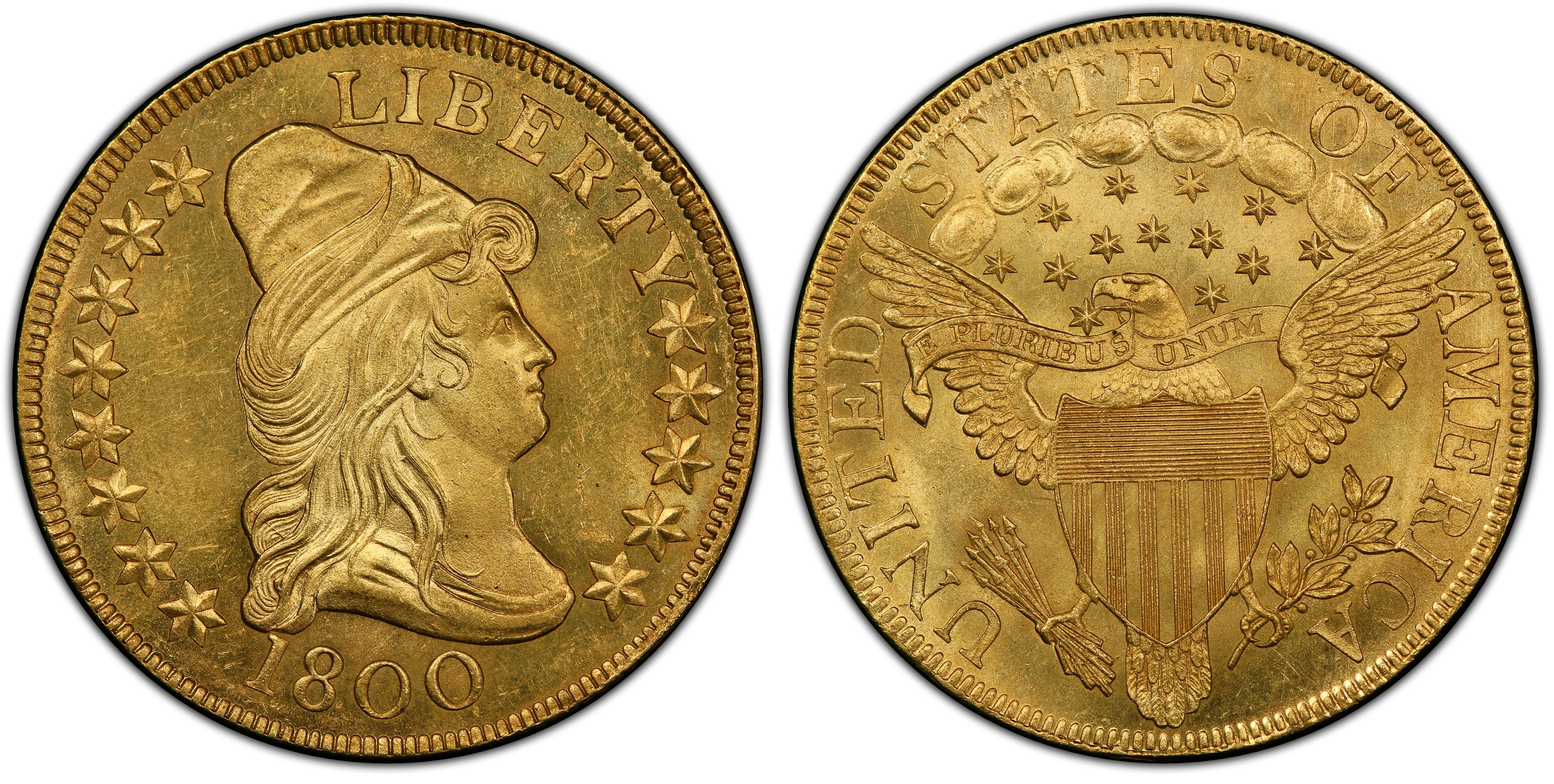
PCGS MS64
- PCGS #:
- 8563
- Designer:
- Robert Scot
- Edge:
- Reeded
- Diameter:
- 33.00 millimeters
- Weight:
- 17.50 grams
- Mintage:
- 5,999
- Mint:
- Philadelphia
- Metal:
- 91.7% Gold, 8.3% Copper
- Auction Record:
- $310,500 • MS65 • 01-01-2008 • Heritage Auctions
Major Varieties
- 1800 $10
Rarity and Survival Estimates Learn More
| Survival Estimate | |
|---|---|
| All Grades | 250 |
| 60 or Better | 75 |
| 65 or Better | 2 |
| Numismatic Rarity | |
|---|---|
| All Grades | R-6.6 |
| 60 or Better | R-8.2 |
| 65 or Better | R-9.9 |
| Relative Rarity By Type All Specs in this Type | |
|---|---|
| All Grades | 5 / 10 TIE |
| 60 or Better | 6 / 10 |
| 65 or Better | 1 / 10 TIE |
| Relative Rarity By Series All Specs in this Series | |
|---|---|
| All Grades | 8 / 14 TIE |
| 60 or Better | 9 / 14 TIE |
| 65 or Better | 1 / 14 TIE |
Condition Census What Is This?
 #1 PCGS MS65
King Farouk of Egypt; “The Palace Collections of Egypt,” Sotheby’s, February 1954, Part of Lot 187; John Jay Pittman; “The John Jay Pittman Collection,” David W. Akers, May 1998, Lot 1907; Heritage Auctions, sold privately. As NGC MS65 #223944-001. “The Madison Collection,” Heritage Auctions, January 10, 2008, Lot 3250 – $310,500. As PCGS MS65 #81939528. Small copper spot under T of LIBERTY. Thin vertical hairline scratch on cheek. Denticles weak at 9 o'clock on the reverse. Denticle die clash marks. |
|
#2 PCGS MS64
George F. Seavey; “The Seavey Descriptive Catalog,” William Strobridge, June 1873, Lot 302; Lorin G. Parmelee; “The Lorin G. Parmelee Collection,” New York Coin & Stamp Co., June 1890, Lot 776 – $21; John G. Mills; “The John G. Mills Collection,” Chapman Bros., April 1904, Lot 522; J.M. Clapp; John H. Clapp, by inheritance; Clapp Estate to Louis Eliasberg, Sr., via sale through Stack’s, 1942; “The Louis E. Eliasberg, Sr. Collection,” Bowers and Ruddy, October 1982, Lot 655; Stack’s, October 1988, Lot 116. As PCGS MS64 #4308221. “The New Orleans Collection,” Heritage Auctions, April 23, 2015, Lot 5391 – $282,000. As PCGS MS64 #04308221. “The Bob R. Simpson Collection, Part XII,” Heritage Auctions, May 9, 2024, Lot 4581 – $264,000. Spot below drapery near star 13. Diagonal streak across the top of the cap. Toning above I of LIBERTY. Die crack across top of IBERT. Denticle die clash marks on reverse. |
|
#2 PCGS MS64
Die crack above LIBERTY not present. Denticle die clash marks in the upper reverse field at the top of the eagle's right wing through STAT. |
| #2 PCGS MS64 |
| #2 PCGS MS64 |
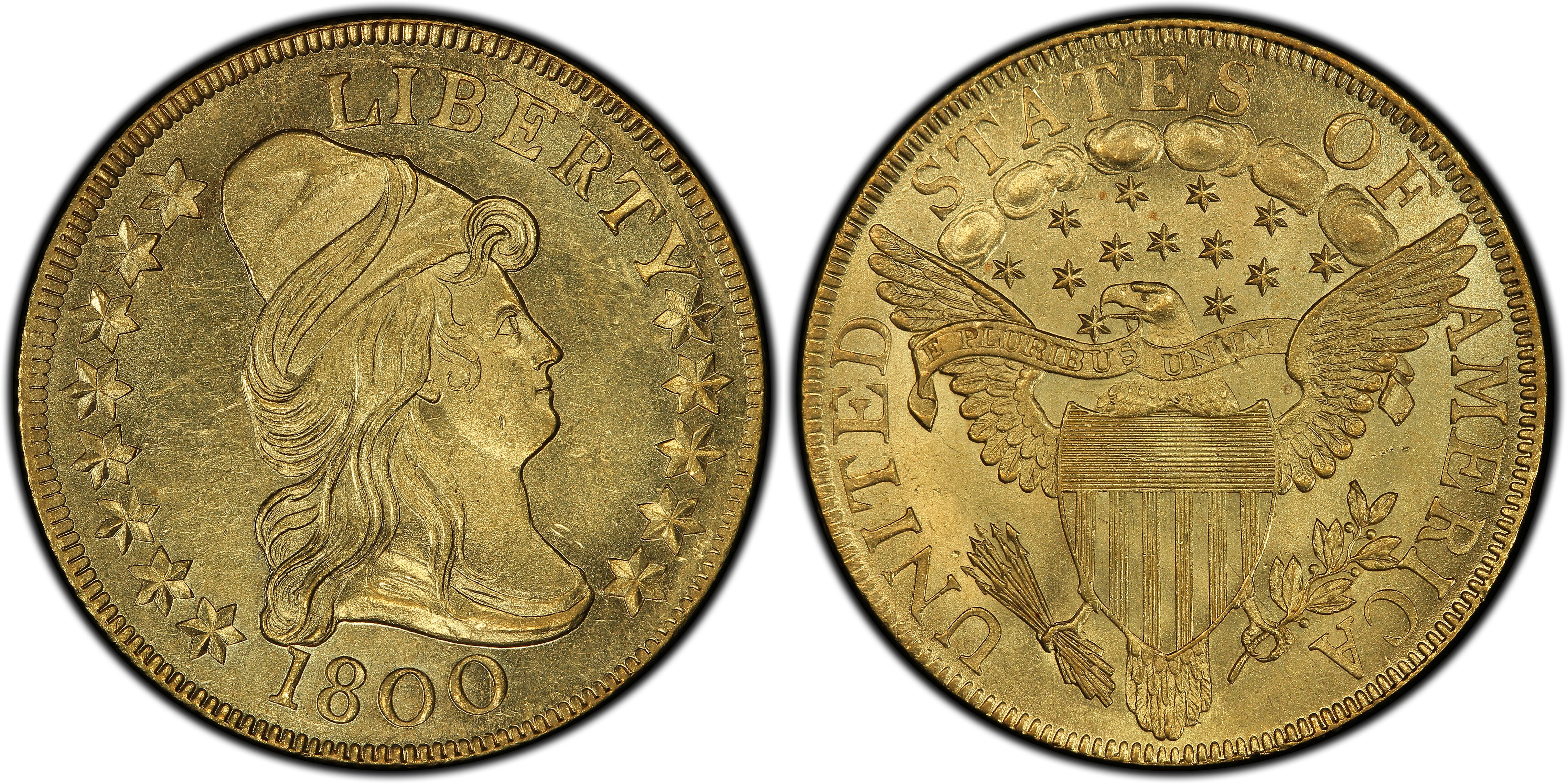 #7 MS63+ PCGS grade
“Auction ’79,” RARCOA, July 1979, Lot 1297; “The D. Brent Pogue Family Collection, Part II,” Stack’s Bowers / Sotheby’s, September 2015, Lot 2101 – $99,875. Vertical die crack through cap. Die crack across ERTY. Small tick on jaw. Small diagonal mark near Liberty's hair to the left of Stars 5 and 6. |
|
#8 PCGS MS63
Heritage Auctions, April 24, 2021, Lot 5137 – $69,000. Adjustment marks across the lower periphery of the obverse. Die cracks above LIBERTY. Cluster of small ticks in the lower right obverse field. Top of ST of STATES is slightly weak. |
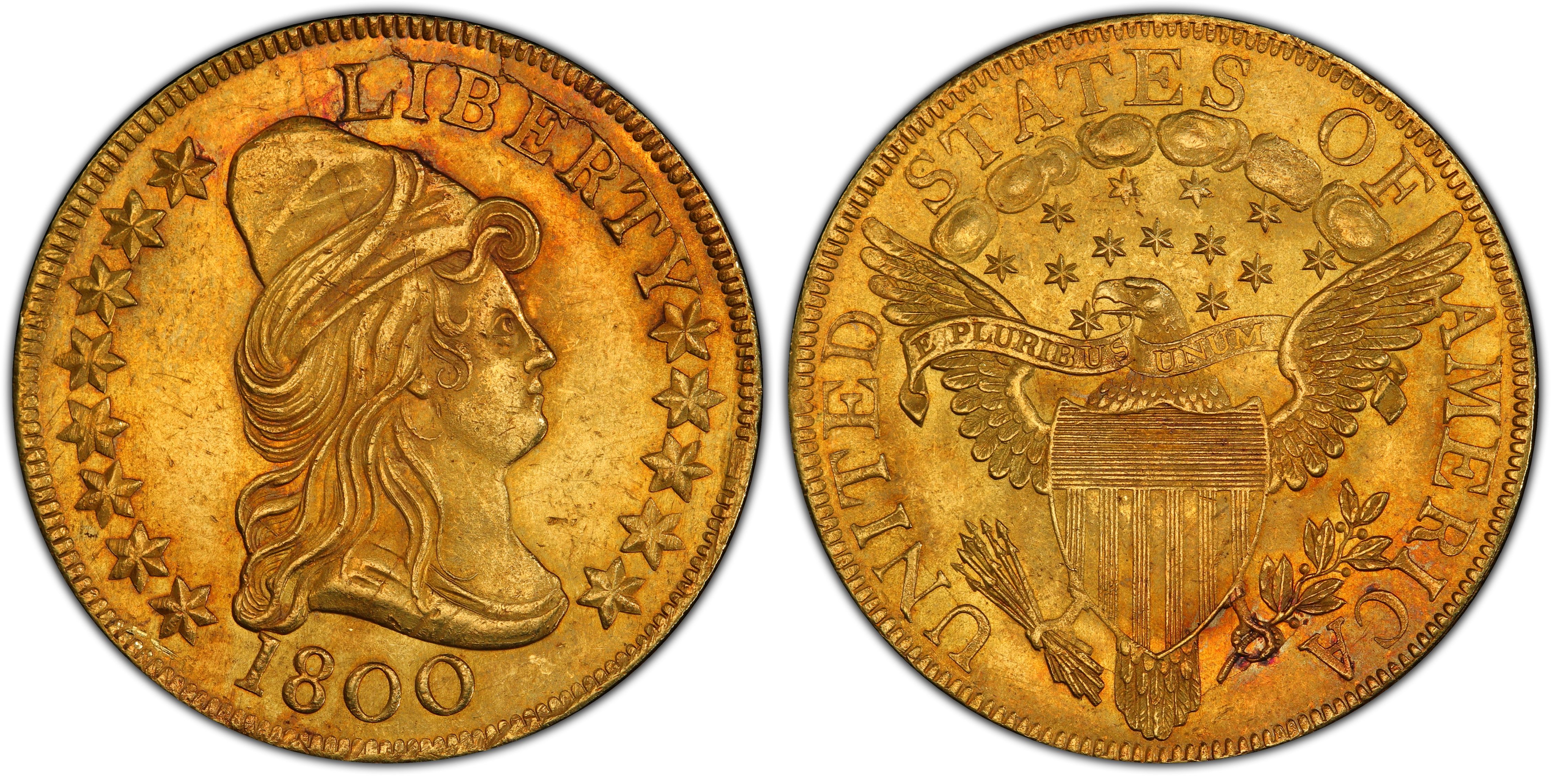 #8 MS63 PCGS grade
Mid-American Rare Coin Galleries to Anthony J. Taraszka, August 1994; “The Anthony J. Taraszka Collection,” Stack’s Bowers, August 15, 2019, Lot 4029 – $90,000. Scratch below star 1. Horizontal scratch in right field to the left of star 12. Scattered toning. Spiderweb of die cracks above LIBERTY. Toning spot below C in AMERICA. Denticle die clash marks. |
|
#8 PCGS MS63
"The Early Tens Collection" (PCGS Set Registry). |
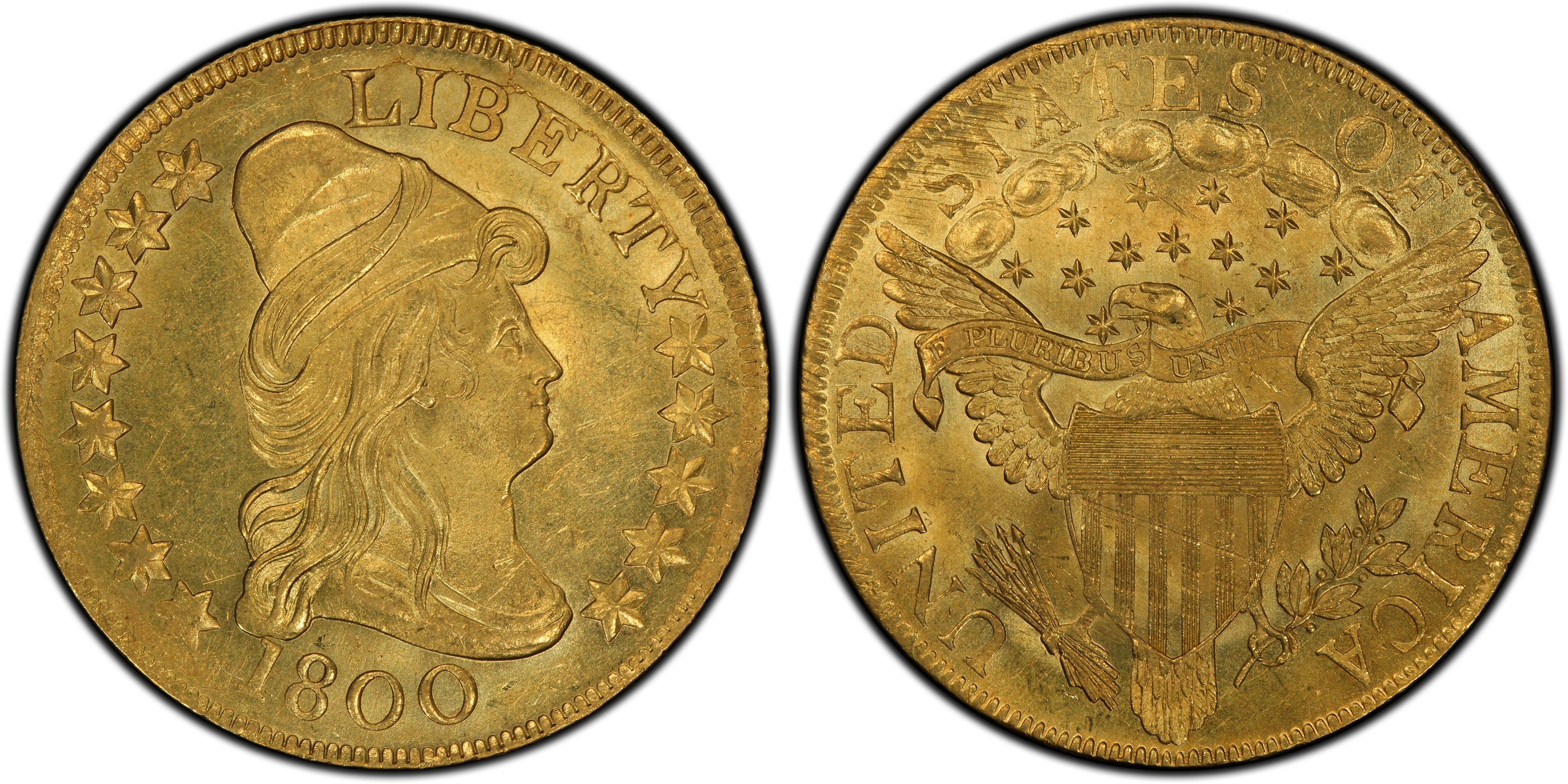 #8 PCGS MS63
Web of die cracks at the top of LIBERTY. Adjustment marks across the top of the reverse; through shield. Denticle die clash marks. |
| #8 PCGS MS63 |
| #8 PCGS MS63 |
| #8 PCGS MS63 |
| #8 PCGS MS63 |
| #8 PCGS MS63 |
| #8 PCGS MS63 |
| #8 PCGS MS63 |
The 1800 Draped Bust Eagle
The low reported mintage of the 1800 Capped Bust Right Eagle (PCGS #8563) mirrors the limited Philadelphia Mint emissions of 1795–1797. According to research by Harry W. Bass, Jr. and John Dannreuther, a single die pair was used to strike all 1800-dated Eagles. However, the striking sequence is unusual: evidence points to a "remarriage" of the obverse and reverse in 1801, occurring after the reverse die had already been used to strike the BD-1 1801 Eagle (#45733). When the 1801 obverse failed prematurely, coiners expediently returned the 1800 obverse to service. The exact number of 1800-dated Eagles struck during this 1801 window remains a point of conjecture.
The stated mintage of 5,999 is derived from the final two deliveries of 1800:
- November 18 (Warrant #183): 3,754 coins
- November 25 (Warrant #184): 2,245 coins
Because the remarriage output was likely included in the 1801 delivery totals, the final mintage for the "1800" date is unclear. While determining this figure is significant, the mass export of early American gold effectively wiped out vast quantities of these coins, draining the nascent nation's meager holdings. To address this drain, the Jefferson Administration suspended coinage of America’s flagship gold and silver denominations in 1804.
The PCGS Population Report helps estimate a likely survival rate, though these figures represent all coins certified and graded to date. In some instances, this count is inflated by resubmissions. Case in point: the condition census features detailed information for only five of the ten coins listed. The five without data share a similar profile—most were certified over 20 years ago. While important coins often disappear into private collections for decades, a sophisticated observer might view this as a sign of a bloated population. Consequently, the rare opportunities to acquire a high-quality example should not be taken for granted.
BD-1 Die Characteristics
Obverse Diagnostics
- Date Spacing: The digits in the date are spaced widely apart.
- Digit Placement: The "1" is positioned to the left of the bust’s curl.
- Die Failure: A distinct die break runs through the top of the word LIBERTY.
- Star Detail: Large stars; specifically, the eighth star hangs slightly lower than the others.
Reverse Diagnostics
- Die Remarriage: A significant die clash showing denticles from wingtip to the top of STAT occured during the 1801 BD-1 production run and is evidence of a remarriage of the 1800 Obverse and Reverse die.
* * *