1799 $10 Large Stars Obverse (Regular Strike)
Series: Draped Bust $10 1795-1804

PCGS MS66
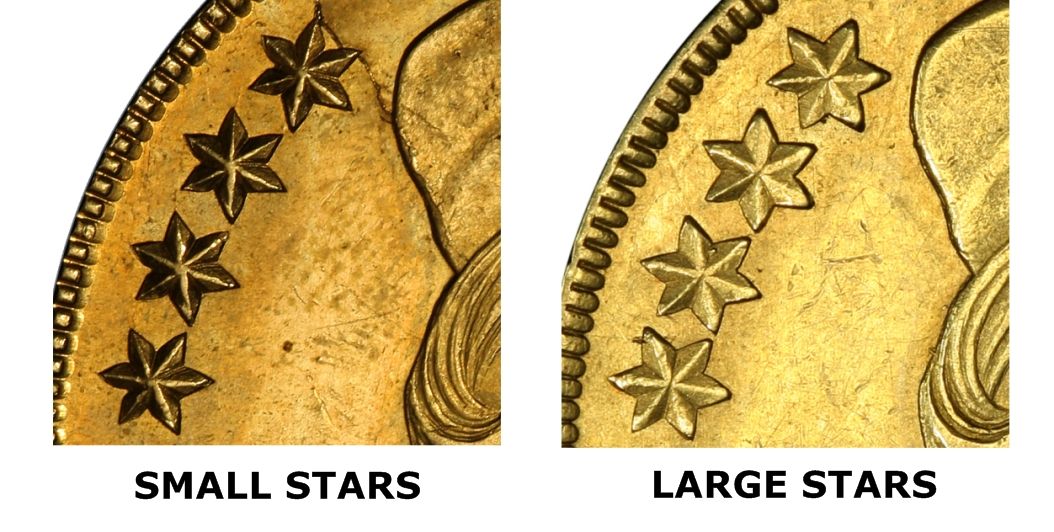
STARS COMPARISON

PCGS MS65+
- PCGS #:
- 8562
- Designer:
- Robert Scot
- Edge:
- Reeded
- Diameter:
- 33.00 millimeters
- Weight:
- 17.50 grams
- Mintage:
- 37,449
- Mint:
- Philadelphia
- Metal:
- 91.7% Gold, 8.3% Copper
- Auction Record:
- $493,500 • MS66 • 03-30-2016 • Stack's Bowers
Go To Grade
Current Auctions - PCGS Graded
Current Auctions - NGC Graded
For Sale Now at Collectors Corner - PCGS Graded
For Sale Now at Collectors Corner - NGC Graded
Rarity and Survival Estimates Learn More
| Survival Estimate | |
|---|---|
| All Grades | 375 |
| 60 or Better | 150 |
| 65 or Better | 10 |
| Numismatic Rarity | |
|---|---|
| All Grades | R-6.2 |
| 60 or Better | R-7.5 |
| 65 or Better | R-9.5 |
| Relative Rarity By Type All Specs in this Type | |
|---|---|
| All Grades | 8 / 10 |
| 60 or Better | 9 / 10 |
| 65 or Better | 5 / 10 TIE |
| Relative Rarity By Series All Specs in this Series | |
|---|---|
| All Grades | 11 / 14 |
| 60 or Better | 13 / 14 |
| 65 or Better | 6 / 14 TIE |
Condition Census What Is This?
| #1 MS66 PCGS grade |
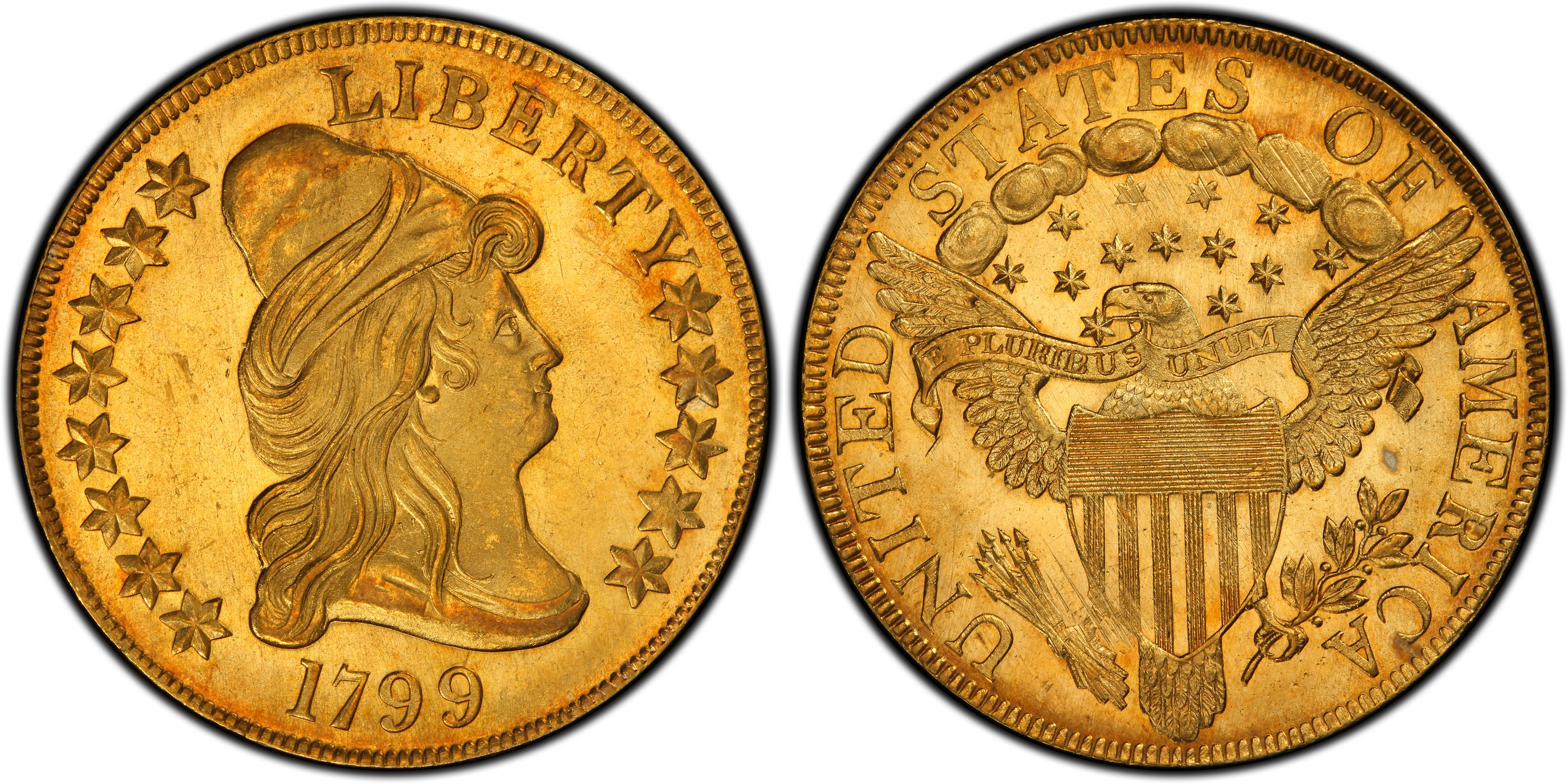 #2 MS65+ PCGS grade
High Desert Collection (PCGS Set Registry) |
|
#2 MS65+ PCGS grade
F.C.C. Boyd Collection - Numismatic Gallery “World's Greatest Collection” 1/1946:634 - Oliver Jung Collection - American Numismatic Rarities 7/2004:99, $230,000 - D. Brent Pogue Collection |
 #4 MS65 PCGS grade
Bowers & Merena 8/2006:4300, $241,500 |
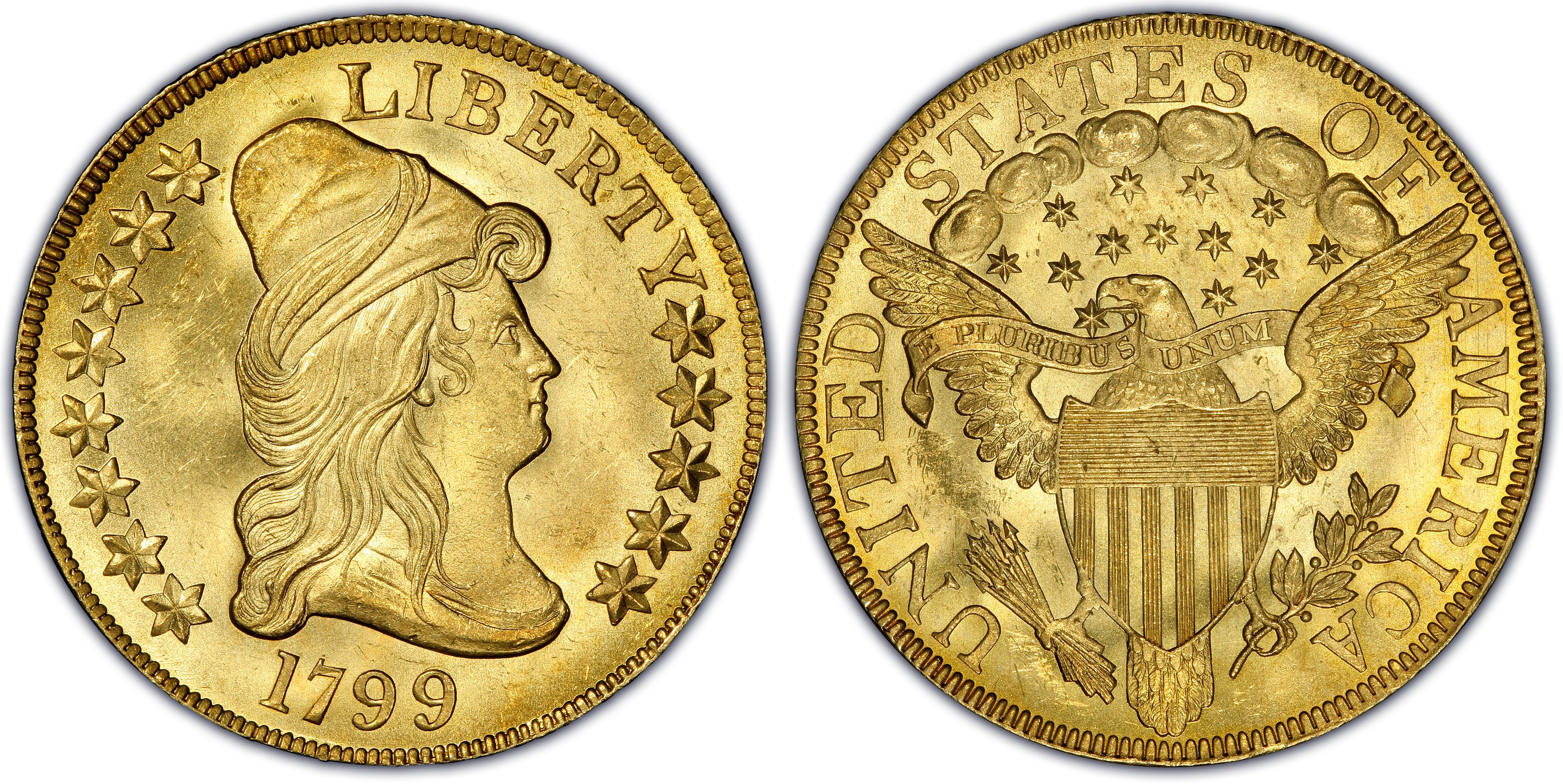 #4 MS65 PCGS grade
Catherine Bullowa’s Personal Collection - Coinhunter 12/2005:408, $231,000 - D. Brent Pogue Collection |
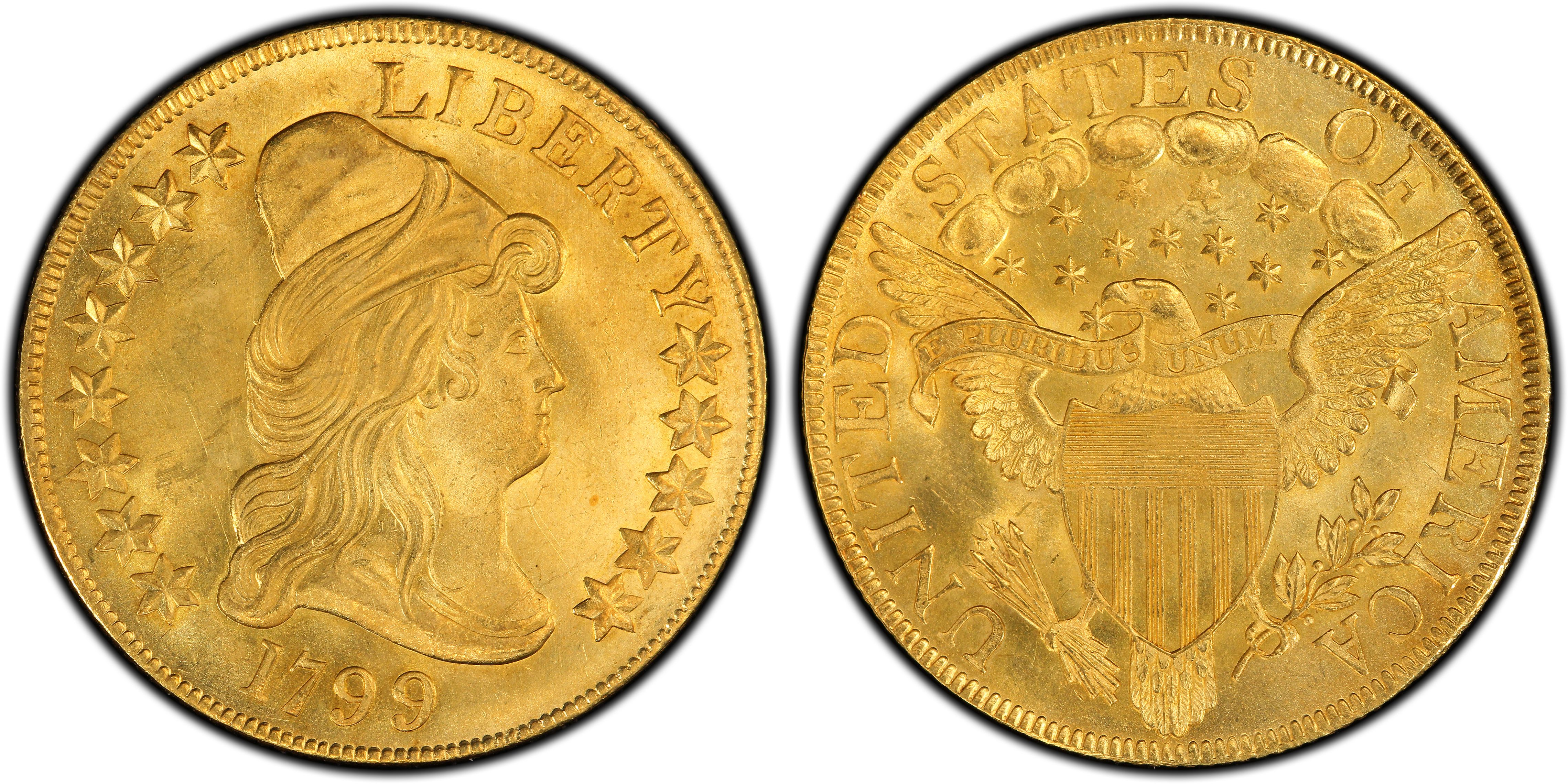 #4 MS65 PCGS grade
|
| #4 MS65 PCGS grade |
| #4 MS65 PCGS grade |
| #4 MS65 PCGS grade |
| #4 MS65 PCGS grade |
David Akers (1975/88):
The 1799 had more auction appearances in my survey than any other early Eagle and, despite its lower mintage, it is somewhat more common than the 1801. I have seen a substantial number of choice and gem uncirculated examples of this date as well as specimens in every other grade category. Varieties exist with small stars (as on earlier issues) and large stars (as on all early eagles that follow).
Gordon Wrubel:
Quickfinder Notes: There is only one Large Star obverse die for 1799. It is paired with two reverses; Bass-Dannreuther, BD-9 and 10. The Large Star obverse is also used on all early eagles to follow (1800-1804). The stars are very broad with short fat rays. They are arranged 8 on the left and 5 on the right. They are very closely spaced, even "crowded". Some star points nearly touch their neighbors. And they are spaced CLOSER TO THE DENTILS. The Small Stars Obverse, BD-1 through 8, were the same size as those used on the previous year, 1798/7. They have long, thin "spiny" rays that are rather evenly spaced and somewhat apart and FARTHER FROM THE DENTILS. Despite the fact that only one Large Star obverse die was used, the variety appears to be more common. But population data probably includes some Small Star coins before that variety was designated. As of this writing, November, 2013, 139 Mint State examples have been graded. At the top of the list is an MS-66 followed by six 65s.