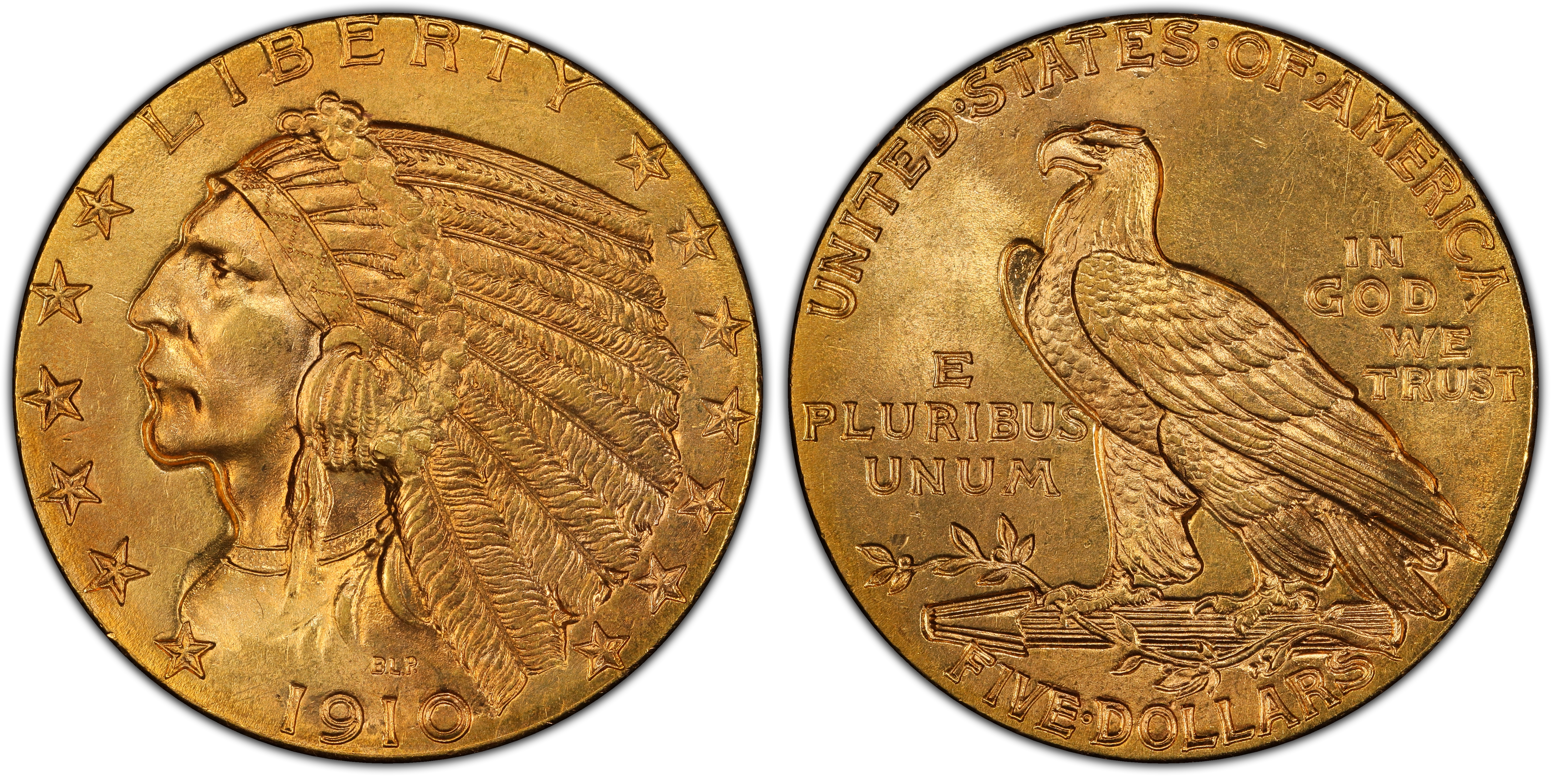
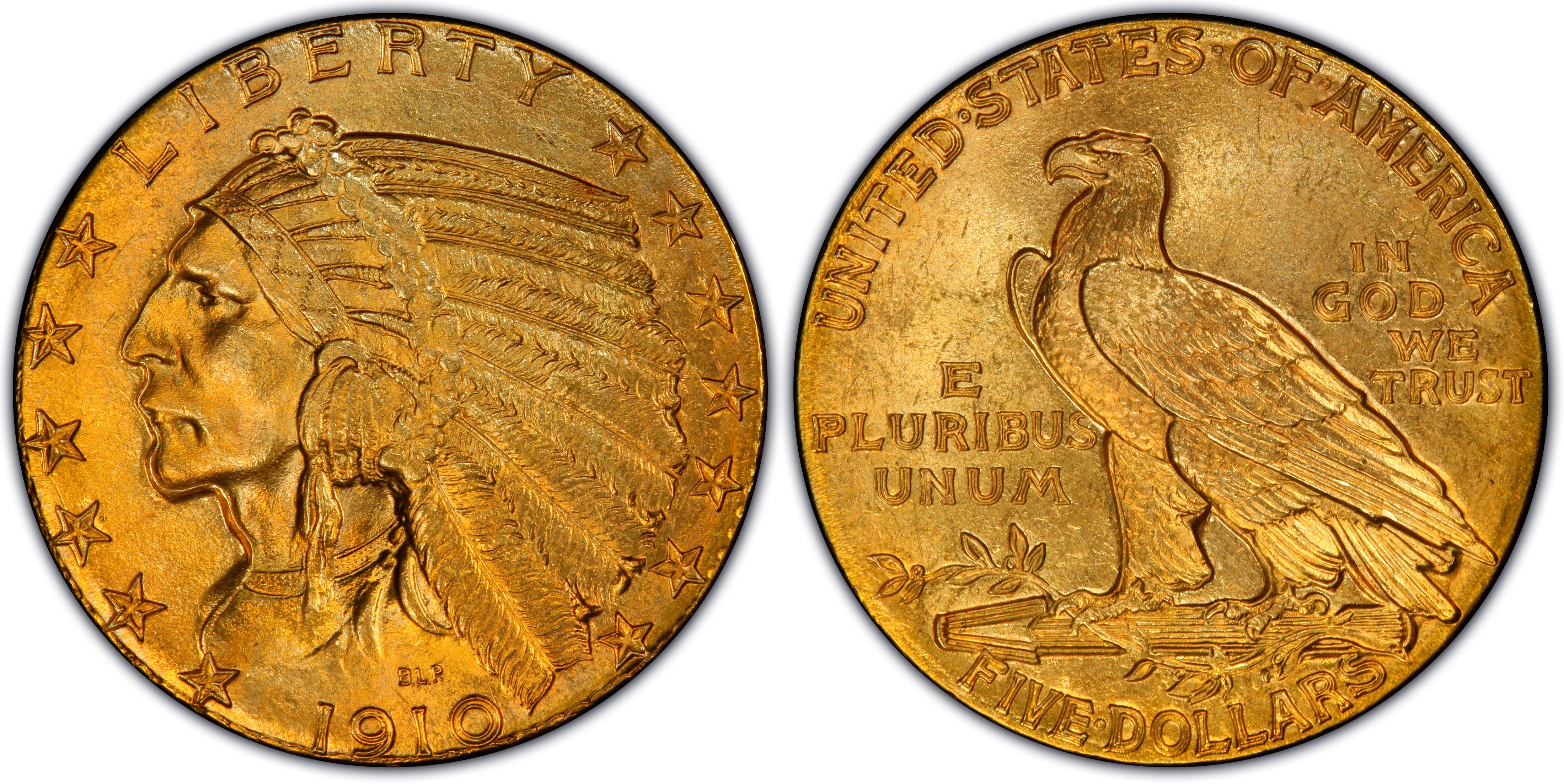
PCGS MS65+
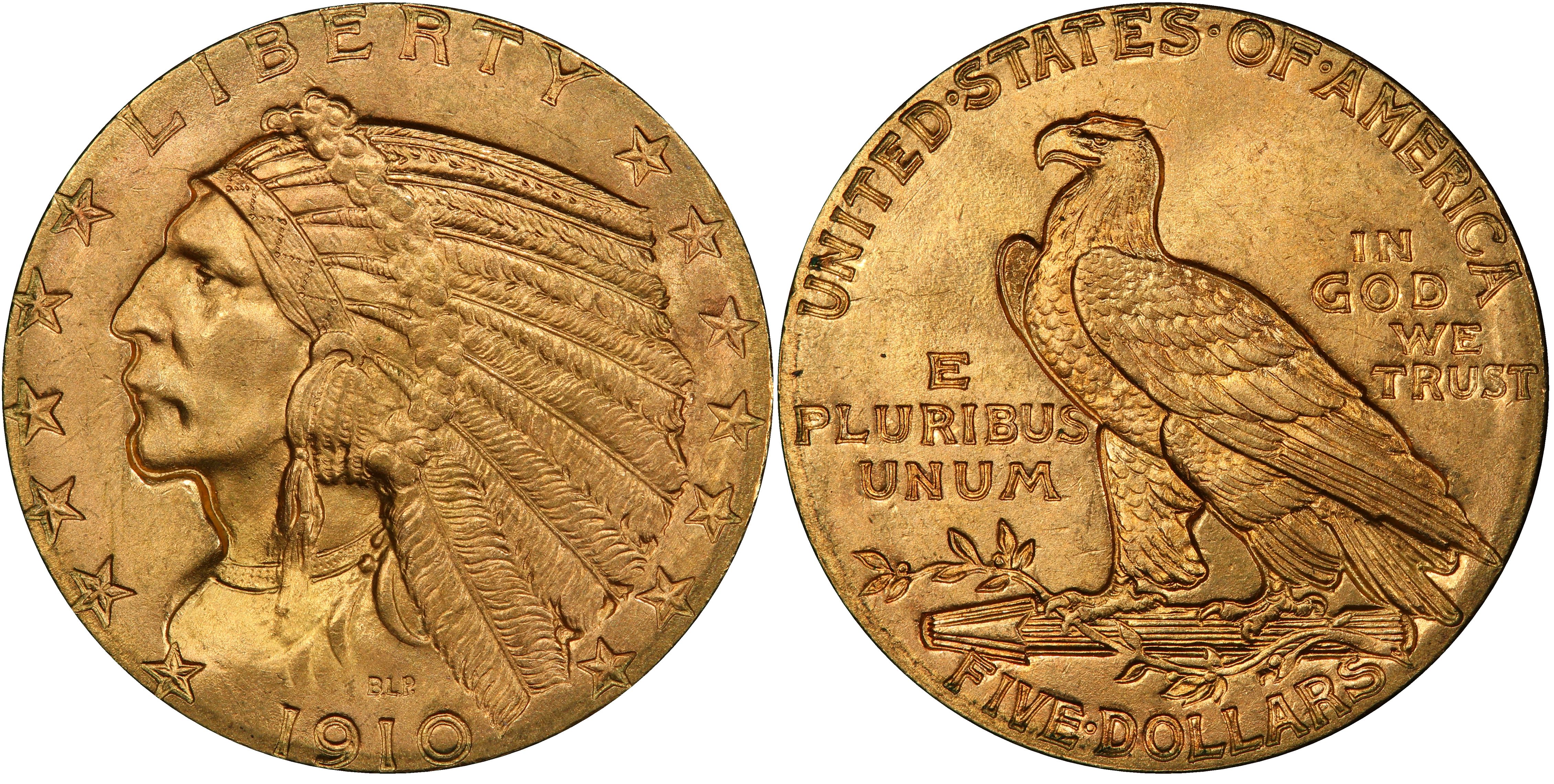
PCGS MS65+
- PCGS #:
- 8517
- Designer:
- Bela Lyon Pratt
- Edge:
- Reeded
- Diameter:
- 21.60 millimeters
- Weight:
- 8.36 grams
- Mintage:
- 604,000
- Mint:
- Philadelphia
- Metal:
- 90% Gold, 10% Copper
- Auction Record:
- $32,200 • MS65 • 05-28-2006 • Superior Galleries
Major Varieties
- 1910 $5
Go To Grade
Current Auctions - PCGS Graded
Current Auctions - NGC Graded
For Sale Now at Collectors Corner - PCGS Graded
For Sale Now at Collectors Corner - NGC Graded
Rarity and Survival Estimates Learn More
| Survival Estimate | |
|---|---|
| All Grades | 16,500 |
| 60 or Better | 9,666 |
| 65 or Better | 61 |
| Numismatic Rarity | |
|---|---|
| All Grades | R-2.8 |
| 60 or Better | R-3.0 |
| 65 or Better | R-8.3 |
| Relative Rarity By Type All Specs in this Type | |
|---|---|
| All Grades | 16 / 24 TIE |
| 60 or Better | 16 / 24 |
| 65 or Better | 16 / 24 |
| Relative Rarity By Series All Specs in this Series | |
|---|---|
| All Grades | 16 / 24 TIE |
| 60 or Better | 16 / 24 |
| 65 or Better | 16 / 24 |
Condition Census What Is This?
 #1 MS65+ PCGS grade
|
| #2 MS65 PCGS grade |
| #2 MS65 PCGS grade |
| #2 MS65 PCGS grade |
| #2 MS65 PCGS grade |
| #2 MS65 PCGS grade |
| #2 MS65 PCGS grade |
| #2 MS65 PCGS grade |
| #2 MS65 PCGS grade |
| #2 MS65 PCGS grade |
David Akers (1975/88):
The 1910 is not especially difficult to find in MS-63 or less but top grade examples are certainly rare. Overall, the 1910 is roughly comparable to the 1909 and 1912 but it is marginally more difficult to find in MS-64 or MS-65 than either of those two issues. A few really superb specimens are known, the finest I have seen being the Kruthoffer coin.
The 1910 is nearly always very well struck with very good lustre. Appearance is very similar to the 1909 although the lustre is generally a little less vibrant. Most specimens are of the "soft" frosty type but there are a number of satiny examples that are not unlike the Roman finish Proofs of this issue. Color is usually light to medium yellow gold but some examples have a very appealing orange to greenish gold color.
The 1910 is nearly always very well struck with very good lustre. Appearance is very similar to the 1909 although the lustre is generally a little less vibrant. Most specimens are of the "soft" frosty type but there are a number of satiny examples that are not unlike the Roman finish Proofs of this issue. Color is usually light to medium yellow gold but some examples have a very appealing orange to greenish gold color.