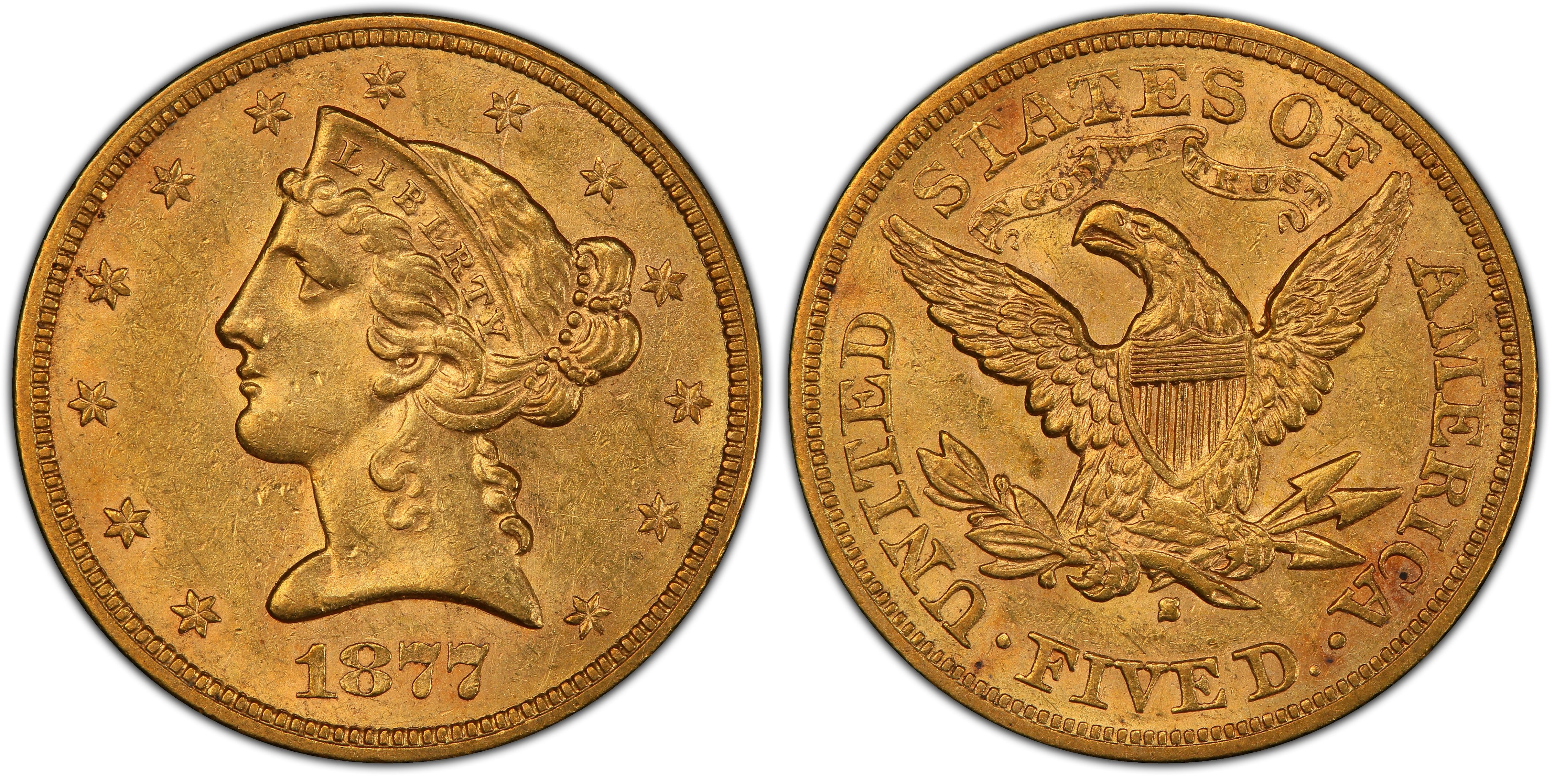
PCGS MS61

PCGS MS60
- PCGS #:
- 8344
- Designer:
- Christian Gobrecht
- Edge:
- Reeded
- Diameter:
- 21.65 millimeters
- Weight:
- 8.36 grams
- Mintage:
- 26,700
- Mint:
- San Francisco
- Metal:
- 90% Gold, 10% Copper
- Auction Record:
- $28,750 • MS64 • 01-07-2004 • Heritage Auctions
Major Varieties
- 1877-S $5
Go To Grade
Current Auctions - PCGS Graded
Current Auctions - NGC Graded
For Sale Now at Collectors Corner - PCGS Graded
For Sale Now at Collectors Corner - NGC Graded
Rarity and Survival Estimates Learn More
| Survival Estimate | |
|---|---|
| All Grades | 300 |
| 60 or Better | 2 |
| 65 or Better | |
| Numismatic Rarity | |
|---|---|
| All Grades | R-6.4 |
| 60 or Better | R-9.9 |
| 65 or Better | R-10.1 |
| Relative Rarity By Type All Specs in this Type | |
|---|---|
| All Grades | 37 / 106 |
| 60 or Better | 7 / 106 TIE |
| 65 or Better | 1 / 106 |
| Relative Rarity By Series All Specs in this Series | |
|---|---|
| All Grades | 113 / 218 TIE |
| 60 or Better | 13 / 218 TIE |
| 65 or Better | 1 / 218 |
Condition Census What Is This?
| #1 MS64 PCGS grade |
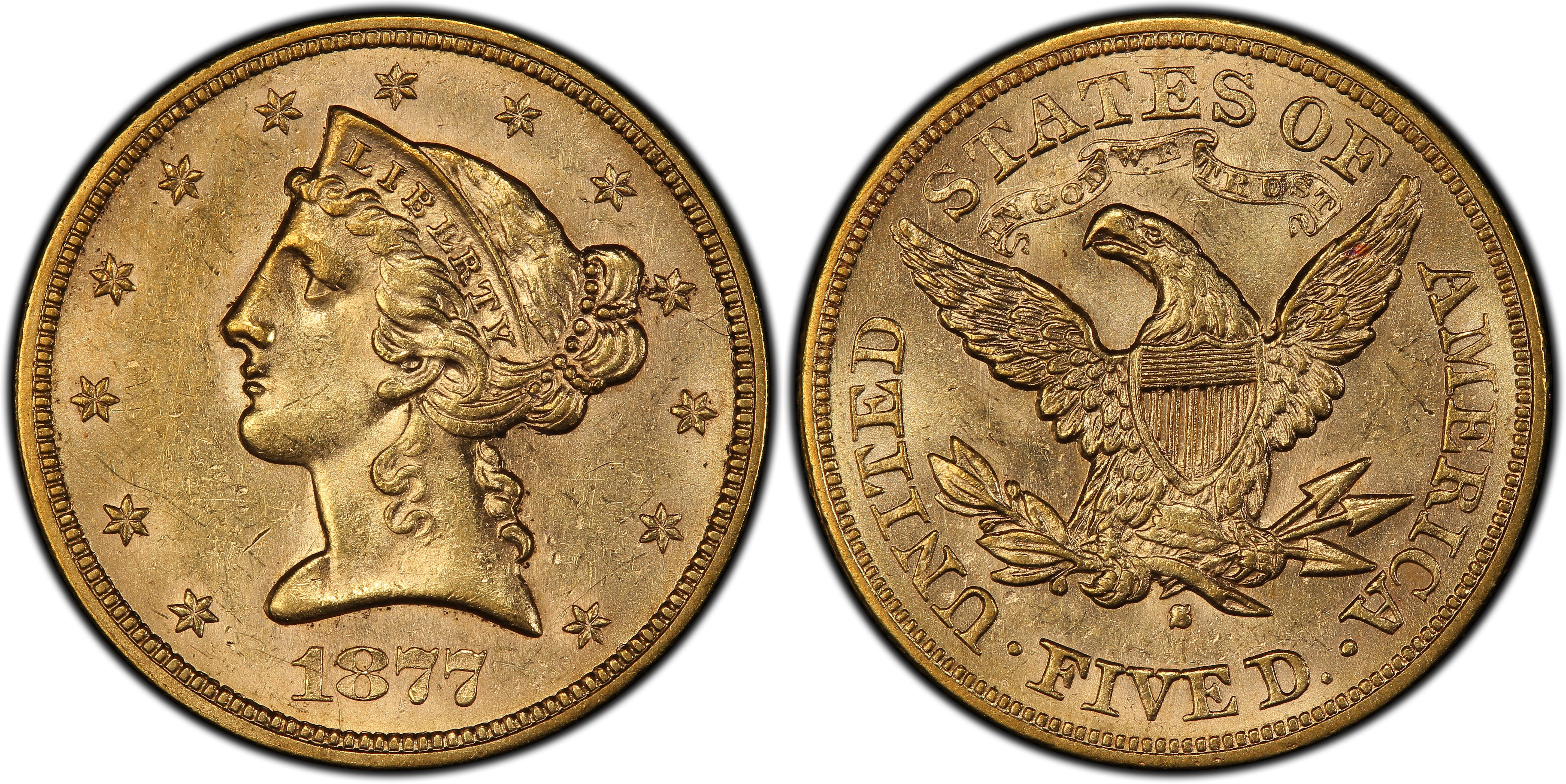 #2 MS62 PCGS grade
|
| #3 AU58 PCGS grade |
| #3 AU58 PCGS grade |
| #3 AU58 estimated grade |
| #6 AU55 PCGS grade |
| #6 AU55 PCGS grade |
| #6 AU55 PCGS grade |
| #6 AU55 PCGS grade |
| #6 AU55 PCGS grade |
David Akers (1975/88):
The 1877-S is rare in all grades and has appeared at auction just as infrequently as many of the other rare S Mints Half Eagles from 1858 to 1876. I have seen more of this date, however, than I have any of the others and do not feel that it is as hard to acquire as the earlier dates as long as one is satified with VF or EF condition. Above EF, though, the 1877-S is extremely rare and is virtually in the same rarity class as the others. I have seen only a few AU pieces and just two uncirculated specimens, one of them a gem that sold in Paramount's 5/76 sale. The mintmark is always very small and is usually weak.