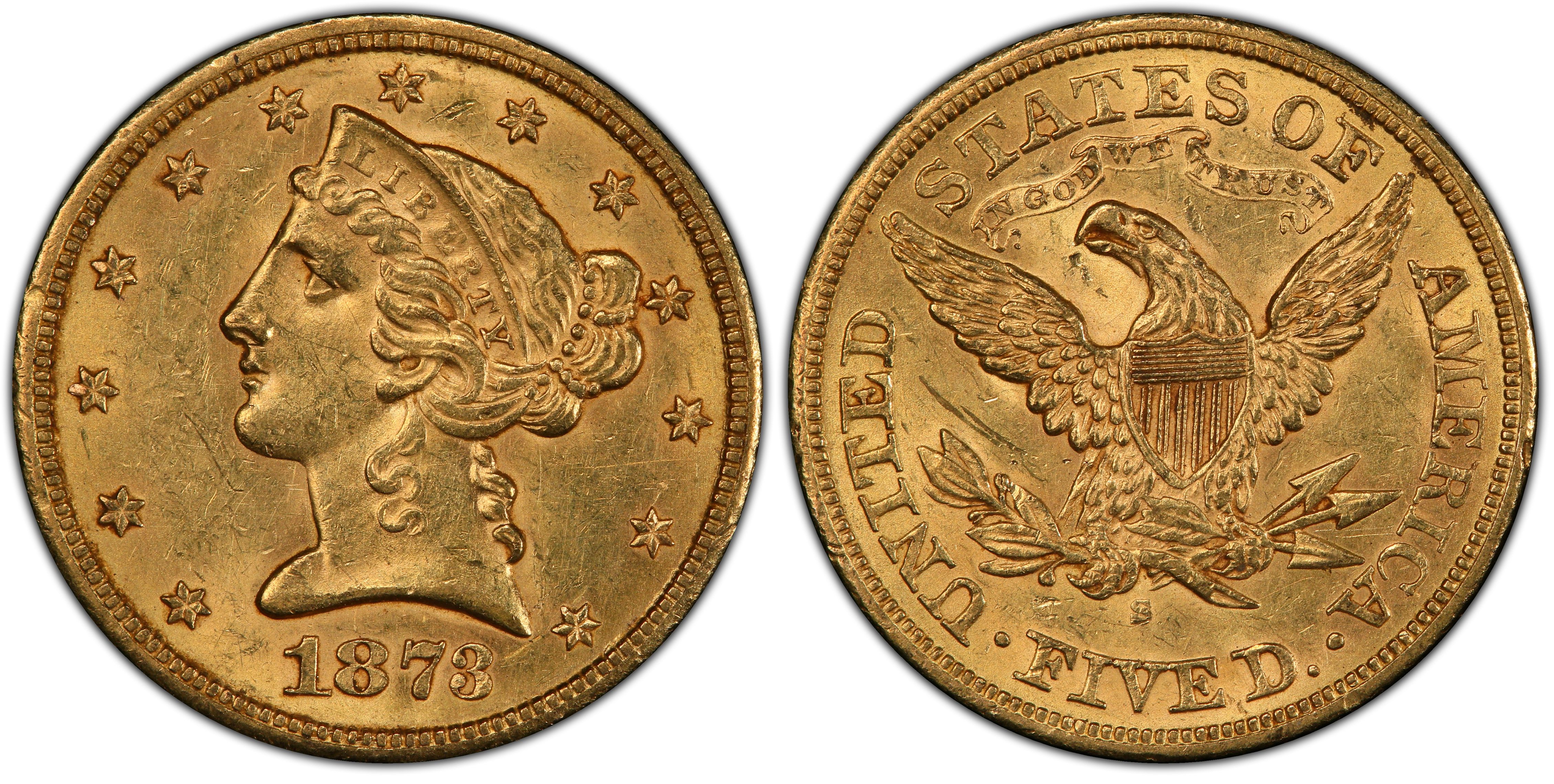
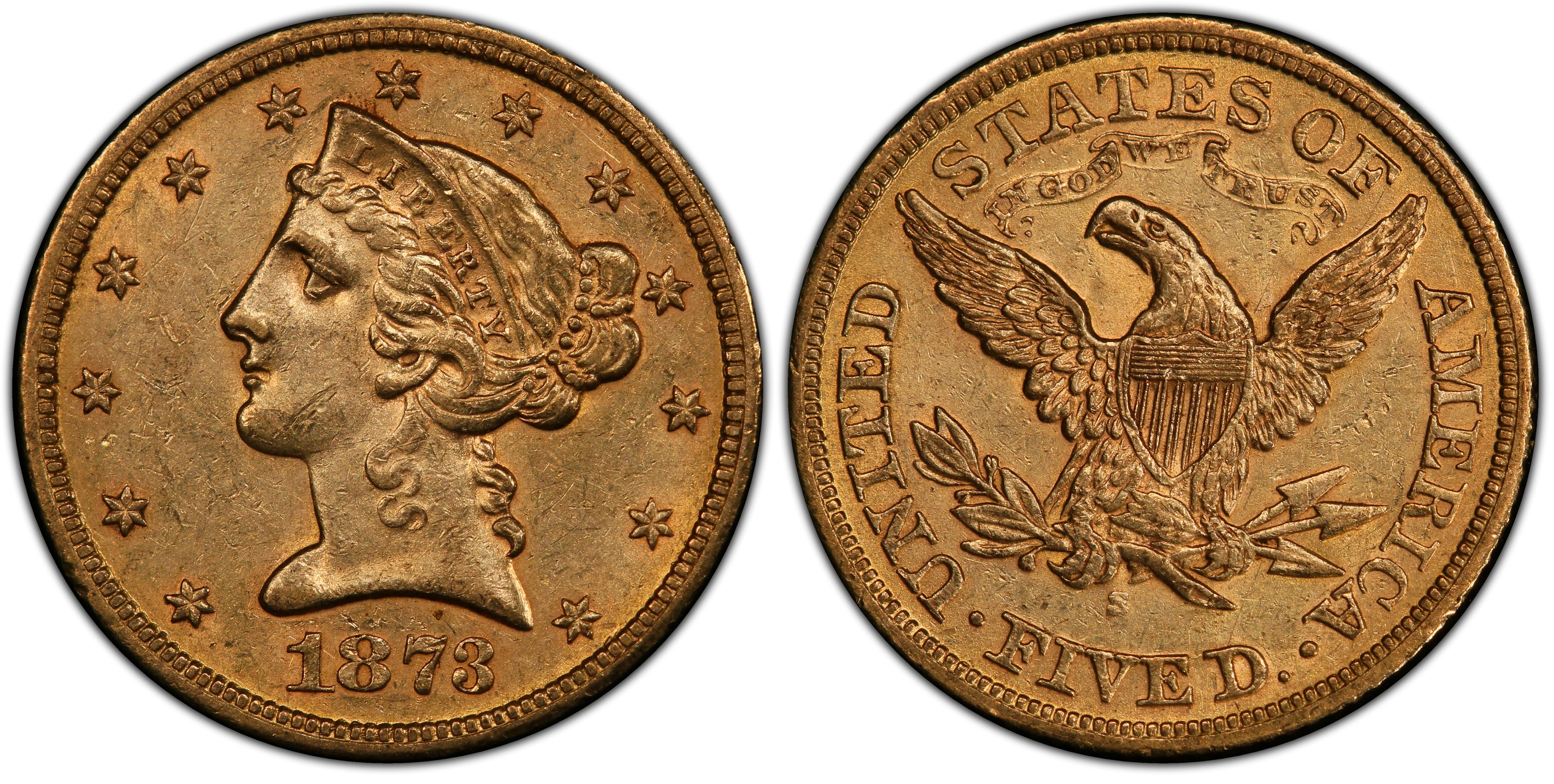
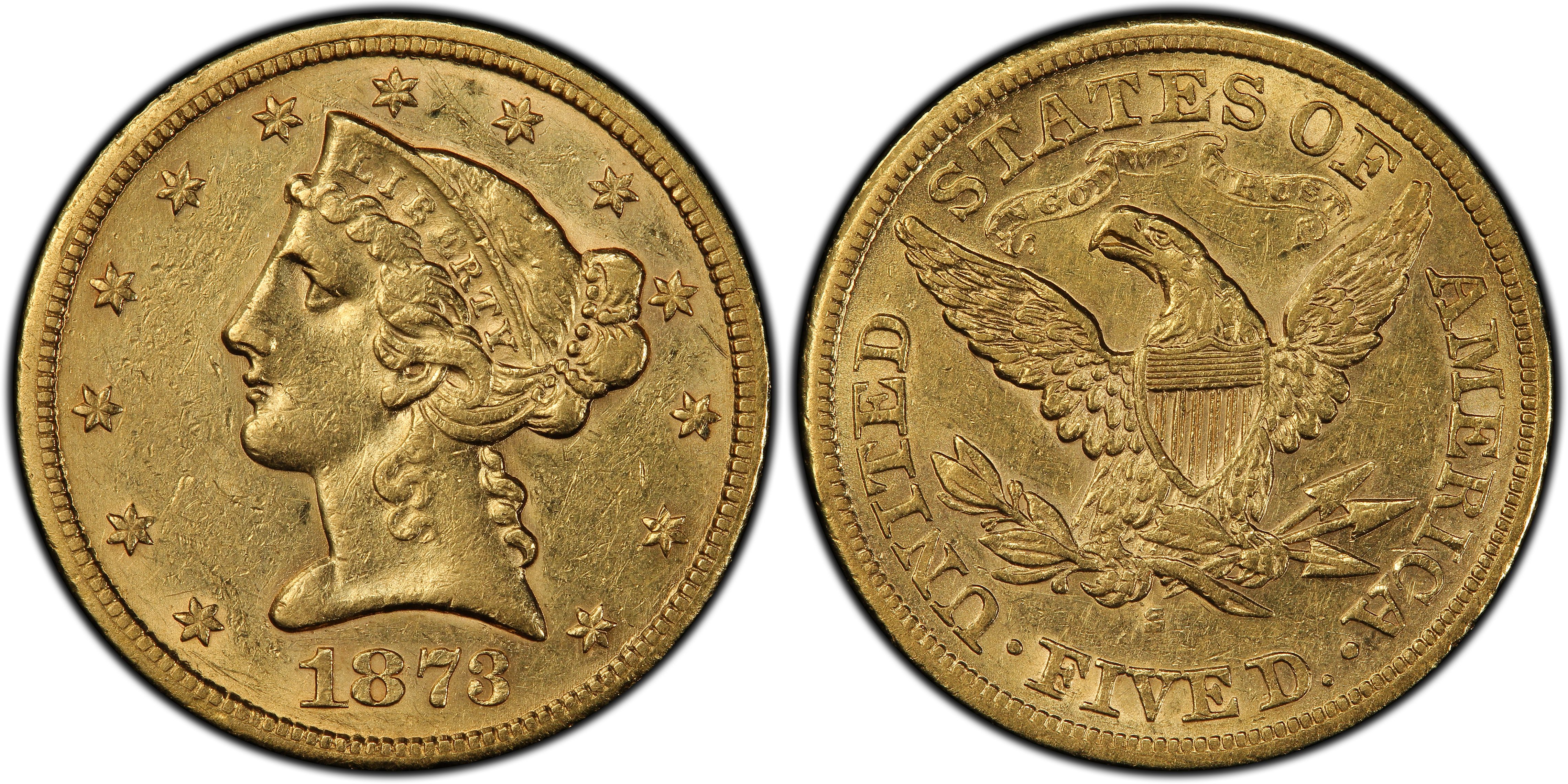
PCGS AU58

PCGS AU58
- PCGS #:
- 8332
- Designer:
- Christian Gobrecht
- Edge:
- Reeded
- Diameter:
- 21.65 millimeters
- Weight:
- 8.36 grams
- Mintage:
- 31,000
- Mint:
- San Francisco
- Metal:
- 90% Gold, 10% Copper
- Auction Record:
- $34,000 • MS61 • 10-18-2020 • David Lawrence RC
Major Varieties
- 1873-S $5
Go To Grade
Current Auctions - PCGS Graded
Current Auctions - NGC Graded
For Sale Now at Collectors Corner - PCGS Graded
For Sale Now at Collectors Corner - NGC Graded
Rarity and Survival Estimates Learn More
| Survival Estimate | |
|---|---|
| All Grades | 100 |
| 60 or Better | |
| 65 or Better | |
| Numismatic Rarity | |
|---|---|
| All Grades | R-8.0 |
| 60 or Better | R-10.1 |
| 65 or Better | R-10.1 |
| Relative Rarity By Type All Specs in this Type | |
|---|---|
| All Grades | 18 / 106 TIE |
| 60 or Better | 1 / 106 |
| 65 or Better | 1 / 106 |
| Relative Rarity By Series All Specs in this Series | |
|---|---|
| All Grades | 51 / 218 TIE |
| 60 or Better | 1 / 218 |
| 65 or Better | 1 / 218 |
Condition Census What Is This?
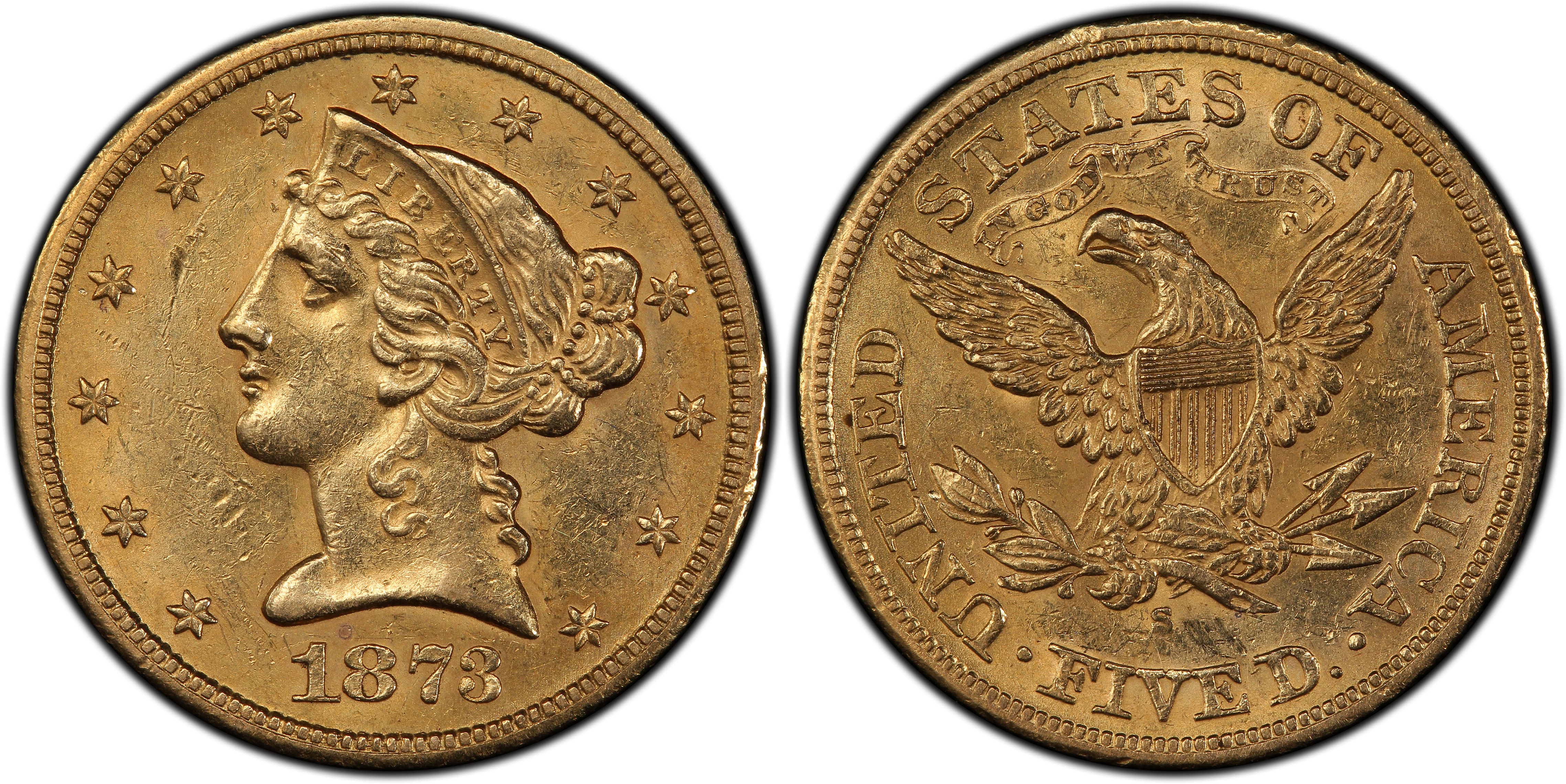 #1 AU58 PCGS grade
|
| #1 AU58 PCGS grade |
| #1 AU58 PCGS grade |
| #1 AU58 estimated grade |
 #5 AU55 PCGS grade
|
| #5 AU55 PCGS grade |
| #5 AU55 PCGS grade |
| #5 AU55 PCGS grade |
| #9 AU55 PCGS grade |
 #9 AU53 PCGS grade
|
David Akers (1975/88):
The 1873-S is extremely rare in any condition. It is more rare than the 1868-S, 1869-S, 1871-S or 1872-S and is equal in rarity to the 1870-S. Almost all known specimens are well worn. All 1873-S Half Eagles have a Closed 3 in the date, and the mintmark is always weak.
David Hall:
I believe the 1873-S $5 Liberty may be unknown in mint state condition. I have never seen one and I can find no auction records of one ever offered as uncirculated.