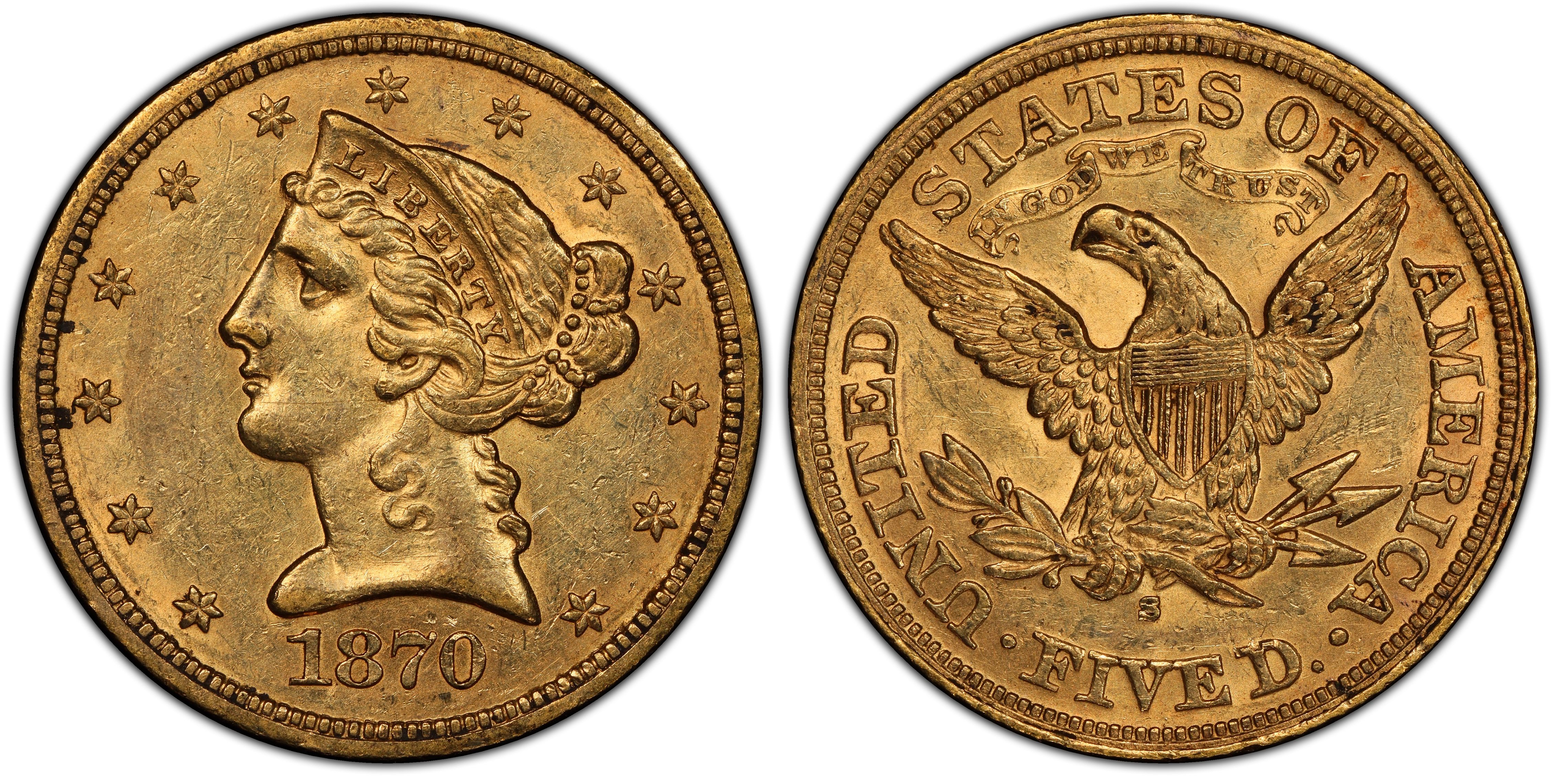
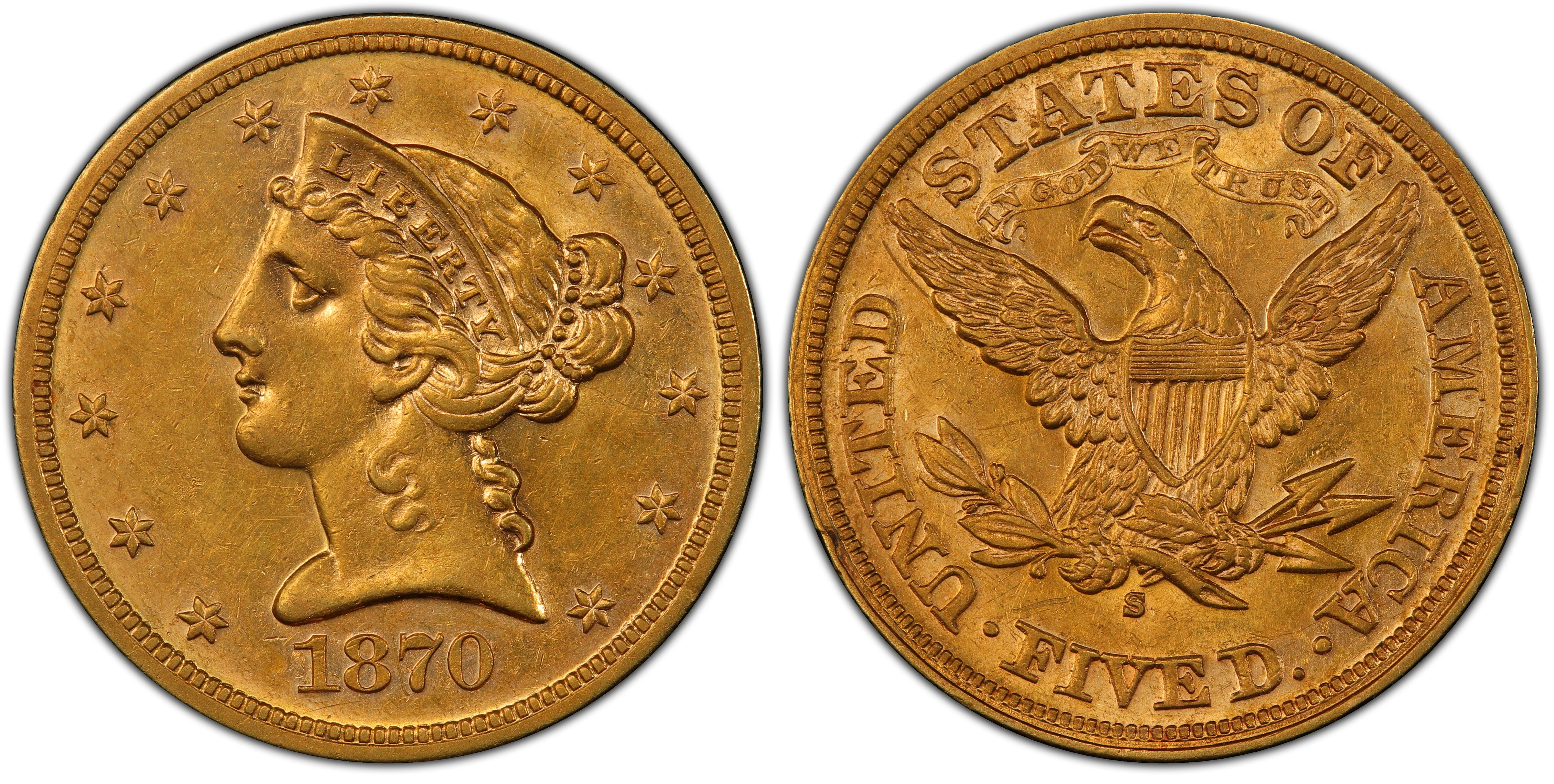
PCGS AU58
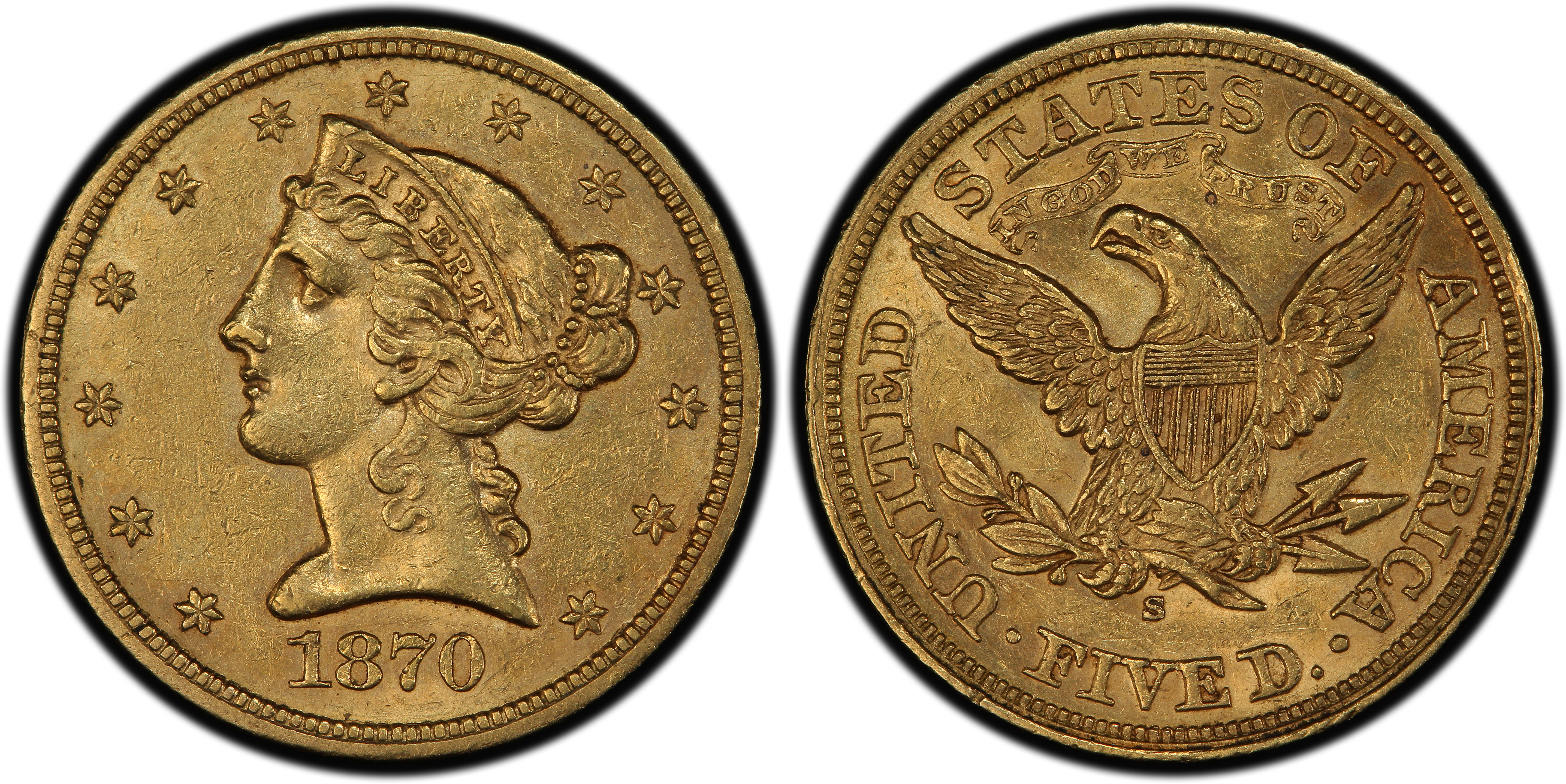
PCGS AU58
- PCGS #:
- 8321
- Designer:
- Christian Gobrecht
- Edge:
- Reeded
- Diameter:
- 21.65 millimeters
- Weight:
- 8.36 grams
- Mintage:
- 17,000
- Mint:
- San Francisco
- Metal:
- 90% Gold, 10% Copper
- Auction Record:
- $22,800 • AU58 • 04-13-2022 • Stack's Bowers
Major Varieties
- 1870-S $5
Go To Grade
Current Auctions - PCGS Graded
Current Auctions - NGC Graded
For Sale Now at Collectors Corner - PCGS Graded
For Sale Now at Collectors Corner - NGC Graded
Rarity and Survival Estimates Learn More
| Survival Estimate | |
|---|---|
| All Grades | 85 |
| 60 or Better | 1 |
| 65 or Better | |
| Numismatic Rarity | |
|---|---|
| All Grades | R-8.1 |
| 60 or Better | R-10.0 |
| 65 or Better | R-10.1 |
| Relative Rarity By Type All Specs in this Type | |
|---|---|
| All Grades | 16 / 106 TIE |
| 60 or Better | 1 / 106 TIE |
| 65 or Better | 1 / 106 |
| Relative Rarity By Series All Specs in this Series | |
|---|---|
| All Grades | 44 / 218 TIE |
| 60 or Better | 1 / 218 TIE |
| 65 or Better | 1 / 218 |
Condition Census What Is This?
| #1 AU55 PCGS grade |
| #1 AU55 PCGS grade |
| #1 AU55 PCGS grade |
| #1 AU55 PCGS grade |
| #1 AU55 PCGS grade |
| #1 AU55 PCGS grade |
| #1 AU55 PCGS grade |
| #1 AU55 PCGS grade |
| #9 AU53 PCGS grade |
| #9 AU53 PCGS grade |
David Akers (1975/88):
The 1870-S is somewhat more rare than the 1868-S, 1869-S, 1871-S, or 1872-S, but not quite as rare as the 1874-1876-S Mint coins. It is very similar in overall rarity to the 1873-S. Like all the others, the 1870-S is generally available only in Fine or VF condition and, on rare occasions, EF. The mintmark is very small and weak, not because of strike, but because it was weakly punched into the die.