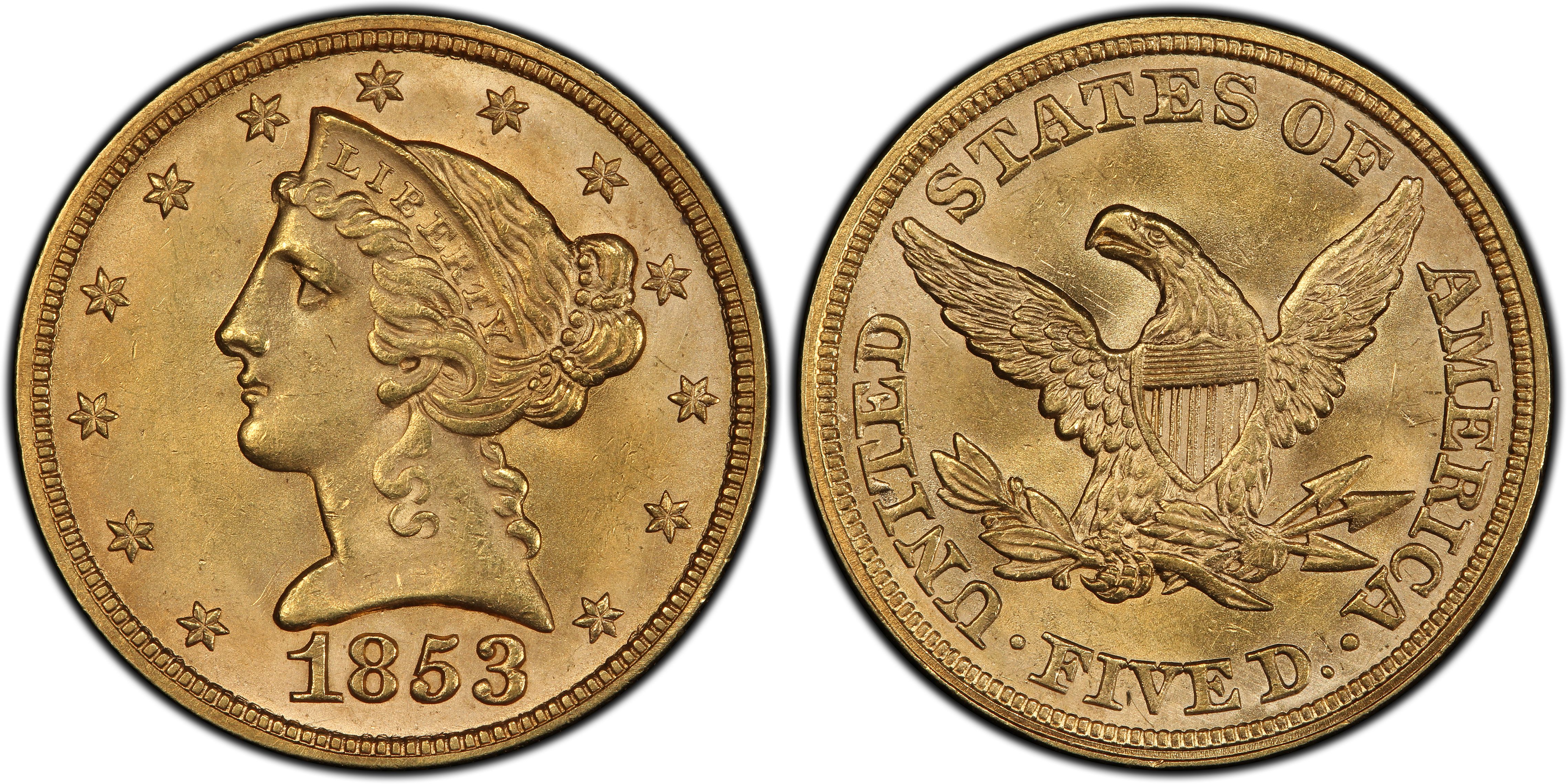
PCGS MS64+

PCGS MS64
- PCGS #:
- 8253
- Designer:
- Christian Gobrecht
- Edge:
- Reeded
- Diameter:
- 21.65 millimeters
- Weight:
- 8.36 grams
- Mintage:
- 305,770
- Mint:
- Philadelphia
- Metal:
- 90% Gold, 10% Copper
- Auction Record:
- $76,375 • MS66 • 02-13-2014 • Legend Rare Coin Auctions
Major Varieties
- 1853 $5
Go To Grade
Current Auctions - PCGS Graded
Current Auctions - NGC Graded
For Sale Now at Collectors Corner - PCGS Graded
For Sale Now at Collectors Corner - NGC Graded
Rarity and Survival Estimates Learn More
| Survival Estimate | |
|---|---|
| All Grades | 550 |
| 60 or Better | 75 |
| 65 or Better | |
| Numismatic Rarity | |
|---|---|
| All Grades | R-5.9 |
| 60 or Better | R-8.2 |
| 65 or Better | R-10.1 |
| Relative Rarity By Type All Specs in this Type | |
|---|---|
| All Grades | 103 / 112 TIE |
| 60 or Better | 98 / 112 TIE |
| 65 or Better | 1 / 112 |
| Relative Rarity By Series All Specs in this Series | |
|---|---|
| All Grades | 145 / 218 TIE |
| 60 or Better | 137 / 218 TIE |
| 65 or Better | 1 / 218 |
Condition Census What Is This?
|
#1 MS66 PCGS grade
Legend Rare Coin Auctions 2/2014:329, $76,375 |
|
#2 MS65 PCGS grade
Stack's/Bowers 10/2014:10042, $38,187.50 |
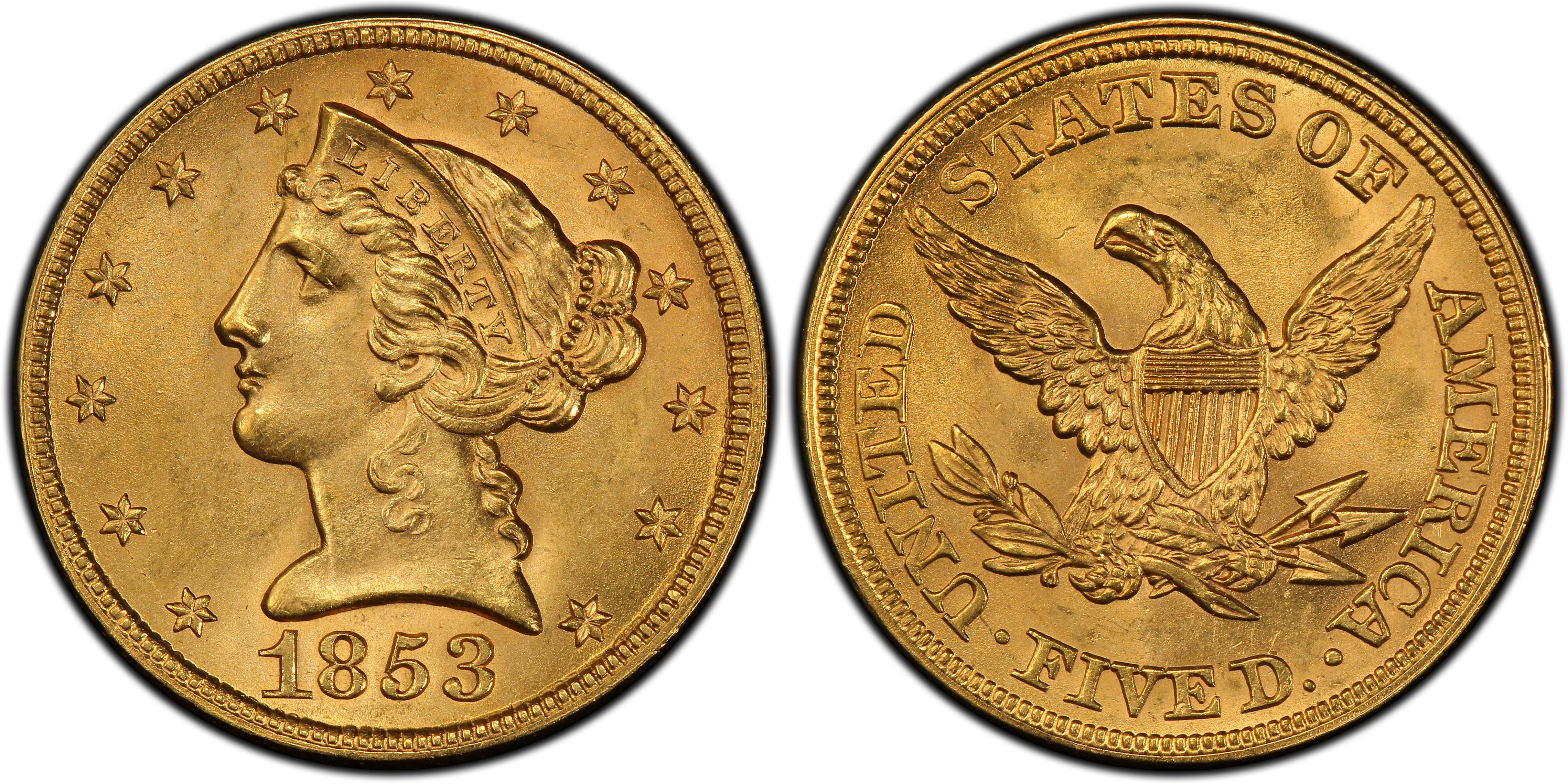 #3 MS64+ PCGS grade
Heritage 10/2015:3523, $15,862.50 |
| #3 MS64+ PCGS grade |
| #5 MS64 estimated grade |
| #6 MS63 PCGS grade |
| #6 MS63 PCGS grade |
| #6 MS63 PCGS grade |
| #6 MS63 PCGS grade |
| #6 MS63 PCGS grade |
David Akers (1975/88):
The "common date" status accorded this date by price guides is very misleading, particularly in AU or uncirculated condition. Moderately scarce in any grade, the 1853 is actually very rare in strictly uncirculated condition and virtually unobtainable in choice or gem condition. It is comparable in rarity to the 1851 and more rare than the 1843, 1847, 1852, or 1861, the only dates of this type that are available with any regularity in choice condition.