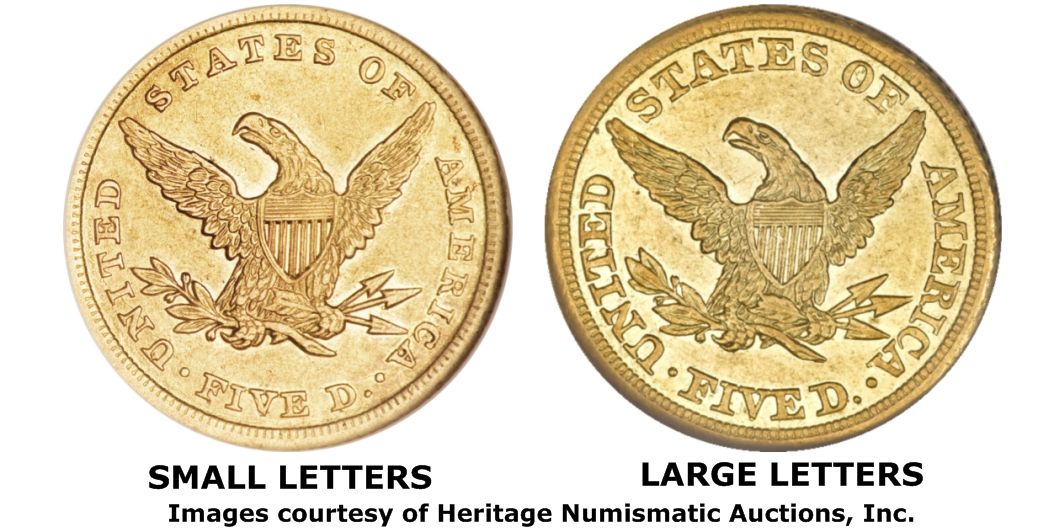
REVERSE COMPARISON

PCGS AU55
- PCGS #:
- 8206
- Designer:
- Christian Gobrecht
- Edge:
- Reeded
- Diameter:
- 21.65 millimeters
- Weight:
- 8.36 grams
- Mintage:
- 27,578
- Mint:
- Philadelphia
- Metal:
- 90% Gold, 10% Copper
- Auction Record:
- $17,600 • MS63 • 10-01-1997 • David Akers
Go To Grade
Current Auctions - PCGS Graded
Current Auctions - NGC Graded
For Sale Now at Collectors Corner - PCGS Graded
For Sale Now at Collectors Corner - NGC Graded
Rarity and Survival Estimates Learn More
| Survival Estimate | |
|---|---|
| All Grades | 47 |
| 60 or Better | 3 |
| 65 or Better | |
| Numismatic Rarity | |
|---|---|
| All Grades | R-8.5 |
| 60 or Better | R-9.8 |
| 65 or Better | R-10.1 |
| Relative Rarity By Type All Specs in this Type | |
|---|---|
| All Grades | 13 / 112 TIE |
| 60 or Better | 18 / 112 TIE |
| 65 or Better | 1 / 112 |
| Relative Rarity By Series All Specs in this Series | |
|---|---|
| All Grades | 15 / 218 TIE |
| 60 or Better | 31 / 218 TIE |
| 65 or Better | 1 / 218 |
Condition Census What Is This?
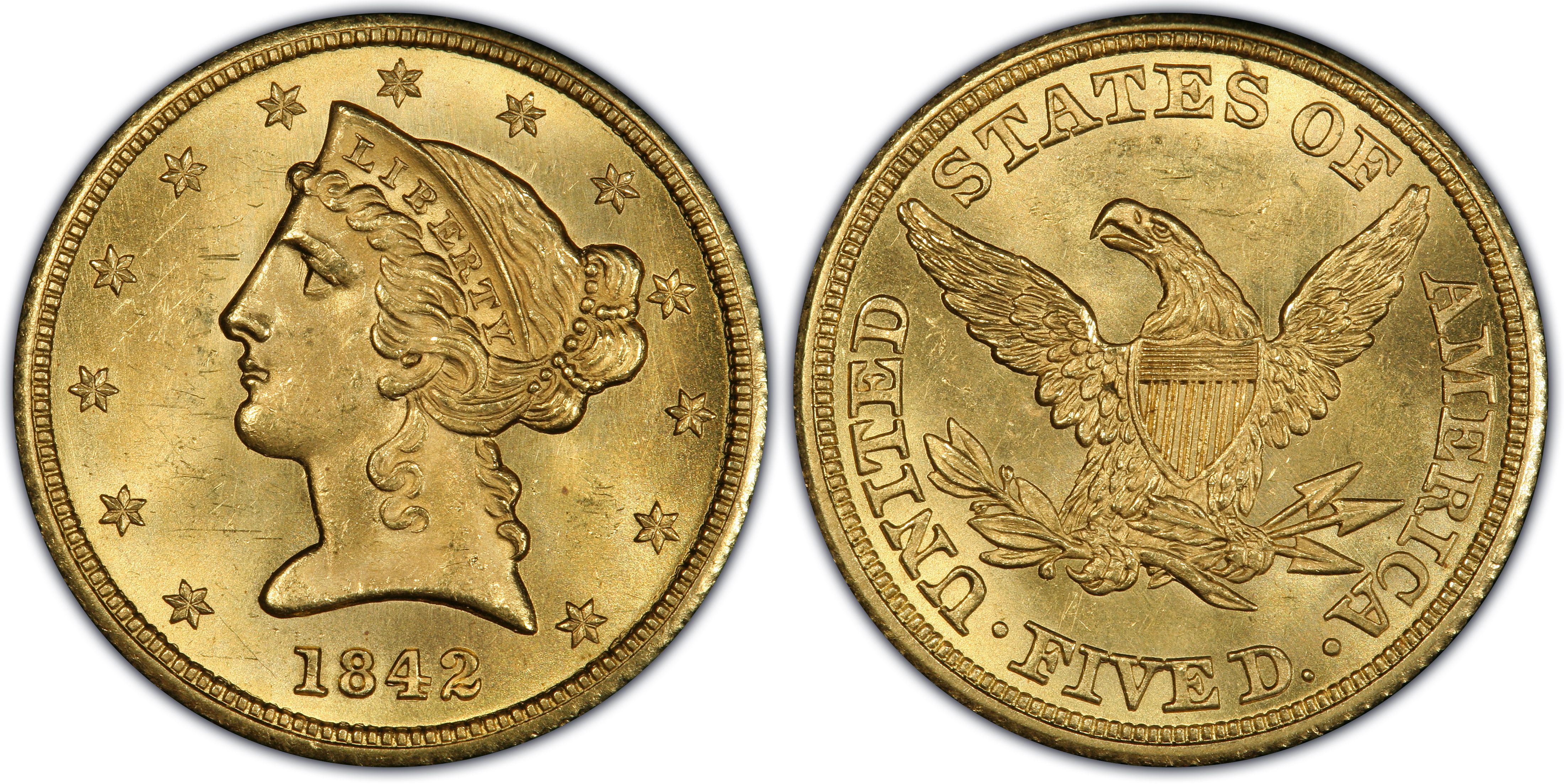 #1 MS64 PCGS grade
|
| #2 MS63 PCGS grade |
| #3 MS61 PCGS grade |
| #4 AU58 PCGS grade |
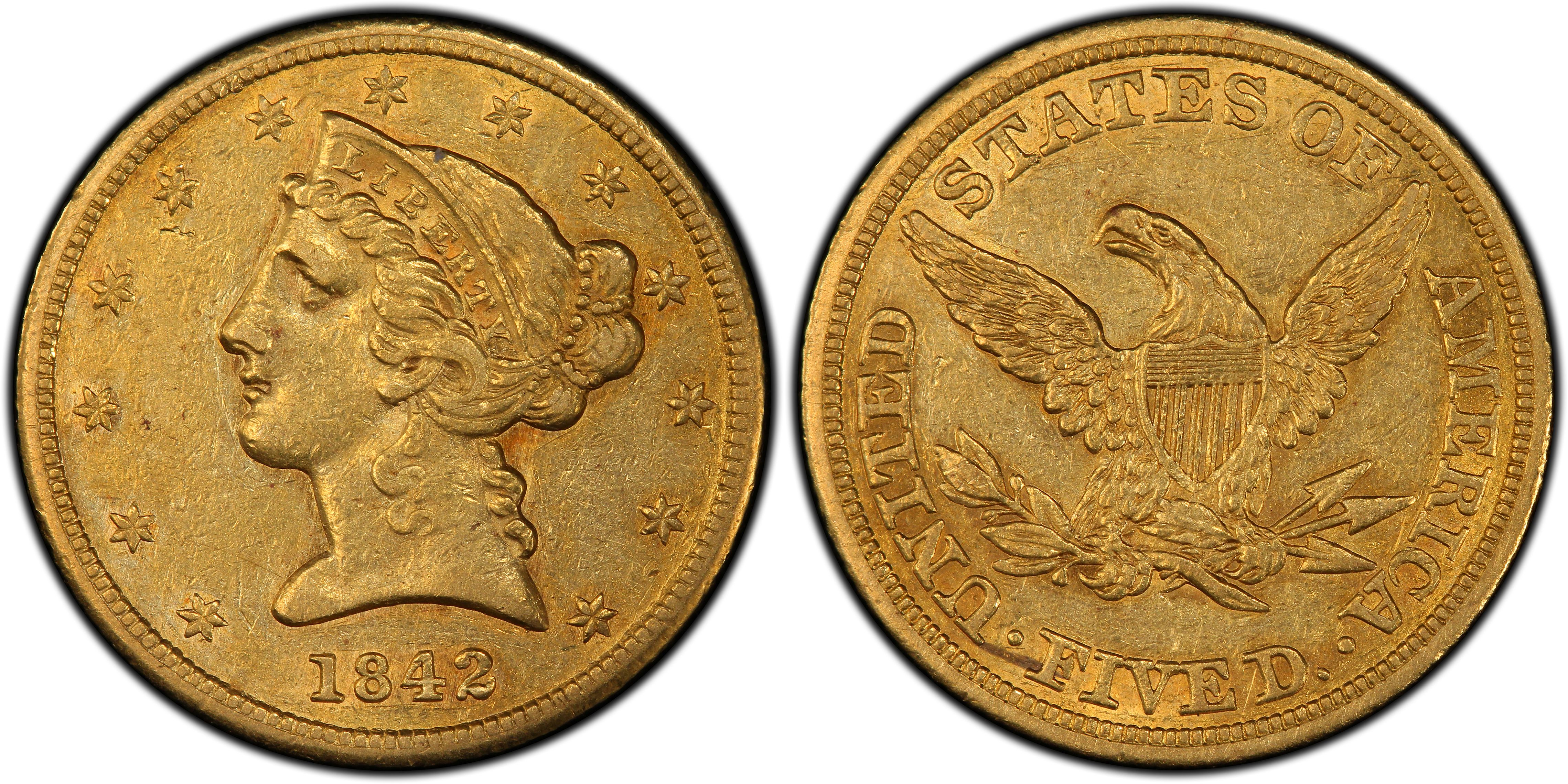 #5 AU53 PCGS grade
|
| #5 AU53 PCGS grade |
| #5 AU53 PCGS grade |
| #5 AU53 estimated grade |
| #5 AU53 estimated grade |
| #5 AU53 estimated grade |
Gordon Wrubel:
As you can see by the great photos above, there are obvious differences between the Large Letter (LL) and Small Letter (SL) reverses of the 1842 $5. The puncheons on the LL are tall and about twice the size of the SL. They are crowded, almost touching at their bases. The tops of the letters are CLOSE to the rim. The SL reverse puncheons are squared, about as wide as they are tall. The letters are widely spaced and AWAY from the rim.
David Akers (1975/88):
For years the 1842 Large Letters has been claimed to be more common than the 1842 Small Letters. However, as the auction records clearly show, this is not the case. The Large Letters variety appears at auction only half as often as the Small Letters variety. In fact, the 1842 large Letters has fewer auction appearances than any other Philadelphia Mint Liberty Head Half Eagle except the 1875. It is an extremely rare coin.