1834 $5 Classic Head, Plain 4 (Regular Strike)
Series: Classic Head $5 1834-1838
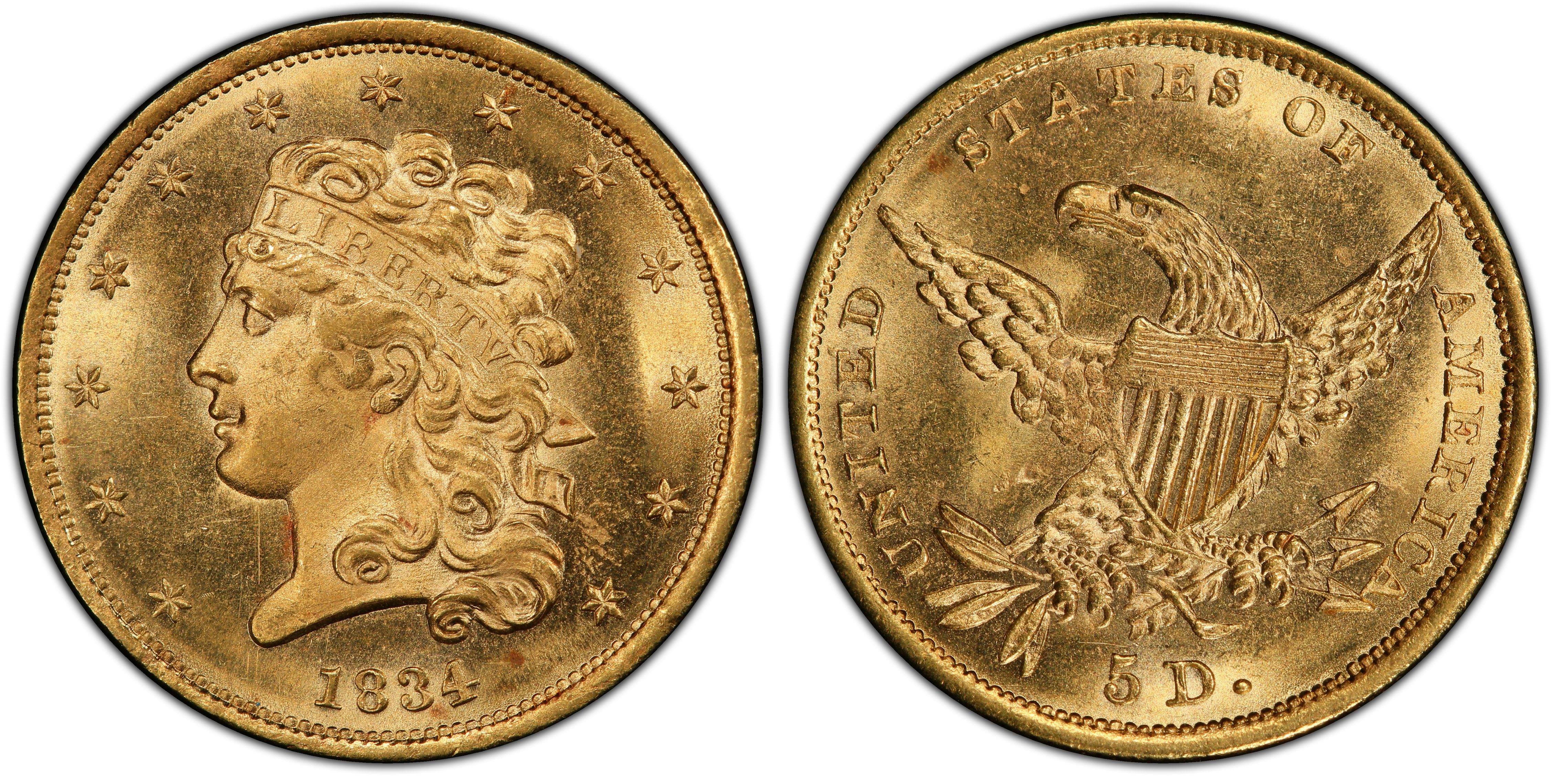
PCGS MS66
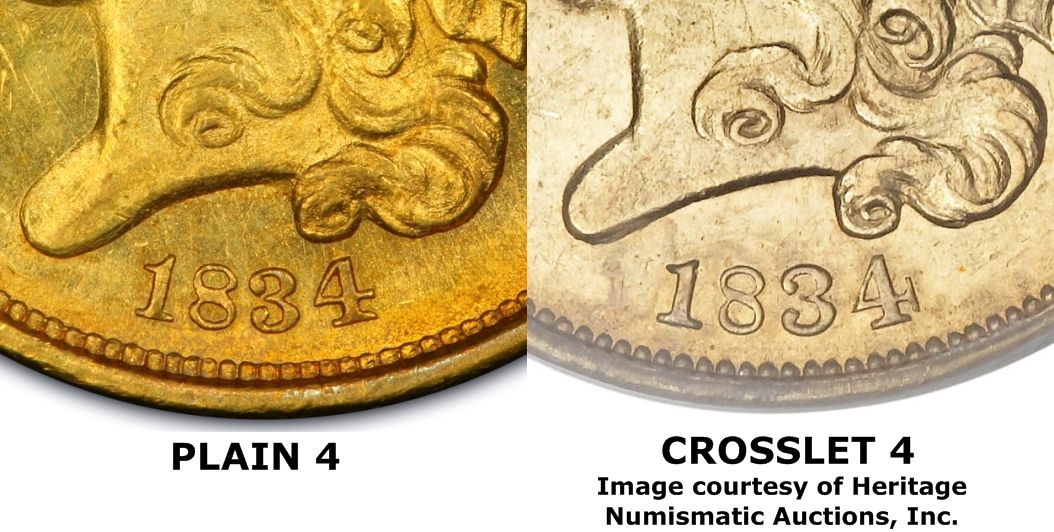
OBVERSE COMPARISON
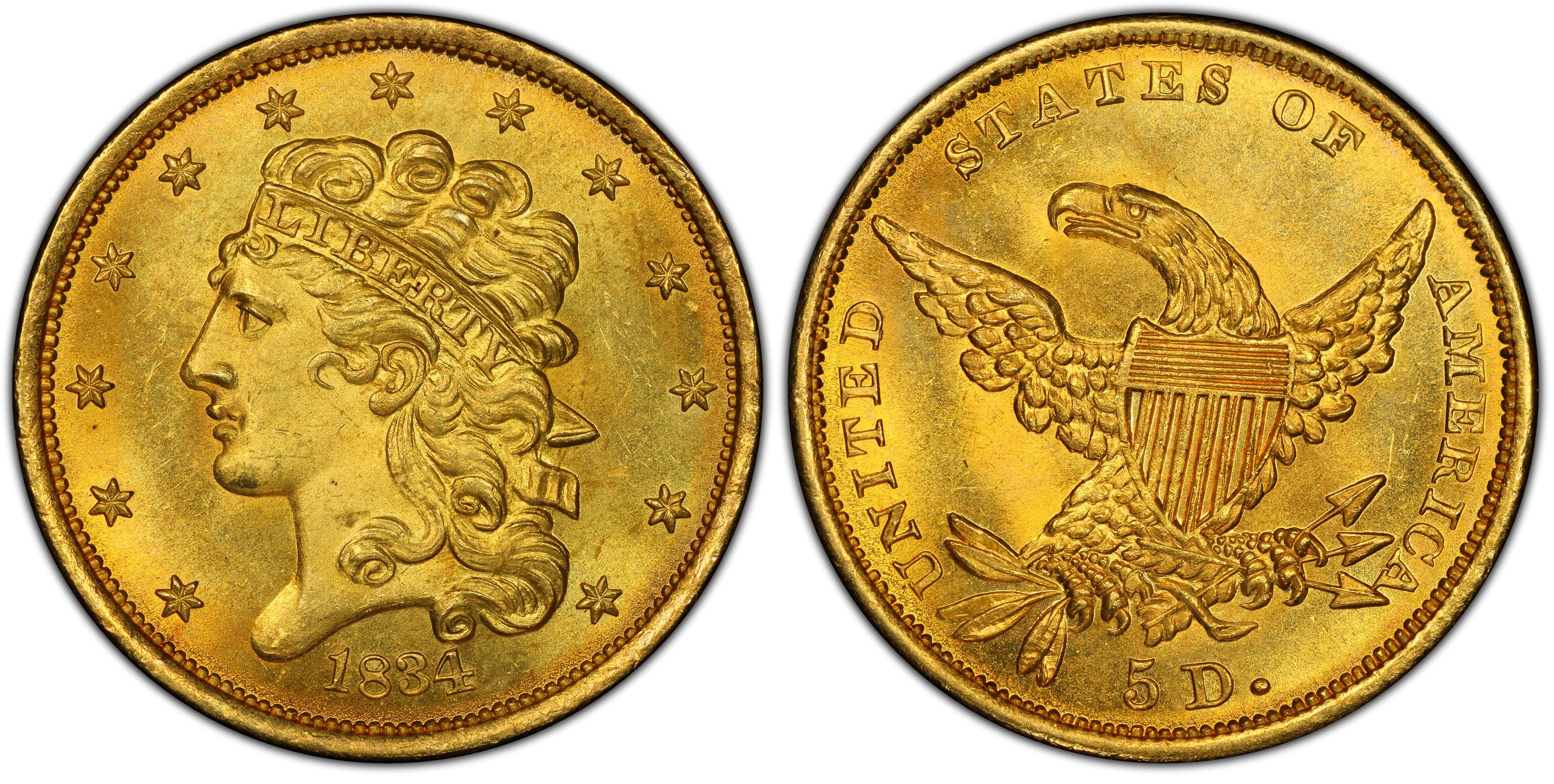
PCGS MS66
- PCGS #:
- 8171
- Designer:
- William Kneass
- Edge:
- Reeded
- Diameter:
- 22.50 millimeters
- Weight:
- 8.36 grams
- Mintage:
- 657,460
- Mint:
- Philadelphia
- Metal:
- 89.9% Gold, 10.1% Copper
- Auction Record:
- $126,500 • MS66 • 03-01-2007 • Stack's
Major Varieties
- 1834 $5 Classic Head, Plain 4
- 1834 $5 Classic Head, Plain 4, PL
- 1834 $5 Classic Head, Crosslet 4
Go To Grade
Current Auctions - PCGS Graded
Current Auctions - NGC Graded
For Sale Now at Collectors Corner - PCGS Graded
For Sale Now at Collectors Corner - NGC Graded
Rarity and Survival Estimates Learn More
| Survival Estimate | |
|---|---|
| All Grades | 1,750 |
| 60 or Better | 300 |
| 65 or Better | 7 |
| Numismatic Rarity | |
|---|---|
| All Grades | R-4.7 |
| 60 or Better | R-6.4 |
| 65 or Better | R-9.6 |
| Relative Rarity By Type All Specs in this Type | |
|---|---|
| All Grades | 8 / 8 |
| 60 or Better | 8 / 8 |
| 65 or Better | 4 / 8 TIE |
| Relative Rarity By Series All Specs in this Series | |
|---|---|
| All Grades | 8 / 8 |
| 60 or Better | 8 / 8 |
| 65 or Better | 4 / 8 TIE |
Condition Census What Is This?
|
#1 MS66 PCGS grade
Andrew Nugget, sold privately in 7/2000 - D. Brent Pogue Collection) - Stack's/Bowers & Sotheby's 5/2016:4050, $111,625 |
| #1 MS66 PCGS grade |
| #3 MS65+ PCGS grade |
 #4 MS65 PCGS grade
Heritage 8/2014:5649, $99,875 |
|
#4 MS65 PCGS grade
Heritage 1/2007:3543, $63,250 |
|
#4 MS65 PCGS grade
Hamburg-Sonoma Collection - Heritage 10/2006:2723, $43,125 |
|
#4 MS65 estimated grade
Stack’s 3/2007:1563, $126,500 |
 #8 MS64+ PCGS grade
Trzaska Collection - Heritage 4/2013:4518, $21,150 |
 #8 MS64+ PCGS grade
|
| #8 MS64+ PCGS grade |
David Akers (1975/88):
By 1834, the price of gold had risen to the point where the value of gold in a Half Eagle exceeded the face value. As a result, in 1834 the specifications were changed and the size reduced. William Kneass created this new Classic Head design but it lasted for only five years. The 1834 No Motto, Plain 4 is by far the commonest Half Eagle to this point. It is available in all grades up to and including choice uncirculated. The head of Miss Liberty comes in two different sizes, but the differences are relatively minor. Most specimens I have seen show some weakness in the hair curls around Liberty's face.