
- PCGS #:
- 8038
- Designer:
- James Barton Longacre
- Edge:
- Reeded
- Diameter:
- 20.50 millimeters
- Weight:
- 5.02 grams
- Mintage:
- 20
- Mint:
- Philadelphia
- Metal:
- 90% Gold, 10% Copper
- Auction Record:
- $46,000 • PR65 • 03-08-2005 • American Numismatic Rarities
Go To Grade
Current Auctions - PCGS Graded
Current Auctions - NGC Graded
For Sale Now at Collectors Corner - PCGS Graded
For Sale Now at Collectors Corner - NGC Graded
Rarity and Survival Estimates Learn More
| Survival Estimate | |
|---|---|
| All Grades | 16 |
| 60 or Better | 14 |
| 65 or Better | 5 |
| Numismatic Rarity | |
|---|---|
| All Grades | R-9.3 |
| 60 or Better | R-9.4 |
| 65 or Better | R-9.7 |
| Relative Rarity By Type All Specs in this Type | |
|---|---|
| All Grades | 10 / 37 TIE |
| 60 or Better | 9 / 37 TIE |
| 65 or Better | 9 / 37 TIE |
| Relative Rarity By Series All Specs in this Series | |
|---|---|
| All Grades | 10 / 37 TIE |
| 60 or Better | 9 / 37 TIE |
| 65 or Better | 9 / 37 TIE |
Condition Census What Is This?
| #1 PR65 PCGS grade |
| #1 PR65 PCGS grade |
| #1 PR65 PCGS grade |
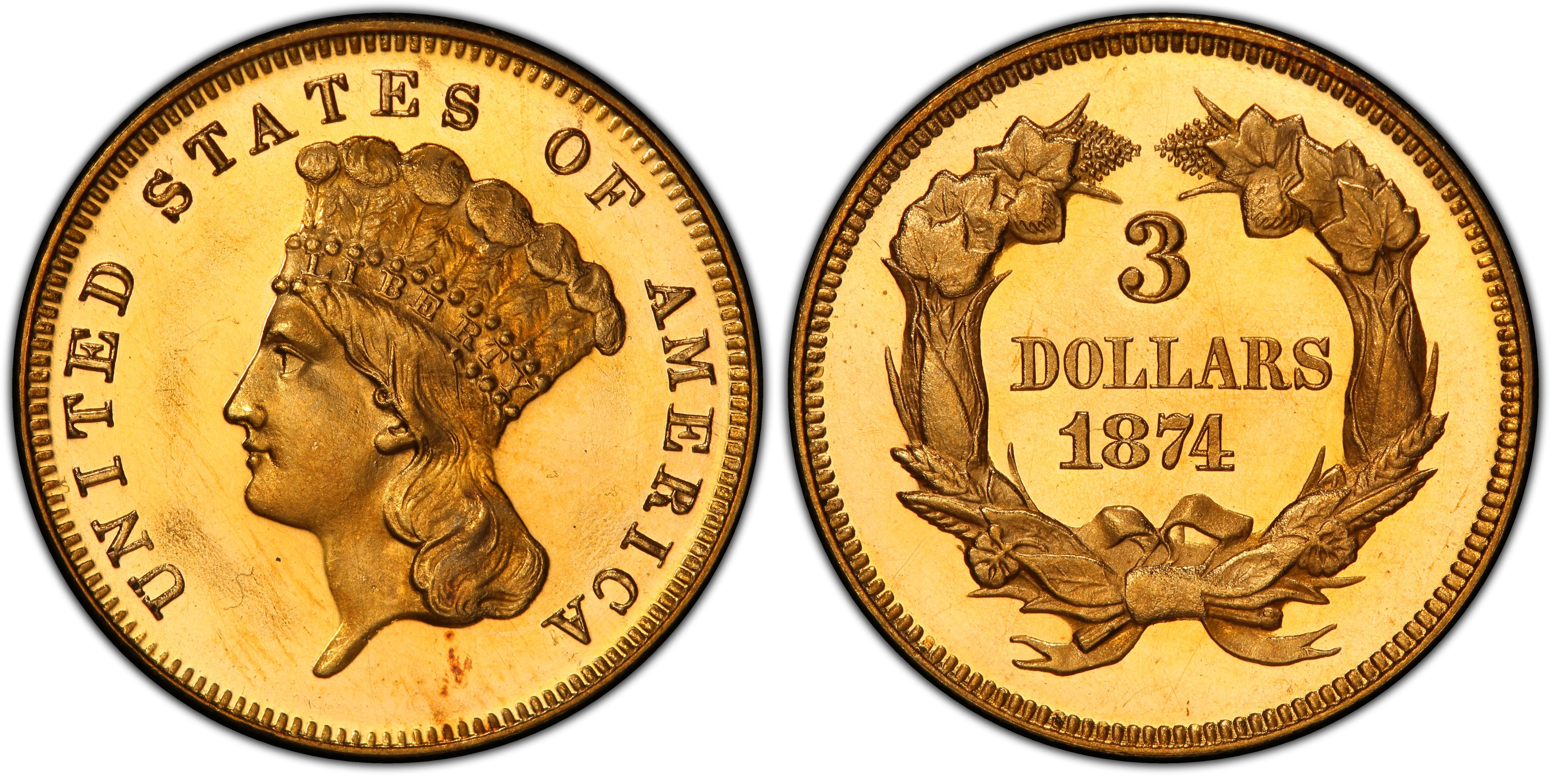 #1 PR65 PCGS grade
|
| #5 PR64 PCGS grade |
| #5 PR64 PCGS grade |
| #5 PR64 PCGS grade |
| #5 PR64 PCGS grade |
| #5 PR64 PCGS grade |
| #5 PR64 PCGS grade |
David Akers (1975/88):
In my opinion, this is one of the most underrated proof threes, along with the 1861 and 1878. Proofs are easily distiguishable from fully proof-like business strikes by the position of the date. The date on the proofs is more to the left, with the upright of the 4 directly below the center of the A in DOLLARS. On business strikes, the date is to the right, with the upright of the 4 just below the right foot of the A.