

DATE COMPARISON
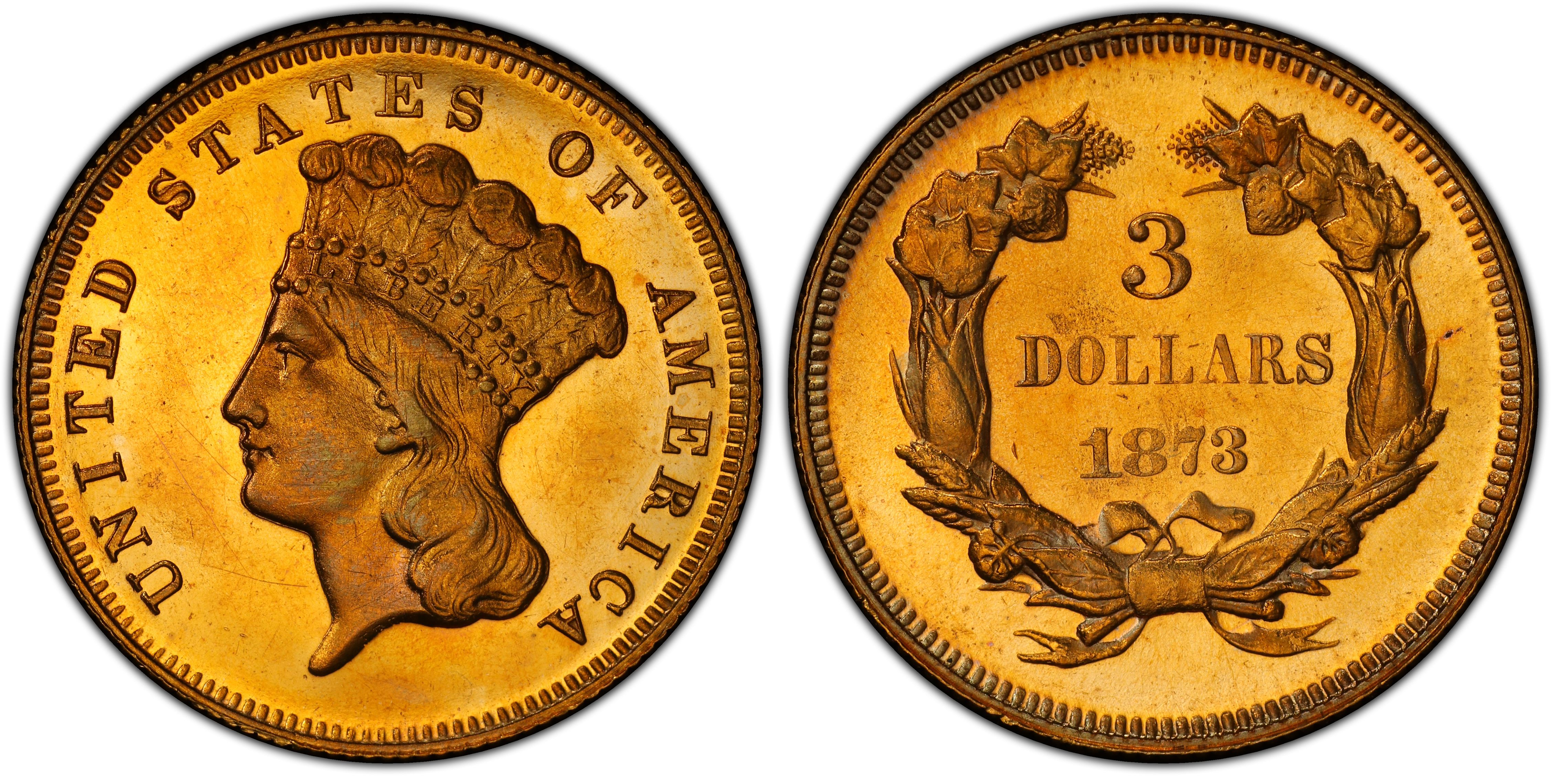
PCGS PR63
- PCGS #:
- 8036
- Designer:
- James Barton Longacre
- Edge:
- Reeded
- Diameter:
- 20.50 millimeters
- Weight:
- 5.02 grams
- Mintage:
- 8
- Mint:
- Philadelphia
- Metal:
- 90% Gold, 10% Copper
- Auction Record:
- $156,000 • PR65 • 04-13-2022 • Stack's Bowers
Go To Grade
Current Auctions - PCGS Graded
Current Auctions - NGC Graded
For Sale Now at Collectors Corner - PCGS Graded
For Sale Now at Collectors Corner - NGC Graded
Rarity and Survival Estimates Learn More
| Survival Estimate | |
|---|---|
| All Grades | 6 |
| 60 or Better | 6 |
| 65 or Better | 3 |
| Numismatic Rarity | |
|---|---|
| All Grades | R-9.7 |
| 60 or Better | R-9.7 |
| 65 or Better | R-9.8 |
| Relative Rarity By Type All Specs in this Type | |
|---|---|
| All Grades | 2 / 37 TIE |
| 60 or Better | 2 / 37 TIE |
| 65 or Better | 5 / 37 TIE |
| Relative Rarity By Series All Specs in this Series | |
|---|---|
| All Grades | 2 / 37 TIE |
| 60 or Better | 2 / 37 TIE |
| 65 or Better | 5 / 37 TIE |
Condition Census What Is This?
| #1 PR65 PCGS grade |
| #1 PR65 PCGS grade |
|
#3 PR63 PCGS grade
|
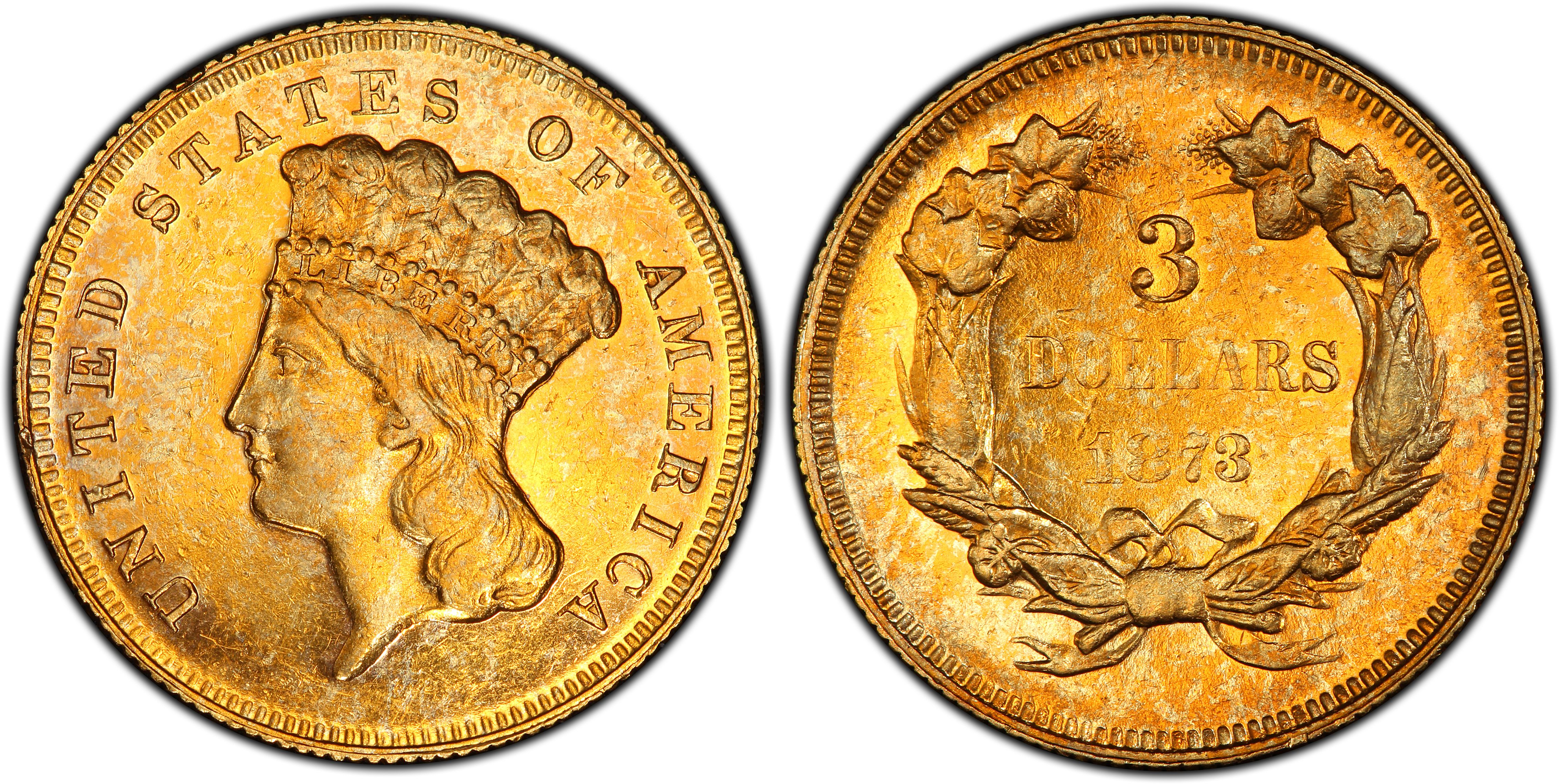 #4 PR61 PCGS grade
|
David Akers (1975/88):
One variety of the 1873 Closed 3 three dollar gold piece is markedly "dished", that is, it has a convex obverse and a concave reverse. This variety is the so-called "dished restrike". However, Harry Bass claims that the dished pieces are, in fact, the true "originals'. I feel that these dished pieces are merely the proofs with the Closed 3, whereas the other Closed 3 pieces are all business strikes.