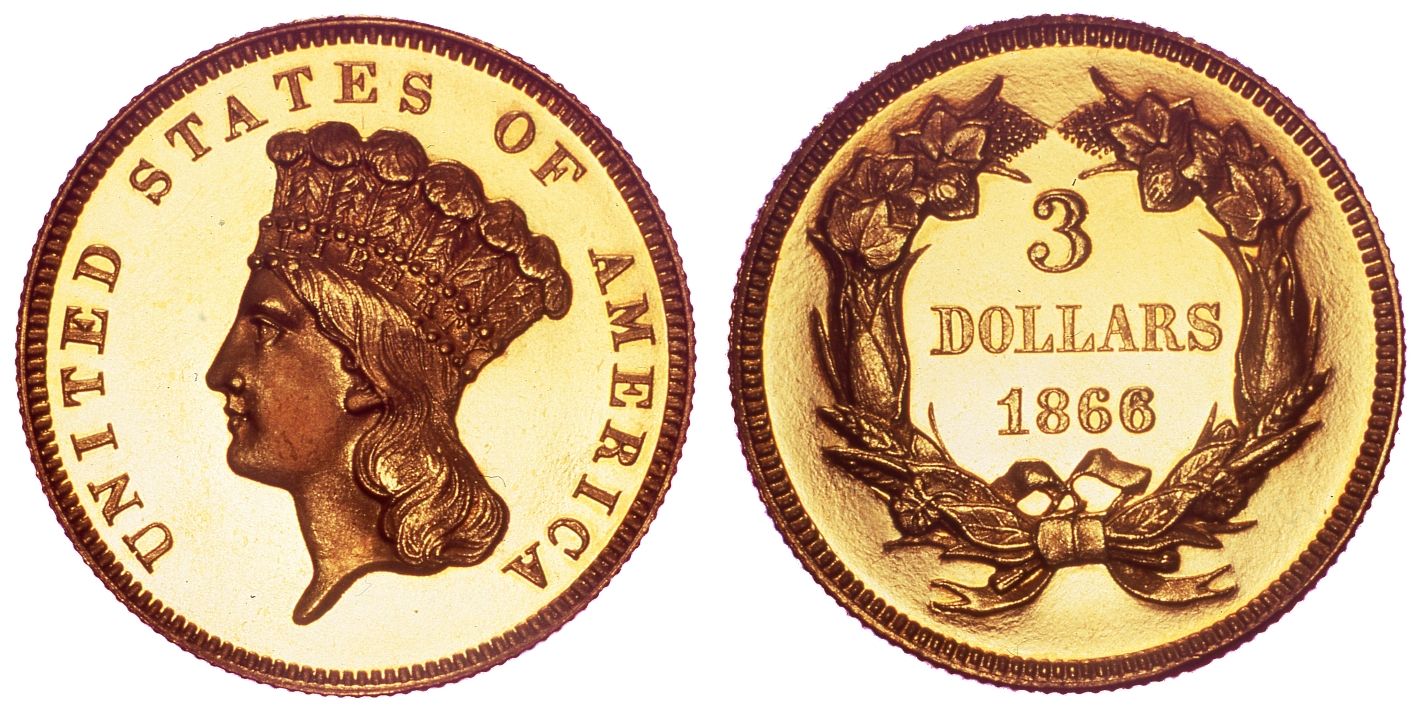
- PCGS #:
- 8029
- Designer:
- James Barton Longacre
- Edge:
- Reeded
- Diameter:
- 20.50 millimeters
- Weight:
- 5.02 grams
- Mintage:
- 30
- Mint:
- Philadelphia
- Metal:
- 90% Gold, 10% Copper
- Auction Record:
- $34,000 • PR65 • 11-01-1979 • Bowers & Ruddy
Go To Grade
Current Auctions - PCGS Graded
Current Auctions - NGC Graded
For Sale Now at Collectors Corner - PCGS Graded
For Sale Now at Collectors Corner - NGC Graded
Rarity and Survival Estimates Learn More
| Survival Estimate | |
|---|---|
| All Grades | 22 |
| 60 or Better | 21 |
| 65 or Better | 6 |
| Numismatic Rarity | |
|---|---|
| All Grades | R-9.0 |
| 60 or Better | R-9.0 |
| 65 or Better | R-9.7 |
| Relative Rarity By Type All Specs in this Type | |
|---|---|
| All Grades | 20 / 37 TIE |
| 60 or Better | 22 / 37 TIE |
| 65 or Better | 9 / 37 TIE |
| Relative Rarity By Series All Specs in this Series | |
|---|---|
| All Grades | 20 / 37 TIE |
| 60 or Better | 22 / 37 TIE |
| 65 or Better | 9 / 37 TIE |
Condition Census What Is This?
| #1 PR65 PCGS grade |
| #2 PR64 PCGS grade |
| #2 PR64 PCGS grade |
| #4 PR58 PCGS grade |
| #4 PR58 PCGS grade |
| #6 PR53 estimated grade |
David Akers (1975/88):
Proofs are distinguishable from business strikes by the fact that the top of the second 6 in the date is filled on the proofs, whereas it is open and clear on business strikes. This filling is prominent enough that one can detect it even on relatively poor quality photos in auction catalogues.