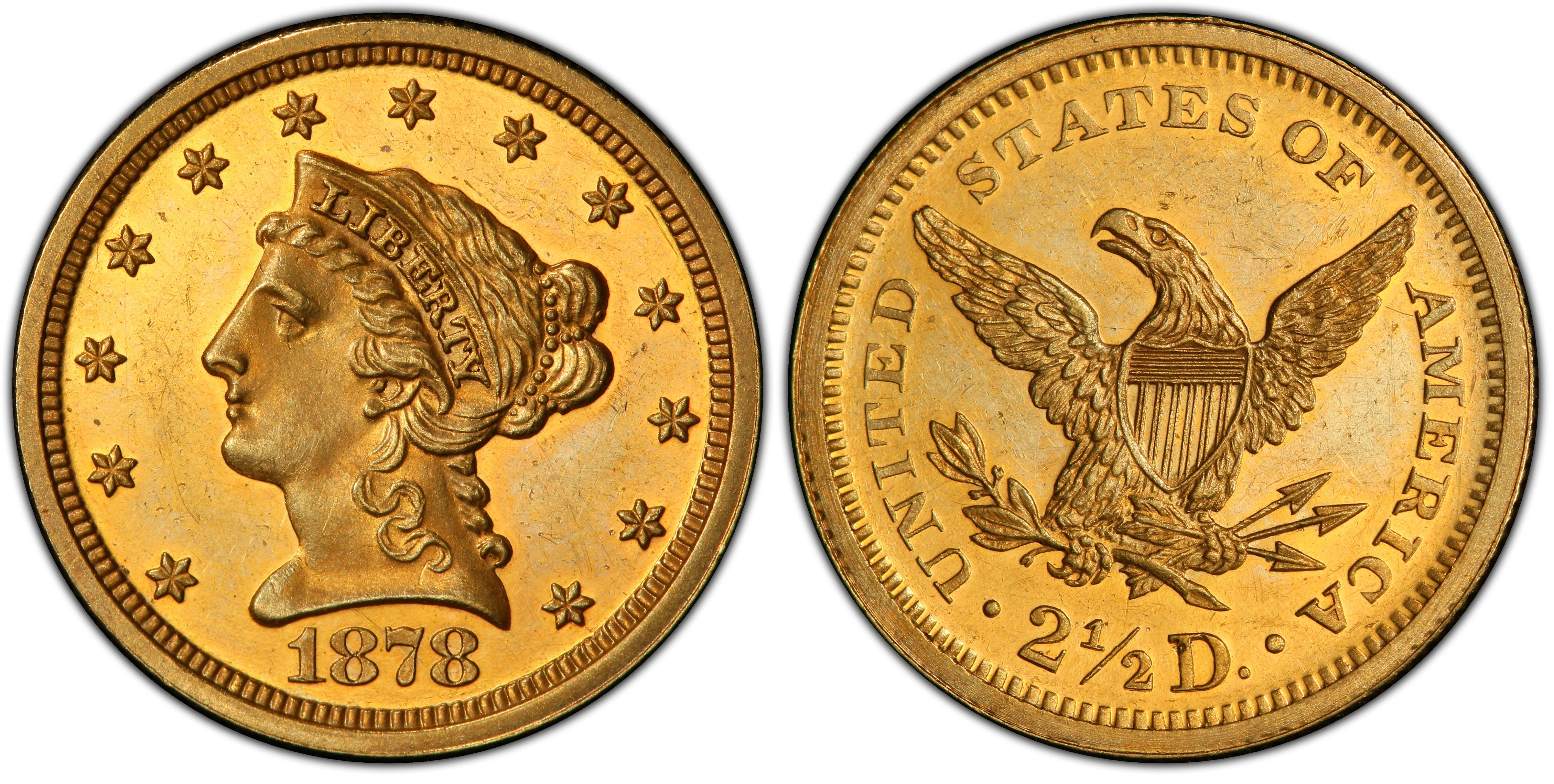
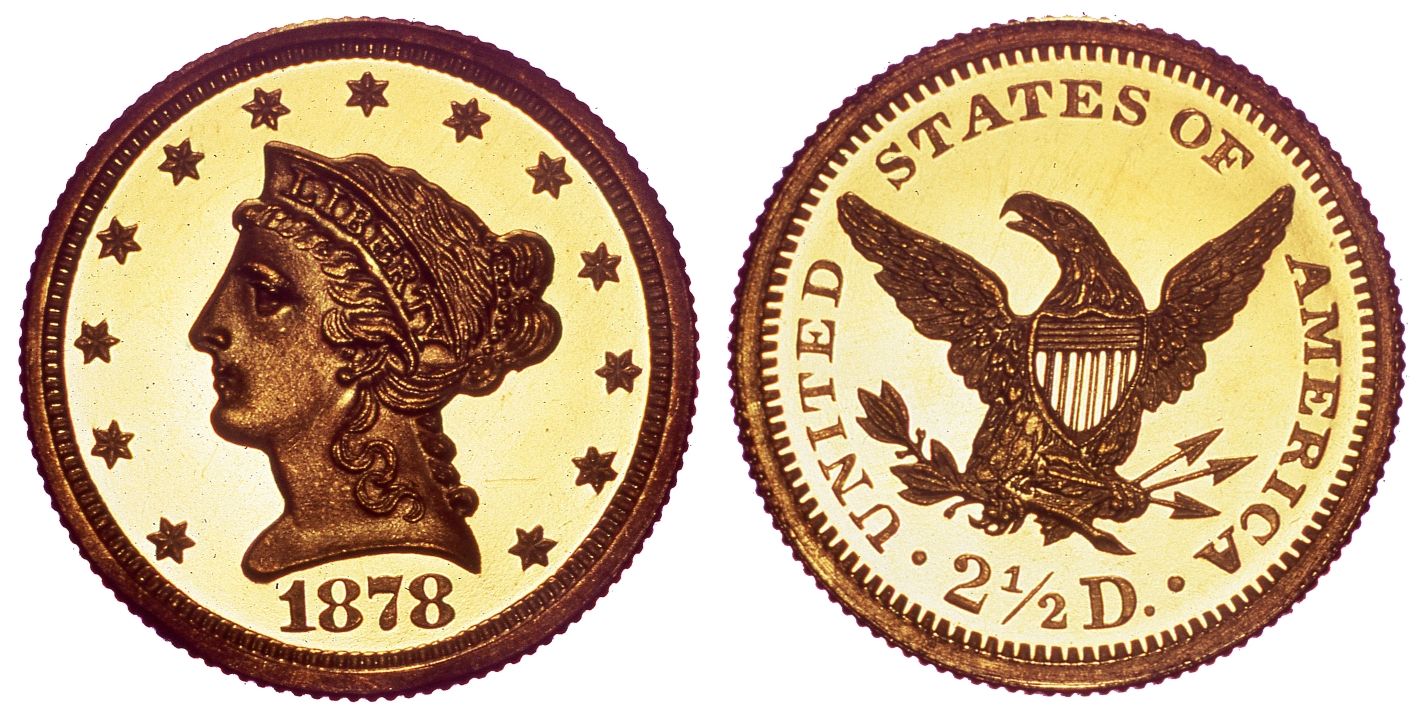
ex Trompeter collection

PCGS PR55
- PCGS #:
- 7904
- Designer:
- Christian Gobrecht
- Edge:
- Reeded
- Diameter:
- 18.00 millimeters
- Weight:
- 4.18 grams
- Mintage:
- 20
- Mint:
- Philadelphia
- Metal:
- 90% Gold, 10% Copper
- Auction Record:
- $29,700 • PR63 • 05-01-1998 • David Akers
Go To Grade
Current Auctions - PCGS Graded
Current Auctions - NGC Graded
For Sale Now at Collectors Corner - PCGS Graded
For Sale Now at Collectors Corner - NGC Graded
Rarity and Survival Estimates Learn More
| Survival Estimate | |
|---|---|
| All Grades | 12 |
| 60 or Better | 11 |
| 65 or Better | 3 |
| Numismatic Rarity | |
|---|---|
| All Grades | R-9.5 |
| 60 or Better | R-9.5 |
| 65 or Better | R-9.8 |
| Relative Rarity By Type All Specs in this Type | |
|---|---|
| All Grades | 13 / 60 |
| 60 or Better | 13 / 60 TIE |
| 65 or Better | 11 / 60 TIE |
| Relative Rarity By Series All Specs in this Series | |
|---|---|
| All Grades | 13 / 60 |
| 60 or Better | 13 / 60 TIE |
| 65 or Better | 11 / 60 TIE |
Condition Census What Is This?
| #1 PR64 PCGS grade |
| #2 PR64 estimated grade |
David Akers (1975/88):
Proofs are extremely rare and the 1878 is, in fact, the rarest post-1859 quarter eagle in proof. At least I know of fewer examples of this date than of any other proof after 1859. I would estimate that only half a dozen or so remain in unimpaired condition, most of which are impounded in museums or prominent collections. Note: All 1878 proof gold is extremely rare even though the reported mintage is similar to that for some other years. Perhaps some of the sets were not sold and were subsequently melted.