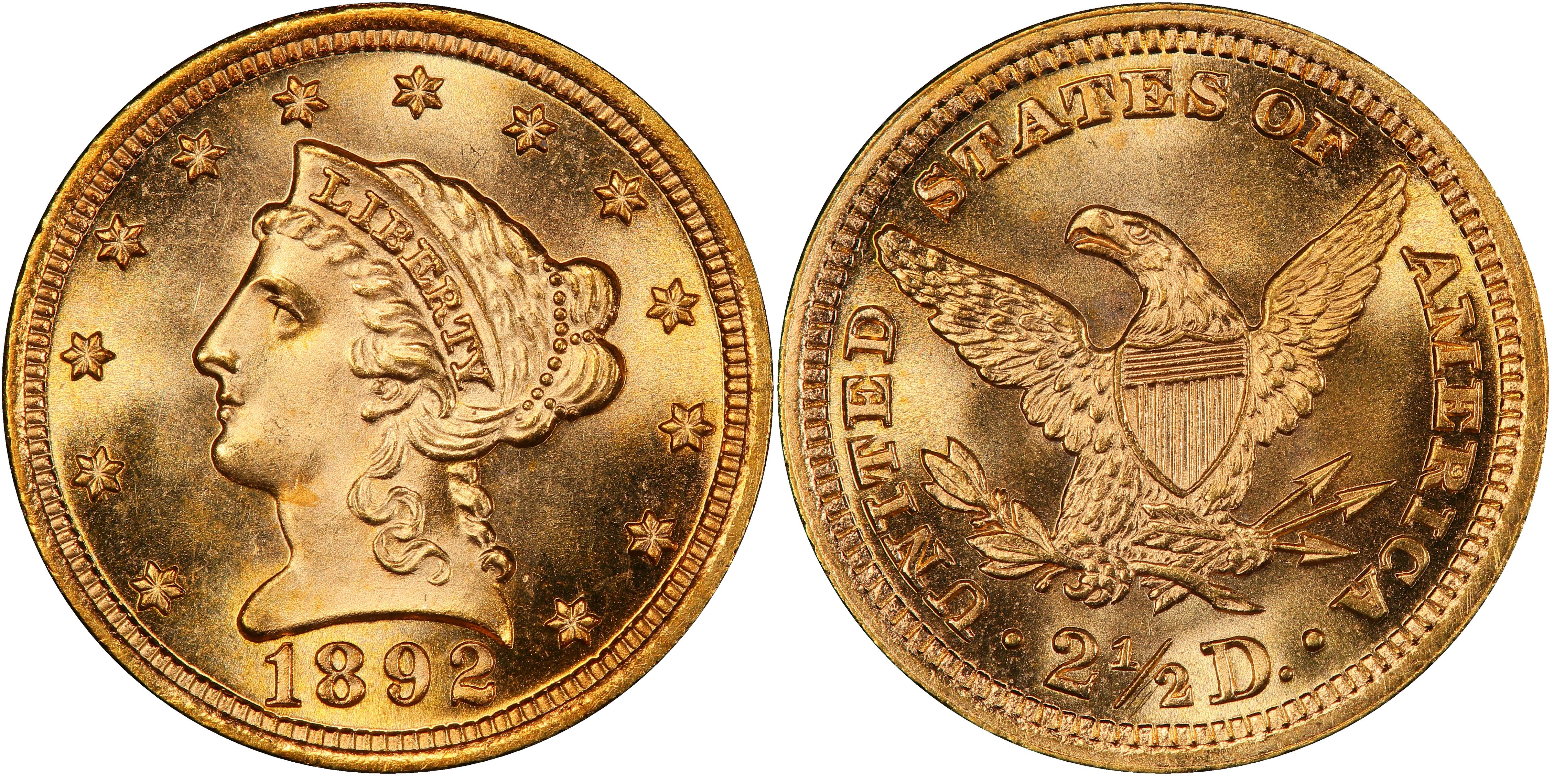
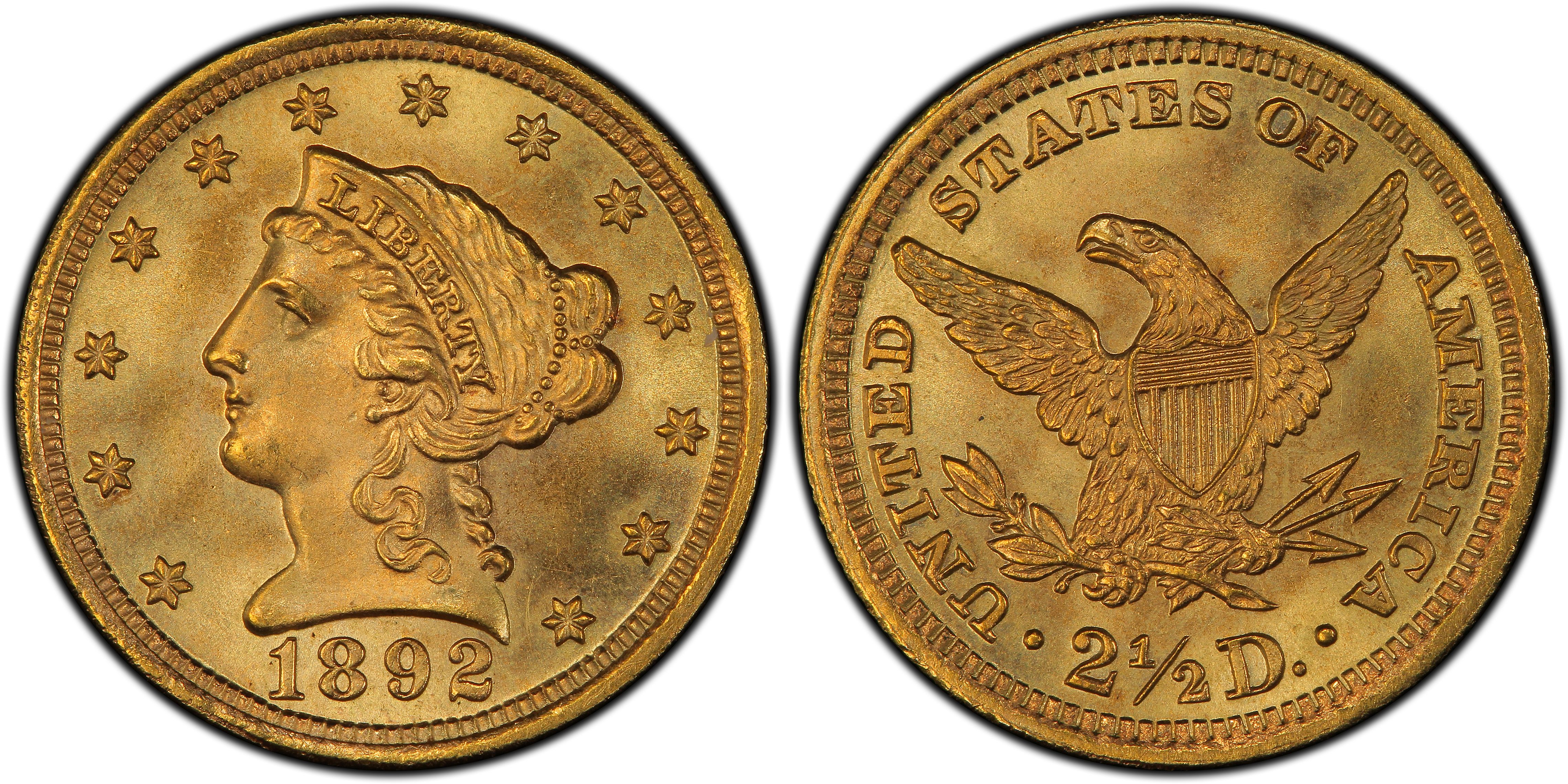
PCGS MS67+
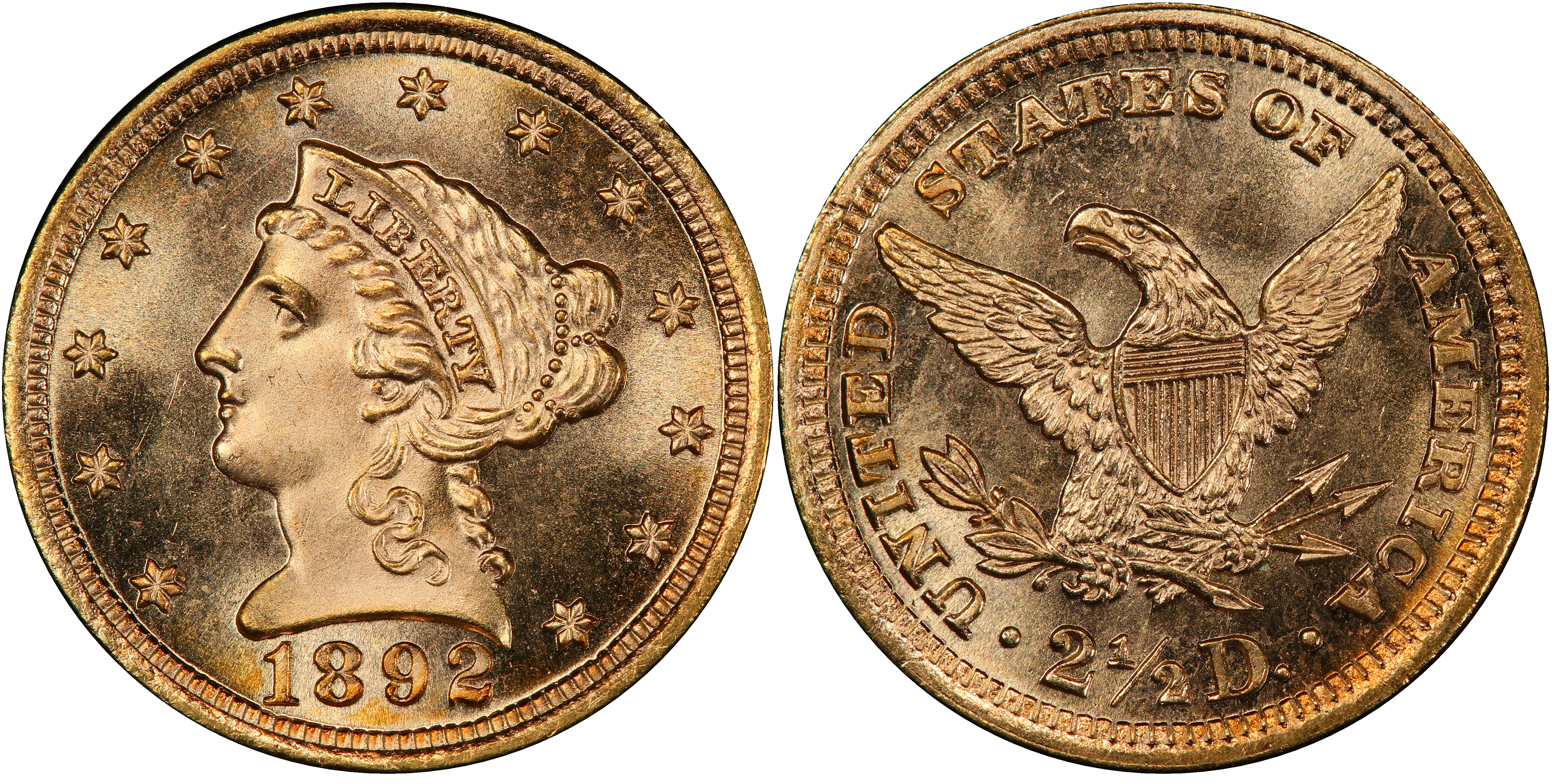
PCGS MS67
- PCGS #:
- 7844
- Designer:
- Christian Gobrecht
- Edge:
- Reeded
- Diameter:
- 18.00 millimeters
- Weight:
- 4.18 grams
- Mintage:
- 2,440
- Mint:
- Philadelphia
- Metal:
- 90% Gold, 10% Copper
- Auction Record:
- $22,913 • MS67 • 10-26-2017 • Legend Rare Coin Auctions
Major Varieties
- 1892 $2.50
Go To Grade
Current Auctions - PCGS Graded
Current Auctions - NGC Graded
For Sale Now at Collectors Corner - PCGS Graded
For Sale Now at Collectors Corner - NGC Graded
Rarity and Survival Estimates Learn More
| Survival Estimate | |
|---|---|
| All Grades | 400 |
| 60 or Better | 120 |
| 65 or Better | 14 |
| Numismatic Rarity | |
|---|---|
| All Grades | R-6.2 |
| 60 or Better | R-7.8 |
| 65 or Better | R-9.4 |
| Relative Rarity By Type All Specs in this Type | |
|---|---|
| All Grades | 104 / 147 TIE |
| 60 or Better | 107 / 147 TIE |
| 65 or Better | 50 / 147 |
| Relative Rarity By Series All Specs in this Series | |
|---|---|
| All Grades | 104 / 147 TIE |
| 60 or Better | 107 / 147 TIE |
| 65 or Better | 50 / 147 |
Condition Census What Is This?
 #1 MS67 PCGS grade
|
| #1 MS67 PCGS grade |
| #1 MS67 PCGS grade |
| #1 MS67 PCGS grade |
| #1 MS67 estimated grade |
| #6 MS66 PCGS grade |
| #6 MS66 PCGS grade |
| #6 MS66 PCGS grade |
| #6 MS66 PCGS grade |
| #6 MS66 estimated grade |
David Akers (1975/88):
This is the lowest mintage quarter eagle after 1885. Despite the fact that there are 36 auction records in unc. for this date in our 226 catalog auction survey, I must admit that I have seen relatively few truly choice specimens. In fact, I have seen more choice proofs than I have choice uncirculated pieces. Most of the Uncs. that I have seen have not been choice at all. This is in contrast, for example, to the 1894 which has appeared at auction in Unc. only one more time than the 1892. Most of the 1894's I have seen have been extremely choice, while the majority of the 1892's have been "scruffy".