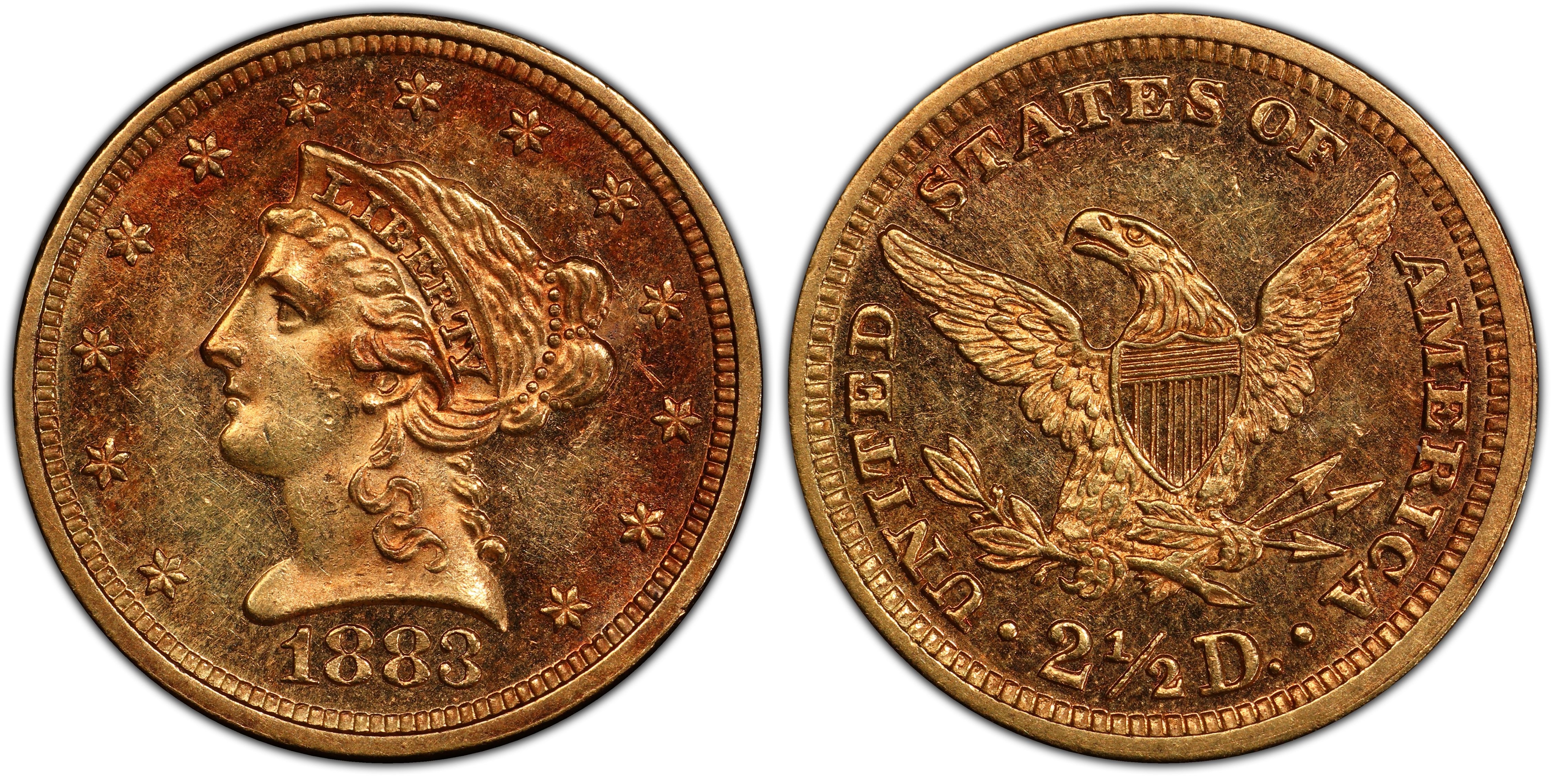

PCGS AU58

PCGS AU58
- PCGS #:
- 7835
- Designer:
- Christian Gobrecht
- Edge:
- Reeded
- Diameter:
- 18.00 millimeters
- Weight:
- 4.18 grams
- Mintage:
- 1,920
- Mint:
- Philadelphia
- Metal:
- 90% Gold, 10% Copper
- Auction Record:
- $10,200 • MS62 • 10-30-2018 • Stack's Bowers
Go To Grade
Current Auctions - PCGS Graded
Current Auctions - NGC Graded
For Sale Now at Collectors Corner - PCGS Graded
For Sale Now at Collectors Corner - NGC Graded
Rarity and Survival Estimates Learn More
| Survival Estimate | |
|---|---|
| All Grades | 250 |
| 60 or Better | 14 |
| 65 or Better | |
| Numismatic Rarity | |
|---|---|
| All Grades | R-6.6 |
| 60 or Better | R-9.4 |
| 65 or Better | R-10.1 |
| Relative Rarity By Type All Specs in this Type | |
|---|---|
| All Grades | 91 / 147 TIE |
| 60 or Better | 74 / 147 TIE |
| 65 or Better | 1 / 147 |
| Relative Rarity By Series All Specs in this Series | |
|---|---|
| All Grades | 91 / 147 TIE |
| 60 or Better | 74 / 147 TIE |
| 65 or Better | 1 / 147 |
Condition Census What Is This?
| #1 MS65 estimated grade |
| #2 MS64 PCGS grade |
| #3 MS63 estimated grade |
| #4 MS62 PCGS grade |
| #4 MS62 PCGS grade |
| #4 MS62 PCGS grade |
| #4 MS62 estimated grade |
| #4 MS62 estimated grade |
| #9 MS61 PCGS grade |
| #9 MS61 PCGS grade |
David Akers (1975/88):
Very scarce in all grades. Many deceptive first strikes exist, and some such specimens have been offered as proofs both at auction and privately. This has given rise to the erroneous conclusion that the 1883 is more common as a proof than it is as a business strike. This is not at all true and genuine proofs are really very rare.