
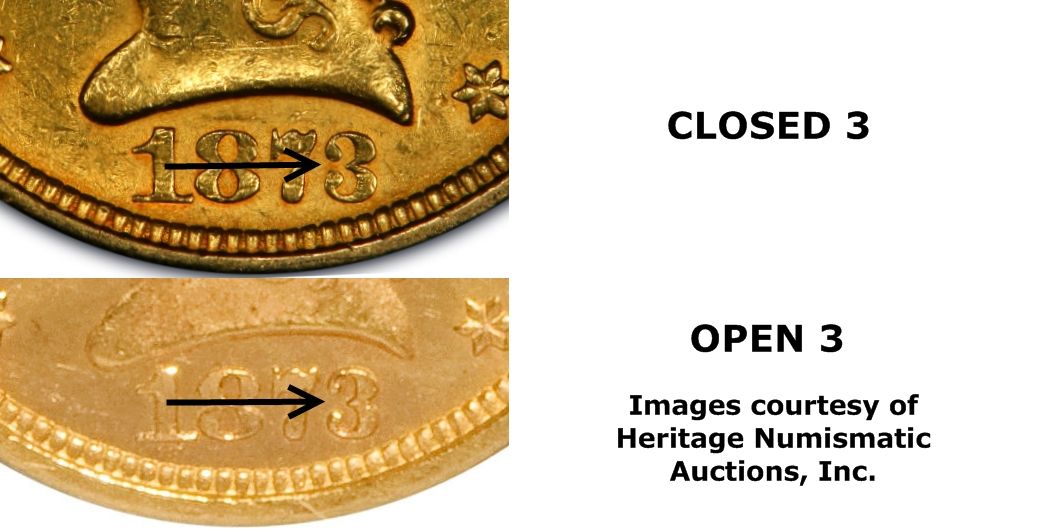
DATE COMPARISON

PCGS MS66
- PCGS #:
- 7817
- Designer:
- Christian Gobrecht
- Edge:
- Reeded
- Diameter:
- 18.00 millimeters
- Weight:
- 4.18 grams
- Mintage:
- 122,800
- Mint:
- Philadelphia
- Metal:
- 90% Gold, 10% Copper
- Auction Record:
- $23,500 • MS66 • 02-03-2014 • Heritage Auctions
Go To Grade
Current Auctions - PCGS Graded
Current Auctions - NGC Graded
For Sale Now at Collectors Corner - PCGS Graded
For Sale Now at Collectors Corner - NGC Graded
Rarity and Survival Estimates Learn More
| Survival Estimate | |
|---|---|
| All Grades | 800 |
| 60 or Better | 625 |
| 65 or Better | 10 |
| Numismatic Rarity | |
|---|---|
| All Grades | R-5.4 |
| 60 or Better | R-5.7 |
| 65 or Better | R-9.5 |
| Relative Rarity By Type All Specs in this Type | |
|---|---|
| All Grades | 120 / 147 TIE |
| 60 or Better | 127 / 147 |
| 65 or Better | 42 / 147 TIE |
| Relative Rarity By Series All Specs in this Series | |
|---|---|
| All Grades | 120 / 147 TIE |
| 60 or Better | 127 / 147 |
| 65 or Better | 42 / 147 TIE |
Condition Census What Is This?
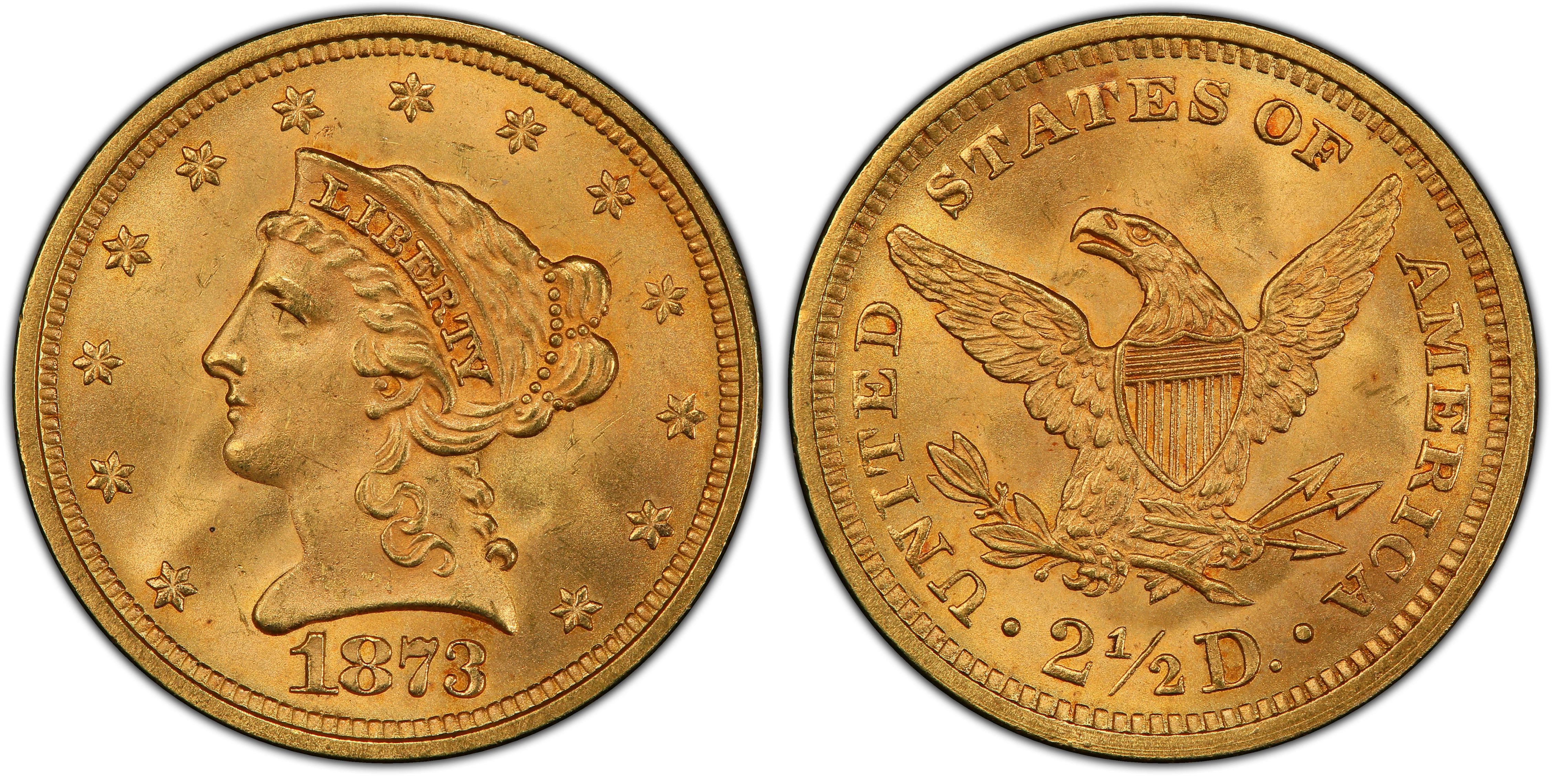 #1 MS66 PCGS grade
D.L. Hansen Collection |
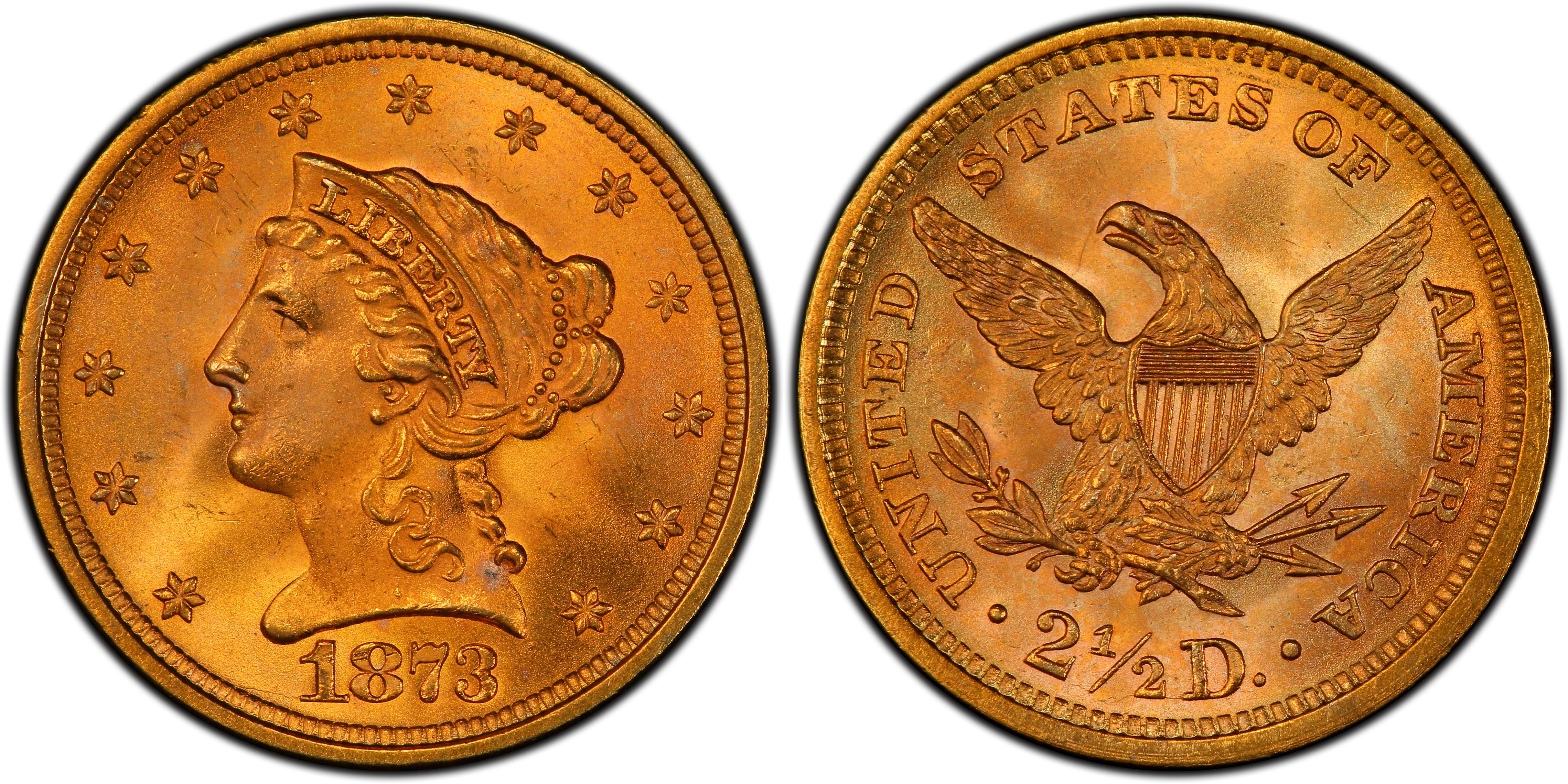 #1 MS66 PCGS grade
|
| #1 MS66 PCGS grade |
| #1 MS66 PCGS grade |
 #5 MS65+ PCGS grade
|
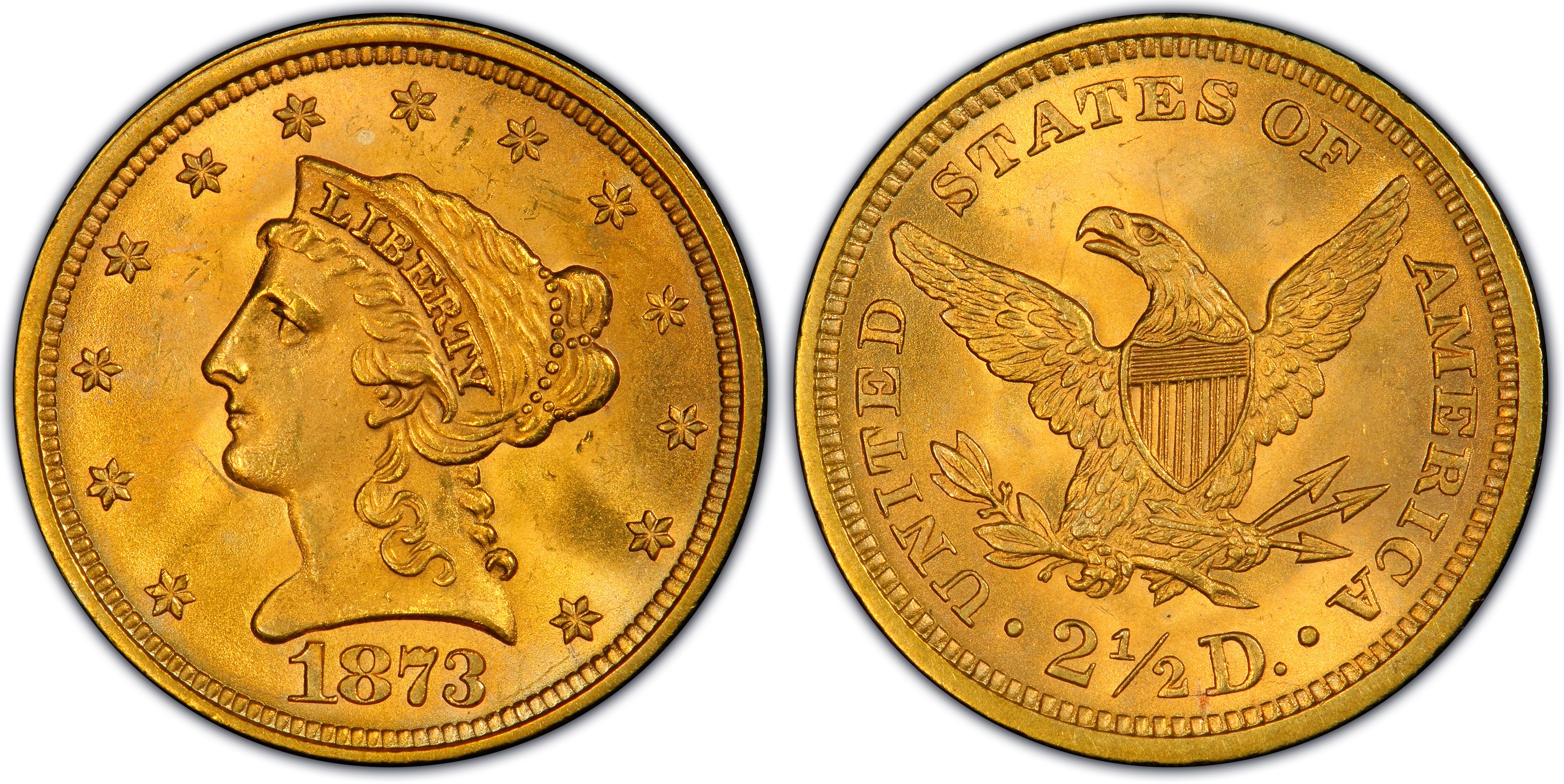 #6 MS65 PCGS grade
|
| #6 MS65 PCGS grade |
| #6 MS65 PCGS grade |
| #6 MS65 PCGS grade |
| #6 MS65 PCGS grade |
David Akers (1975/88):
The Open 3 variety undoubtedly constituted most of the 178,025 total mintage for the year, and the 1873 Open 3 quarter eagle is definitely much more common than the 1873 Closed 3. I would estimate that the total mintage for the 1873 Open 3 quarter eagle was on the order of 125,000 pieces. Choice uncirculated examples are relatively common and actually this variety is reasonably obtainable in all grades.
Gordon Wrubel:
Quickfinder Notes: The loops of the 3 on the Open 3 have a small ball at top and bottom. The opening of the 3 is wide enough for them to EASILY PASS through. The 3 on the Closed 3 has larger balls at the top and bottom loops and the opening is so constricted that the balls will NOT PASS through. According to the September, 2012 Population report, the Open 3 is more common by about 30%. In Mint State the Open 3 is about 40% more common. In the highest grades the varieties are fairly equal. Both show a top grade of MS-66.