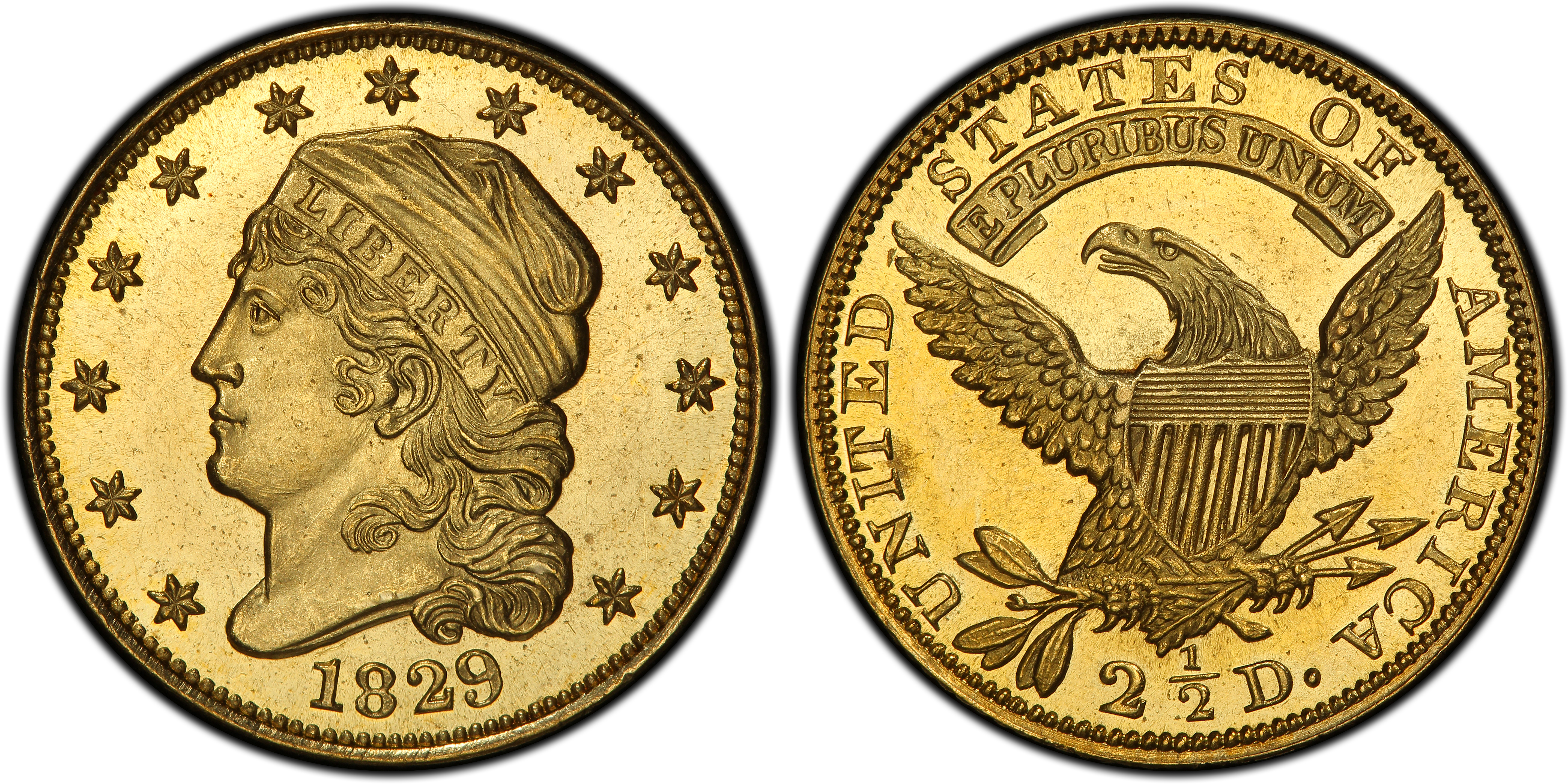
PCGS MS65

PCGS MS64+
- PCGS #:
- 7669
- Designer:
- William Kneass
- Edge:
- Reeded
- Diameter:
- 18.20 millimeters
- Weight:
- 4.37 grams
- Mintage:
- 3,403
- Mint:
- Philadelphia
- Metal:
- 91.7% Gold, 8.3% Copper
- Auction Record:
- $316,250 • MS67 • 08-14-2006 • Heritage Auctions
Go To Grade
Current Auctions - PCGS Graded
Current Auctions - NGC Graded
For Sale Now at Collectors Corner - PCGS Graded
For Sale Now at Collectors Corner - NGC Graded
Rarity and Survival Estimates Learn More
| Survival Estimate | |
|---|---|
| All Grades | 115 |
| 60 or Better | 50 |
| 65 or Better | 8 |
| Numismatic Rarity | |
|---|---|
| All Grades | R-7.8 |
| 60 or Better | R-8.5 |
| 65 or Better | R-9.6 |
| Relative Rarity By Type All Specs in this Type | |
|---|---|
| All Grades | 3 / 6 |
| 60 or Better | 4 / 6 |
| 65 or Better | 3 / 6 |
| Relative Rarity By Series All Specs in this Series | |
|---|---|
| All Grades | 7 / 12 |
| 60 or Better | 9 / 12 TIE |
| 65 or Better | 8 / 12 |
Condition Census What Is This?
 #1 MS67 PCGS grade
Heritage 8/2006:5423, $316,250 |
|
#2 MS65 PCGS grade
Bowers & Merena 1/1997:291 - Stack's 7/2008:2331 - Larry Hanks (as agent?) - D. Brent Pogue Collection - Stack's/Bowers & Sotheby's 9/2015:2053, $105,750 |
| #2 MS65 PCGS grade |
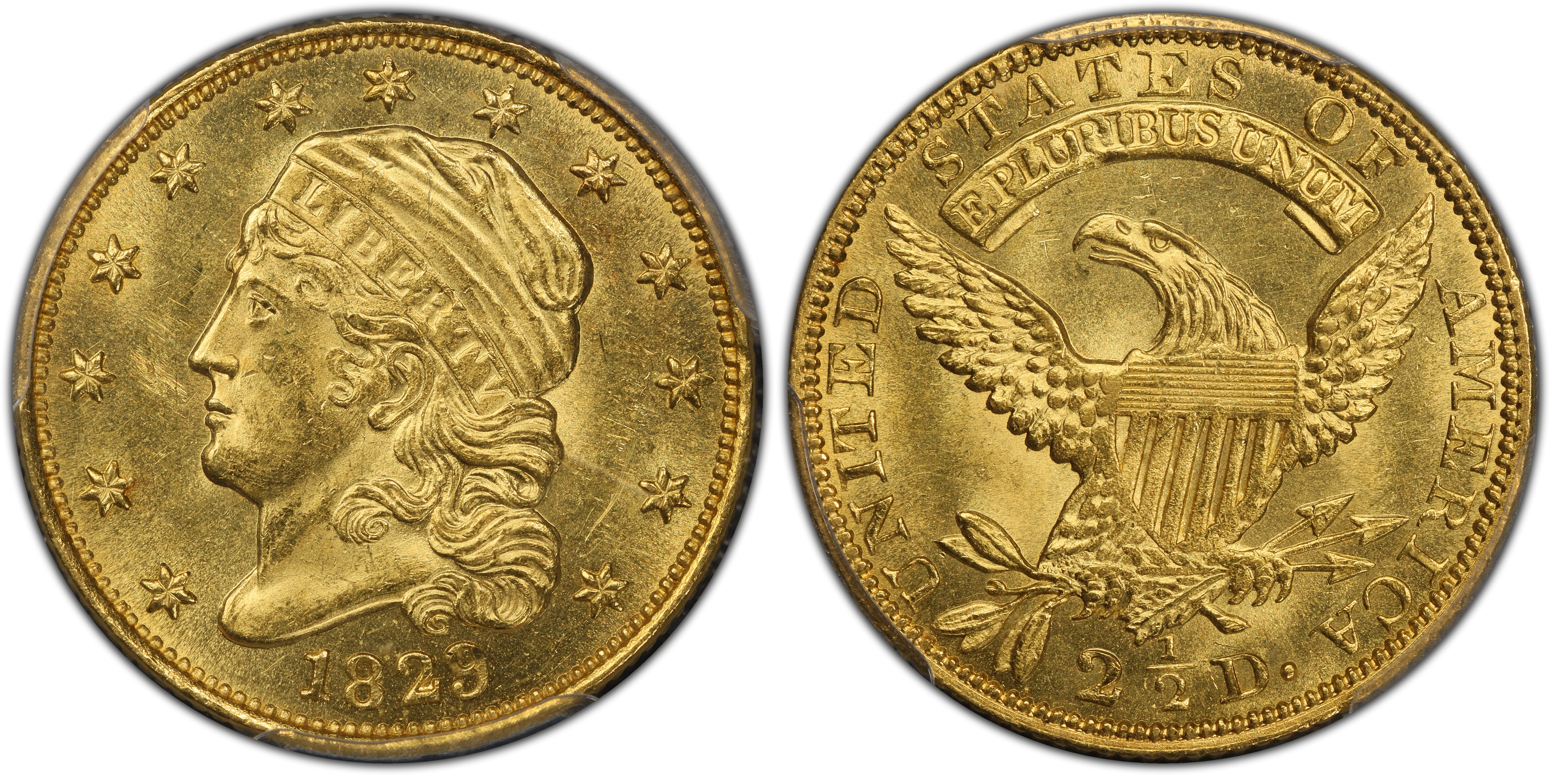 #4 MS64 PCGS grade
|
|
#4 MS64 PCGS grade
Bowers & Merena 1/1997:291, $23,650 |
| #4 MS64 PCGS grade |
| #4 MS64 PCGS grade |
| #4 MS64 PCGS grade |
| #4 MS64 PCGS grade |
| #4 MS64 estimated grade |
David Akers (1975/88):
Although sometimes lumped together with the type issued from 1821 to 1827, the quarter eagles from 1829 to 1834 are a distinctly different type. The diameter is smaller and the thickness has been correspondingly increased. The borders are beaded and the head of Liberty has also been modified. The 1829, despite the fact it has the lowest mintage of the type, is the most common date and the most easily obtainable in gem condition since some were undoubtedly saved as souvenirs of the first year of a new design.
Regency XVI Preview | Legend Rare Coin Auctions | February 18, 2016
(Starts at 9:38)