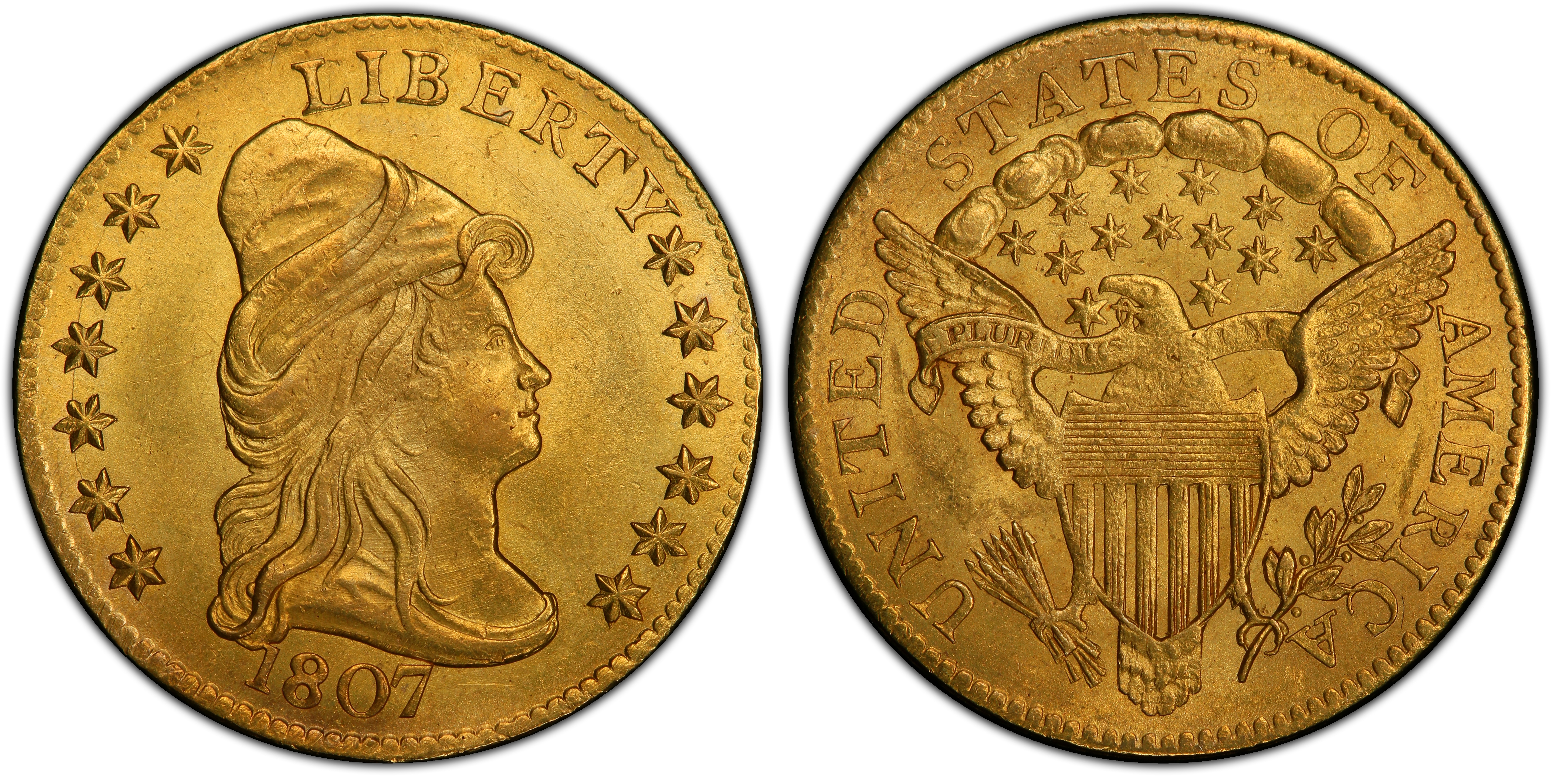
PCGS MS64

PCGS MS63
- PCGS #:
- 7656
- Designer:
- Robert Scot
- Edge:
- Reeded
- Diameter:
- 20.00 millimeters
- Weight:
- 4.37 grams
- Mintage:
- 6,812
- Mint:
- Philadelphia
- Metal:
- 91.7% Gold, 8.3% Copper
- Auction Record:
- $587,500 • MS65 • 05-19-2015 • Stack's Bowers
Major Varieties
- 1807 $2.50
Go To Grade
Current Auctions - PCGS Graded
Current Auctions - NGC Graded
For Sale Now at Collectors Corner - PCGS Graded
For Sale Now at Collectors Corner - NGC Graded
Rarity and Survival Estimates Learn More
| Survival Estimate | |
|---|---|
| All Grades | 262 |
| 60 or Better | 37 |
| 65 or Better | 2 |
| Numismatic Rarity | |
|---|---|
| All Grades | R-6.5 |
| 60 or Better | R-8.7 |
| 65 or Better | R-9.9 |
| Relative Rarity By Type All Specs in this Type | |
|---|---|
| All Grades | 11 / 11 |
| 60 or Better | 9 / 11 |
| 65 or Better | 3 / 11 |
| Relative Rarity By Series All Specs in this Series | |
|---|---|
| All Grades | 12 / 12 |
| 60 or Better | 10 / 12 |
| 65 or Better | 4 / 12 |
Condition Census What Is This?
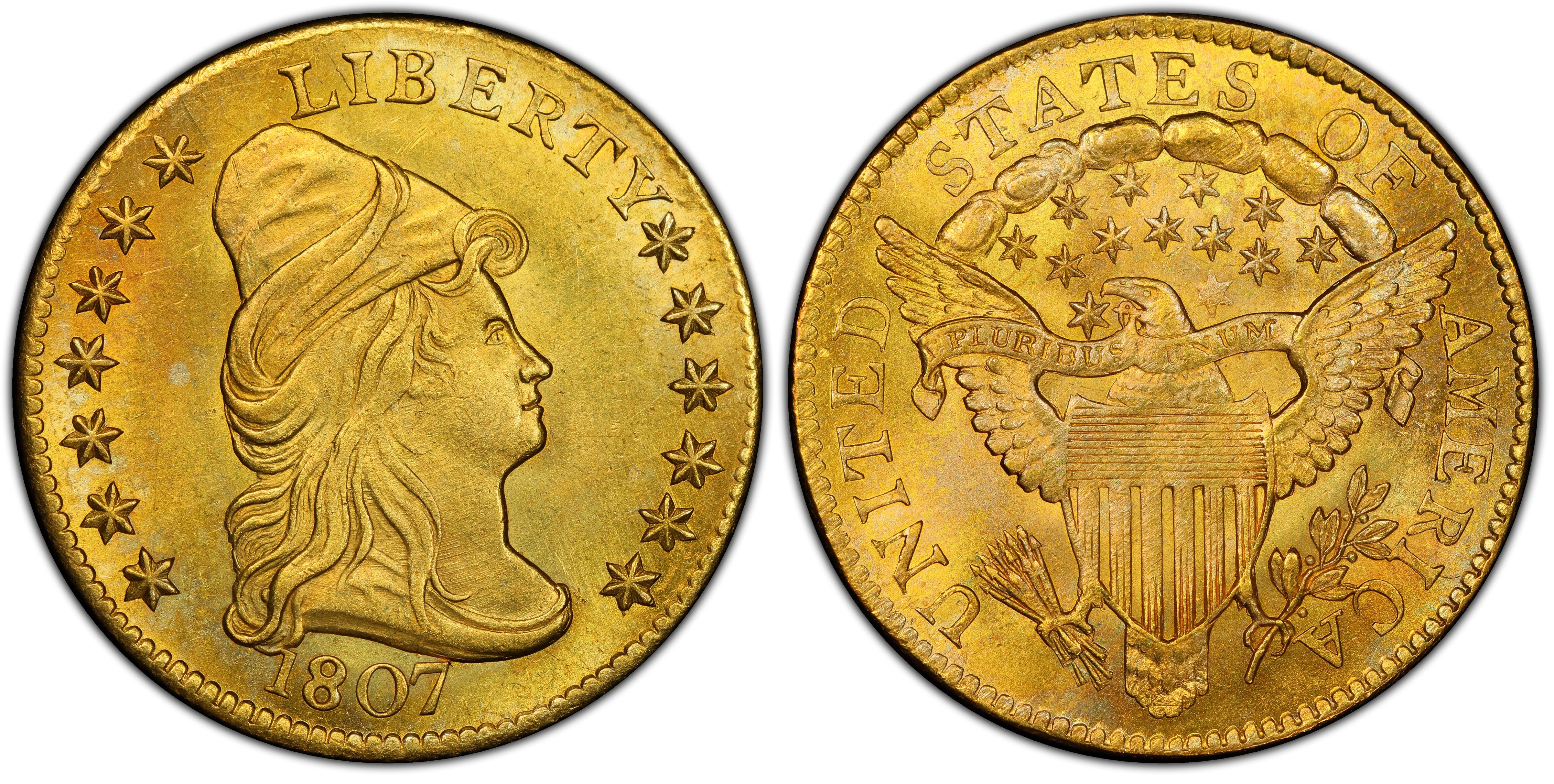 #1 MS65 PCGS grade
Ohringer Family Trust Holdings - Goldbergs 9/2008:1225, $276,000 - D. Brent Pogue Collection - Stack’s/Bowers & Sotheby’s 5/2015:1127, $587,500 |
| #2 MS64 PCGS grade |
|
#2 MS64 estimated grade
National Numismatic Collection at the Smithsonian Institution |
|
#4 MS63 PCGS grade
American Numismatic Rarities 8/2006:1180, not sold |
|
#4 MS63 PCGS grade
American Numismatic Rarities 9/2005:1052, $80,500 |
| #4 MS63 PCGS grade |
| #4 MS63 PCGS grade |
| #4 MS63 PCGS grade |
| #4 MS63 PCGS estimated grade |
| #4 MS63 estimated grade |
David Akers (1975/88):
Although the 1802/1 appeared at auction four more times in our 226 catalogue survey than the 1807, in my opinion the 1807 is most common date of this date of this type. Of course, one might reasonably expect this from the significantly higher than average mintage of the 1807 which is more than twice that of any other heraldic eagle quarter eagle. Also, although once again the data does not clearly indicate this, the 1807 is the most available date of this type in high grade, and strictly uncircualted specimens do turn up from time to time. Well struck specimens of this date, though rare, are also more availabloe than any other date of this rare type.