1873 G$1 Closed 3 (Regular Strike)
Series: Liberty Gold Dollars 1849-1889
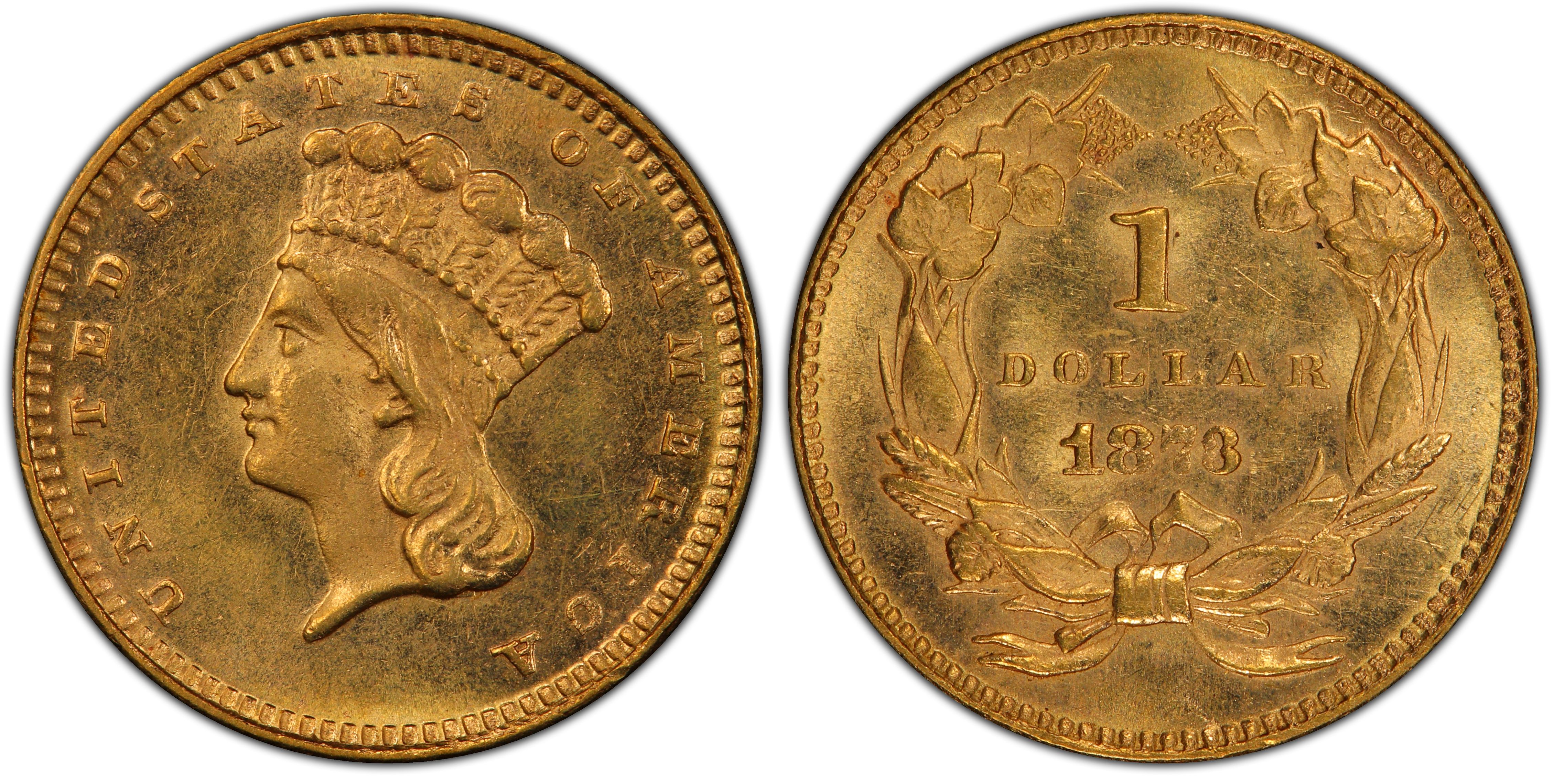
PCGS MS64+
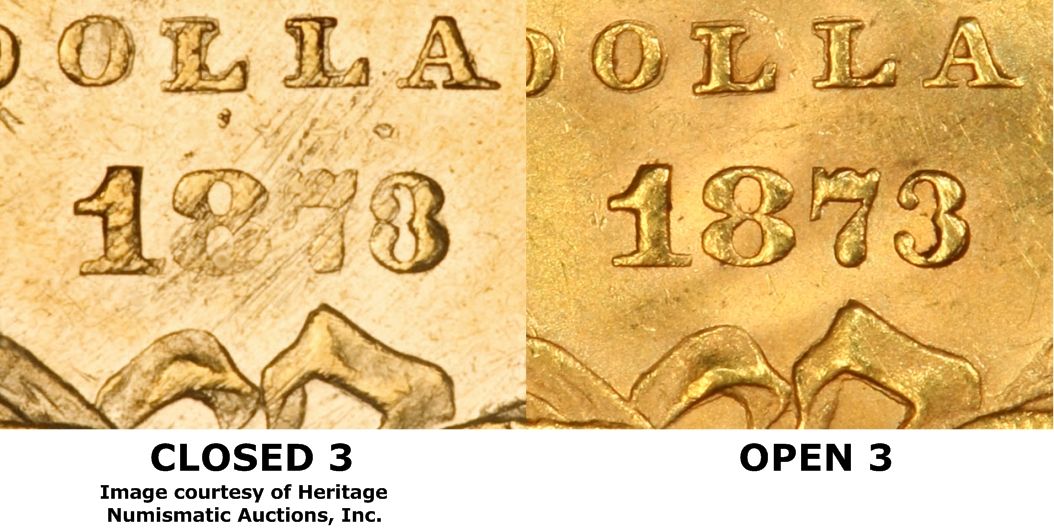
REVERSE COMPARISON

PCGS MS64
- PCGS #:
- 7574
- Designer:
- James Barton Longacre
- Edge:
- Reeded
- Diameter:
- 14.30 millimeters
- Weight:
- 1.70 grams
- Mintage:
- 1,800
- Mint:
- Philadelphia
- Metal:
- 90% Gold, 10% Copper
- Auction Record:
- $21,600 • MS66 • 08-22-2021 • Heritage Auctions
Go To Grade
Current Auctions - PCGS Graded
Current Auctions - NGC Graded
For Sale Now at Collectors Corner - PCGS Graded
For Sale Now at Collectors Corner - NGC Graded
Rarity and Survival Estimates Learn More
| Survival Estimate | |
|---|---|
| All Grades | 150 |
| 60 or Better | 75 |
| 65 or Better | 5 |
| Numismatic Rarity | |
|---|---|
| All Grades | R-7.5 |
| 60 or Better | R-8.2 |
| 65 or Better | R-9.7 |
| Relative Rarity By Type All Specs in this Type | |
|---|---|
| All Grades | 13 / 49 TIE |
| 60 or Better | 16 / 49 TIE |
| 65 or Better | 5 / 49 TIE |
| Relative Rarity By Series All Specs in this Series | |
|---|---|
| All Grades | 20 / 81 TIE |
| 60 or Better | 34 / 81 TIE |
| 65 or Better | 11 / 81 TIE |
Condition Census What Is This?
| #1 MS66 PCGS grade |
| #2 MS65 PCGS grade |
| #2 MS65 PCGS grade |
| #2 MS65 PCGS grade |
| #2 MS65 estimated grade |
| #2 MS65 estimated grade |
| #2 MS65 estimated grade |
| #8 MS64 PCGS grade |
| #8 MS64 PCGS grade |
| #8 MS64 PCGS grade |
David Akers (1975/88):
This variety was not known until Harry X. Boosel discovered it not too many years ago. The 1873 Closed 3 gold dollar is one of the rarest coins in the series and certainly one of the most unpublicized. The Closed 3 in the date is just that - closed, and on first glance, many would mistake it for an 8 and certainly over the years, it is likely that some 1873 Closed 3 gold dollars have been sold as 1878's and vice versa.