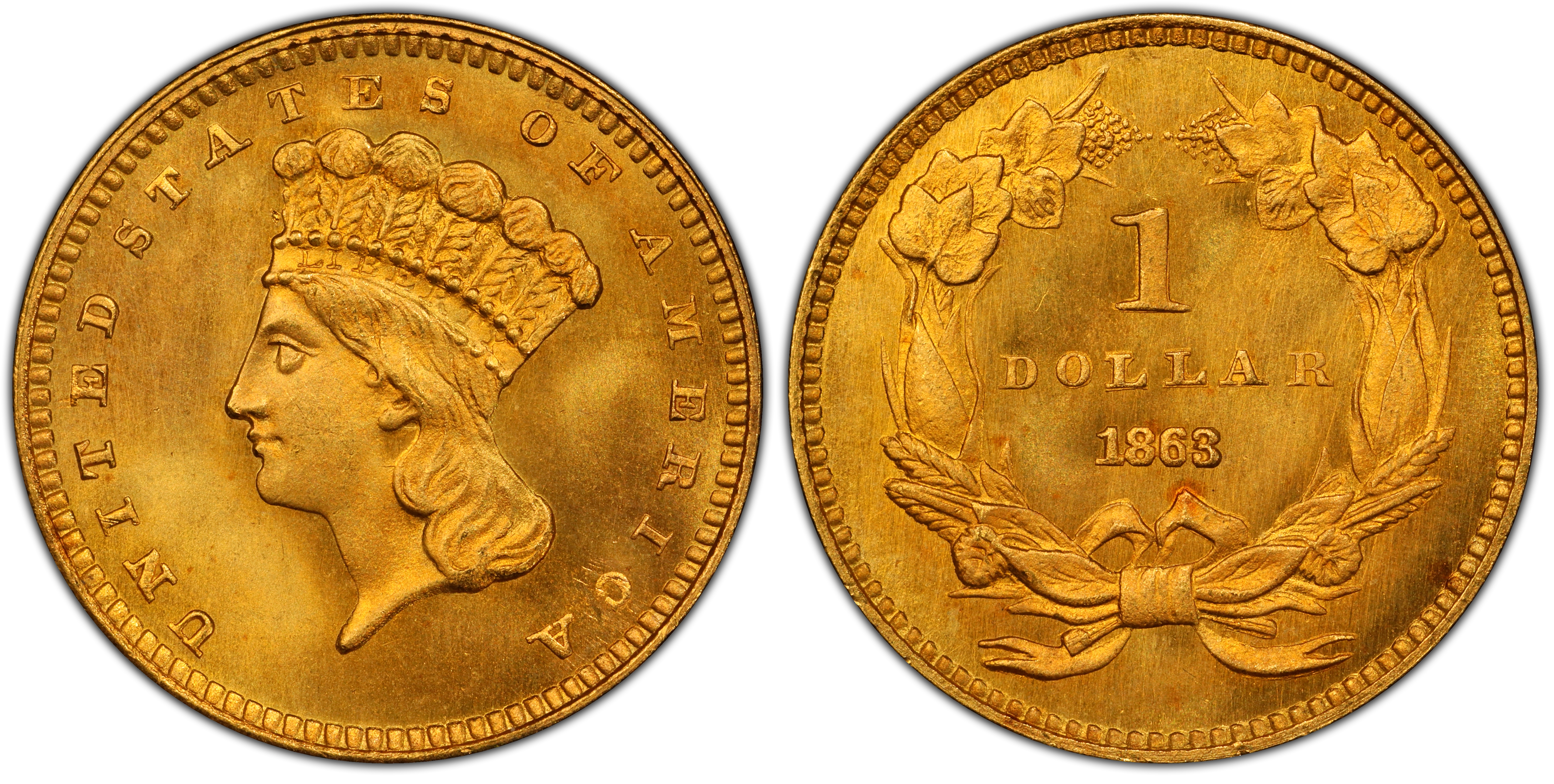

PCGS MS68
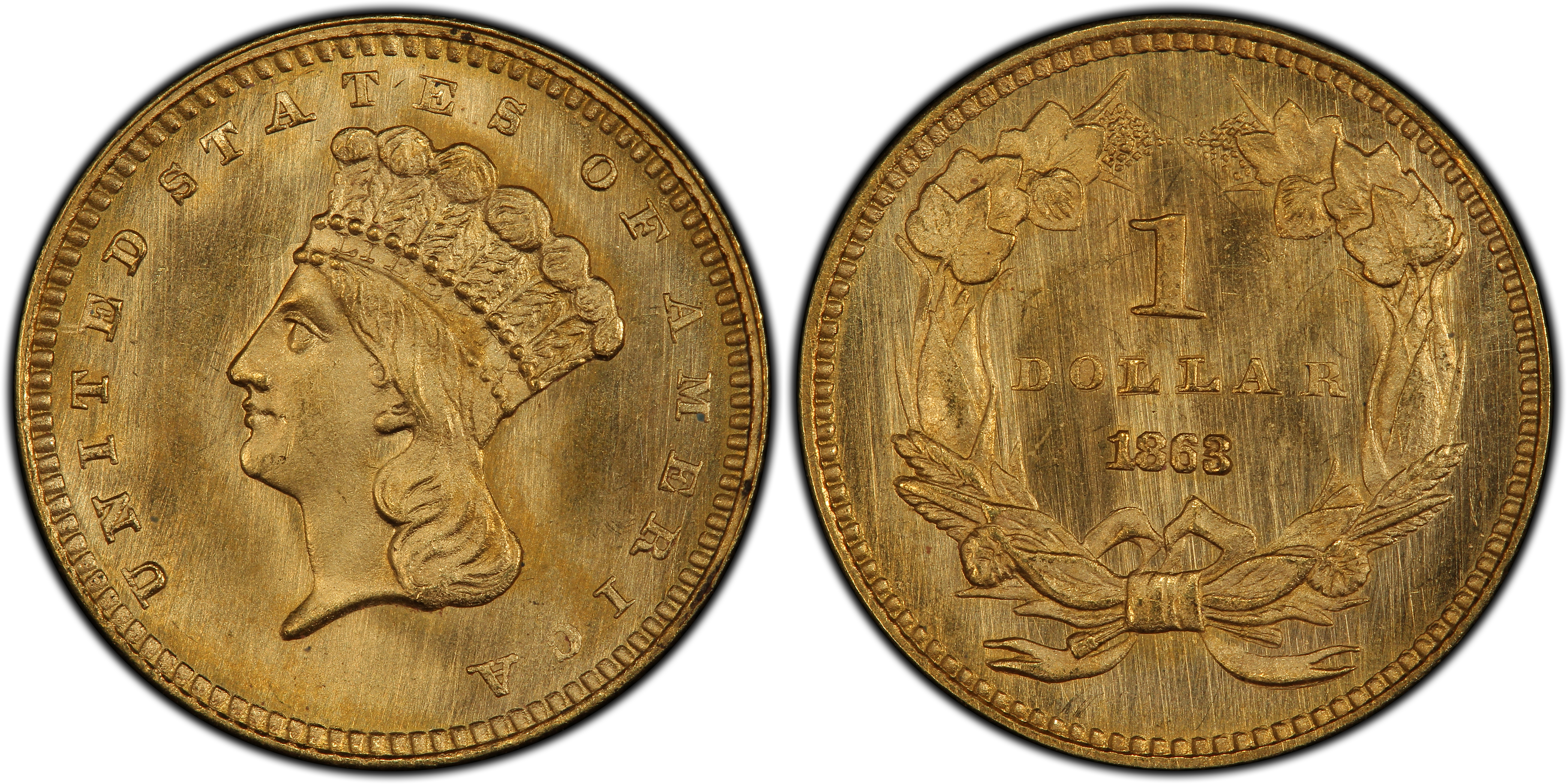
PCGS MS66
- PCGS #:
- 7562
- Designer:
- James Barton Longacre
- Edge:
- Reeded
- Diameter:
- 14.30 millimeters
- Weight:
- 1.70 grams
- Mintage:
- 6,200
- Mint:
- Philadelphia
- Metal:
- 90% Gold, 10% Copper
- Auction Record:
- $193,875 • MS68 • 08-16-2015 • Heritage Auctions
Major Varieties
- 1863 G$1
Go To Grade
Current Auctions - PCGS Graded
Current Auctions - NGC Graded
For Sale Now at Collectors Corner - PCGS Graded
For Sale Now at Collectors Corner - NGC Graded
Rarity and Survival Estimates Learn More
| Survival Estimate | |
|---|---|
| All Grades | 85 |
| 60 or Better | 45 |
| 65 or Better | 8 |
| Numismatic Rarity | |
|---|---|
| All Grades | R-8.1 |
| 60 or Better | R-8.6 |
| 65 or Better | R-9.6 |
| Relative Rarity By Type All Specs in this Type | |
|---|---|
| All Grades | 3 / 49 |
| 60 or Better | 13 / 49 |
| 65 or Better | 7 / 49 TIE |
| Relative Rarity By Series All Specs in this Series | |
|---|---|
| All Grades | 5 / 81 TIE |
| 60 or Better | 28 / 81 TIE |
| 65 or Better | 14 / 81 TIE |
Condition Census What Is This?
|
#1 MS68 PCGS grade
Virgil Brand Collection - Bowers and Merena 11/1983:29 - David Akers - Duckor Family Collection of Gold Dollars - Heritage 8/2015:4263, $193,875 |
| #2 MS66 PCGS grade |
| #2 MS66 PCGS grade |
| #2 MS66 estimated grade |
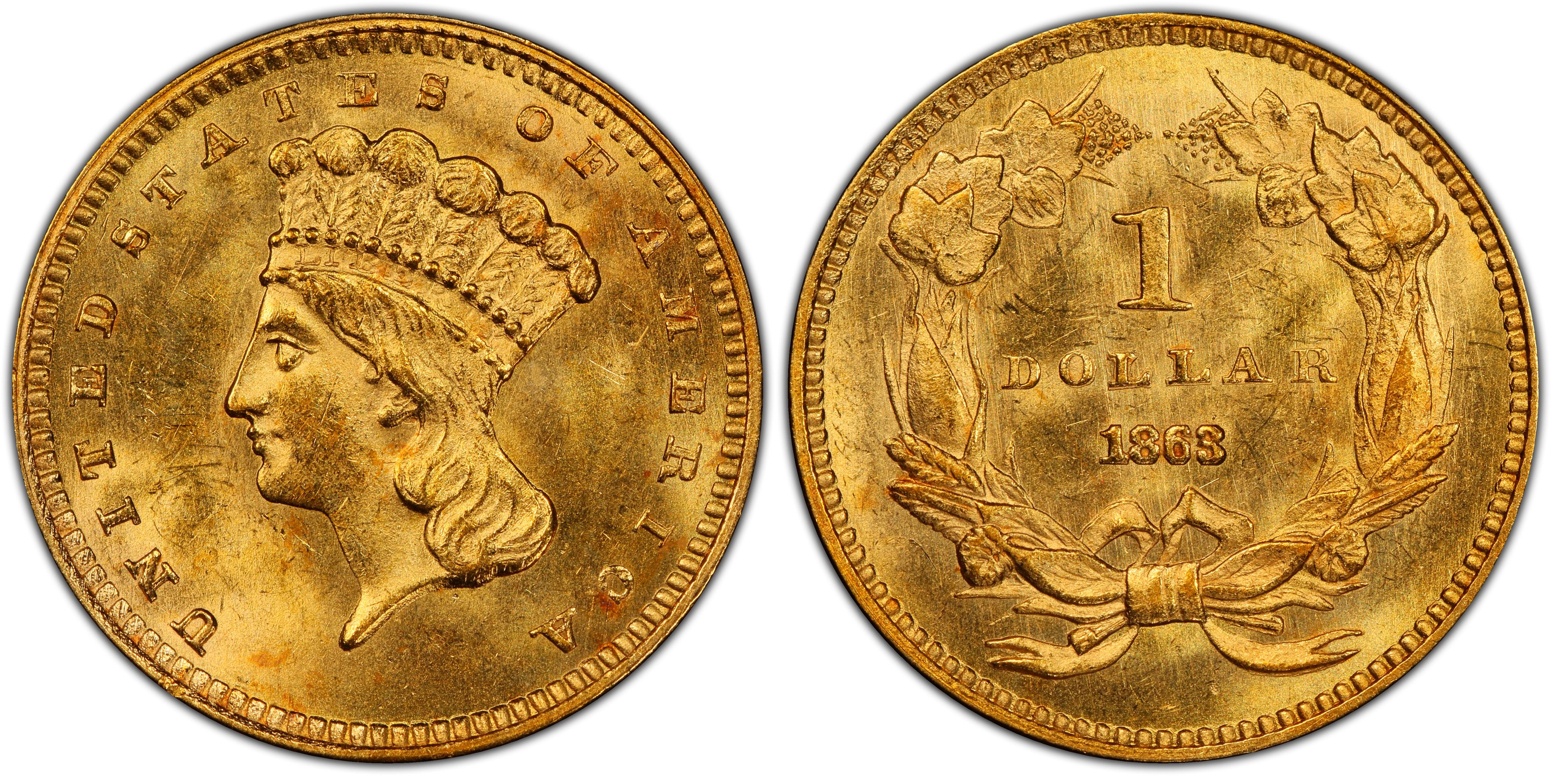 #5 MS65 PCGS grade
|
| #5 MS65 PCGS grade |
| #5 MS65 PCGS grade |
| #5 MS65 PCGS grade |
| #5 MS65 estimated grade |
David Akers (1975/88):
This is the rarest Philadelphia Mint gold dollar of the 1860'S and also the rarest gold dollar in Unc. after 1861. As a date, it is only marginally less rare than the 1875 but, as I just mentioned, it is actually more difficult to obtain in full mint state than the highly regarded 1875.