1856 G$1 Slanted 5 (Regular Strike)
Series: Liberty Gold Dollars 1849-1889

PCGS MS68+

REVERSE COMPARISON
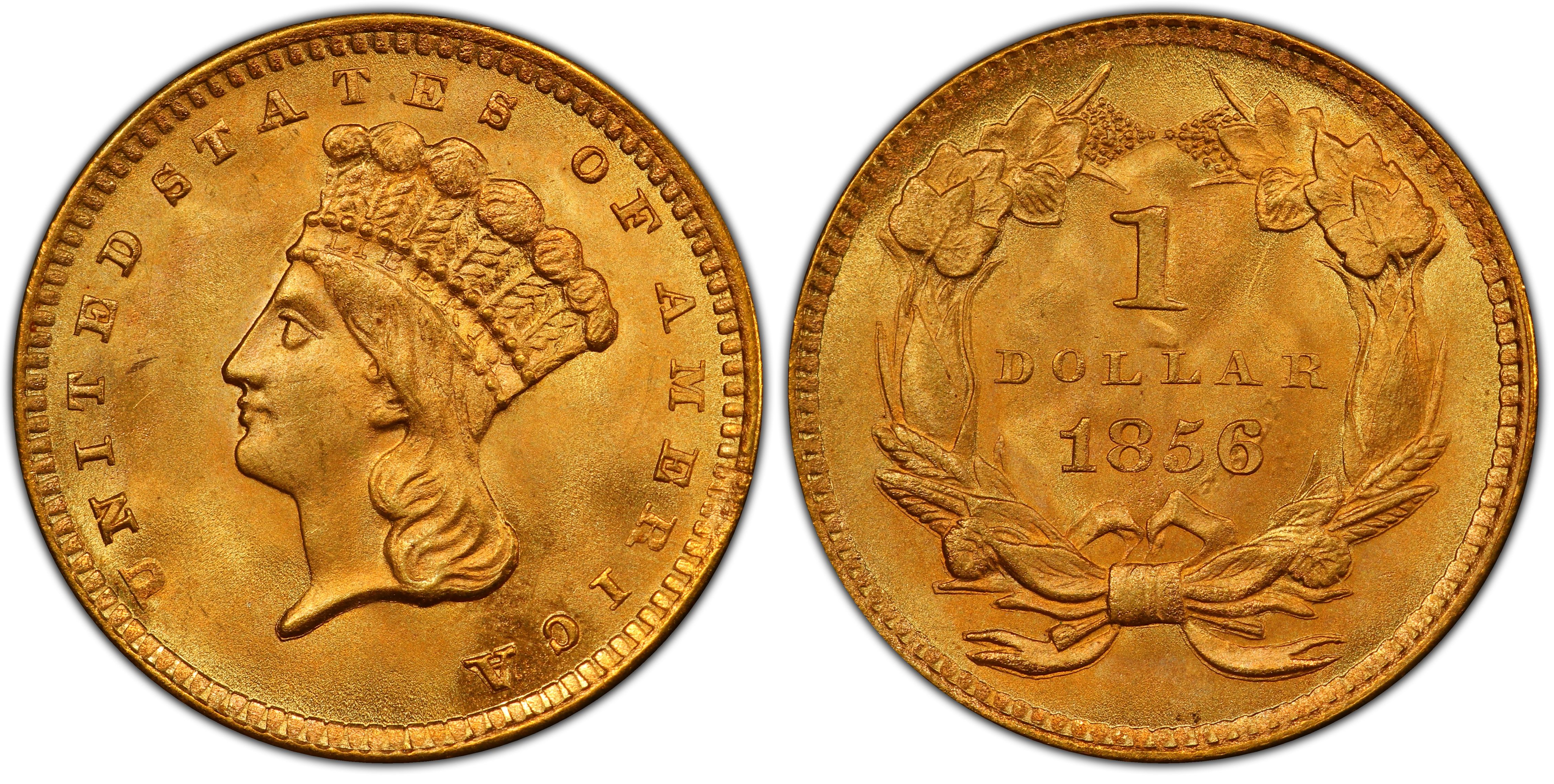
PCGS MS67
- PCGS #:
- 7540
- Designer:
- James Barton Longacre
- Edge:
- Reeded
- Diameter:
- 14.30 millimeters
- Weight:
- 1.70 grams
- Mintage:
- 1,762,936
- Mint:
- Philadelphia
- Metal:
- 90% Gold, 10% Copper
- Auction Record:
- $43,200 • MS68+ • 01-24-2021 • Heritage Auctions
Go To Grade
Current Auctions - PCGS Graded
Current Auctions - NGC Graded
For Sale Now at Collectors Corner - PCGS Graded
For Sale Now at Collectors Corner - NGC Graded
Rarity and Survival Estimates Learn More
| Survival Estimate | |
|---|---|
| All Grades | 2,250 |
| 60 or Better | 1,000 |
| 65 or Better | 50 |
| Numismatic Rarity | |
|---|---|
| All Grades | R-4.5 |
| 60 or Better | R-5.0 |
| 65 or Better | R-8.5 |
| Relative Rarity By Type All Specs in this Type | |
|---|---|
| All Grades | 45 / 49 |
| 60 or Better | 38 / 49 TIE |
| 65 or Better | 26 / 49 |
| Relative Rarity By Series All Specs in this Series | |
|---|---|
| All Grades | 70 / 81 TIE |
| 60 or Better | 63 / 81 TIE |
| 65 or Better | 38 / 81 TIE |
Condition Census What Is This?
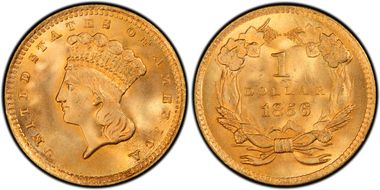 #1 MS68+ PCGS grade
David Akers - Dr. Steven Duckor |
| #2 MS68 PCGS grade |
| #3 MS67 PCGS grade |
| #3 MS67 PCGS grade |
| #5 MS66+ PCGS grade |
| #5 MS66+ PCGS grade |
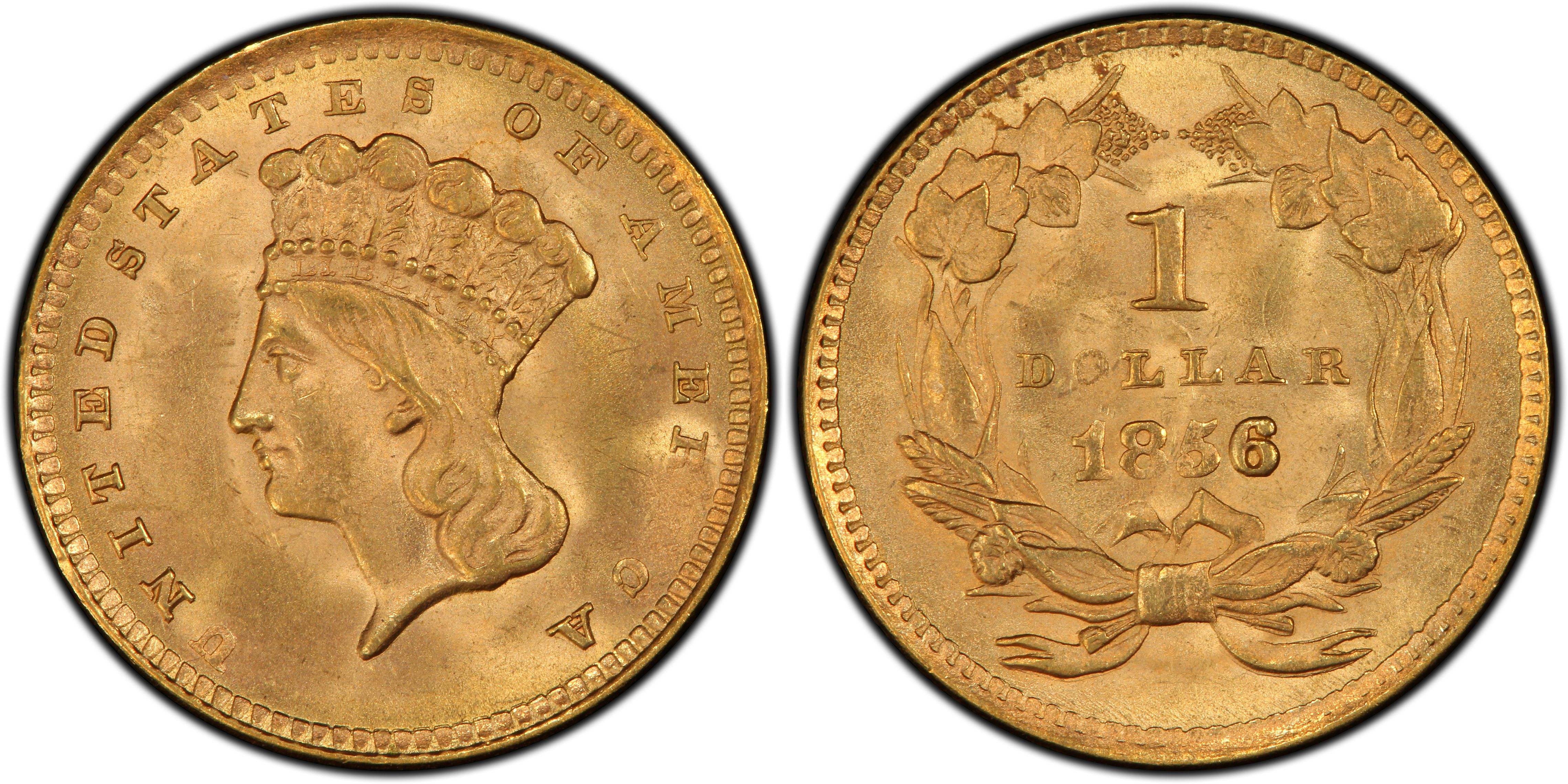 #7 MS66 PCGS grade
|
| #7 MS66 PCGS grade |
| #7 MS66 PCGS grade |
| #7 MS66 PCGS grade |
David Akers (1975/88):
This is one of the three or four most common of all Type III gold dollars. As the data clearly indicates, however, most specimens offered are well worn, and although uncirculated pieces are available, they are offered with less frequency than one might suspect. In choice condition, this date is much rarer than any of the dates in the 1880's for example.