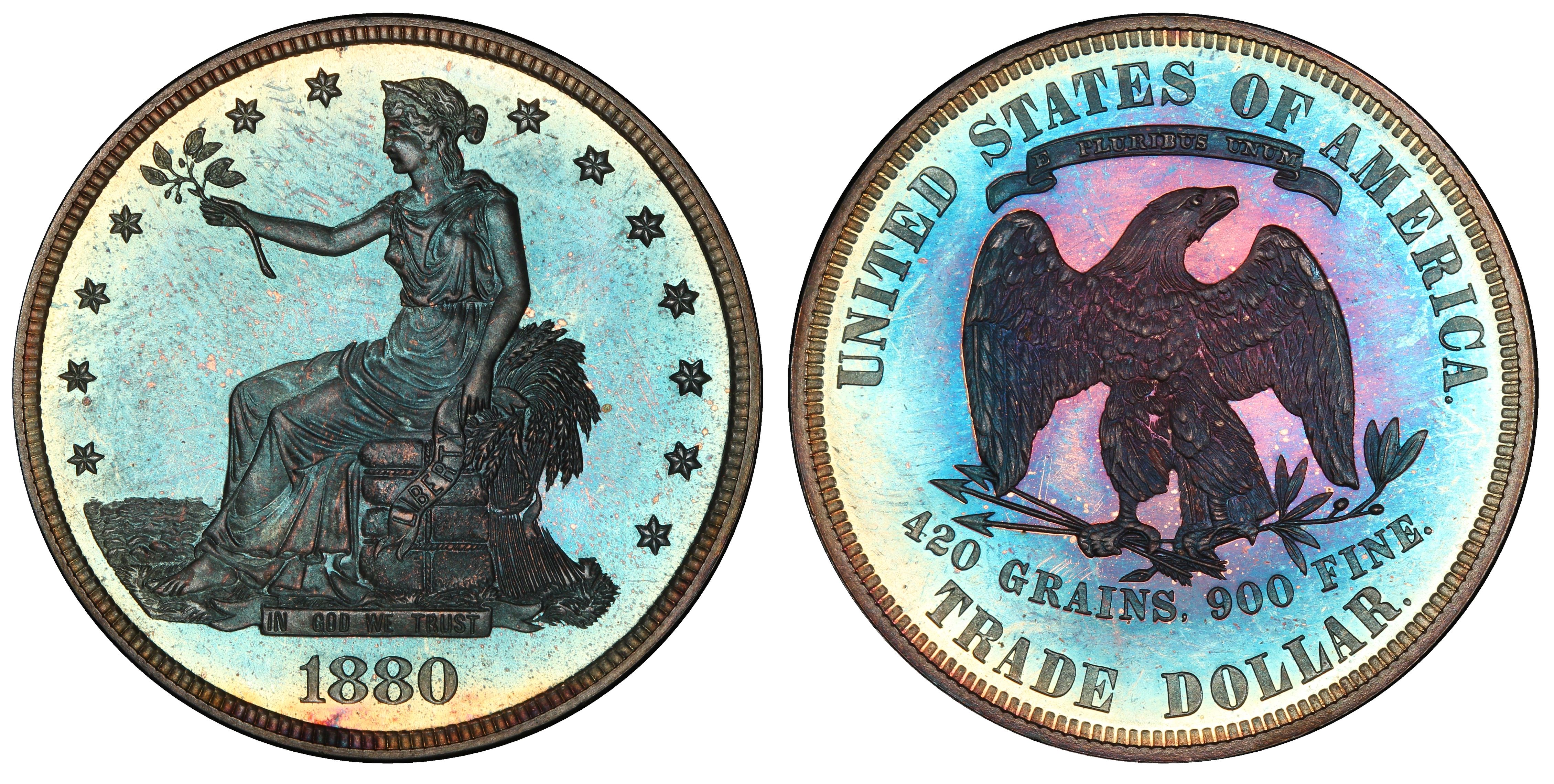
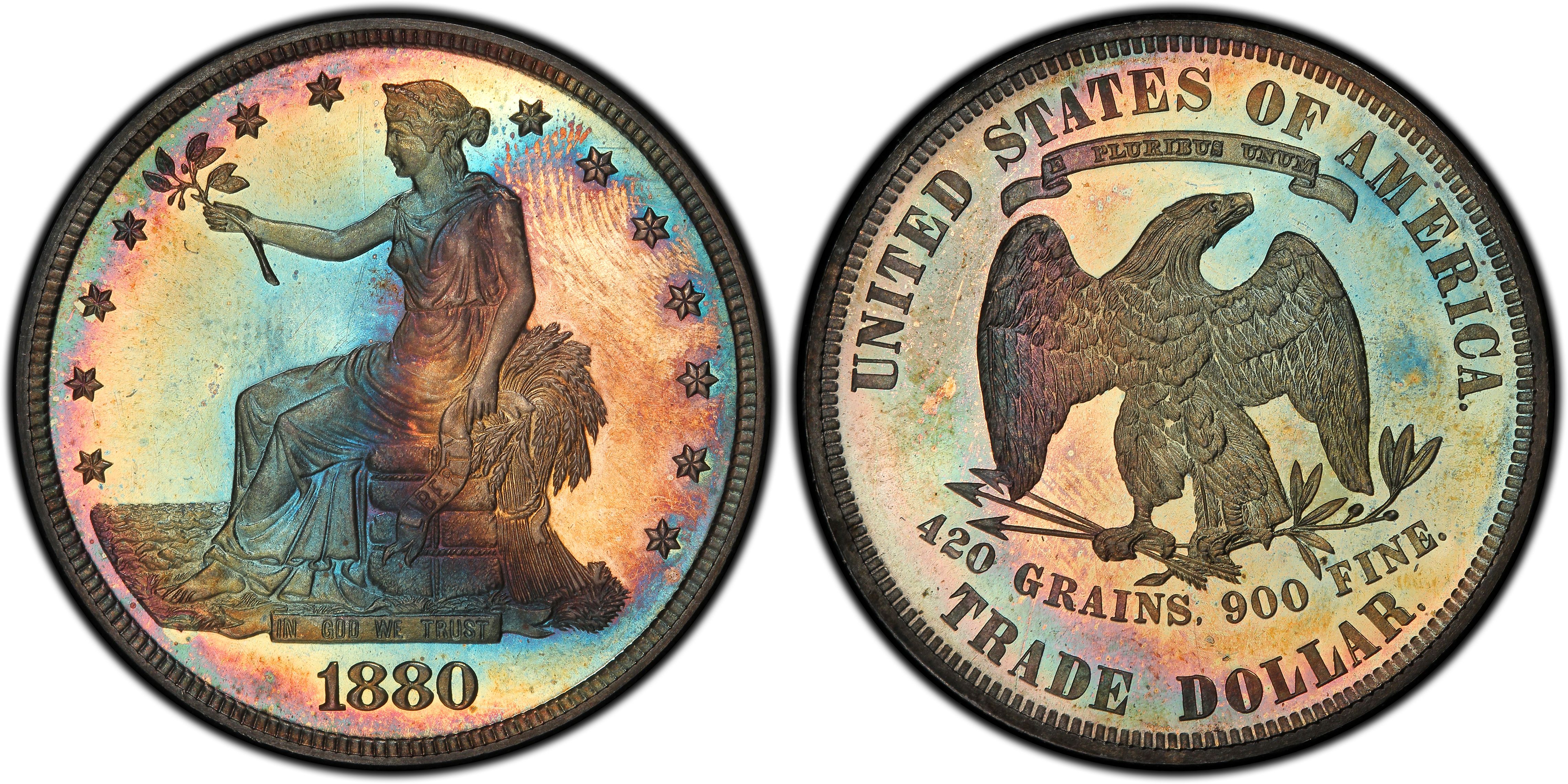
PCGS PR67+
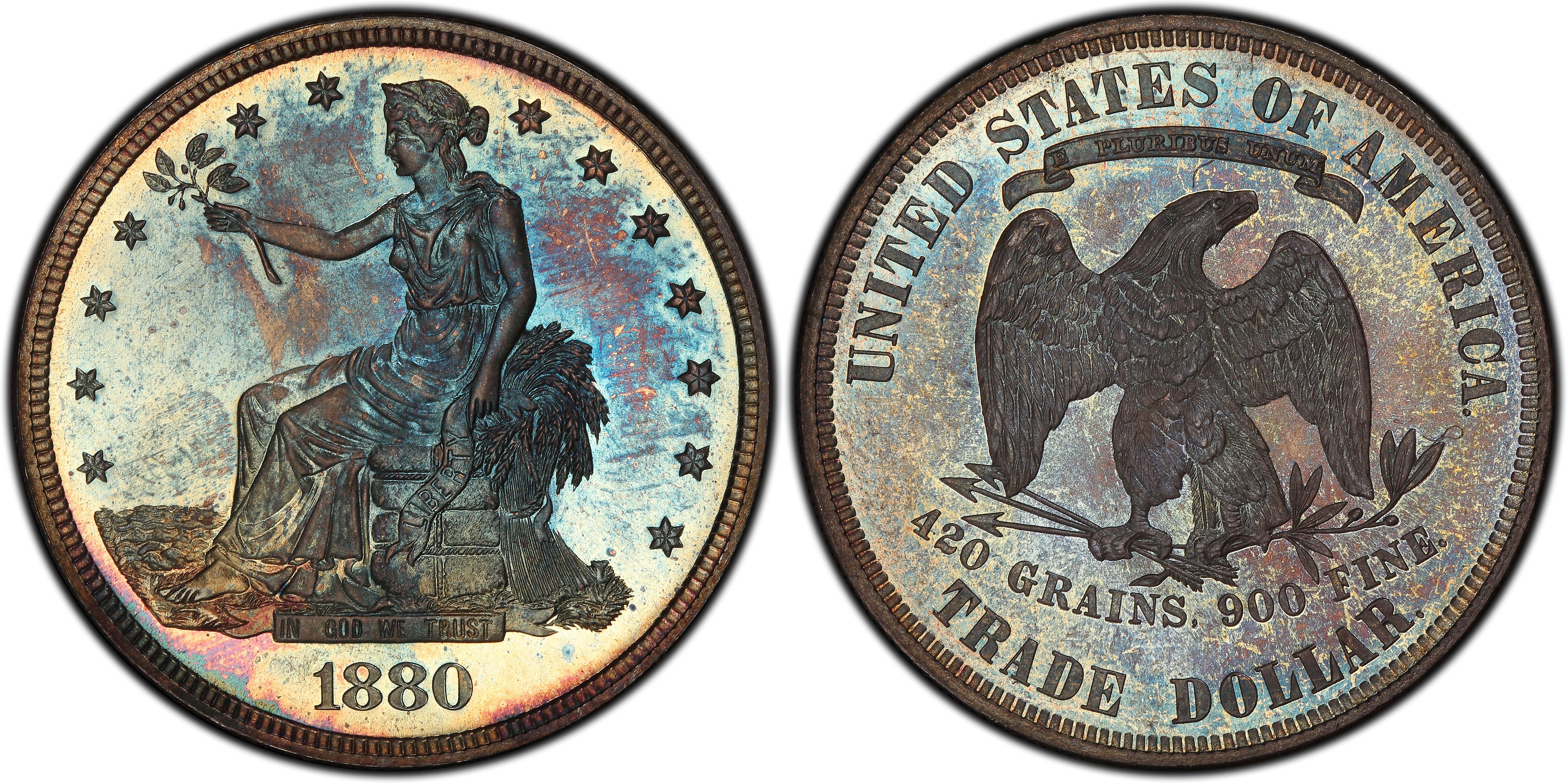
PCGS PR67
- PCGS #:
- 7060
- Designer:
- William Barber
- Edge:
- Reeded
- Diameter:
- 38.10 millimeters
- Weight:
- 27.20 grams
- Mintage:
- 1,987
- Mint:
- Philadelphia
- Metal:
- 90% Silver, 10% Copper
- Auction Record:
- $32,200 • PR67 • 03-20-2003 • Heritage Auctions
Go To Grade
Current Auctions - PCGS Graded
Current Auctions - NGC Graded
For Sale Now at Collectors Corner - PCGS Graded
For Sale Now at Collectors Corner - NGC Graded
Rarity and Survival Estimates Learn More
| Survival Estimate | |
|---|---|
| All Grades | 1,400 |
| 60 or Better | 1,200 |
| 65 or Better | 250 |
| Numismatic Rarity | |
|---|---|
| All Grades | R-4.8 |
| 60 or Better | R-4.9 |
| 65 or Better | R-6.6 |
| Relative Rarity By Type All Specs in this Type | |
|---|---|
| All Grades | 12 / 13 TIE |
| 60 or Better | 12 / 13 TIE |
| 65 or Better | 12 / 13 |
| Relative Rarity By Series All Specs in this Series | |
|---|---|
| All Grades | 12 / 13 TIE |
| 60 or Better | 12 / 13 TIE |
| 65 or Better | 12 / 13 |
Condition Census What Is This?
| #1 PR67+ PCGS grade |
 #2 PR67 PCGS grade
|
| #2 PR67 PCGS grade |
| #2 PR67 PCGS grade |
| #2 PR67 estimated grade |
 #6 PR66+ PCGS grade
|
| #6 PR66+ PCGS grade |
 #8 PR66 PCGS grade
|
| #8 PR66 PCGS grade |
| #8 PR66 PCGS grade |
Q. David Bowers:
The following narrative, with minor editing, is from my "Silver Dollars & Trade Dollars of the United States: A Complete Encyclopedia" (Wolfeboro, NH: Bowers and Merena Galleries, Inc., 1993):
Coinage Context
No business strikes made: As in all years 1879-1885, the only trade dollars made were Proofs. This year set a record for Proof trade dollar mintage.
Trade dollars continue their reverse flow: During 1880 trade dollars of earlier dates continued to come back to the United States, primarily through the London and other European markets.
Numismatic Information
Proof coinage sets record: The popular speculation in Proof-only trade dollars continued and peaked in March 1880, as the following delivery figures indicate: January: none; (In some years the Mint did not begin delivering Proofs until after January.)February: 488; March: 777; April: 201; May: 58; June: 50; July: 20; August: 25; September: 30; October: 27; November: 40; and December: 271. By year's end some 1,987 Proofs had left the coining press, a record for the denomination.
Availability of Proofs today: Most of the Proofs still exist, perhaps 1,300 to 1,700 of the 1,987 coined. They are readily available in various grades from Proof-60 to Proof-65 or better. Very occasionally a worn example, such as an Extremely Fine coin (technically graded Proof-40 or 45), will come on the market - a piece which was spent by some numismatist who could not wait for his investment to mature (actually, any profits went to the next generation of owners).
Varieties:
OBVERSE TYPE II, RIBBON ENDS POINT DOWN, 1876-1885
REVERSE TYPE II: NO BERRY BELOW CLAW, 1875-1885
Proofs:
1. With top of 1 in date below G of GOD. Crossbar of 4 in 420 is perfect (compare to No.2 below).
2. With top of 1 in date below GO of GOD. The reverse of some specimens has these characteristics:
No projection or right side to crossbar of 4 in 420 (but a tiny dot-like remnant is visible); lower right serif of first L in DOLLAR is flat on the top (as normal), but the second L has a rounded top (abnormal). This is the variety most often seen.
Proofs:
Dies prepared: Obverse: at least 2; Reverse: at least 2 Proof mintage: 1,987; Delivery figures by month:
January: none; February: 488; March: 777; April: 201; May: 58; June: 50; July: 20; August: 25; September: 30; October: 27; November: 40; December: 271.
Characteristics of striking: Usually seen with areas of lightness, particularly at the top of the obverse-the stars and the head of Miss Liberty.
Commentary
The 1880 trade dollar is a Proof-only issue made for collectors. No business strikes were produced. 1880 had the highest Proof mintage of any date of the trade dollar denomination.
Coinage Context
No business strikes made: As in all years 1879-1885, the only trade dollars made were Proofs. This year set a record for Proof trade dollar mintage.
Trade dollars continue their reverse flow: During 1880 trade dollars of earlier dates continued to come back to the United States, primarily through the London and other European markets.
Numismatic Information
Proof coinage sets record: The popular speculation in Proof-only trade dollars continued and peaked in March 1880, as the following delivery figures indicate: January: none; (In some years the Mint did not begin delivering Proofs until after January.)February: 488; March: 777; April: 201; May: 58; June: 50; July: 20; August: 25; September: 30; October: 27; November: 40; and December: 271. By year's end some 1,987 Proofs had left the coining press, a record for the denomination.
Availability of Proofs today: Most of the Proofs still exist, perhaps 1,300 to 1,700 of the 1,987 coined. They are readily available in various grades from Proof-60 to Proof-65 or better. Very occasionally a worn example, such as an Extremely Fine coin (technically graded Proof-40 or 45), will come on the market - a piece which was spent by some numismatist who could not wait for his investment to mature (actually, any profits went to the next generation of owners).
Varieties:
OBVERSE TYPE II, RIBBON ENDS POINT DOWN, 1876-1885
REVERSE TYPE II: NO BERRY BELOW CLAW, 1875-1885
Proofs:
1. With top of 1 in date below G of GOD. Crossbar of 4 in 420 is perfect (compare to No.2 below).
2. With top of 1 in date below GO of GOD. The reverse of some specimens has these characteristics:
No projection or right side to crossbar of 4 in 420 (but a tiny dot-like remnant is visible); lower right serif of first L in DOLLAR is flat on the top (as normal), but the second L has a rounded top (abnormal). This is the variety most often seen.
Proofs:
Dies prepared: Obverse: at least 2; Reverse: at least 2 Proof mintage: 1,987; Delivery figures by month:
January: none; February: 488; March: 777; April: 201; May: 58; June: 50; July: 20; August: 25; September: 30; October: 27; November: 40; December: 271.
Characteristics of striking: Usually seen with areas of lightness, particularly at the top of the obverse-the stars and the head of Miss Liberty.
Commentary
The 1880 trade dollar is a Proof-only issue made for collectors. No business strikes were produced. 1880 had the highest Proof mintage of any date of the trade dollar denomination.