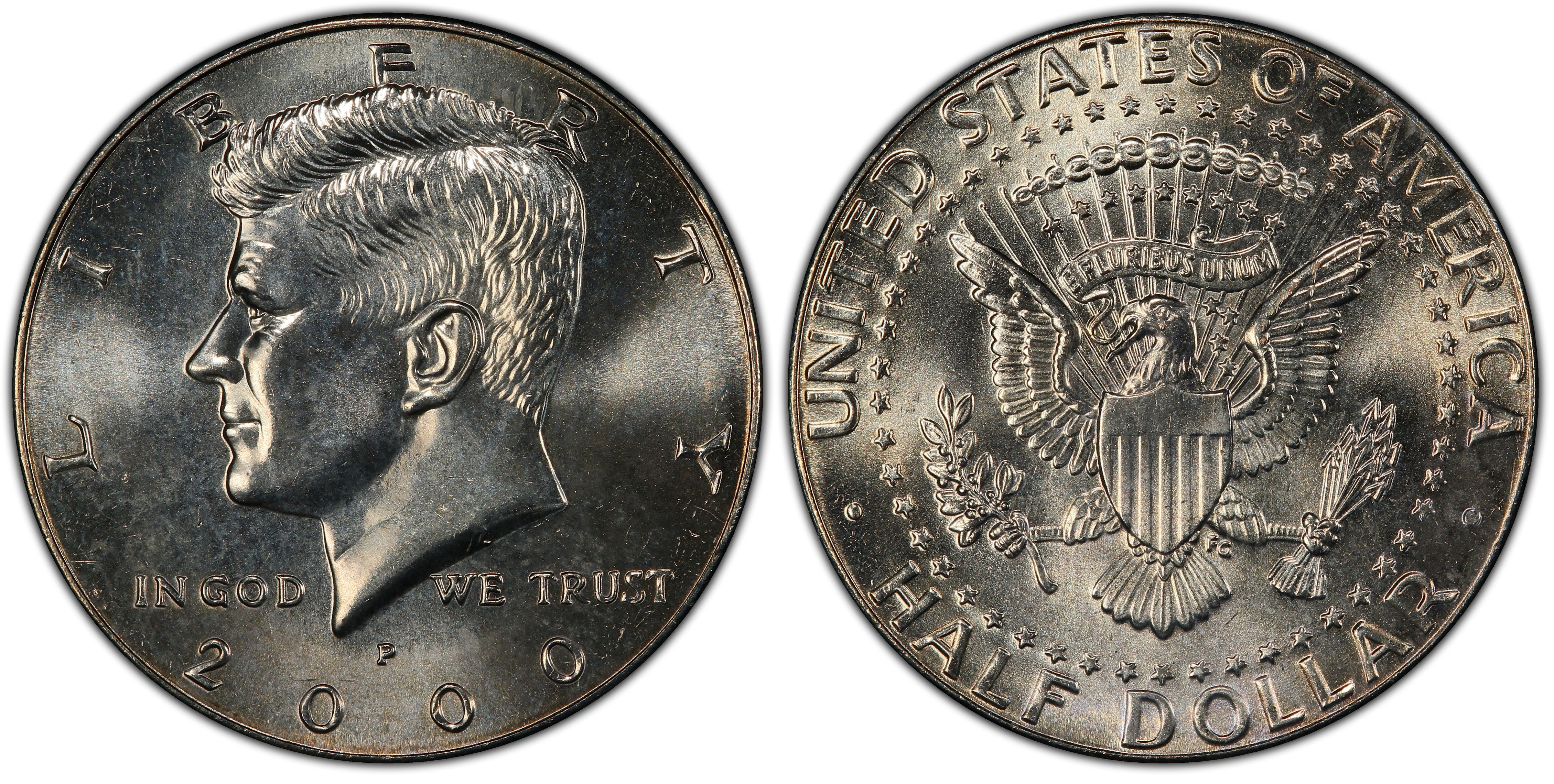
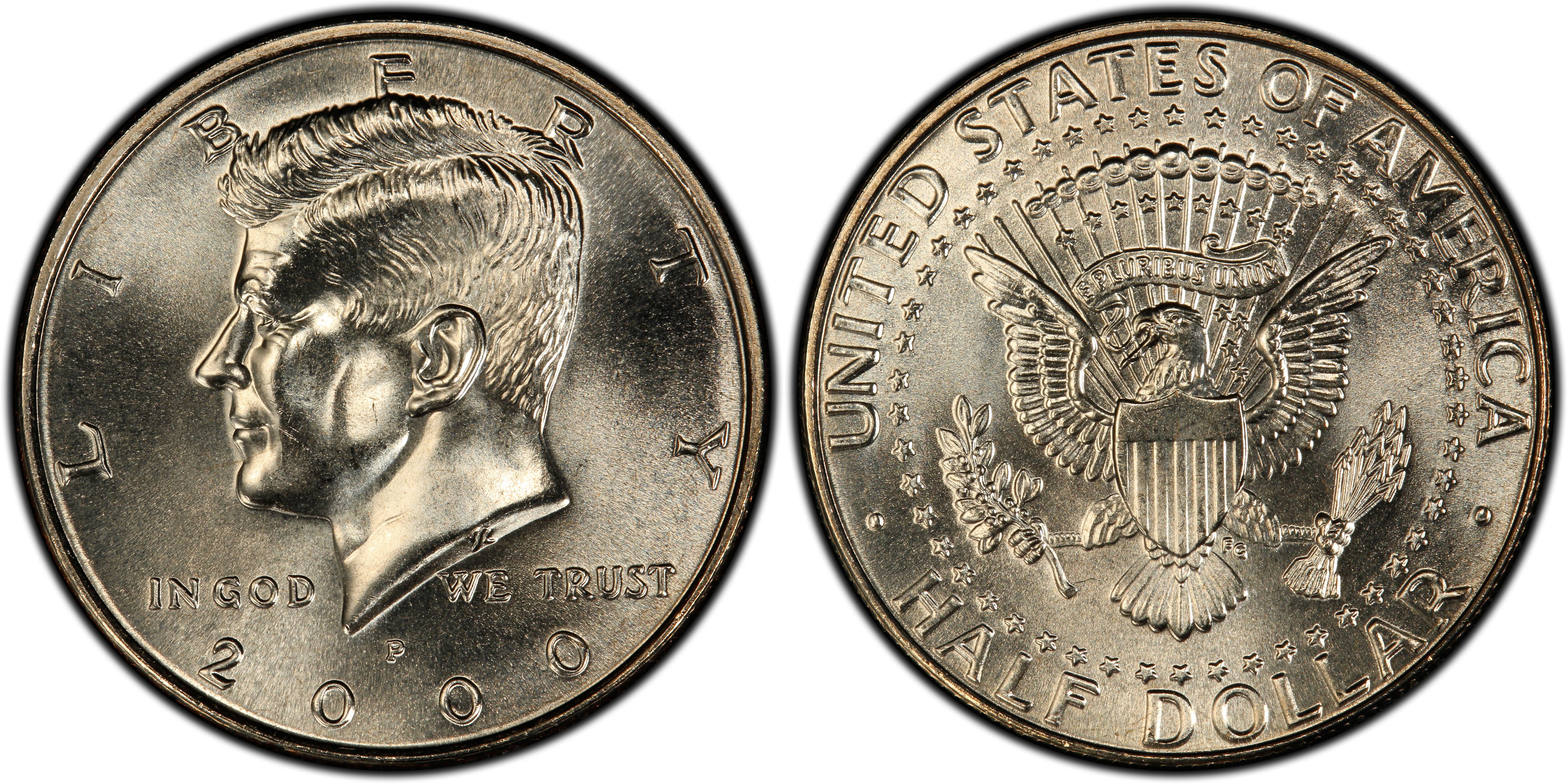
PCGS MS68

PCGS MS67
- PCGS #:
- 6778
- Designer:
- Gilroy Roberts/Frank Gasparro
- Edge:
- 150 Reeds
- Diameter:
- 30.61 millimeters
- Weight:
- 11.30 grams
- Mintage:
- 22,600,000
- Mint:
- Philadelphia
- Metal:
- 75% Copper, 25% Nickel over a pure Copper center
- Auction Record:
- $764 • MS68 • 08-05-2014 • Heritage Auctions
Major Varieties
- 2000-P 50C
Go To Grade
Current Auctions - PCGS Graded
Current Auctions - NGC Graded
For Sale Now at Collectors Corner - PCGS Graded
For Sale Now at Collectors Corner - NGC Graded
Rarity and Survival Estimates Learn More
| Survival Estimate | |
|---|---|
| All Grades | 18,080,000 |
| 60 or Better | 1,808,000 |
| 65 or Better | 361,600 |
| Numismatic Rarity | |
|---|---|
| All Grades | R-1.0 |
| 60 or Better | R-1.0 |
| 65 or Better | R-1.7 |
| Relative Rarity By Type All Specs in this Type | |
|---|---|
| All Grades | 1 / 62 TIE |
| 60 or Better | 29 / 62 TIE |
| 65 or Better | 37 / 62 TIE |
| Relative Rarity By Series All Specs in this Series | |
|---|---|
| All Grades | N/A |
| 60 or Better | N/A |
| 65 or Better | N/A |
Jaime Hernandez:
The 2000-P Kennedy Half Dollar is one of the more common issues in the series. It's mintage is also extremely high with well over 22 million examples struck. Therefore, finding a circulated example in circulation should be no trouble at all. More than likely many Uncirculated examples can still be pulled from circulation as well. It is very common in MS65 grades and lower. In MS66 condition it becomes a little scarcer with thousands of examples possibly still out there. In MS67 condition it is now scarce with less than 500 examples certified by PCGS. In MS68 condition it is considered a condition census in this condition, as there are less than a few dozen examples certified by PCGS in MS68.