

PCGS PR68
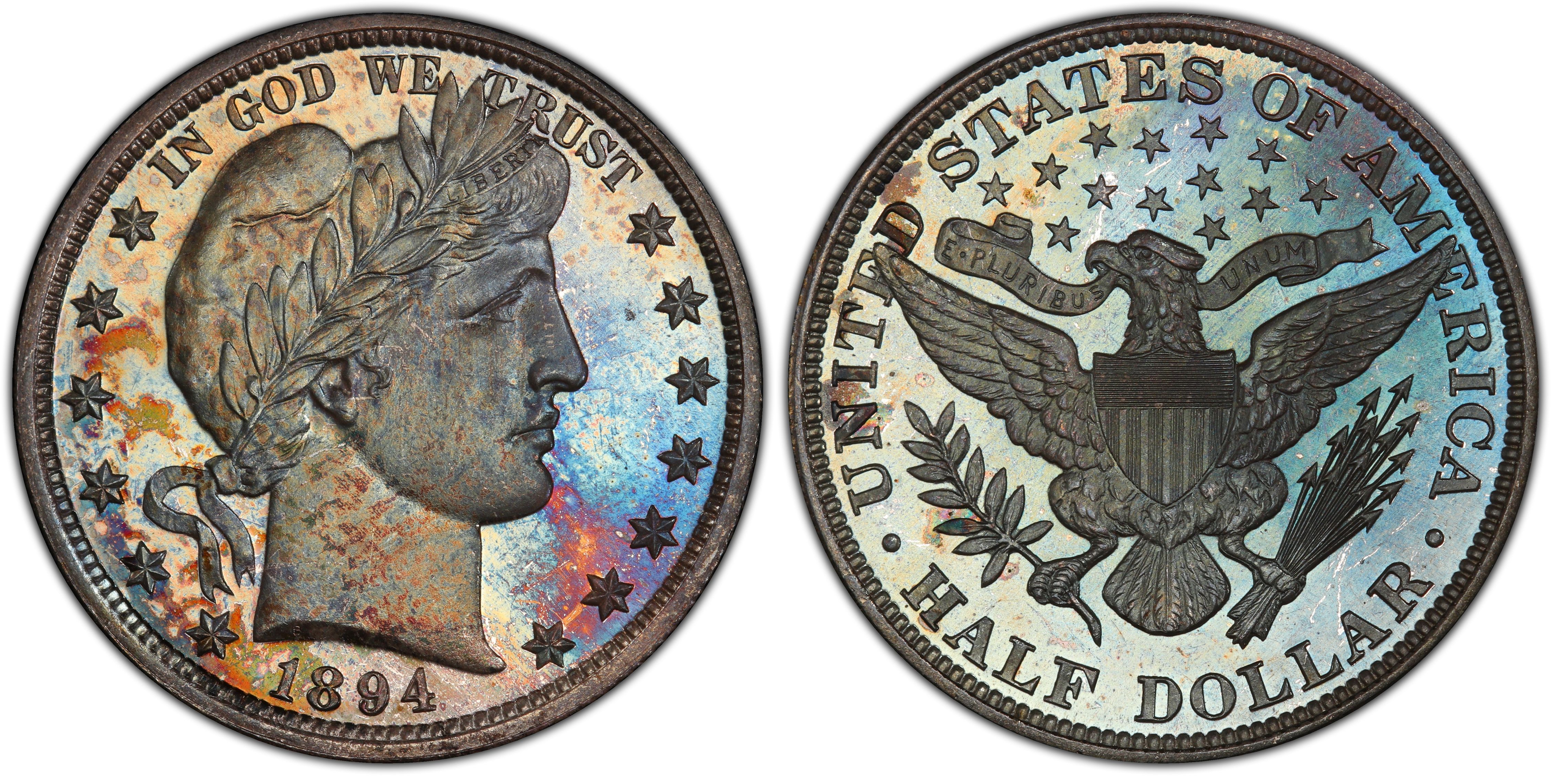
PCGS PR67+
- PCGS #:
- 6541
- Designer:
- Charles E. Barber
- Edge:
- Reeded
- Diameter:
- 30.00 millimeters
- Weight:
- 12.50 grams
- Mintage:
- 972
- Mint:
- Philadelphia
- Metal:
- 90% Silver, 10% Copper
- Auction Record:
- $12,650 • PR67 • 03-20-2003 • Heritage Auctions
Go To Grade
Current Auctions - PCGS Graded
Current Auctions - NGC Graded
For Sale Now at Collectors Corner - PCGS Graded
For Sale Now at Collectors Corner - NGC Graded
Rarity and Survival Estimates Learn More
| Survival Estimate | |
|---|---|
| All Grades | 850 |
| 60 or Better | 810 |
| 65 or Better | 200 |
| Numismatic Rarity | |
|---|---|
| All Grades | R-5.3 |
| 60 or Better | R-5.3 |
| 65 or Better | R-7.0 |
| Relative Rarity By Type All Specs in this Type | |
|---|---|
| All Grades | 23 / 24 |
| 60 or Better | 23 / 24 |
| 65 or Better | 20 / 24 TIE |
| Relative Rarity By Series All Specs in this Series | |
|---|---|
| All Grades | 23 / 24 |
| 60 or Better | 23 / 24 |
| 65 or Better | 20 / 24 TIE |
Condition Census What Is This?
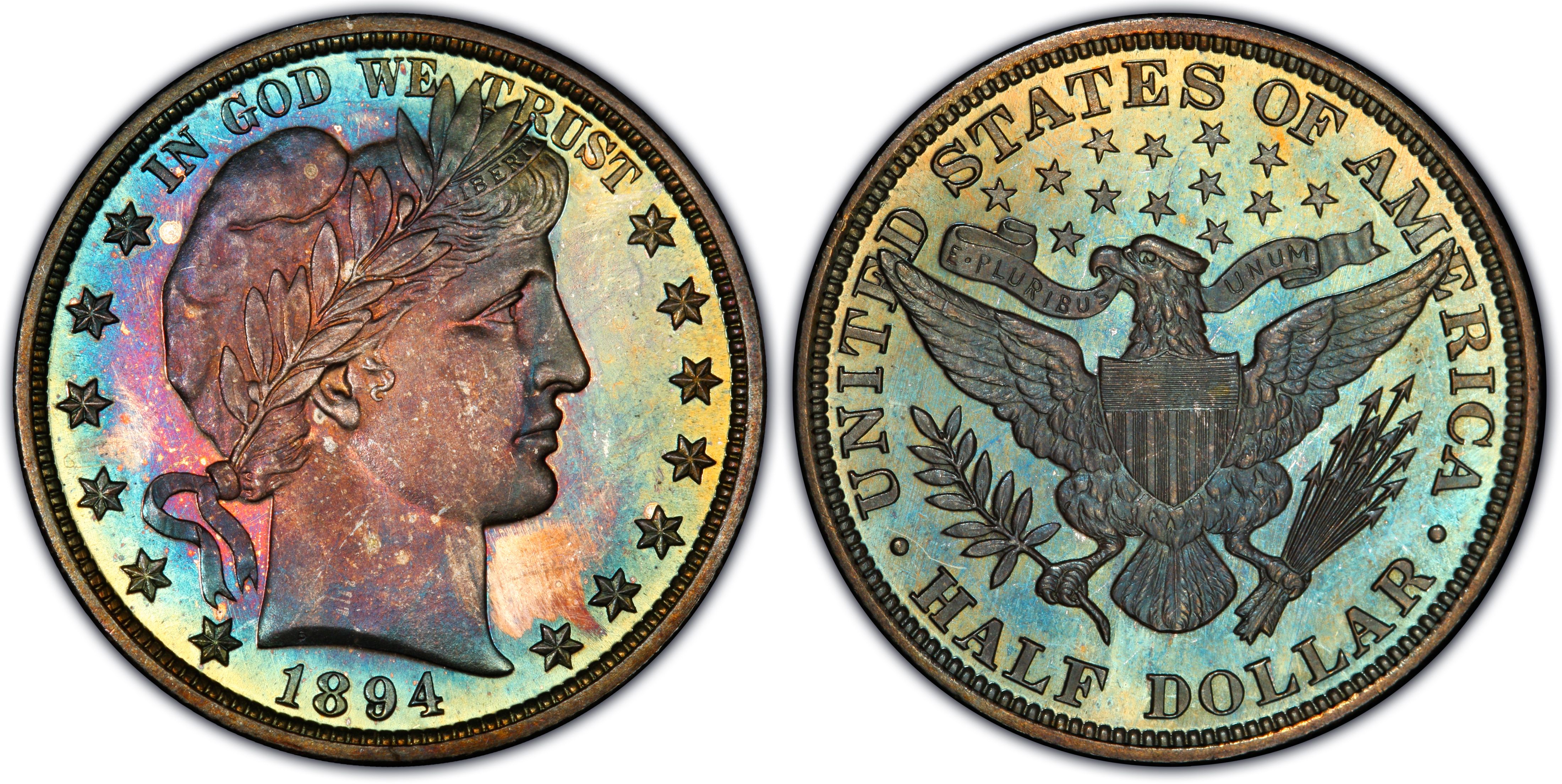 #1 PR67+ PCGS grade
"Denali" Collection |
 #1 PR67+ PCGS grade
|
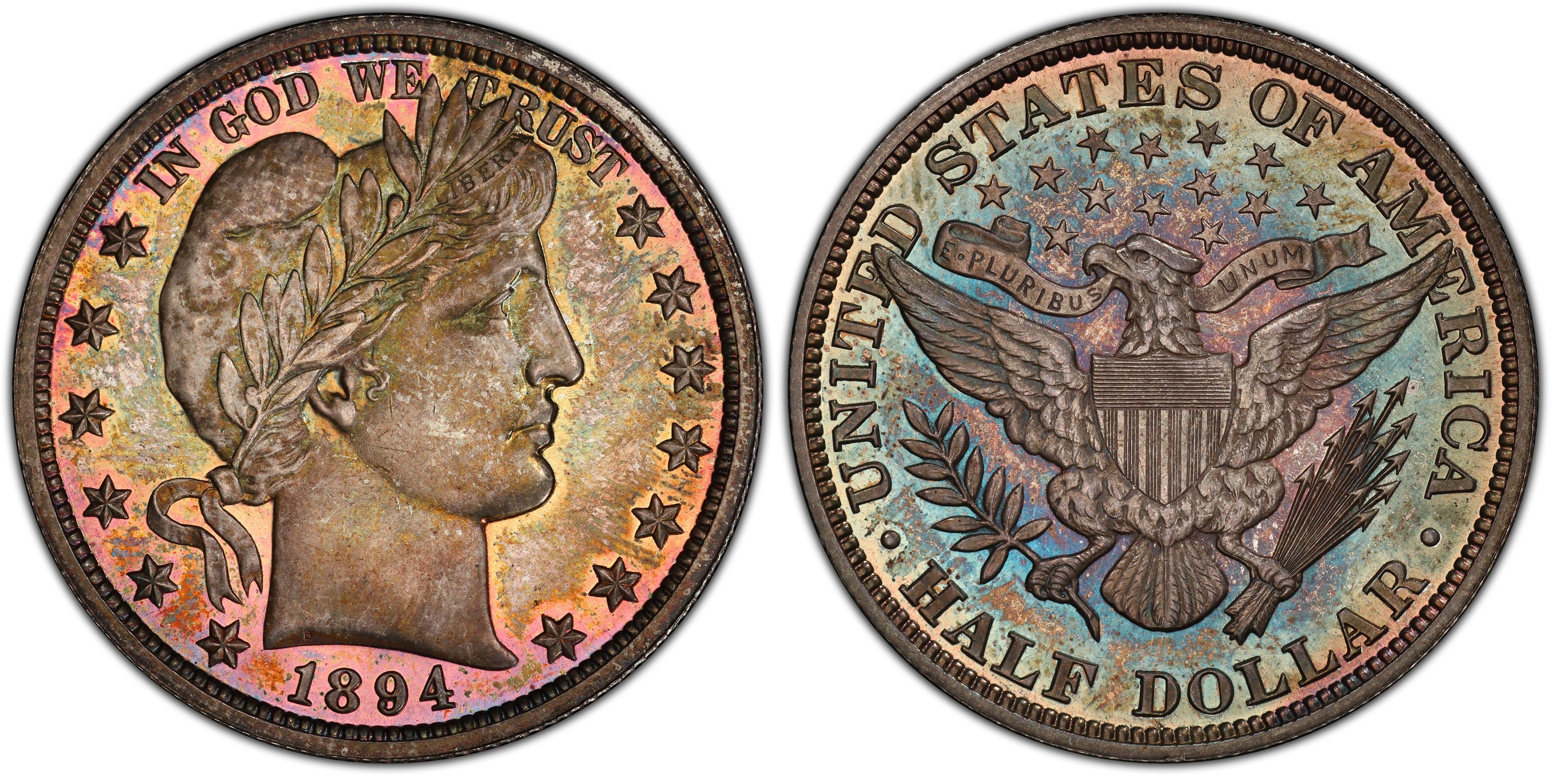 #3 PR67 PCGS grade
Heritage 1/2017:4485, $3,749 - D.L. Hansen Collection |
|
#3 PR67 PCGS grade
|
 #3 PR67 PCGS grade
|
| #3 PR67 PCGS grade |
| #3 PR67 PCGS grade |
| #3 PR67 PCGS grade |
| #3 PR67 PCGS grade |
| #3 PR67 PCGS grade |
Ron Guth:
An unexpected rise in demand caused a small spike in the mintage of Proof 1894 Half Dollars to 972 pieces (this turned out to be the second highest Proof mintage of the entire Barber Half Dollar series). Most 1894 Half Dollar Proofs are brilliant. Less than a fourth are Cameos and just a very few pieces have contras strong enougbh to be called Deep Cameo.