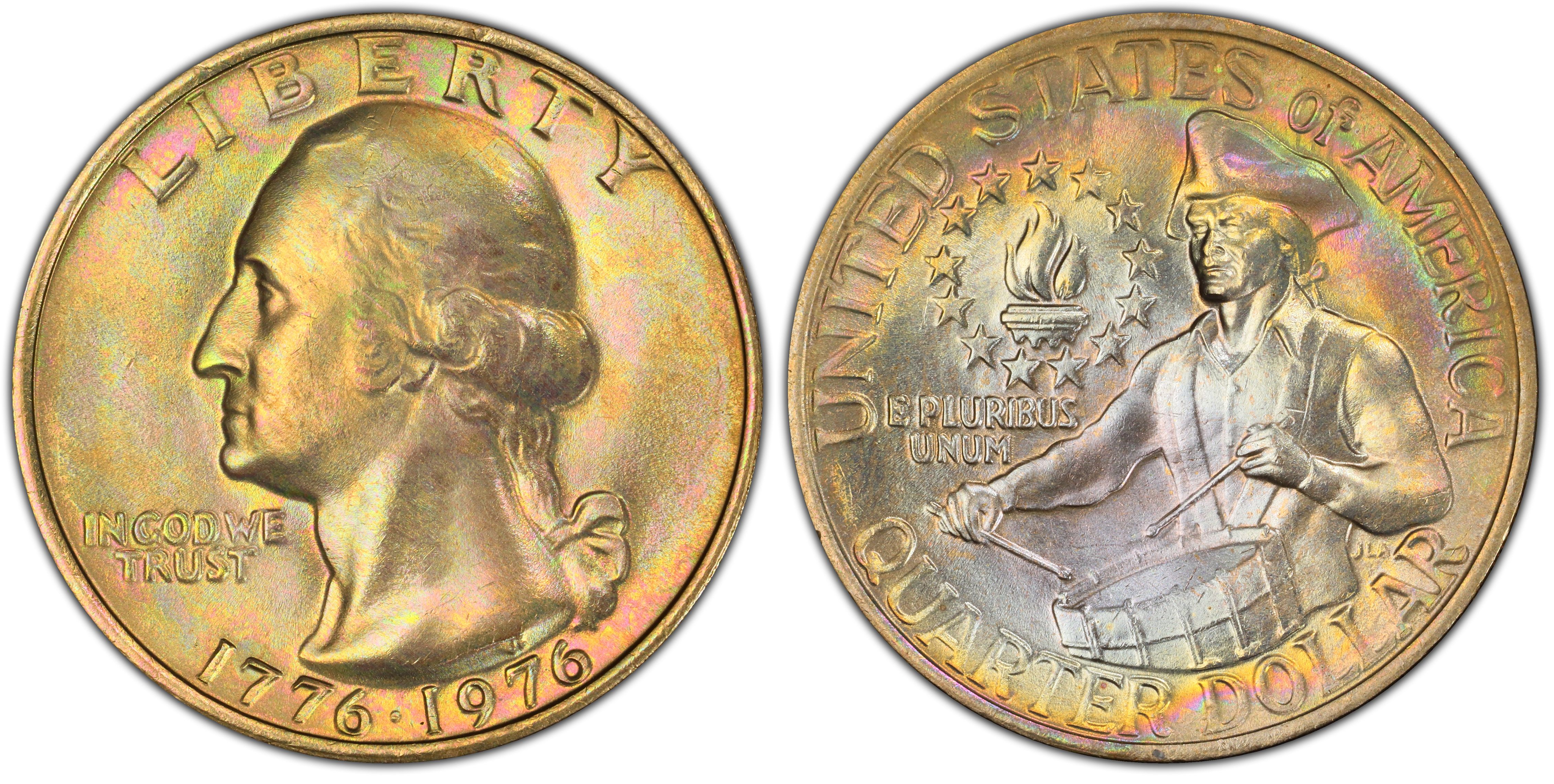

PCGS MS67+
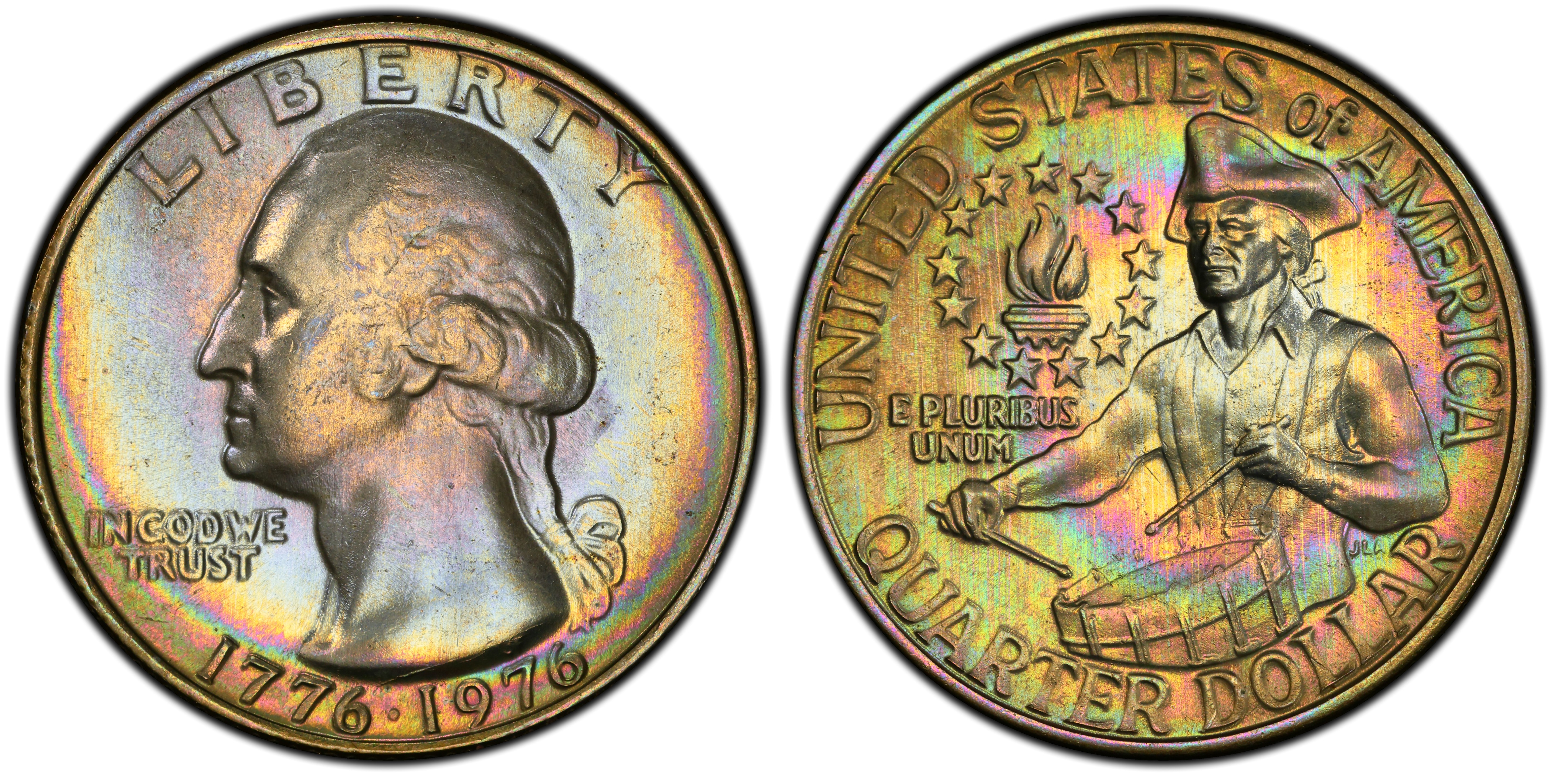
PCGS MS67+
- PCGS #:
- 5896
- Designer:
- John Flanagan
- Edge:
- Reeded
- Diameter:
- 24.30 millimeters
- Weight:
- 5.67 grams
- Mintage:
- 809,784,016
- Mint:
- Philadelphia
- Metal:
- 75% Copper, 25% Nickel over a pure Copper center
- Auction Record:
- $2,520 • MS64 • 08-18-2024 • Heritage Auctions
Major Varieties
- 1976 25C Clad
Go To Grade
Current Auctions - PCGS Graded
Current Auctions - NGC Graded
For Sale Now at Collectors Corner - PCGS Graded
For Sale Now at Collectors Corner - NGC Graded
Rarity and Survival Estimates Learn More
| Survival Estimate | |
|---|---|
| All Grades | 301,041,593 |
| 60 or Better | 90,312,477 |
| 65 or Better | 18,062,495 |
| Numismatic Rarity | |
|---|---|
| All Grades | R-1.0 |
| 60 or Better | R-1.0 |
| 65 or Better | R-1.0 |
| Relative Rarity By Type All Specs in this Type | |
|---|---|
| All Grades | 1 / 2 TIE |
| 60 or Better | 1 / 2 TIE |
| 65 or Better | 1 / 2 TIE |
| Relative Rarity By Series All Specs in this Series | |
|---|---|
| All Grades | 1 / 64 TIE |
| 60 or Better | 4 / 64 TIE |
| 65 or Better | 7 / 64 TIE |
Condition Census What Is This?
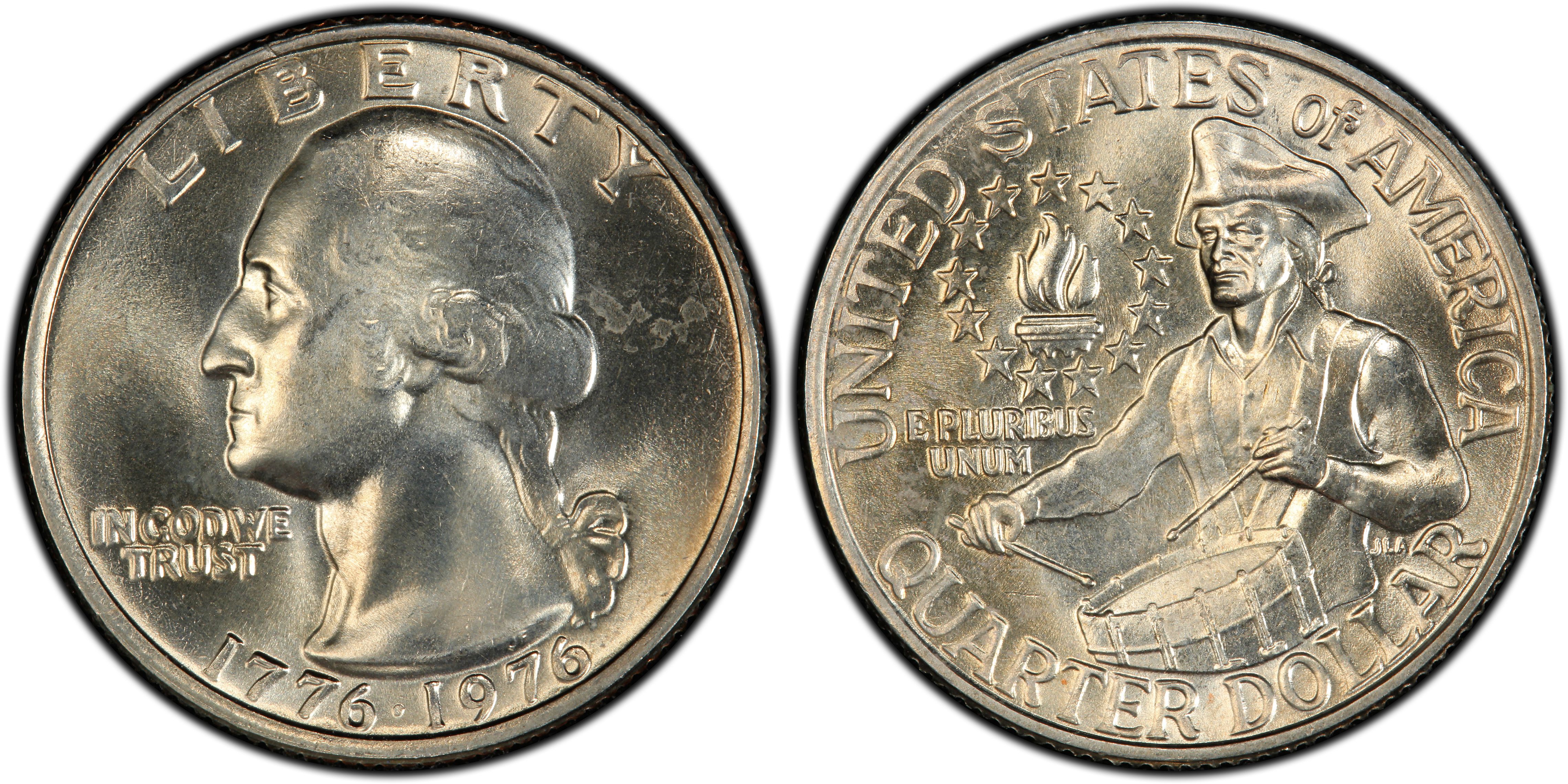 #1 MS67 PCGS grade
|
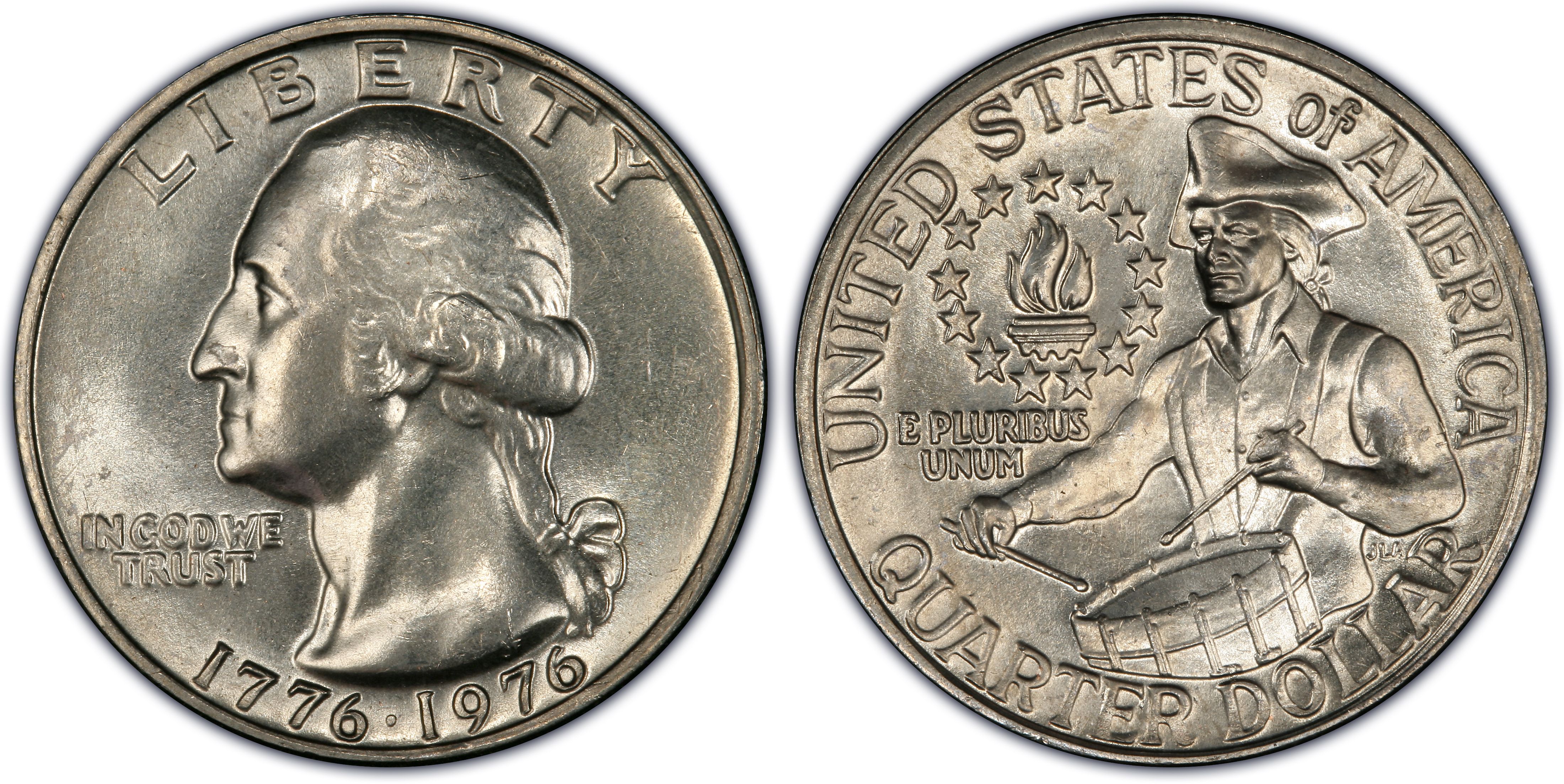 #1 MS67 PCGS grade
|
| #1 MS67 PCGS grade |
| #1 MS67 PCGS grade |
| #1 MS67 PCGS grade |
| #1 MS67 PCGS grade |
| #1 MS67 PCGS grade |
| #1 MS67 PCGS grade |
| #1 MS67 PCGS grade |
| #1 MS67 PCGS grade |
Jaime Hernandez:
The 1976-P Clad Biccentennial Quarter is a one year type, also known as a Type 3 design. 1976 Clad Quarters were produced at the Philedelphia Mint and at the Denver Mint.
The 1976-P Clad Quarter is the scarcer of the two in mintage and in high grade condition.
The Mint also produced a business strike 1976-S Biccentennial Quarter composed of silver or a Type 4.
For the Proof Bicentennial Quarter the Mint also produced two different types. The Type 3 was produced out of a Clad composition. The Type 4 Bicenntennial Proof Quarter was composed of Silver. Both proof quarters bear the "S" mint mark since they were produced at the San Francicso Mint.
The 1976-P Clad Quarter is the scarcer of the two in mintage and in high grade condition.
The Mint also produced a business strike 1976-S Biccentennial Quarter composed of silver or a Type 4.
For the Proof Bicentennial Quarter the Mint also produced two different types. The Type 3 was produced out of a Clad composition. The Type 4 Bicenntennial Proof Quarter was composed of Silver. Both proof quarters bear the "S" mint mark since they were produced at the San Francicso Mint.