

PCGS MS67+
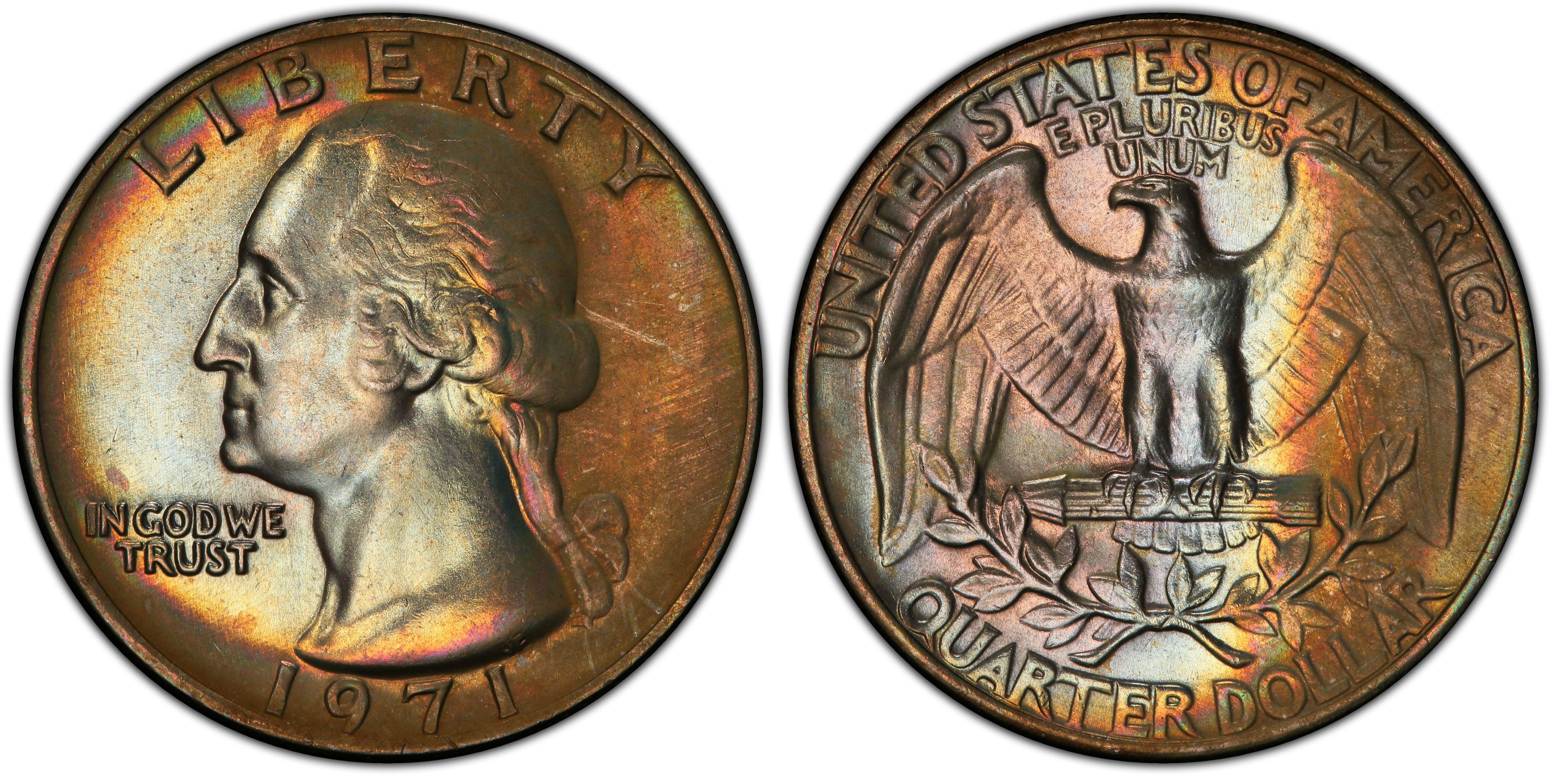
PCGS MS67
- PCGS #:
- 5887
- Designer:
- John Flanagan
- Edge:
- Reeded
- Diameter:
- 24.30 millimeters
- Weight:
- 5.67 grams
- Mintage:
- 109,284,000
- Mint:
- Philadelphia
- Metal:
- 75% Copper, 25% Nickel over a pure Copper center
- Auction Record:
- $3,840 • MS67 • 08-18-2019 • Heritage Auctions
Major Varieties
- 1971 25C
Go To Grade
Current Auctions - PCGS Graded
Current Auctions - NGC Graded
For Sale Now at Collectors Corner - PCGS Graded
For Sale Now at Collectors Corner - NGC Graded
Rarity and Survival Estimates Learn More
| Survival Estimate | |
|---|---|
| All Grades | 32,785,200 |
| 60 or Better | 9,835,560 |
| 65 or Better | 983,556 |
| Numismatic Rarity | |
|---|---|
| All Grades | R-1.0 |
| 60 or Better | R-1.0 |
| 65 or Better | R-1.1 |
| Relative Rarity By Type All Specs in this Type | |
|---|---|
| All Grades | 1 / 61 TIE |
| 60 or Better | 3 / 61 TIE |
| 65 or Better | 4 / 61 TIE |
| Relative Rarity By Series All Specs in this Series | |
|---|---|
| All Grades | 1 / 64 TIE |
| 60 or Better | 4 / 64 TIE |
| 65 or Better | 5 / 64 TIE |
Condition Census What Is This?
| #1 MS67 PCGS grade |
| #1 MS67 PCGS grade |
| #1 MS67 PCGS grade |
| #4 MS66+ PCGS grade |
| #5 MS66 PCGS grade |
| #5 MS66 PCGS grade |
| #5 MS66 PCGS grade |
| #5 MS66 PCGS grade |
| #5 MS66 PCGS grade |
| #5 MS66 PCGS grade |
Mitch Spivack:
The 1971-P ranks among the top three toughest dates in the entire series to obtain in MS67 grade. Just like the 1969-P, everything that could possibly go wrong in your hunt for a superb gem is encountered when you go after this one! Badly scuffed surfaces, poor luster, weak strikes... you name it. I believe I have been through thousands upon thousands of 1971-P coins over the past (3) decades, including huge quantities of fresh U.S. Mint sets and original rolls. You begin to realize just how frustrating a search for an MS67 specimen is after you finish carefully screening a couple hundred fresh 1971 Mint Sets and realize the nicest couple of 1971-P quarters you located might grade MS65 at best! If you get a chance, take a look at a handful or two of 1971 Mint Sets. You should immediately see just how poor quality the 1971-P quarters are in these sets. In my opinion, the 1971-P quarter has a fantastic future for gem and better quality specimens.