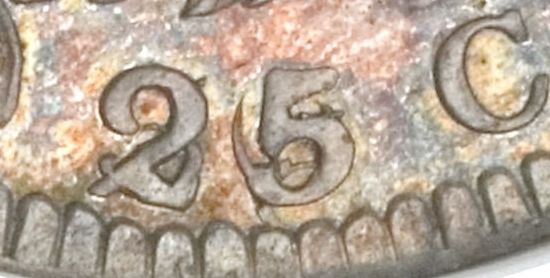
CLOSEUP OF REVERSE
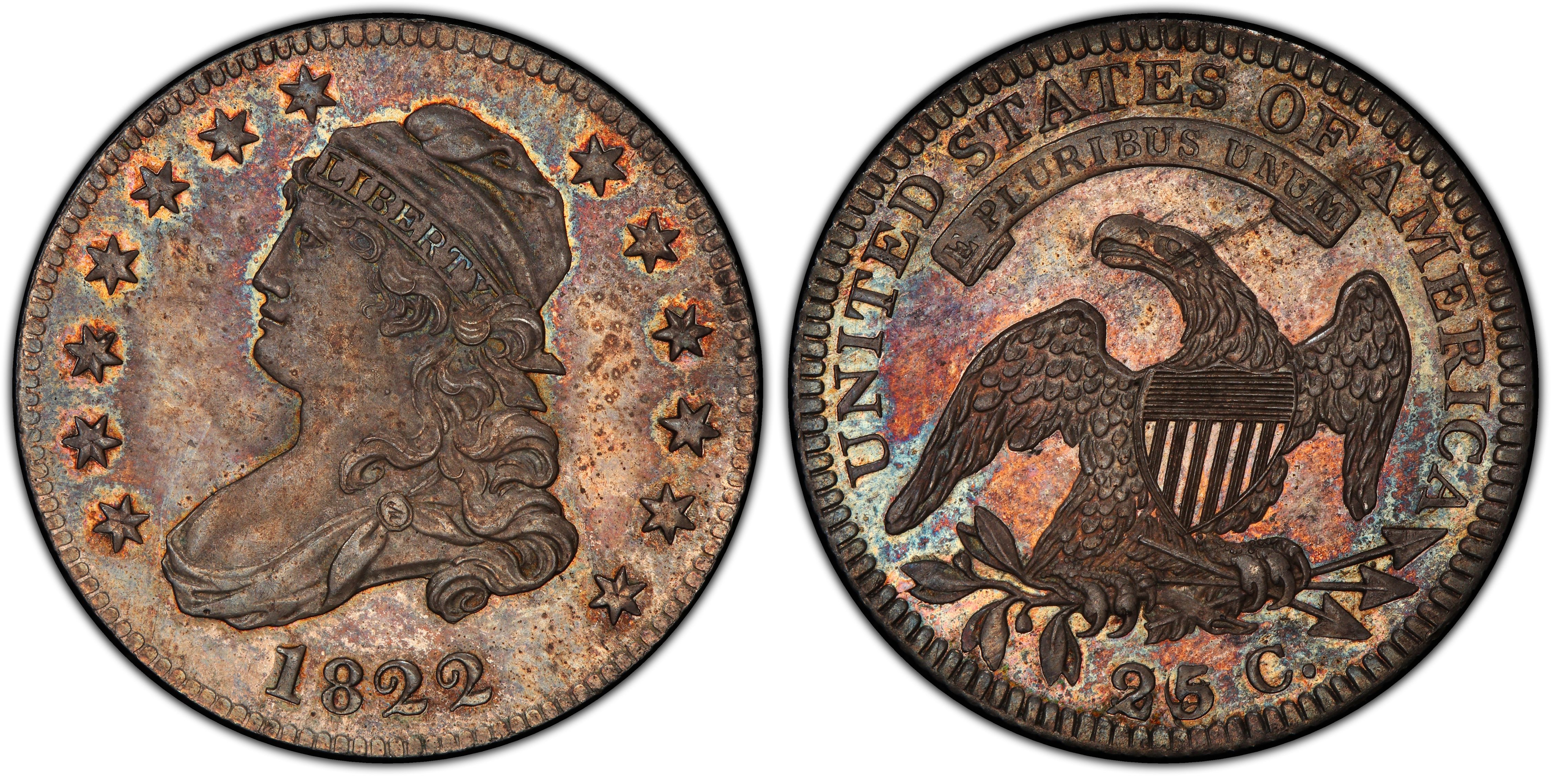
PCGS MS65
- PCGS #:
- 5333
- Designer:
- John Reich
- Edge:
- Reeded
- Diameter:
- 27.50 millimeters
- Weight:
- 6.74 grams
- Mintage:
- 64,080
- Mint:
- Philadelphia
- Metal:
- 89.2% Silver, 10.8% Copper
- Auction Record:
- $184,000 • MS66 • 04-01-2009 • Heritage Auctions
Rarity and Survival Estimates Learn More
| Survival Estimate | |
|---|---|
| All Grades | 42 |
| 60 or Better | 2 |
| 65 or Better | 1 |
| Numismatic Rarity | |
|---|---|
| All Grades | R-8.6 |
| 60 or Better | R-9.9 |
| 65 or Better | R-10.0 |
| Relative Rarity By Type All Specs in this Type | |
|---|---|
| All Grades | 2 / 15 |
| 60 or Better | 1 / 15 TIE |
| 65 or Better | 1 / 15 TIE |
| Relative Rarity By Series All Specs in this Series | |
|---|---|
| All Grades | 2 / 24 |
| 60 or Better | 1 / 24 TIE |
| 65 or Better | 1 / 24 TIE |
Condition Census What Is This?
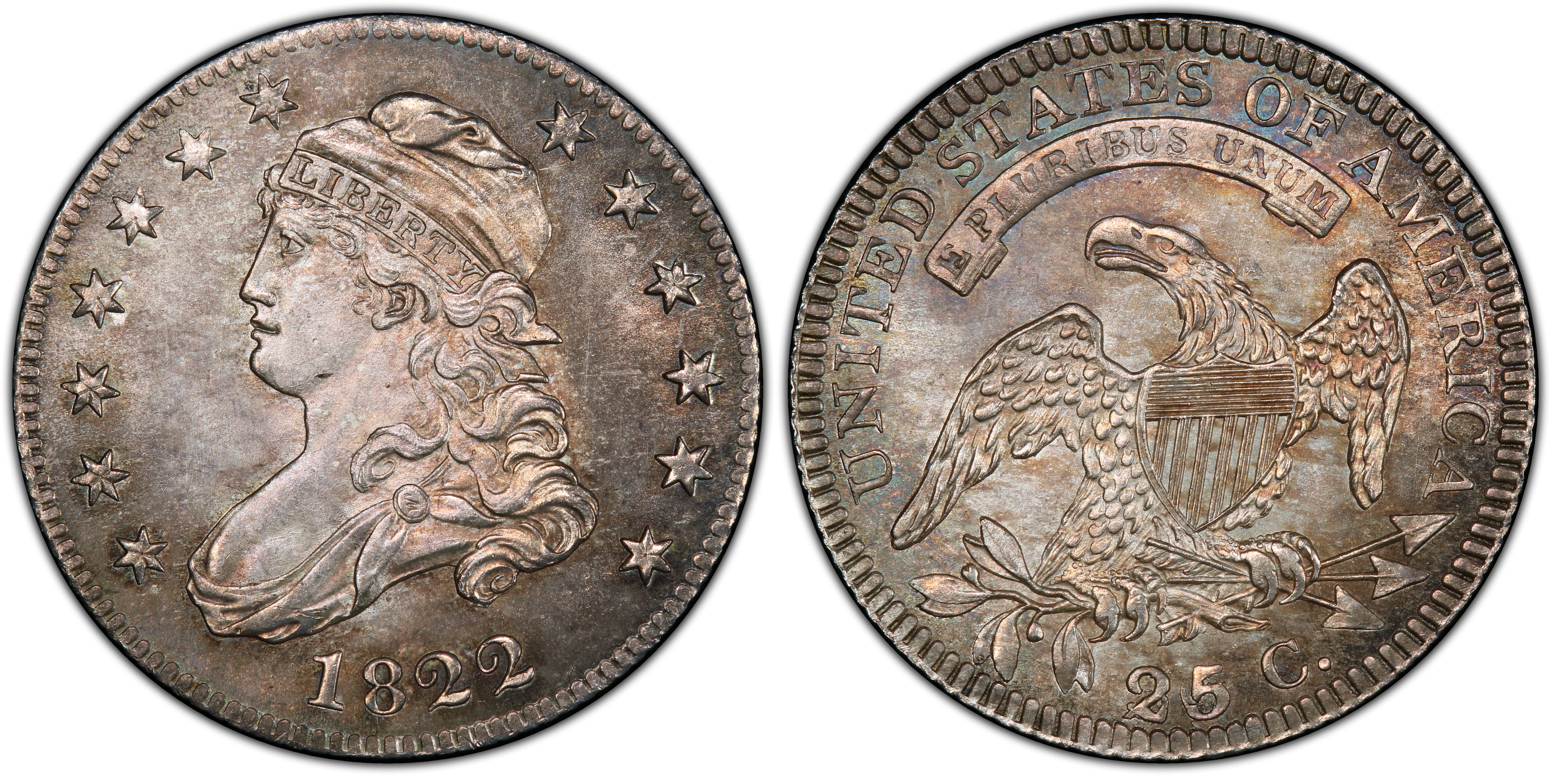 #1 MS65+ PCGS grade
Heritage 6/2016:4429, $108,687.50 - D.L. Hansen Collection |
 #2 MS65 PCGS grade
Peter Mougey Collection, purchased intact by William H. Woodin - Thomas Elder 9/1910:687 - John H. Clapp Collection, sold intact in 1942 - Louis E. Eliasberg, Sr. Collection - Bowers & Merena 4/1997:1385, $61,600 - Heritage 3/2006:564, $195,500 - Joseph C. Thomas Collection - Heritage 4/2009:2323, $184,000 - D. Brent Pogue Collection - Stack’s/Bowers & Sotheby’s 5/2015:1071, $188,000 |
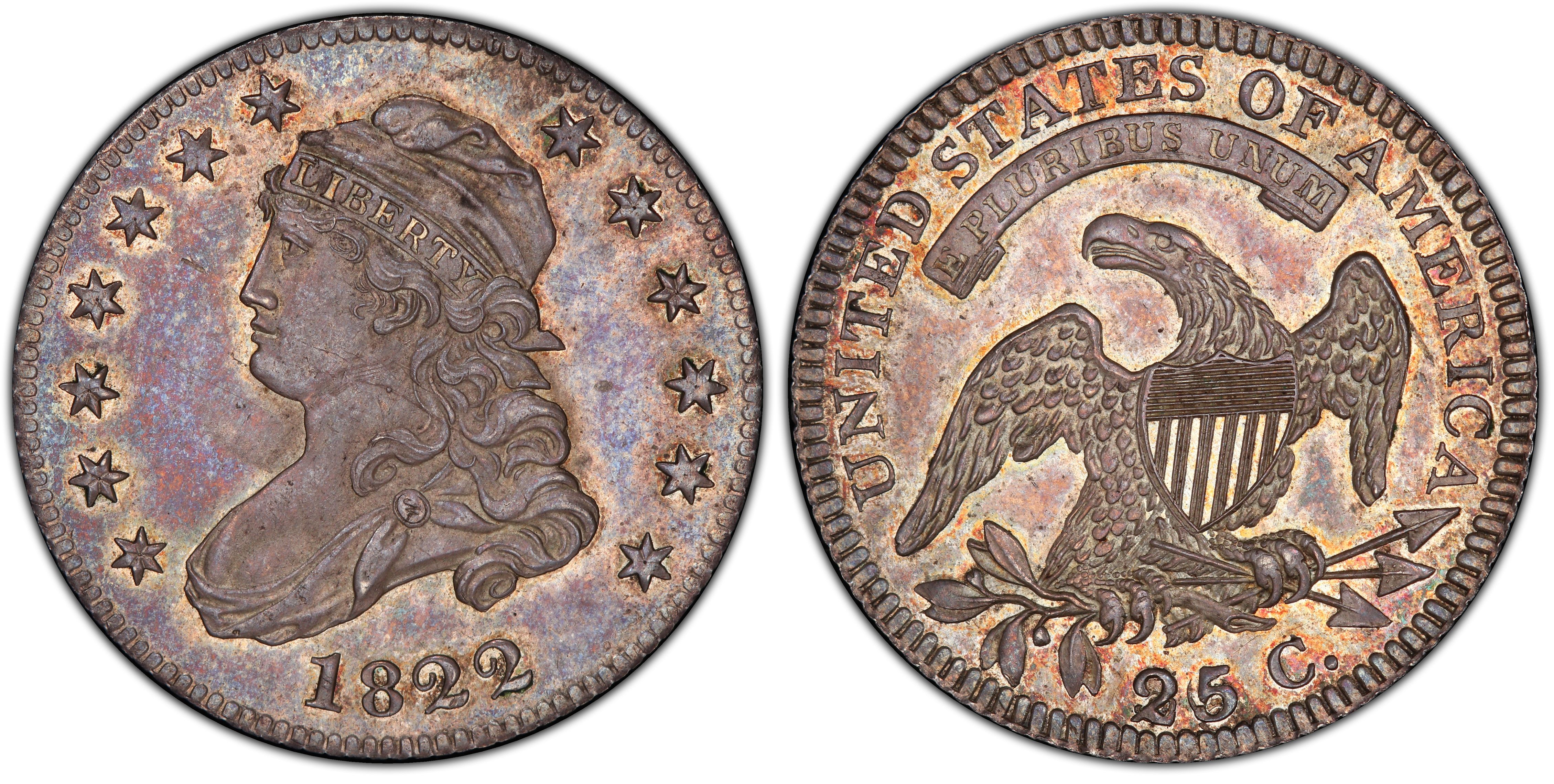 #3 MS64+ PCGS grade
Plate coin in “Walter Breen's Encyclopedia Of United States and Colonial Proof Coins: 1722 - 1977”
Listed as “PR63” in Steve Tompkins “Early United States Quarters: 1796-1838”
Virgil Brand Collection - Steve Ivy, sold privately in 1976 - Heritage 8/1997:8252, $29,900 - Larry Whitlow, sold privately in 5/1998 - Eugene Gardner Collection - Heritage 10/2014:98345, $123,375 - Dr. Charles Link Collection
|
 #4 MS64 PCGS grade
Heritage 1/2007:907, $69,000 |
|
#5 MS61 PCGS grade
Norweb Collection - Bowers & Merena 3/1988:1537 - American Numismatic Rarities 1/2005:427, $43,700 - Stack's/Bowers 8/2011:7308, not sold |
Two die varieties comprised the entire mintage of the 1822 Quarter Dollars: one variety is the 25/50C and the other shows a normal denomination. The Blundered Denomination occurred when the die sinker punched a "50" into the die instead of a "25", thus creating and undersized, new "Half Dollar." The error was caught and corrected, but the underlying 50 remained visible, and little or no efforts were made to efface it. Based on die evidence, researcher and author Steve Tompkins concluded that the Blundered Denomination resulted from a die left over from 1818. The Blundered Denomination appears to be two to three times as scarce as the normal reverse.
As might be expected, Mint State examples of the Blundered Denomination are quite rare. We know of five Mint State examples, ranging in grade from PCGS MS61 to PCGS MS65+.