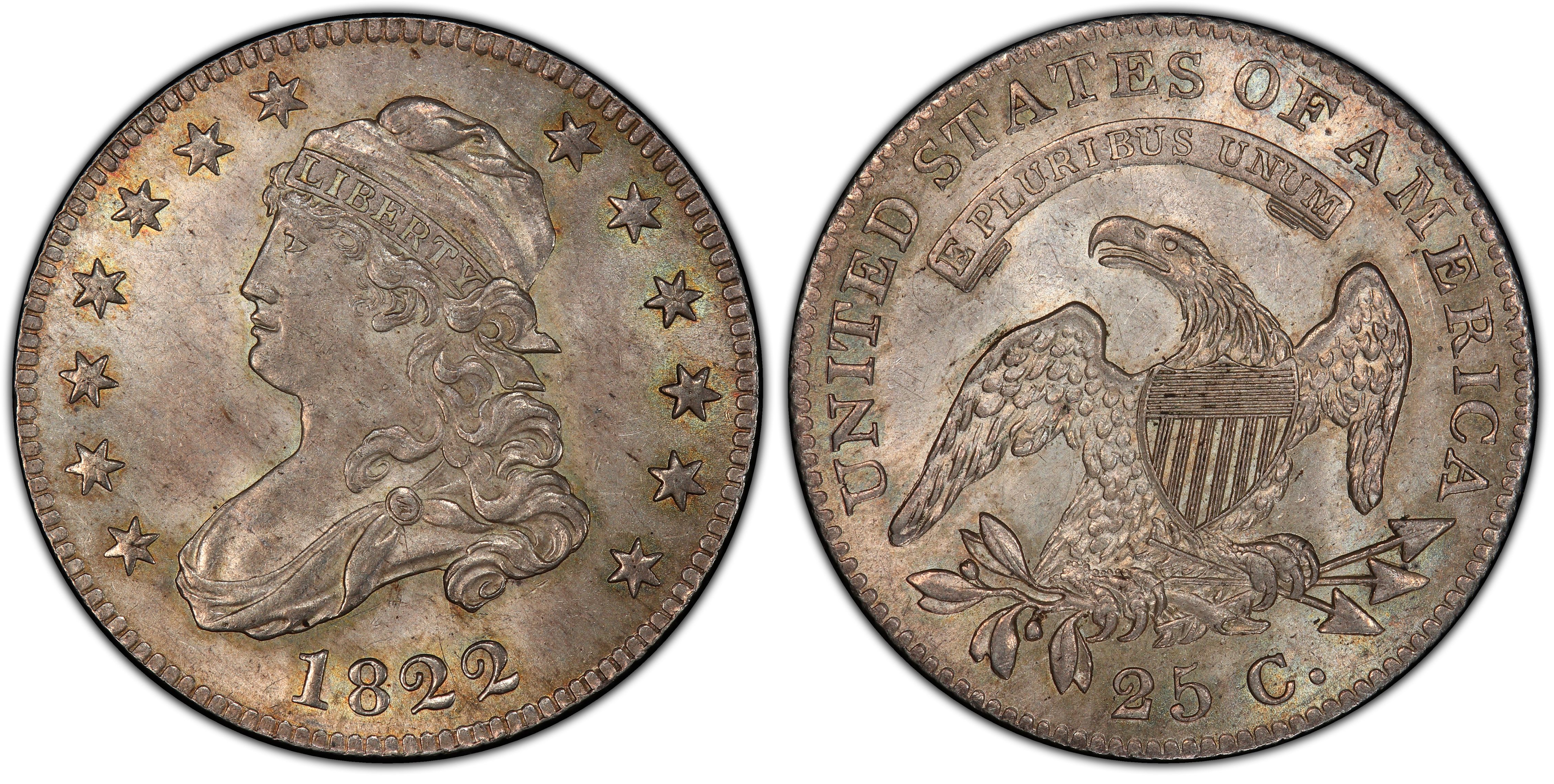

PCGS MS64

PCGS MS64
- PCGS #:
- 5332
- Designer:
- John Reich
- Edge:
- Reeded
- Diameter:
- 27.50 millimeters
- Weight:
- 6.74 grams
- Mintage:
- 64,080
- Mint:
- Philadelphia
- Metal:
- 89.2% Silver, 10.8% Copper
- Auction Record:
- $35,250 • MS64 • 05-19-2015 • Stack's Bowers
Rarity and Survival Estimates Learn More
| Survival Estimate | |
|---|---|
| All Grades | 800 |
| 60 or Better | 13 |
| 65 or Better | 1 |
| Numismatic Rarity | |
|---|---|
| All Grades | R-5.4 |
| 60 or Better | R-9.4 |
| 65 or Better | R-10.0 |
| Relative Rarity By Type All Specs in this Type | |
|---|---|
| All Grades | 7 / 15 TIE |
| 60 or Better | 8 / 15 TIE |
| 65 or Better | 1 / 15 TIE |
| Relative Rarity By Series All Specs in this Series | |
|---|---|
| All Grades | 7 / 24 TIE |
| 60 or Better | 8 / 24 TIE |
| 65 or Better | 1 / 24 TIE |
Condition Census What Is This?
|
#1 MS67 PCGS grade
Heritage 6/2015:3896, $164,500 |
 #2 MS65 PCGS grade
Superior 9/2003:1558, $18,400 |
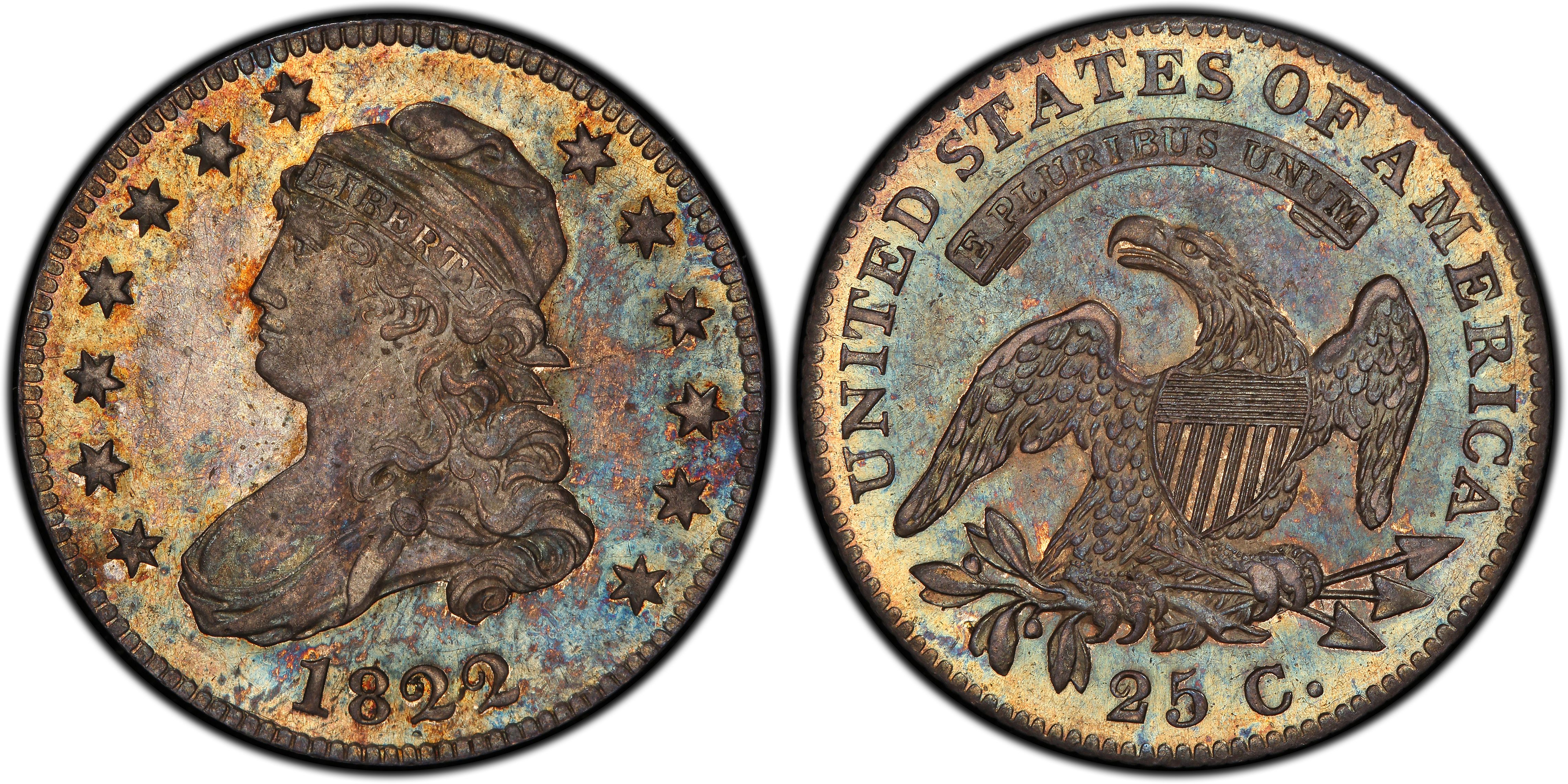 #3 MS64 PCGS grade
Bangs, sold privately on 7/31/1879 - T. Harrison Garrett Collection - Robert Garrett Collection - John Work Garrett Collection - Johns Hopkins University Collection - Stack’s 3/1976:147 - Stack’s 10/1994:352, $11,000 - D. Brent Pogue Collection - Stack’s/Bowers & Sotheby’s 5/2015:1069, $35,250 - Heritage 11/2016:5220, $28,200 - D.L. Hansen Collection |
| #3 MS64 PCGS grade |
| #3 MS64 PCGS grade |
 #7 MS63 PCGS grade
"Colonel" E.H.R. Green Collection and Estate - Partnership of Eric P. Newman & Burdette G. Johnson (St. Louis Stamp & Coin Co.) - Eric P. Newman, who paid $25.00 - Eric P. Newman Numismatic Education Society - Heritage 11/2013:33168, $25,850 |
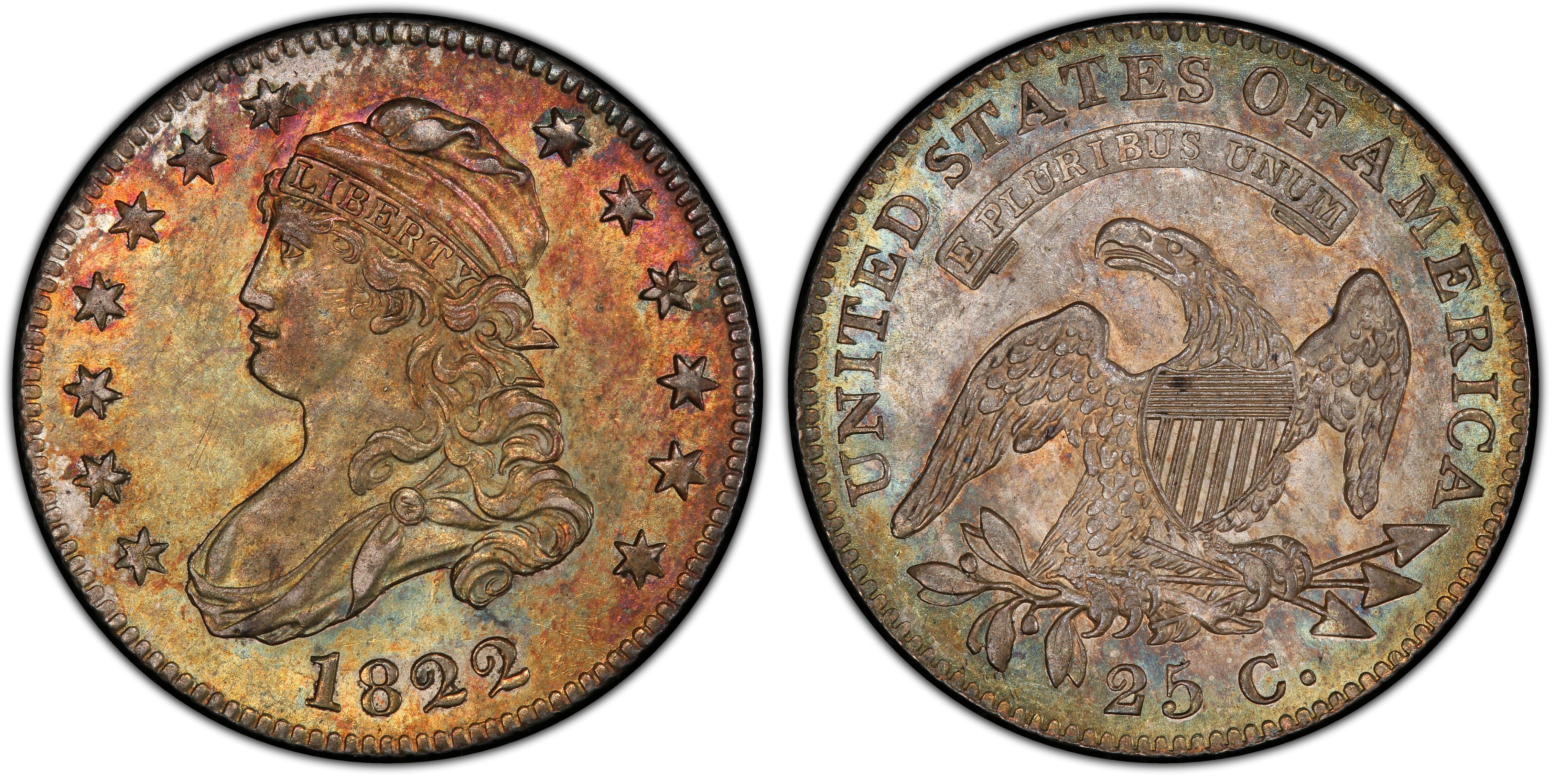 #7 MS63 PCGS grade
|
|
#43 MS64 PCGS grade
American Numismatic Rarities 11/2004:1148, $18,400 - Legend Numismatics, sold privately in 8/2008 - Eugene H. Gardner Collection, Part II - Heritage 10/2014:98344, $19,975 |
Currently, the only known example of B.3 is the Discovery Coin, certified in 2017 as AG3 by NGC.
The 1822 Quarter has a much smaller mintage than that of the previous year, but the 1822 is not known as a particularly scarce date. Two die varieties comprised the entire mintage of this date: one variety is the 25/50C and the other shows a normal denomination. Based on die evidence, researcher and author Steve Tompkins concluded that the Blundered Denomination resulted from a die left over from 1818. The Blundered Denomination appears to be two to three times as scarce as the normal reverse.
Approximately a dozen Mint State examples are known of the Normal Denomination.