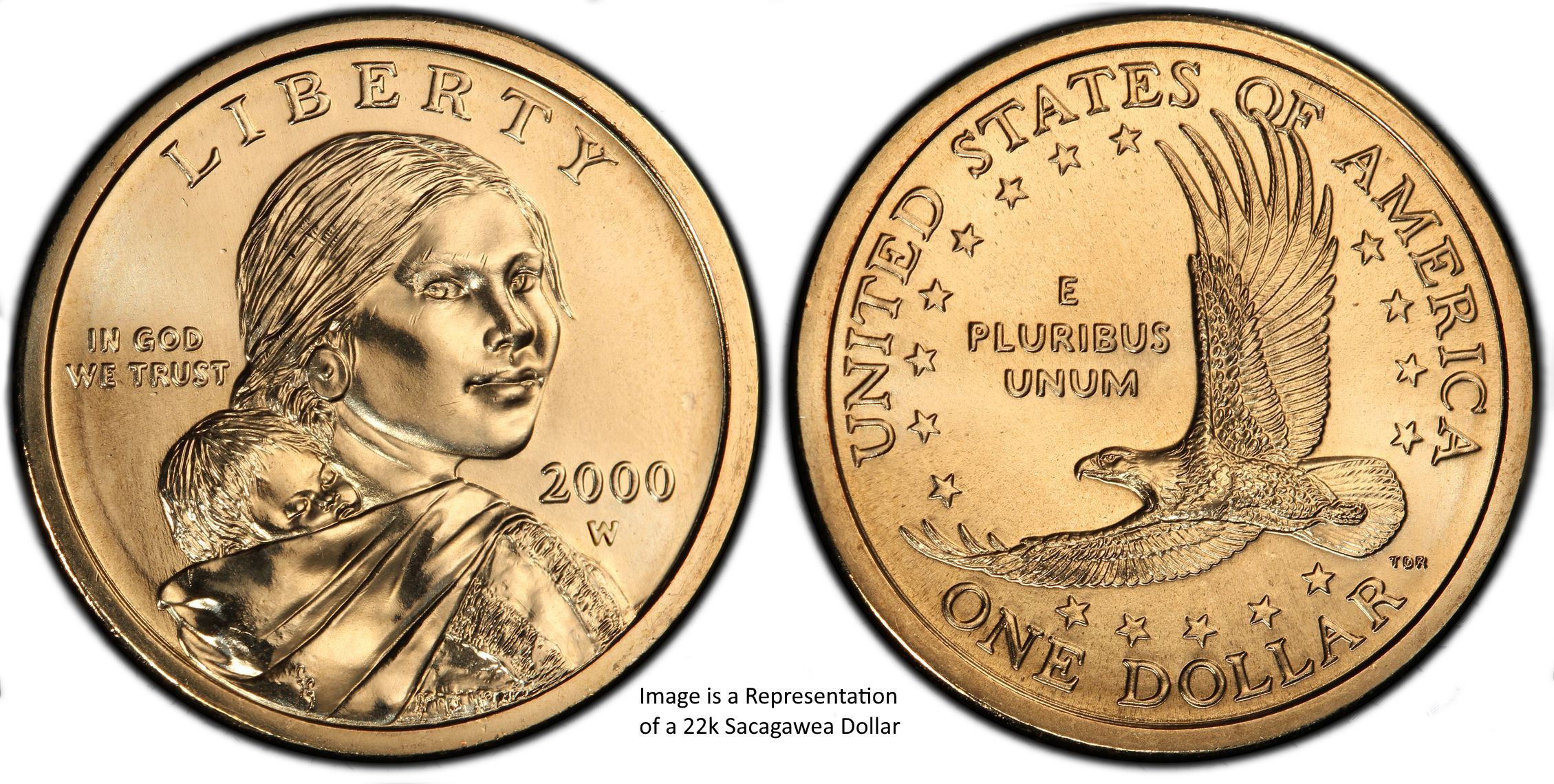

PCGS PR69DCAM

PCGS PR69DCAM
- PCGS #:
- 508062
- Designer:
- Glenna Goodacre/Thomas D. Rogers Sr.
- Edge:
- Plain
- Diameter:
- 26.50 millimeters
- Weight:
- 17.00 grams
- Mintage:
- 39
- Mint:
- N/A
- Metal:
- 91.67% Gold, 3% Silver, 5.33% Copper
- Auction Record:
- $550,001 • PR69DCAM • 09-12-2025 • Stack's Bowers
Major Varieties
- 2000-W SAC$1 J-2190 22kt Gold Space Flown, DCAM
On June of 1999 the U.S. Mint test struck 39 Proof Sacagawea Dollars in 22 kt gold planchets. These gold metal planchets were 27 mm thick and composed of .9167 fine gold. These are the same planchets currently used to strike $25 Uncirculated Gold Eagles.
The 2000-W Sacagawea 22kt Gold Dollars were struck at the Philadelphia Mint. However, the coins carry a W mint mark instead of a P mint mark, or no mint mark at all, since the coins were originally intended to be struck at the West Point Mint, located in New York. The Mint's original plan was to sell the 22 kt Gold Sacagawea Dollars to the public. However, that idea was eventually turned down. Instead of melting all 39 coins, the Mint chose the best 12 looking examples for future displaying purposes and melted the remaining 27 coins.
The 12 surviving examples were later sent 1.8 million miles into outer space aboard the Space Shuttle Columbia to commemorate Eileen Collin as the first female U.S. astronaut to be a commander on a space shuttle flight. On August 31, 2001, the 12 coins were then transported to Fort Knox for safe keeping. On August 10, 2007 the coins were briefly removed from Fort Knox to be displayed at the American Numismatic Association's World Fair of Money in Milwaukee, Wisconsin.
In 2025, Coinworld corresponded with Thomas D. Rogers Sr., the sculptor engraver for the Sacagawea Dollar reverse, and Rogers stated, “Although the 13th feather is something that was determined by some outside sources, actually, there was a raised shaft (rachis) on the center 12th feather. When we began getting concentric lines in the [model] reductions that seemed to be coming from the tail, we decided to smooth the feathers, and part of that was lowering the rachis from raised to incused. The number of feathers was never increased by me, the engraver, but was interpreted as an increase by others."