
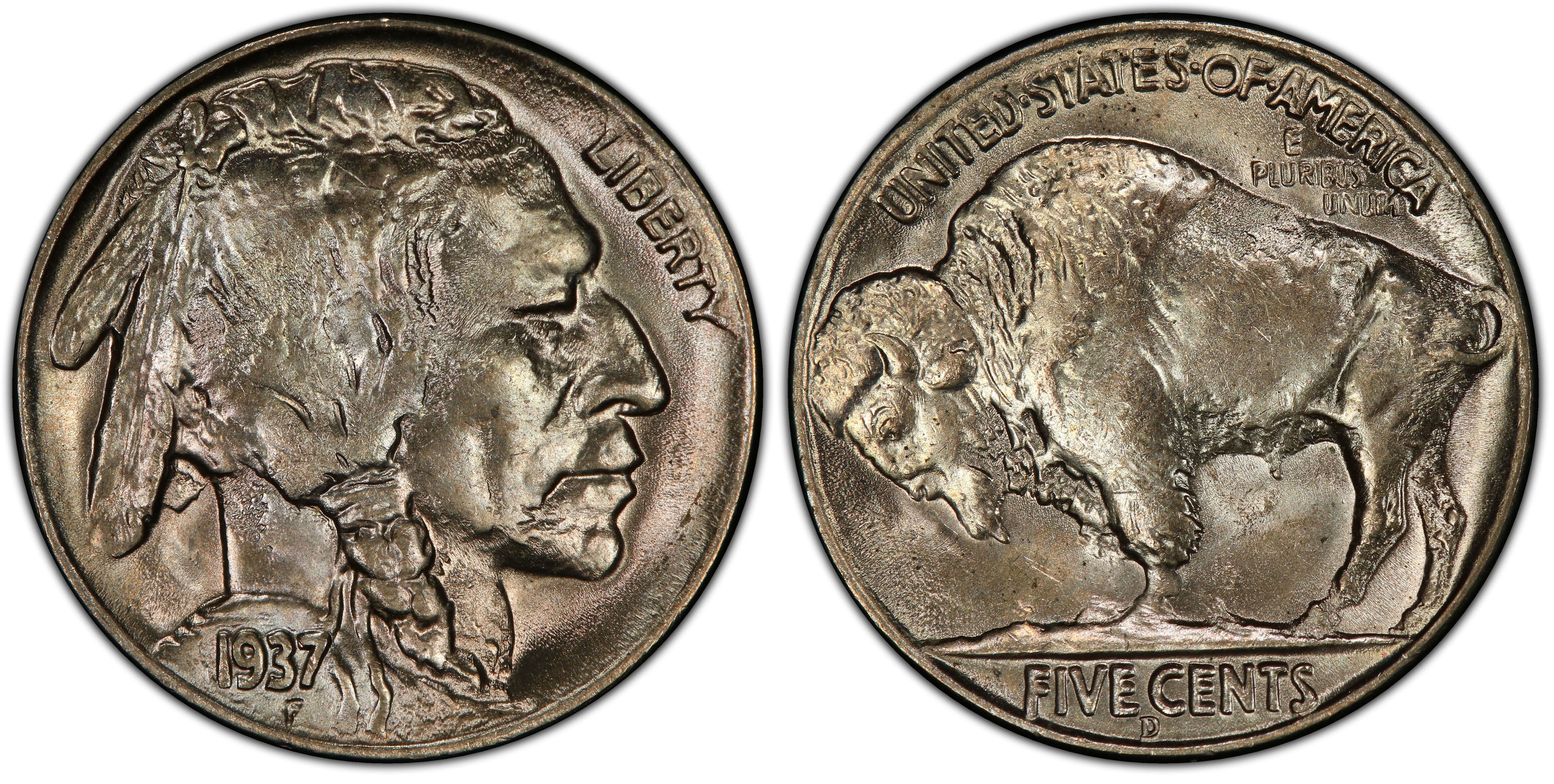
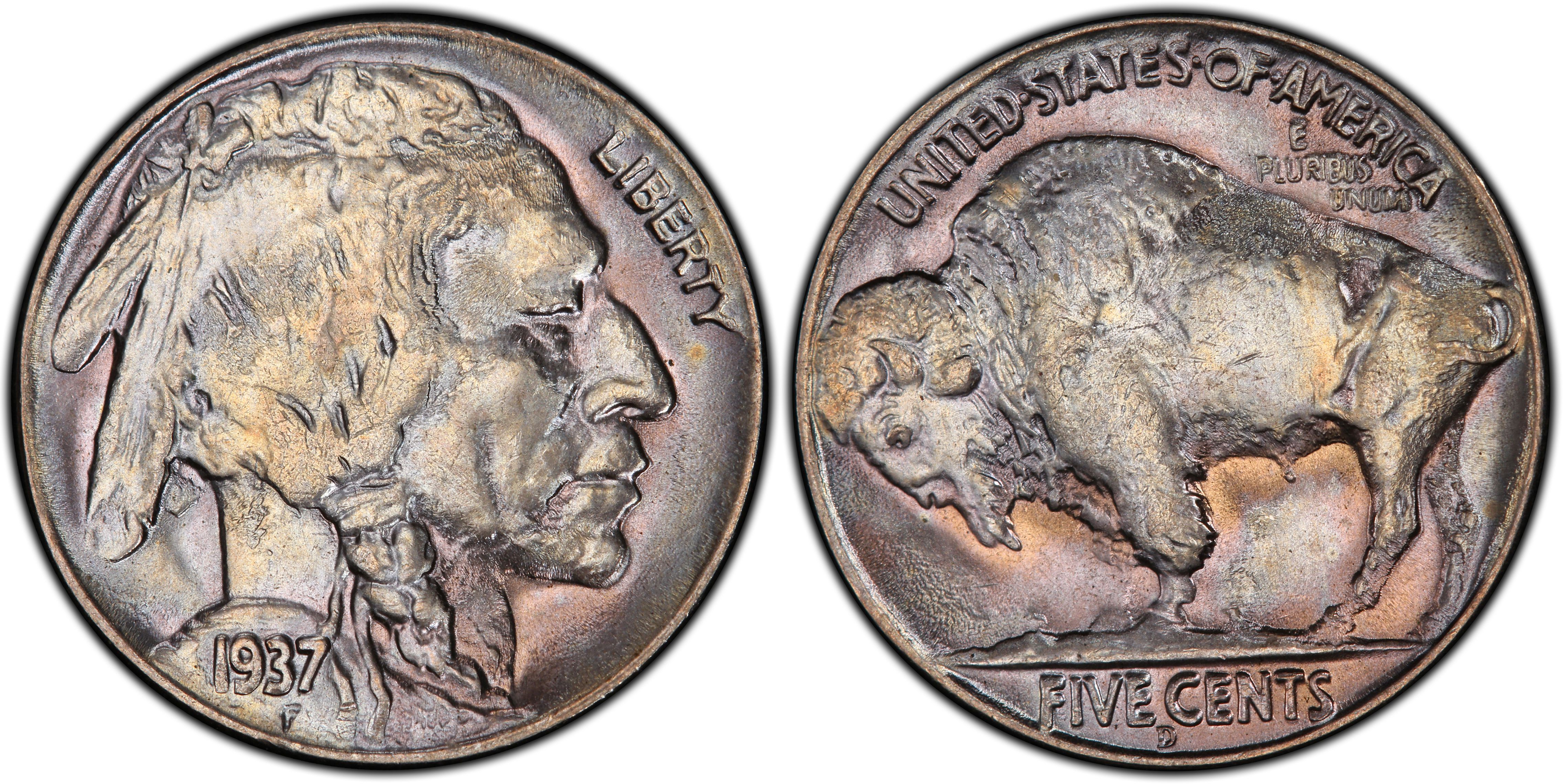
Key attribute is the missing front foreleg
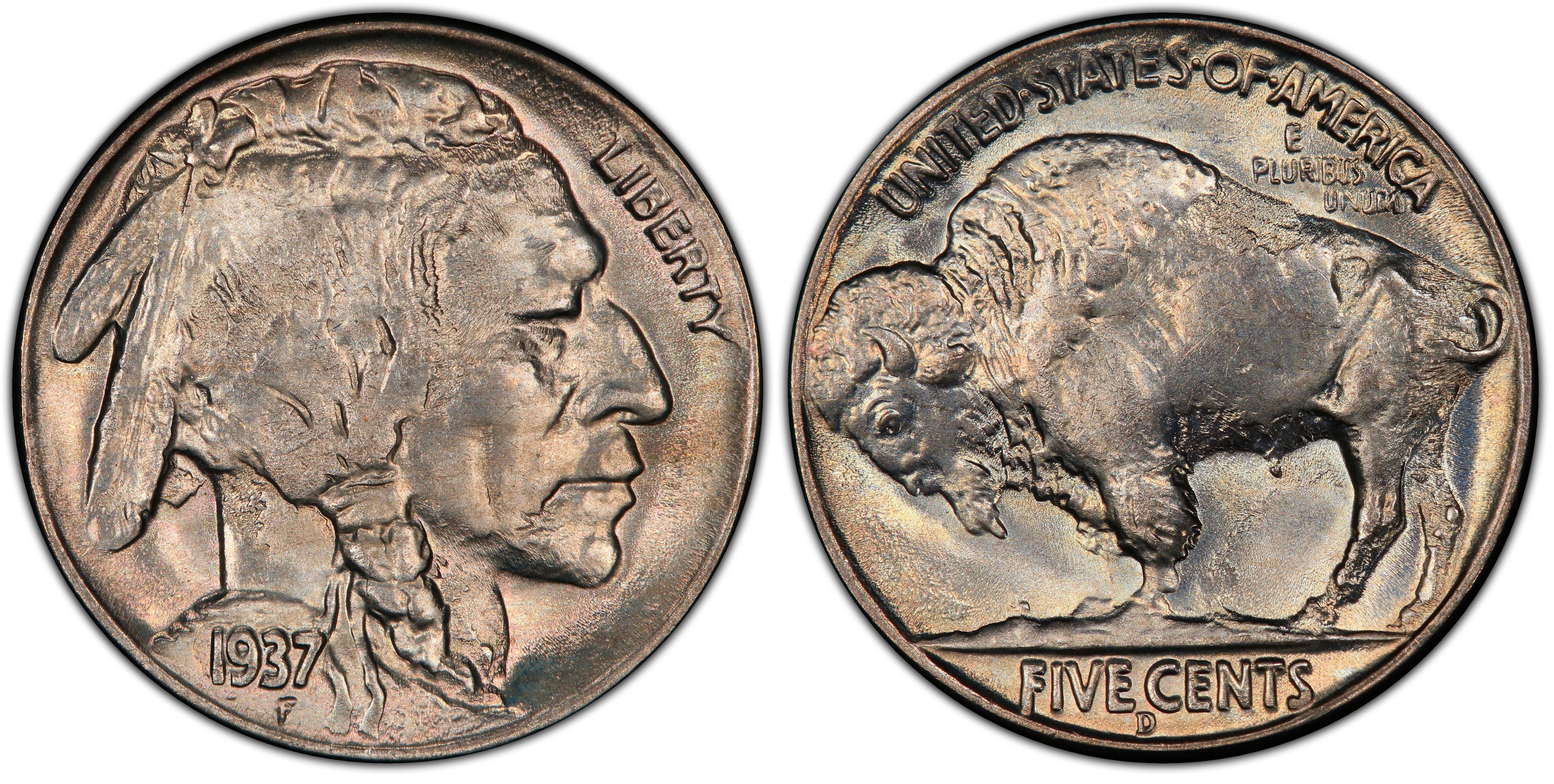
PCGS MS66+
- PCGS #:
- 3982
- Designer:
- James Earle Fraser
- Edge:
- Plain
- Diameter:
- 21.20 millimeters
- Weight:
- 5.00 grams
- Mintage:
- 17,826,000
- Mint:
- Denver
- Metal:
- 75% Copper, 25% Nickel
- Auction Record:
- $99,875 • MS66+ • 10-28-2021 • Legend Rare Coin Auctions
Rarity and Survival Estimates Learn More
| Survival Estimate | |
|---|---|
| All Grades | 10,000 |
| 60 or Better | 1,400 |
| 65 or Better | 100 |
| Numismatic Rarity | |
|---|---|
| All Grades | R-3.0 |
| 60 or Better | R-4.8 |
| 65 or Better | R-8.0 |
| Relative Rarity By Type All Specs in this Type | |
|---|---|
| All Grades | 36 / 69 TIE |
| 60 or Better | 23 / 69 TIE |
| 65 or Better | 13 / 69 TIE |
| Relative Rarity By Series All Specs in this Series | |
|---|---|
| All Grades | 36 / 72 TIE |
| 60 or Better | 23 / 72 TIE |
| 65 or Better | 13 / 72 TIE |
Condition Census What Is This?
 #1 PCGS MS66+
Legend Rare Coin Auctions, December 17, 2025, Lot 98 - $88,125; “The Cuyuna Collection" (PCGS Set Registry). Golden centers with fiery orange toning along the periphery. |
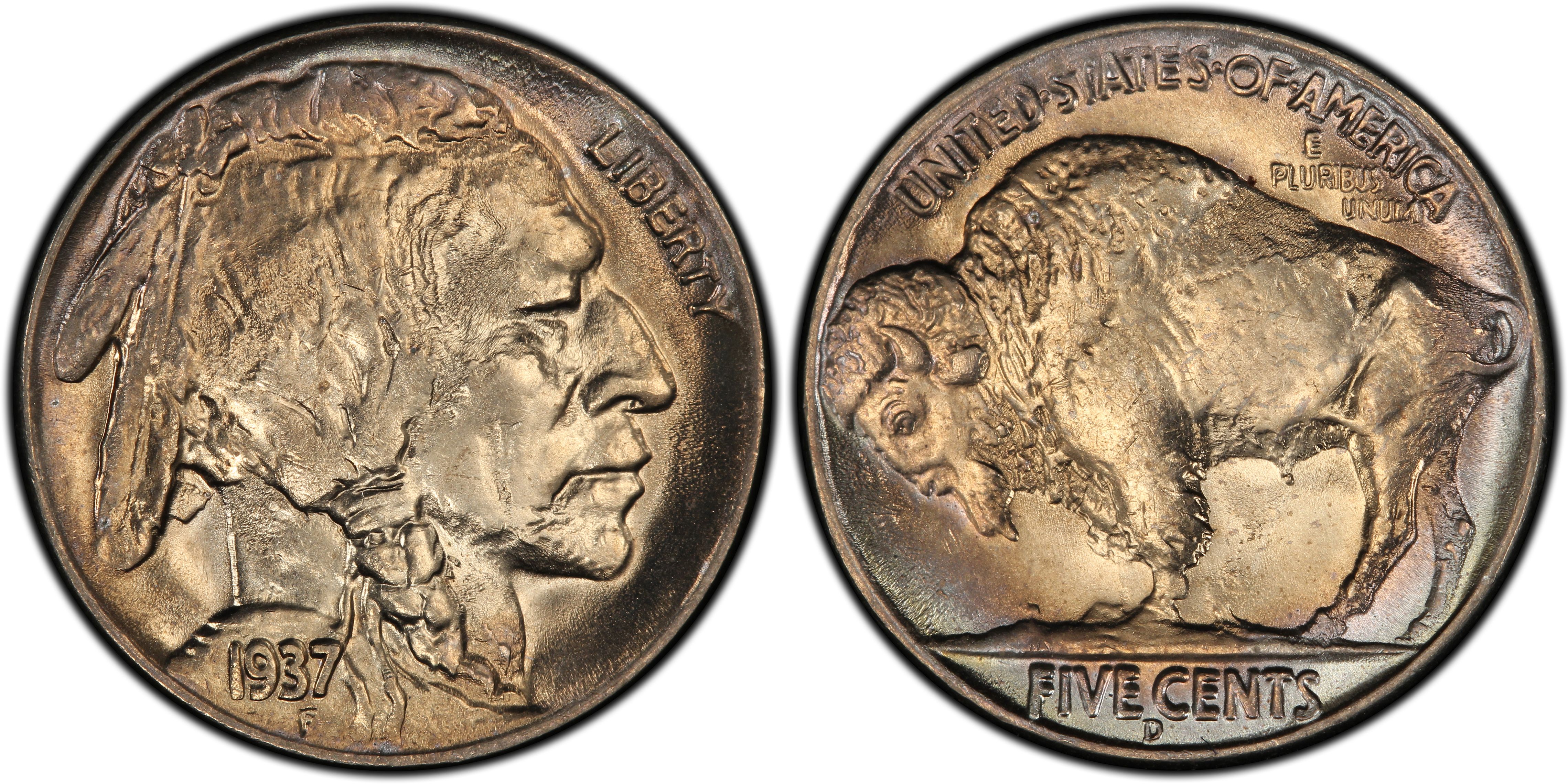 #1 PCGS MS66+
Heritage Auctions, January 9, 2020, Lot 4134 – $72,000. Golden toning throughout. Iridescent rainbow toning on the reverse. |
 #1 PCGS MS66+
Gerald Forsythe; "The FORSYTHEG Collection" (PCGS Set Registry). Intense rainbow toning. |
|
#1 PCGS MS66+
Jim Gately; "The JDG Trust Collection" (PCGS Set Registry). Pearlescent toning. Faint horizontal streaks of gold across the obverse. |
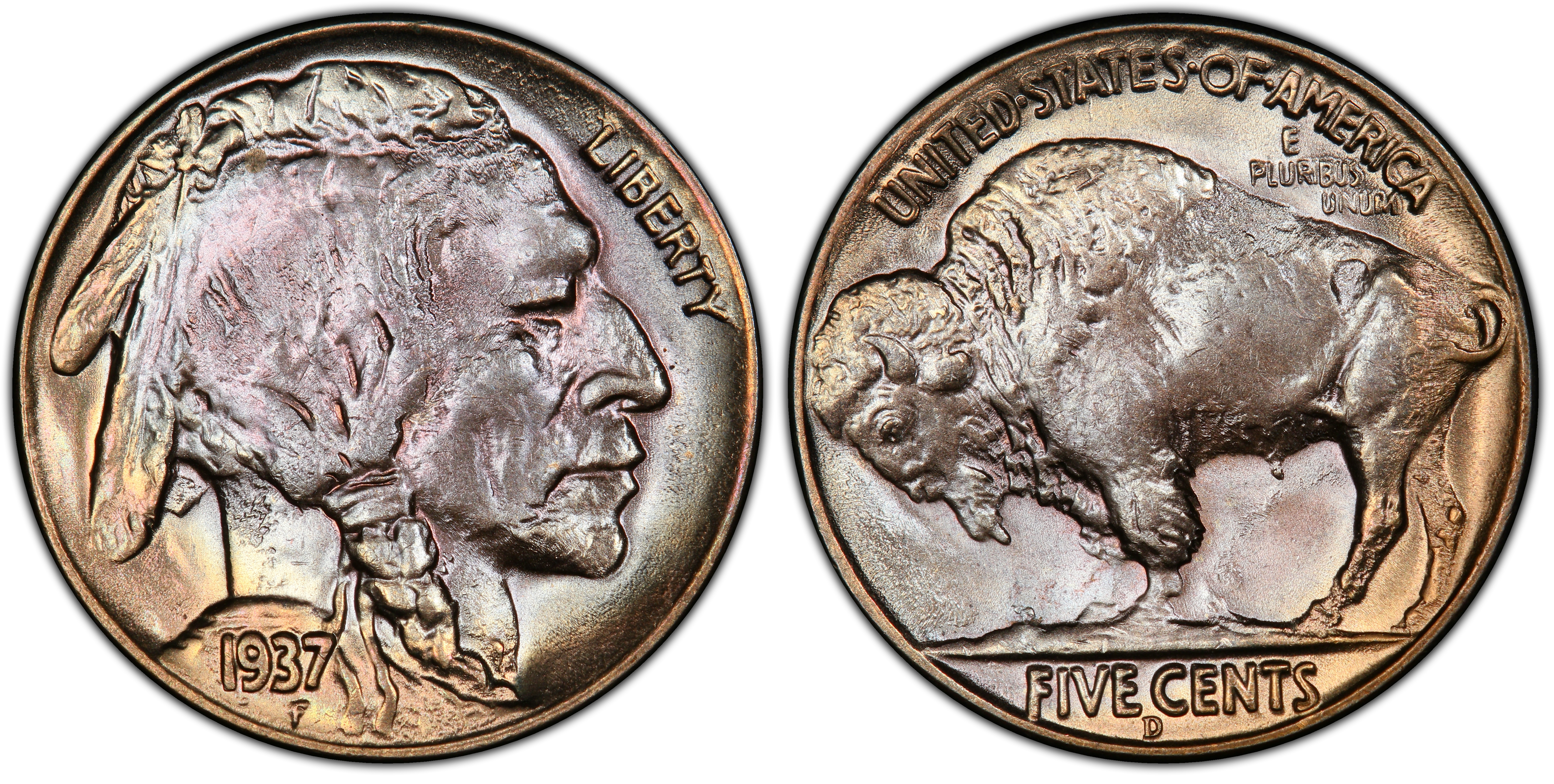 #1 PCGS MS66+
As NGC MS67 #3051481-016. Heritage Auctions, April 28, 2016, Lot 4562 – $85,187.50; “The Black Diamond Collection,” Heritage Auctions, January 10, 2019, Lot 4385 – $66,000. As PCGS MS66+ CAC #41700166. Legend Rare Coin Auctions, October 2021, Lot 297 - $99,875; Stack’s Bowers, August 16, 2023, Lot 5021 – $84,000. Flashy with pastel violet and gold toning. |
 #6 PCGS MS66
|
 #6 PCGS MS66
As PCGS MS66 #25680235. Legend Rare Coin Auctions, May 2016, Lot 66 - $55,812.50. As PCGS MS66 #38055283. Heritage Auctions, July 17, 2022, Lot 3045 - $43,200. Small diagonal mark on the mound above C of CENTS. |
 #6 PCGS MS66
Bob R. Simspon; "The Bob R. Simpson Collection, Part III," Heritage Auctions, January 24, 2021, Lot 3012 - $52,800. Pastel blue, rose, aubergine, and gold toning. |
 #6 PCGS MS66
Heritage Auctions, November 22, 2020, Lot 3304 - $34,800. Orange peel toning. |
|
#6 PCGS MS66
(Possibly) "McCarroll Collection"; Goldberg Auctioneers, September 2015, Lot 87 - $64,625. Pedigree based on CAC-approval of cert number and the McCarroll specimen not matching other MS66 examples. May not be correct. |
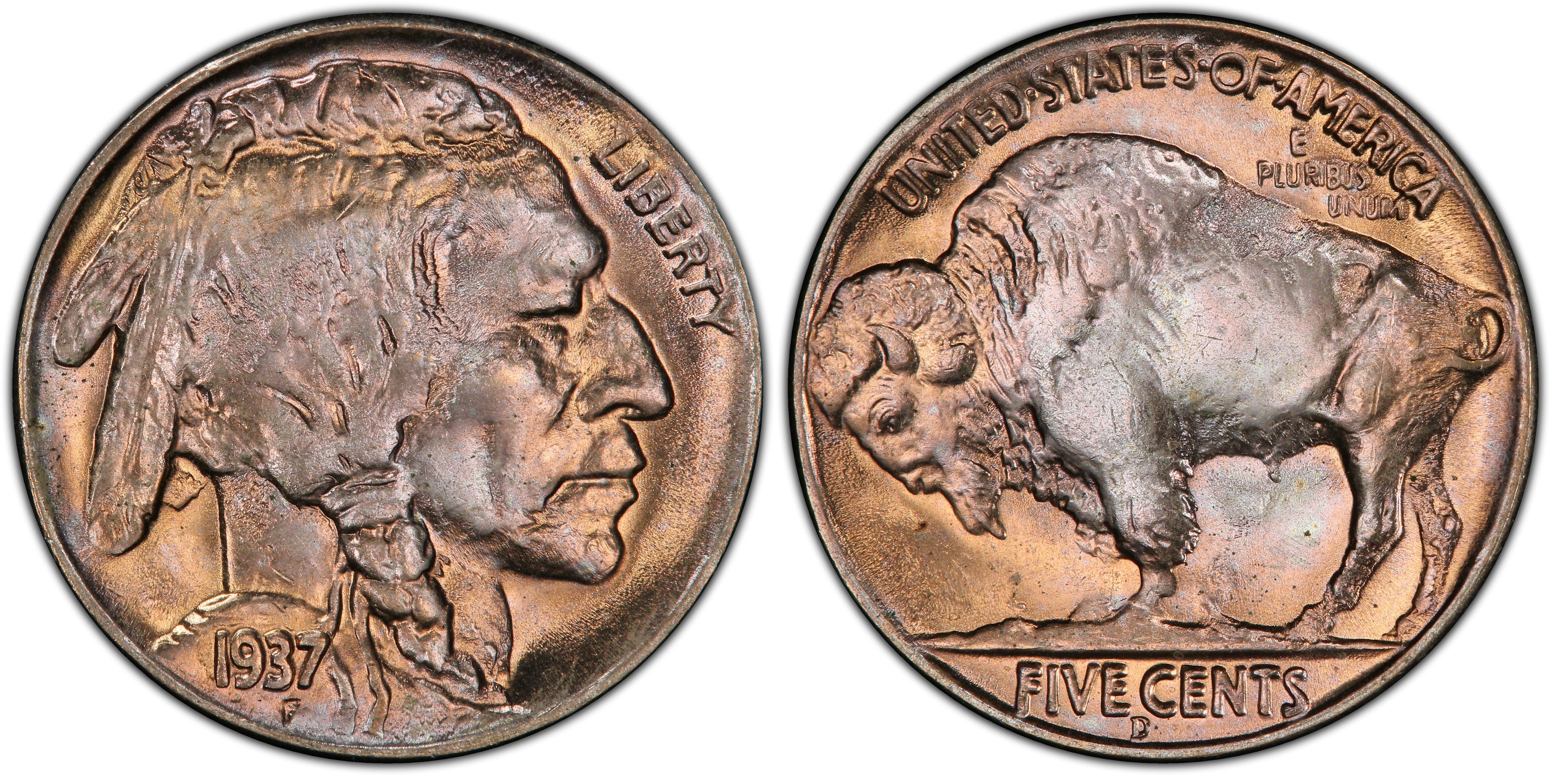 #6 PCGS MS66
Heritage Auctions, August 9, 2020, Lot 3912 - $43,200. |
 #6 PCGS MS66
"The Rafferty Collection of Nickel Coinage," Heritage Auctions, January 2018, Lot 4793 - $48,000; Dell Loy Hansen; "The D.L. Hansen Buffalo Nickels (1913-1938) Collection" (PCGS Set Registry). |
| #6 PCGS MS66 |
 #6 PCGS MS66
Ice blue and gold toning in the centers with violet toning along the periphery. Light marks on the bison's midsection. |
 #6 PCGS MS66
Rose / Apricot centers with ice blue and green along the periphery. |
| #6 PCGS MS66 |
The 1937-D “3-Legged” Buffalo Nickel
Mid-20th-century numismatists had a remarkable sense of what excites the public. From key-date coins like the 1909-S V.D.B. Lincoln Cent (#RD #2428) and the 1916-D Mercury Dime (#4906) to famous Mint errors like the 1955 Doubled Die Lincoln Cent (RD #2827), the era’s dealers were masters of promotion. They even popularized the 1955 "Bugs Bunny" Franklin Half Dollar (FBL #145358)—noteworthy because a humorously placed die clash gave Benjamin Franklin the appearance of having buck teeth. These promoters had a knack for framing coins in such a way that even non-collectors knew exactly what to look for in their pocket change.
Enter the 1937-D "3-Legged" Buffalo Nickel (#3982), so named because the bison lacks its front right leg. Of course, the Mint never intended for this to occur. The leg was present on the original die but was "lapped" (ground off) during an aggressive over-polishing session. Numismatist Walter Breen, who was occasionally known to embellish a good story, identified the press operator as a "Mr. Young." According to Breen, Young used a polishing rod to remove a series of clash marks rather than replacing the damaged dies.
Alternatively, the polishing may have been an attempt to extend the life of a rusted and worn die pair, as evidenced by the deep rust pitting visible on both the obverse and reverse of many specimens. This heavy-handed polishing removed almost all of the bison’s front right foreleg—leaving only the hoof—and created a characteristic "pock-marked" appearance on the rear leg. While such dies would normally be retired, the Denver Mint was under immense pressure to increase production, leading to the use of dies far beyond their standard life cycle. Another interesting feature of the 3-Legged Buffalo is less known to the general public but intimately familiar to specialists: a rough, raised area between the bison's back legs that resembles a stream of urine. All genuine "3-Leggers" exhibit this diagnostic "stream," which is actually a remnant of the damaged die surface.
Discovery and Marketing
The 3-Legged Buffalo entered circulation through standard Treasury shipments. Montana coin dealer C.L. “Cowboy” Franzen discovered the first examples in late 1937 and subsequently marketed them in The Numismatic Scrapbook. By 1965, dealer Ken Nichols was selling examples ranging from Fine (F) to About Uncirculated (AU) for $40 to $95 (approximately $415 to $985 today). Because the issue was caught relatively quickly and all genuine examples originate from a single reverse die, some experts estimate the total production at roughly 20,000 pieces, but certified populations suggest that this number may be too low.
Market Value and Rarity
Given the notoriety of the error, collectors and members of the general public diligently sifted through their pocket change to find examples of this valuable nickel. If the 20,000-coin mintage estimate is correct, roughly 15% of the population survives in Mint State, while another 25% exist in About Uncirculated (AU) condition—likely removed from circulation within a year or so of release. This leaves the remaining 60% in circulated grades up to XF45. Coins in these lower grades likely remained in circulation well into the 1960s, long after the Buffalo type had been roundly replaced by the Jefferson Nickel.
The Absolute Pinnacle
PCGS counts just five pieces at our Top Pop grade of MS66+. One noteworthy specimen—boasting full luster and exceptional gold and lilac toning—sold for $85,000 in 2016 while in an NGC MS67 holder. Interestingly, this same coin set an auction record in 2021 with Legend Rare Coin Auctions, realizing nearly $100,000 even after being re-graded as PCGS MS66+!
A Tall Tale
Part of the lore of my coin-collecting journey began in 1979, when I received a Buffalo Nickel in change at a Shoney’s restaurant near Nashville, Tennessee. According to my mother, it was the famous "3-Legged" variety—and I had allegedly spent it on something at some point. The details were always vague. Even as a child, I never quite believed the story, but the fact that my mother instinctively associated a worn Buffalo Nickel with that valuable Mint error is a clear testament to the public’s widespread familiarity with the coin.
* * *
The 1937-D "three-legged" Buffalo nickel is one of the most famous and most important coins of the 20th century. It is arguably the classic Buffalo nickel. This is an excessively polished die variety with the front leg of the Buffalo missing, though interestingly, the hoof shows. The coin is scare in circulated condition and rare, though not that rare, in mint state condition. Some Gem examples have survived. The popularity of this "super cool" variety drives its price as much as its rarity. This statement may seem contradictory, but most 3 leggers are fairly well struck...the leg is just missing! Luster on mint state examples is usually good and, like other 1937-D Buffalos, the luster is usually frosty. Buyers need to be very careful of 'sliders,' lightly circulated coins that attempt to pass as mint state. These coins were pulled out of circulation in 1937/38 as collectors of the era searched their change for this widely publicized variety and these barely circulated examples correctly grade AU50 to AU58+. This of course is not a problem if you buy PCGS graded 3 leggers. This is really a fun coin!