

PCGS MS67

PCGS MS67
- PCGS #:
- 3967
- Designer:
- James Earle Fraser
- Edge:
- Plain
- Diameter:
- 21.20 millimeters
- Weight:
- 5.00 grams
- Mintage:
- 8,370,000
- Mint:
- Denver
- Metal:
- 75% Copper, 25% Nickel
- Auction Record:
- $15,275 • MS66+ • 02-27-2014 • Heritage Auctions
Major Varieties
- 1929-D 5C
Go To Grade
Current Auctions - PCGS Graded
Current Auctions - NGC Graded
For Sale Now at Collectors Corner - PCGS Graded
For Sale Now at Collectors Corner - NGC Graded
Rarity and Survival Estimates Learn More
| Survival Estimate | |
|---|---|
| All Grades | 6,500 |
| 60 or Better | 1,750 |
| 65 or Better | 350 |
| Numismatic Rarity | |
|---|---|
| All Grades | R-3.7 |
| 60 or Better | R-4.7 |
| 65 or Better | R-6.3 |
| Relative Rarity By Type All Specs in this Type | |
|---|---|
| All Grades | 17 / 69 TIE |
| 60 or Better | 30 / 69 TIE |
| 65 or Better | 30 / 69 |
| Relative Rarity By Series All Specs in this Series | |
|---|---|
| All Grades | 17 / 72 TIE |
| 60 or Better | 30 / 72 TIE |
| 65 or Better | 30 / 72 |
Condition Census What Is This?
 #1 MS67 PCGS grade
|
| #1 MS67 PCGS grade |
| #1 MS67 PCGS grade |
| #2 MS66+ PCGS grade |
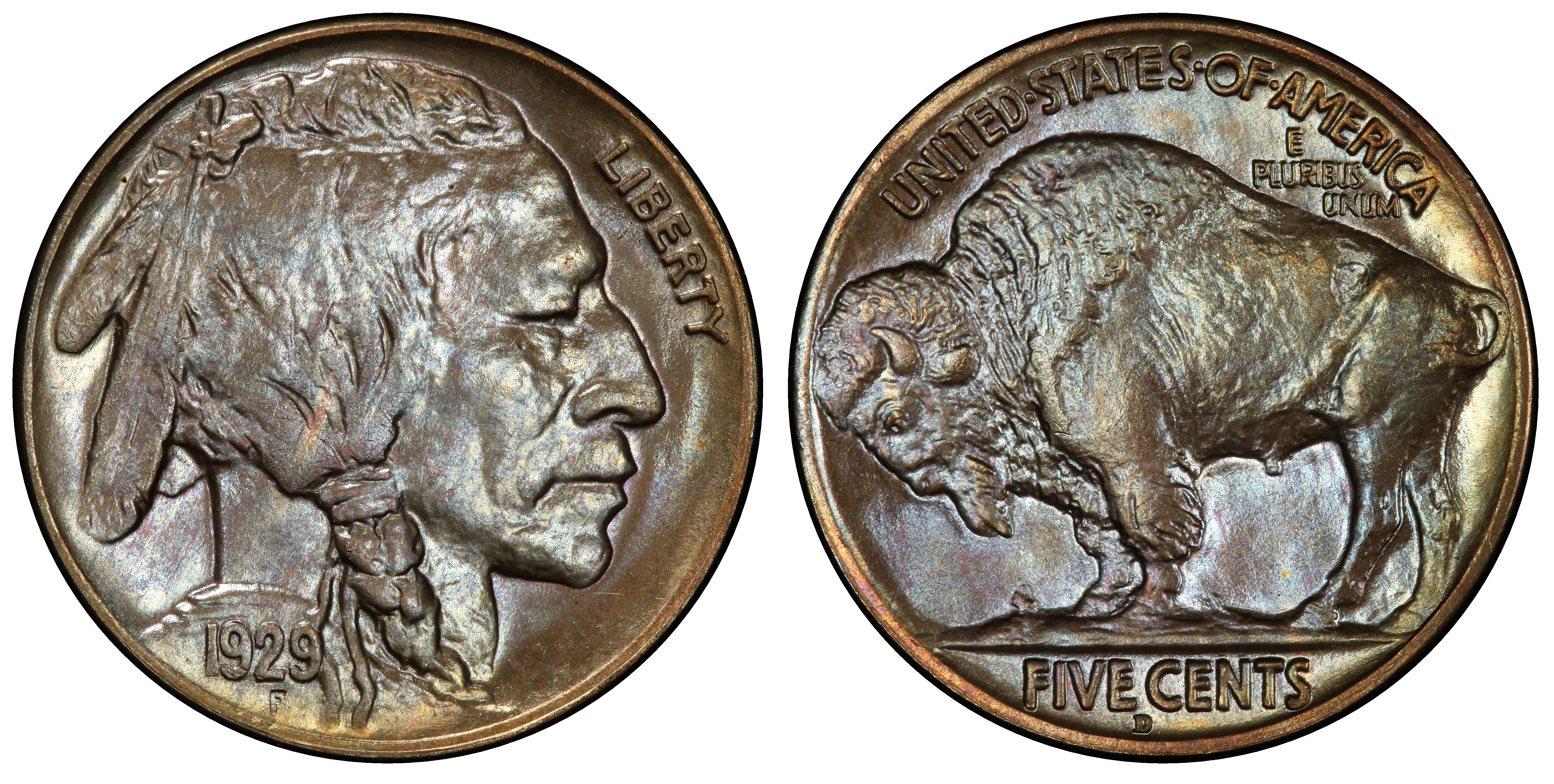 #4 MS66+ PCGS grade
|
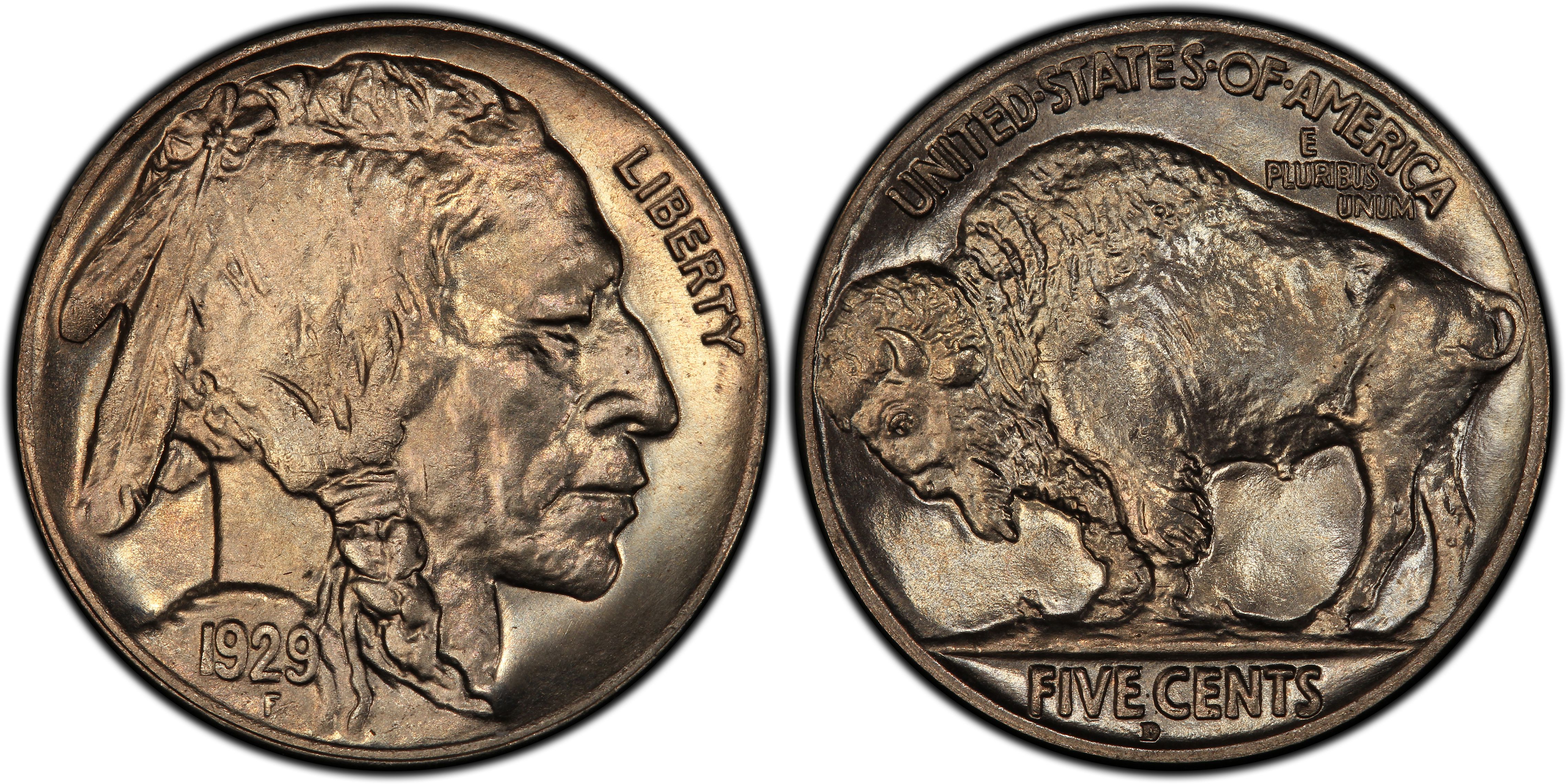 #4 MS66+ PCGS grade
|
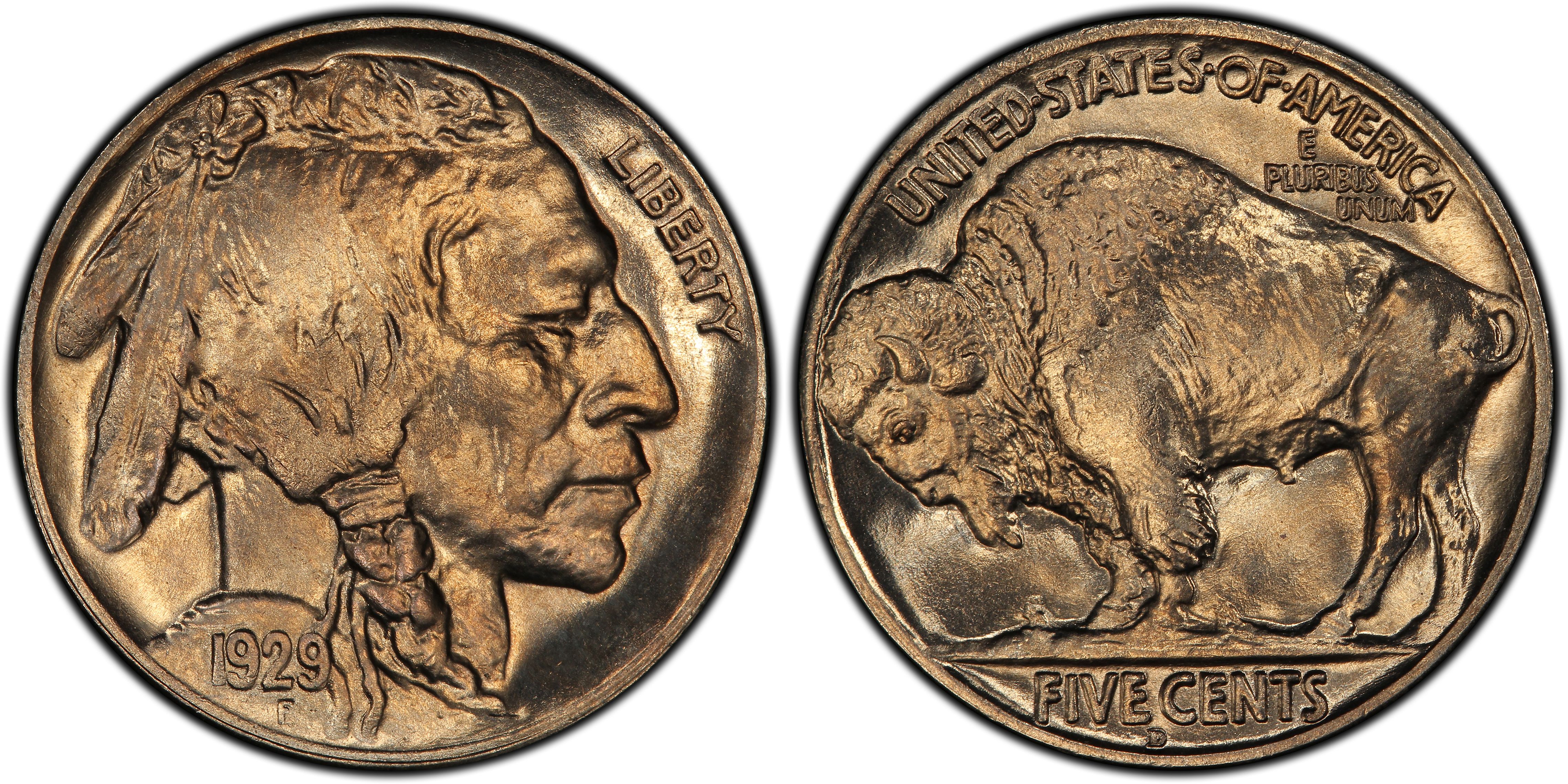 #4 MS66+ PCGS grade
|
| #4 MS66+ PCGS grade |
| #4 MS66+ PCGS grade |
 #10 MS66 PCGS grade
|
David Hall:
The 1929-D is common in lower circulated grades and semi-common in VF20 thru EF45. It is the rarest 1929 to 1938 Buffalo nickel in mint state and Gem condition, though it is not nearly as rare as the earlier Denver and San Francisco Mint issues. The strike is usually at least decent. Luster is typically somewhat frosty and iridescent.