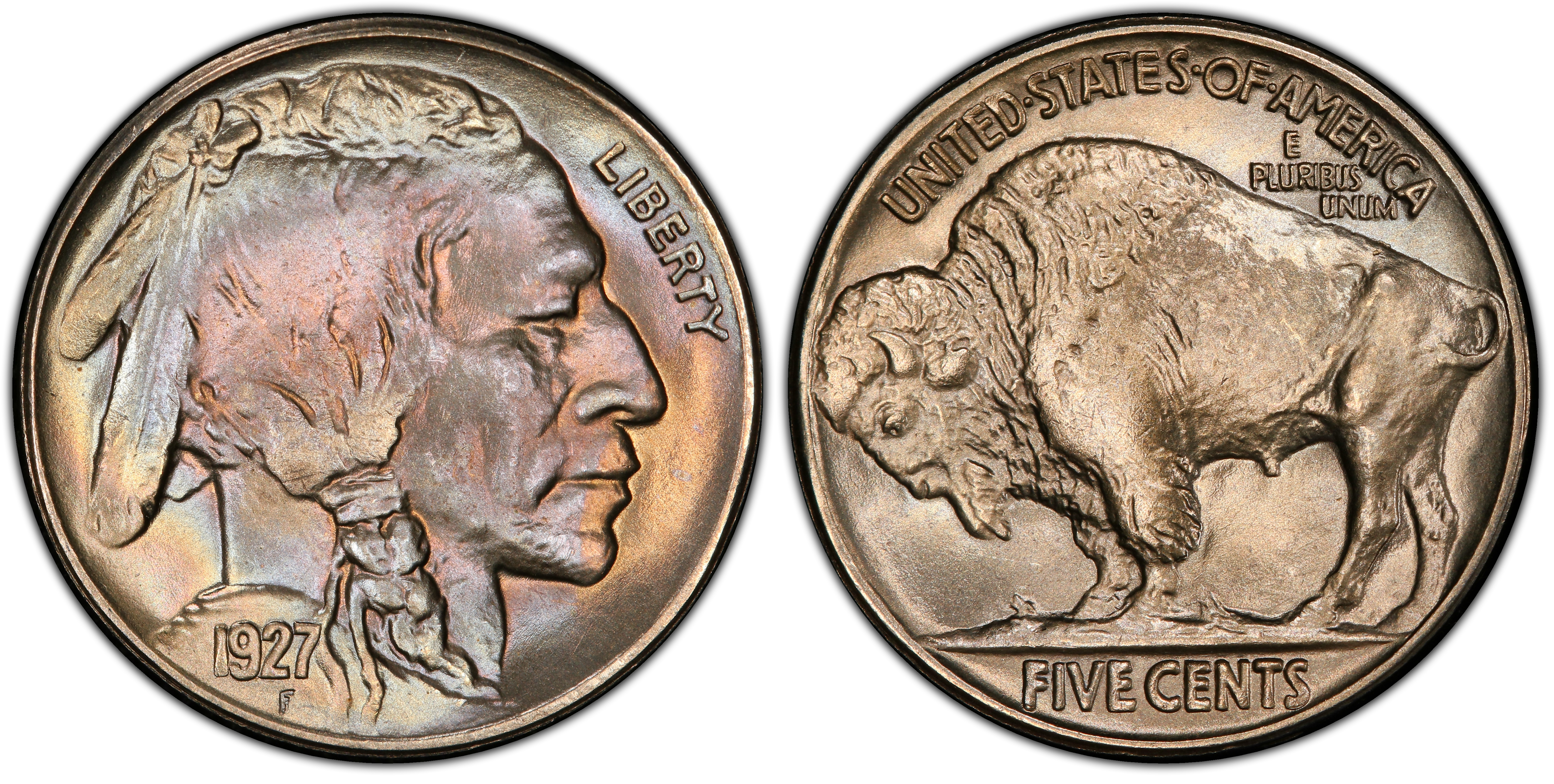

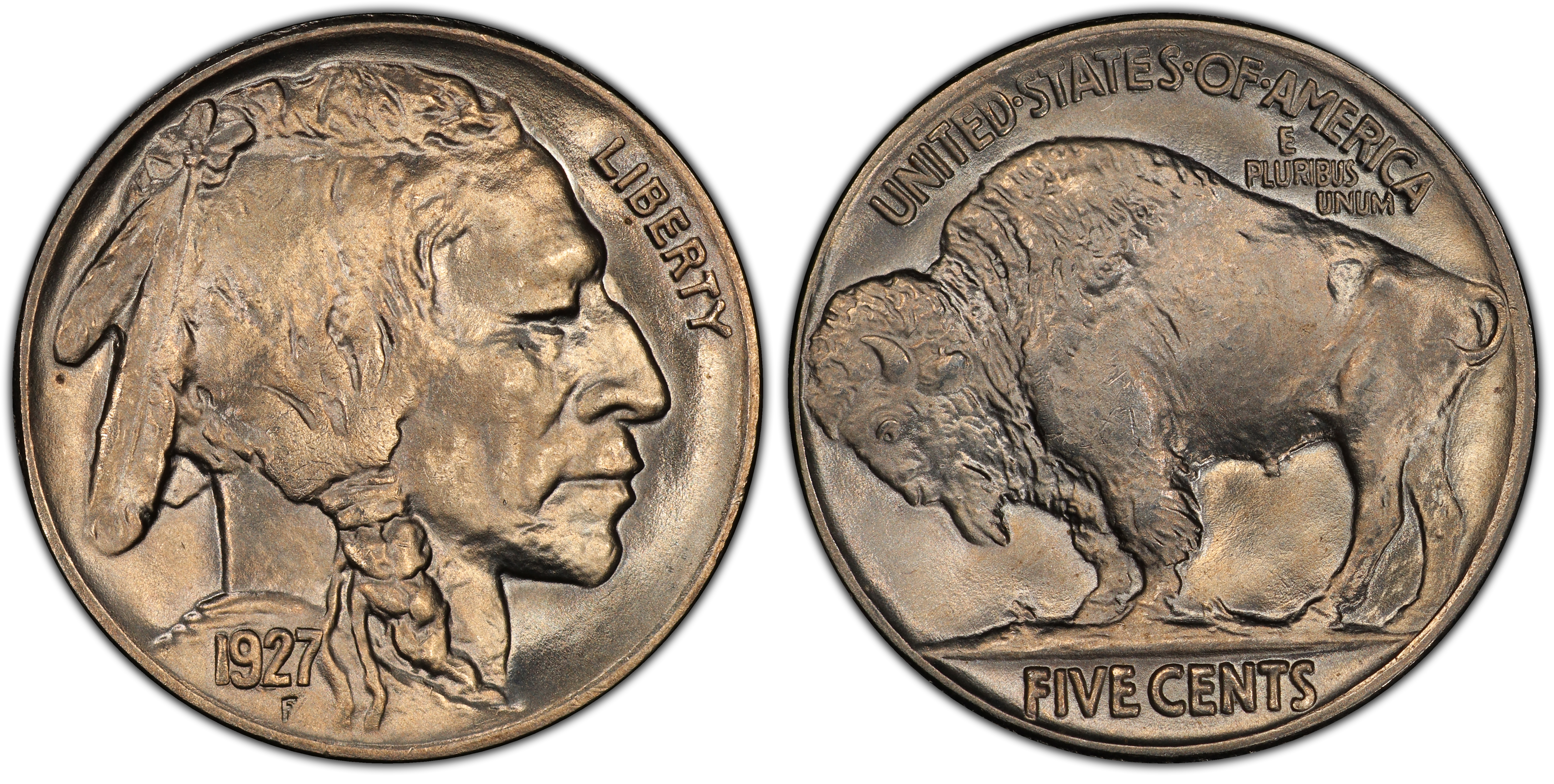
PCGS MS67+

PCGS MS67+
- PCGS #:
- 3960
- Designer:
- James Earle Fraser
- Edge:
- Plain
- Diameter:
- 21.20 millimeters
- Weight:
- 5.00 grams
- Mintage:
- 37,981,000
- Mint:
- Philadelphia
- Metal:
- 75% Copper, 25% Nickel
- Auction Record:
- $24,000 • MS67+ • 08-20-2019 • Stack's Bowers
Major Varieties
- 1927 5C
Go To Grade
Current Auctions - PCGS Graded
Current Auctions - NGC Graded
For Sale Now at Collectors Corner - PCGS Graded
For Sale Now at Collectors Corner - NGC Graded
Rarity and Survival Estimates Learn More
| Survival Estimate | |
|---|---|
| All Grades | 14,000 |
| 60 or Better | 3,000 |
| 65 or Better | 1,500 |
| Numismatic Rarity | |
|---|---|
| All Grades | R-2.9 |
| 60 or Better | R-4.4 |
| 65 or Better | R-4.8 |
| Relative Rarity By Type All Specs in this Type | |
|---|---|
| All Grades | 43 / 69 TIE |
| 60 or Better | 44 / 69 TIE |
| 65 or Better | 52 / 69 TIE |
| Relative Rarity By Series All Specs in this Series | |
|---|---|
| All Grades | 44 / 72 TIE |
| 60 or Better | 44 / 72 TIE |
| 65 or Better | 53 / 72 TIE |
Condition Census What Is This?
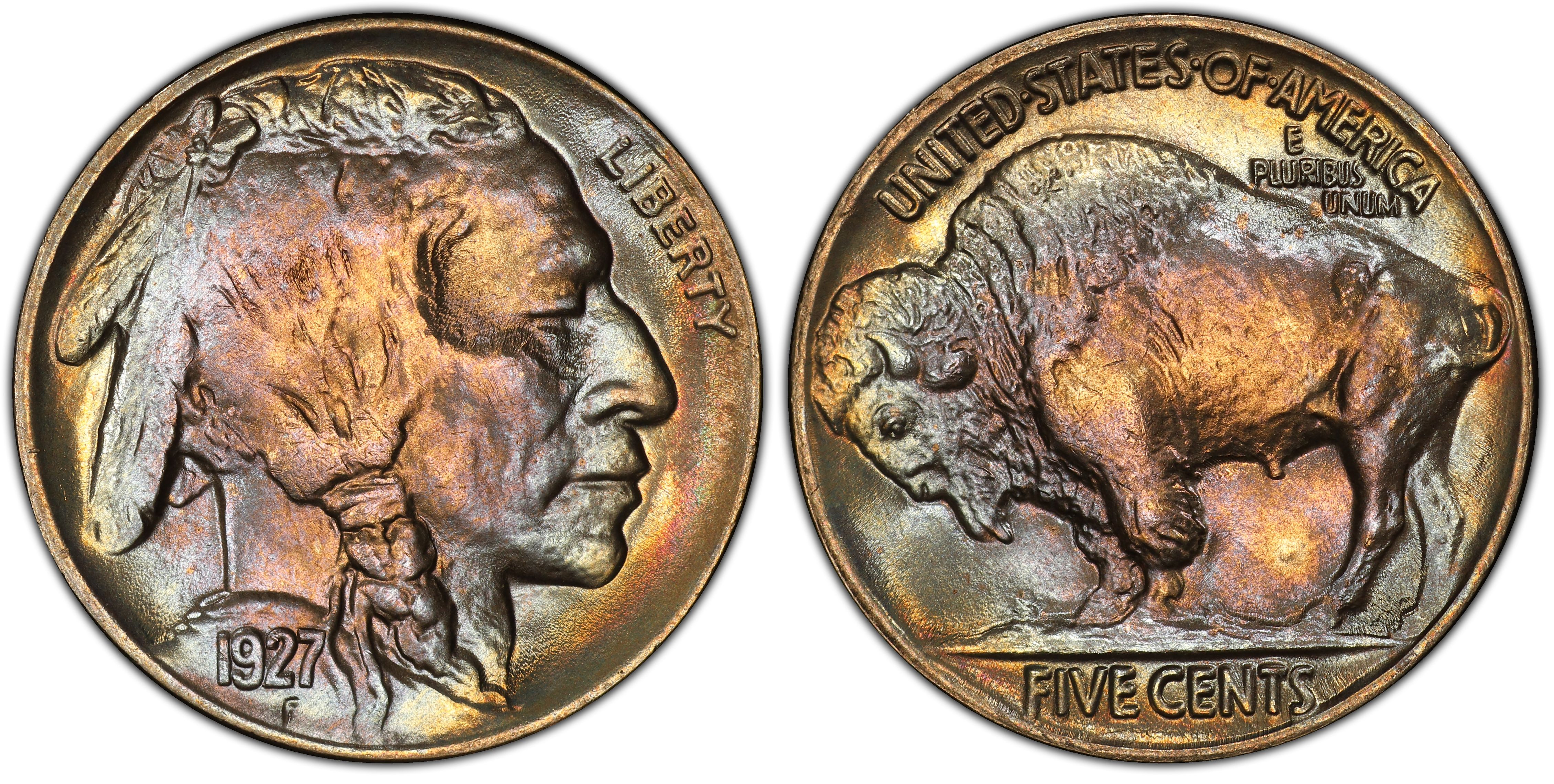 #1 MS67+ PCGS grade
Legend Rare Coin Auctions 9/2019:166 |
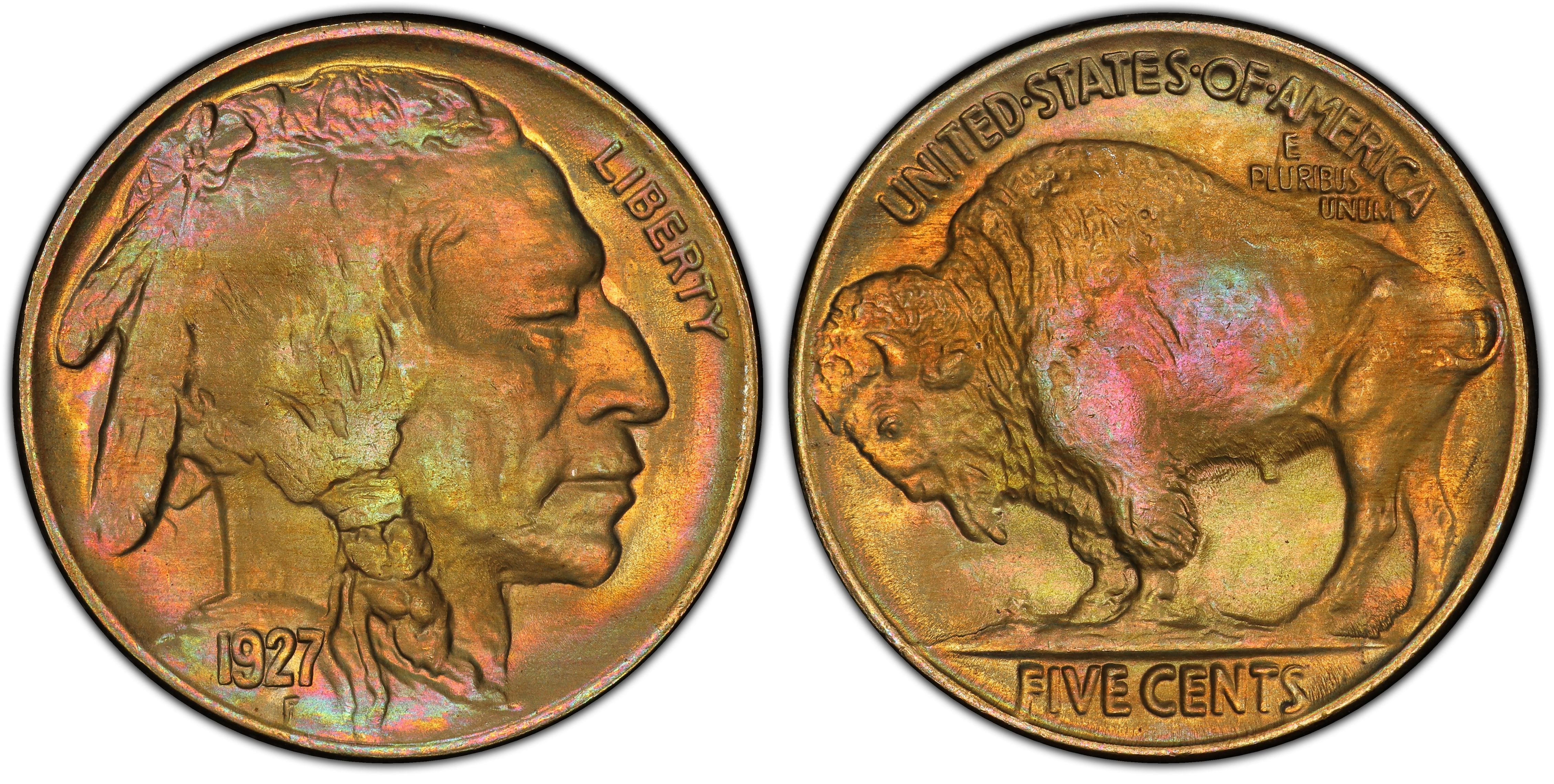 #1 MS67+ PCGS grade
|
 #1 MS67+ PCGS grade
|
| #1 MS67+ PCGS grade |
 #5 MS67 PCGS grade
High Desert Collection (PCGS Set Registry) |
 #5 MS67 PCGS grade
|
 #5 MS67 PCGS grade
|
| #5 MS67 PCGS grade |
| #5 MS67 PCGS grade |
David Hall:
The 1927 is fairly common in all circulated grades. While not as common in mint state as many of the dates in the 1930s, it is one of the more common dates of the 1920s. The strike is usually quite sharp and luster can be frosty and outstanding.