
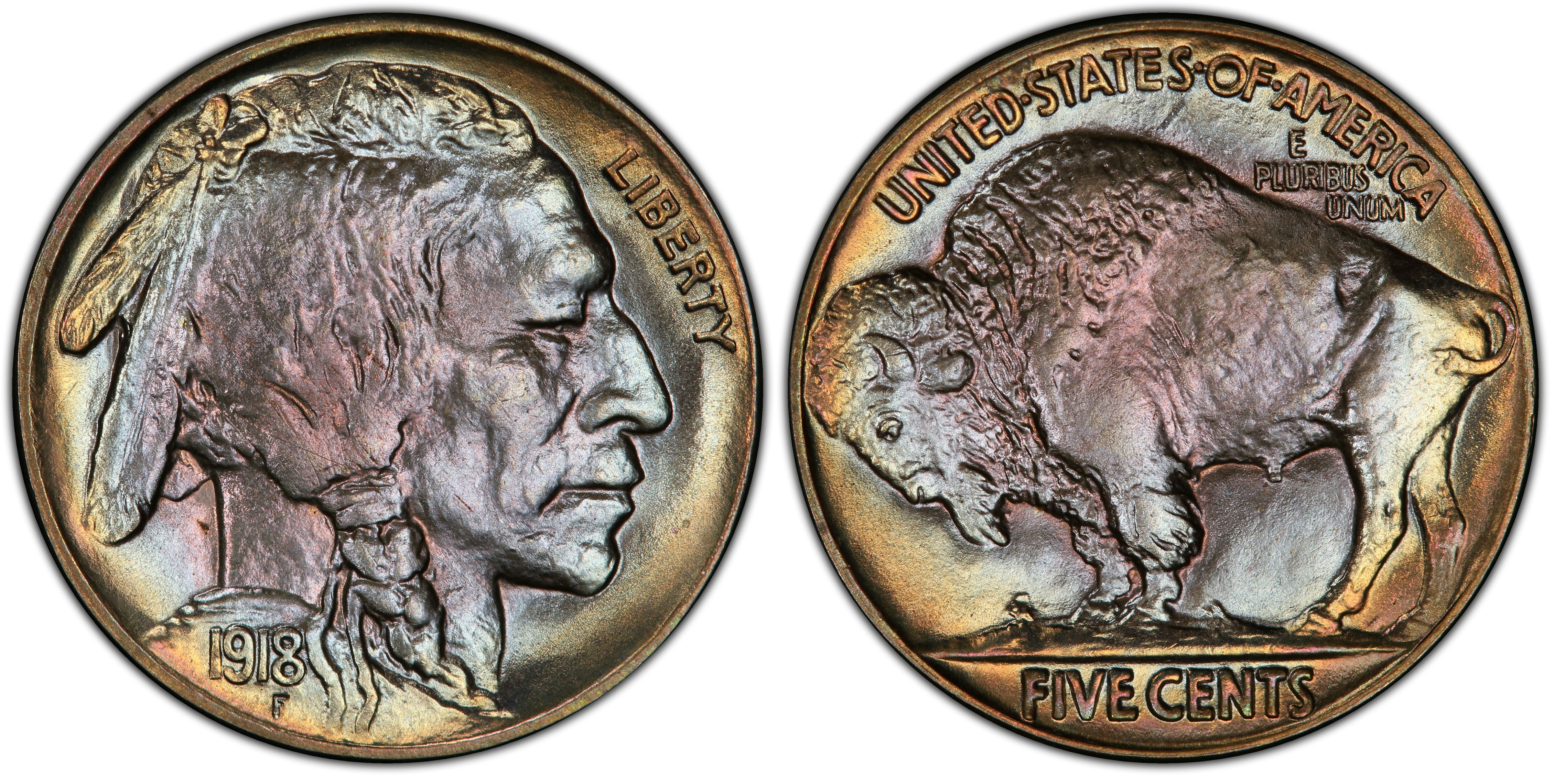
PCGS MS67+

PCGS MS67
- PCGS #:
- 3937
- Designer:
- James Earle Fraser
- Edge:
- Plain
- Diameter:
- 21.20 millimeters
- Weight:
- 5.00 grams
- Mintage:
- 32,086,314
- Mint:
- Philadelphia
- Metal:
- 75% Copper, 25% Nickel
- Auction Record:
- $55,200 • MS67+ • 09-17-2020 • Heritage Auctions
Major Varieties
- 1918 5C
Go To Grade
Current Auctions - PCGS Graded
Current Auctions - NGC Graded
For Sale Now at Collectors Corner - PCGS Graded
For Sale Now at Collectors Corner - NGC Graded
Rarity and Survival Estimates Learn More
| Survival Estimate | |
|---|---|
| All Grades | 6,500 |
| 60 or Better | 1,400 |
| 65 or Better | 400 |
| Numismatic Rarity | |
|---|---|
| All Grades | R-3.7 |
| 60 or Better | R-4.8 |
| 65 or Better | R-6.2 |
| Relative Rarity By Type All Specs in this Type | |
|---|---|
| All Grades | 17 / 69 TIE |
| 60 or Better | 23 / 69 TIE |
| 65 or Better | 31 / 69 TIE |
| Relative Rarity By Series All Specs in this Series | |
|---|---|
| All Grades | 17 / 72 TIE |
| 60 or Better | 23 / 72 TIE |
| 65 or Better | 31 / 72 TIE |
Condition Census What Is This?
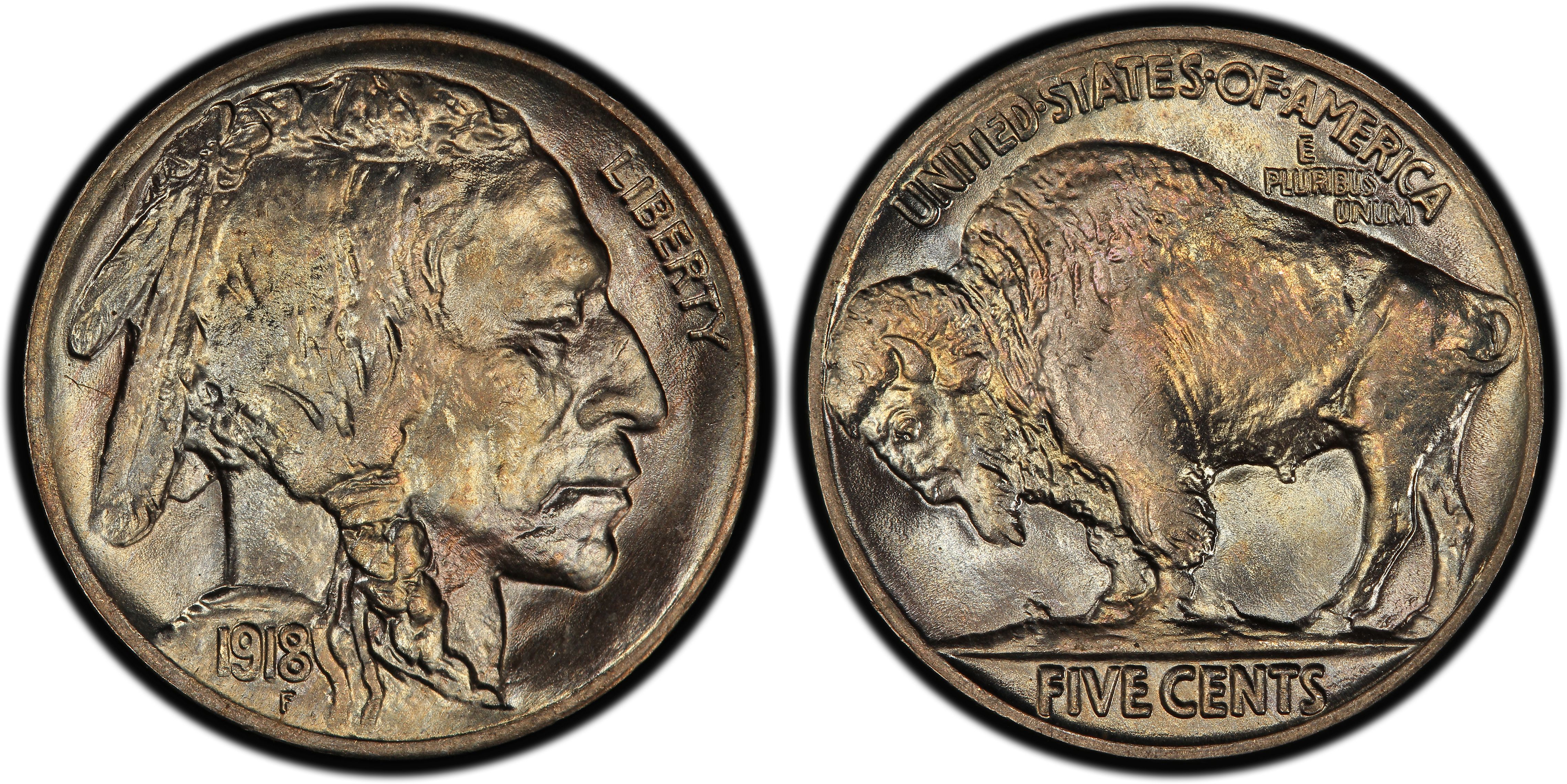 #1 MS67 PCGS grade
|
 #1 MS67 PCGS grade
|
 #1 MS67 PCGS grade
|
| #1 MS67 PCGS grade |
| #1 MS67 PCGS grade |
| #1 MS67 PCGS grade |
| #1 MS67 PCGS grade |
| #1 MS67 PCGS grade |
 #9 MS66+ PCGS grade
|
| #9 MS66+ PCGS grade8 |
David Hall:
The 1918 is about as rare as other early Philadelphia Mints in circulated grades. In Gem condition, the 1918 is the rarest P Mint Buffalo nickel. It is about equal in rarity to the 1913-D Type 2 and 1914-D. Strike for the 1918 is uaually very sharp and luster is usually not a problem. While rare in Gem condition, when you do find one it is usually very nice.