
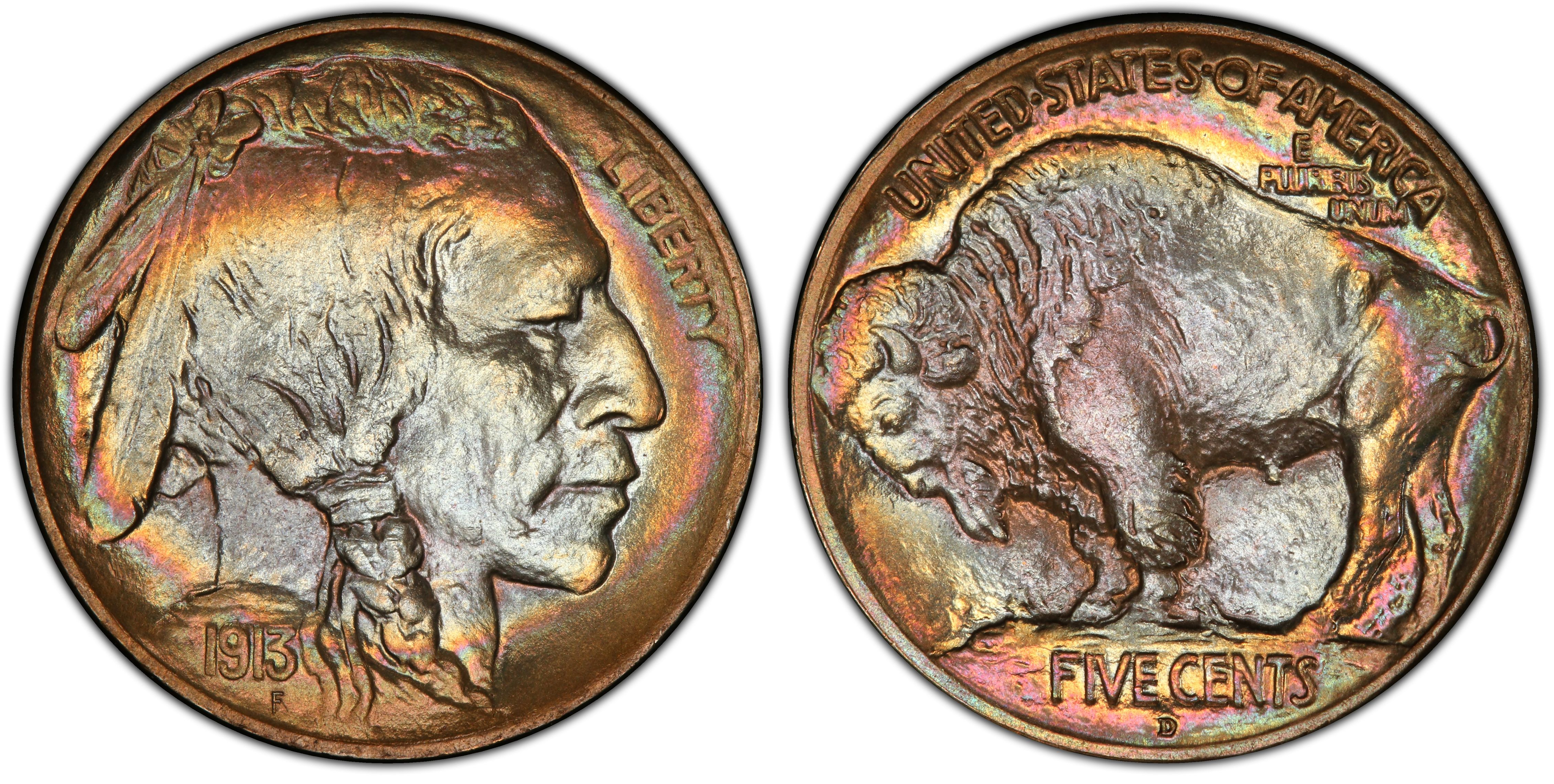
PCGS MS68
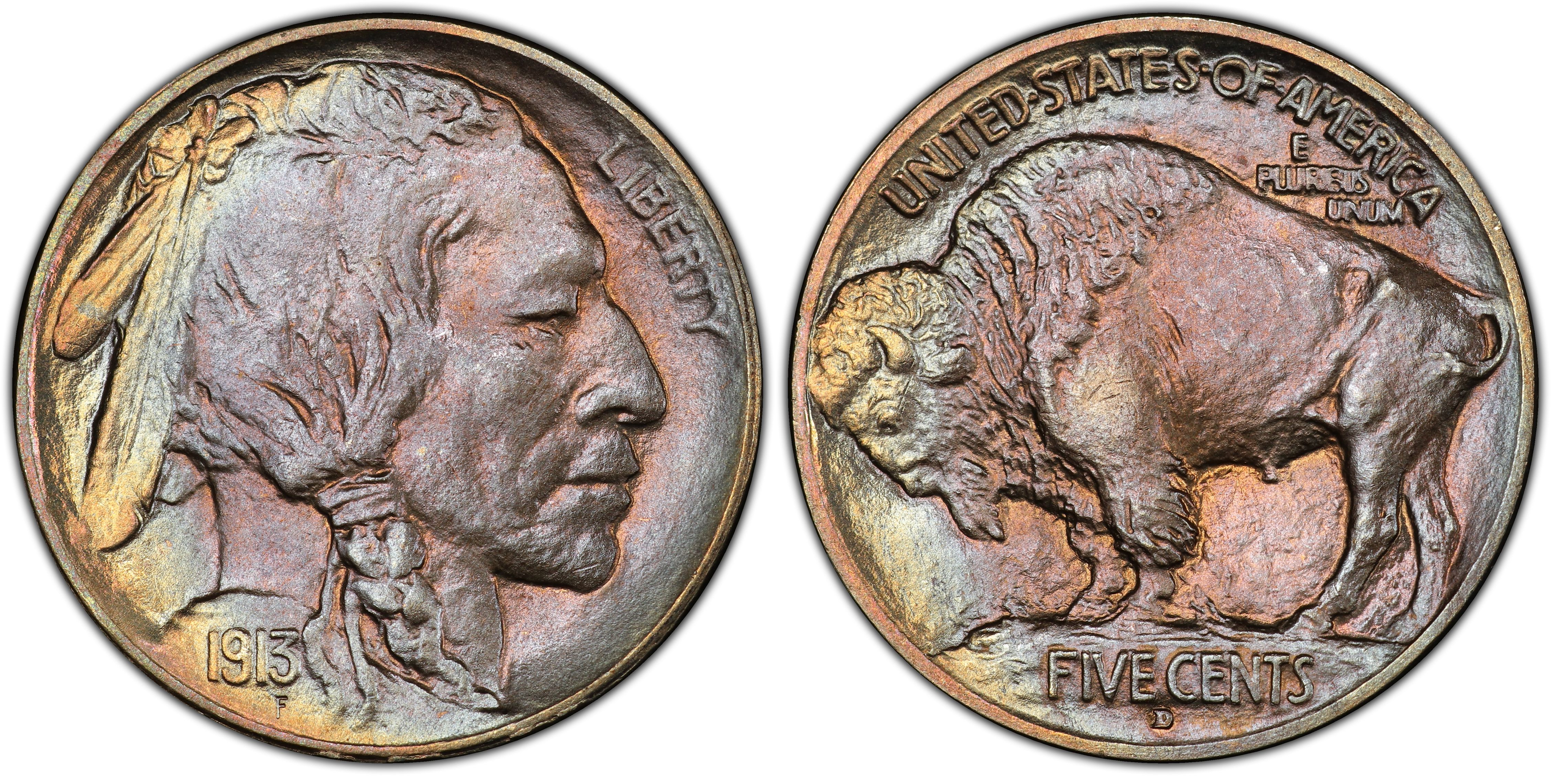
PCGS MS68
- PCGS #:
- 3916
- Designer:
- James Earle Fraser
- Edge:
- Plain
- Diameter:
- 21.20 millimeters
- Weight:
- 5.00 grams
- Mintage:
- 5,337,000
- Mint:
- Denver
- Metal:
- 75% Copper, 25% Nickel
- Auction Record:
- $33,600 • MS68 • 05-04-2025 • Heritage Auctions
Major Varieties
- 1913-D 5C Type 1
Go To Grade
Current Auctions - PCGS Graded
Current Auctions - NGC Graded
For Sale Now at Collectors Corner - PCGS Graded
For Sale Now at Collectors Corner - NGC Graded
Rarity and Survival Estimates Learn More
| Survival Estimate | |
|---|---|
| All Grades | 25,000 |
| 60 or Better | 5,000 |
| 65 or Better | 2,000 |
| Numismatic Rarity | |
|---|---|
| All Grades | R-2.7 |
| 60 or Better | R-4.0 |
| 65 or Better | R-4.6 |
| Relative Rarity By Type All Specs in this Type | |
|---|---|
| All Grades | 2 / 3 |
| 60 or Better | 2 / 3 |
| 65 or Better | 2 / 3 |
| Relative Rarity By Series All Specs in this Series | |
|---|---|
| All Grades | 65 / 72 TIE |
| 60 or Better | 59 / 72 TIE |
| 65 or Better | 55 / 72 TIE |
Condition Census What Is This?
 #1 MS68 PCGS grade
Gerald R. Forsythe Collection |
| #1 MS68 PCGS grade |
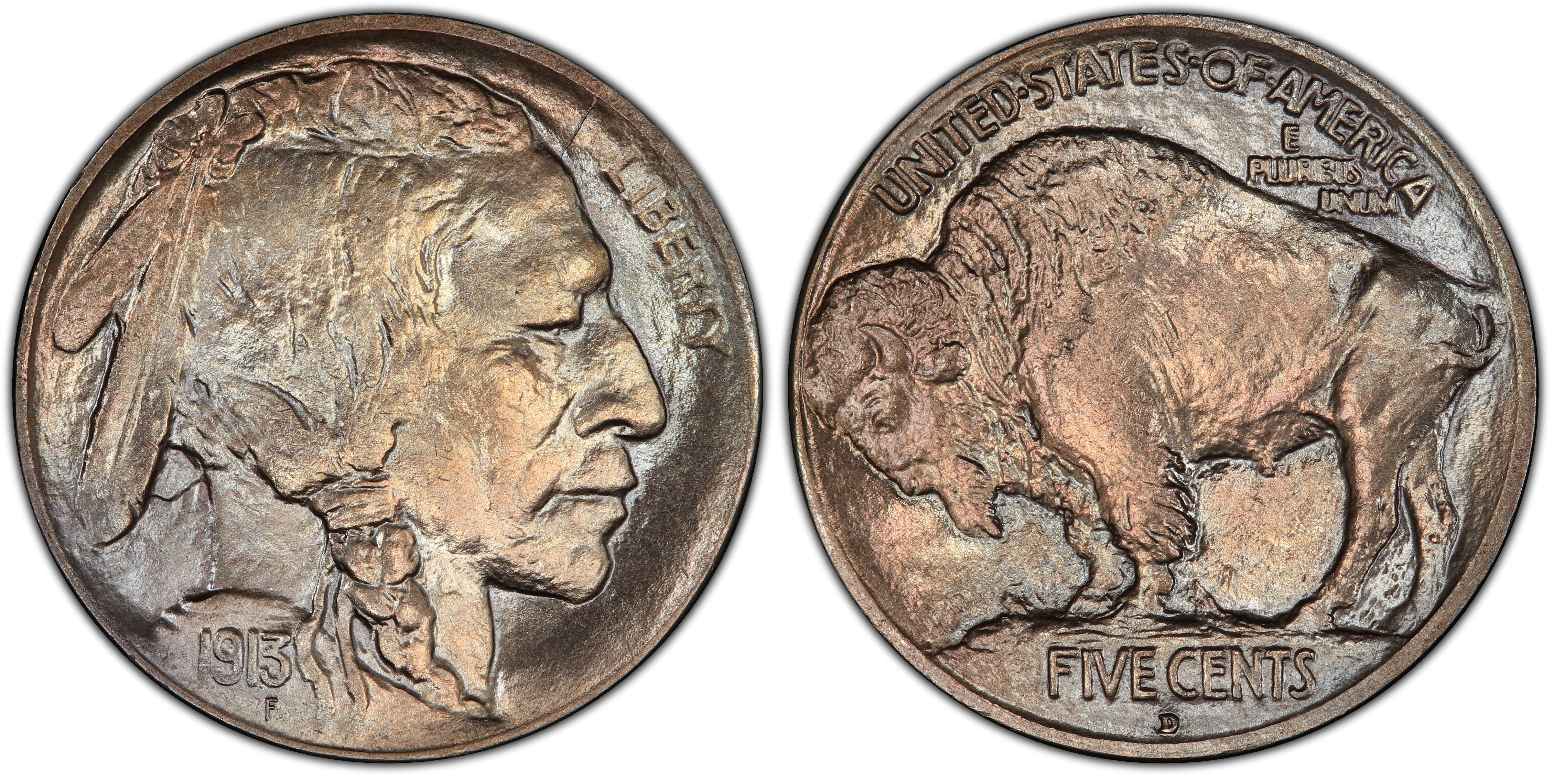 #3 MS67+ PCGS grade
D.L. Hansen Collection |
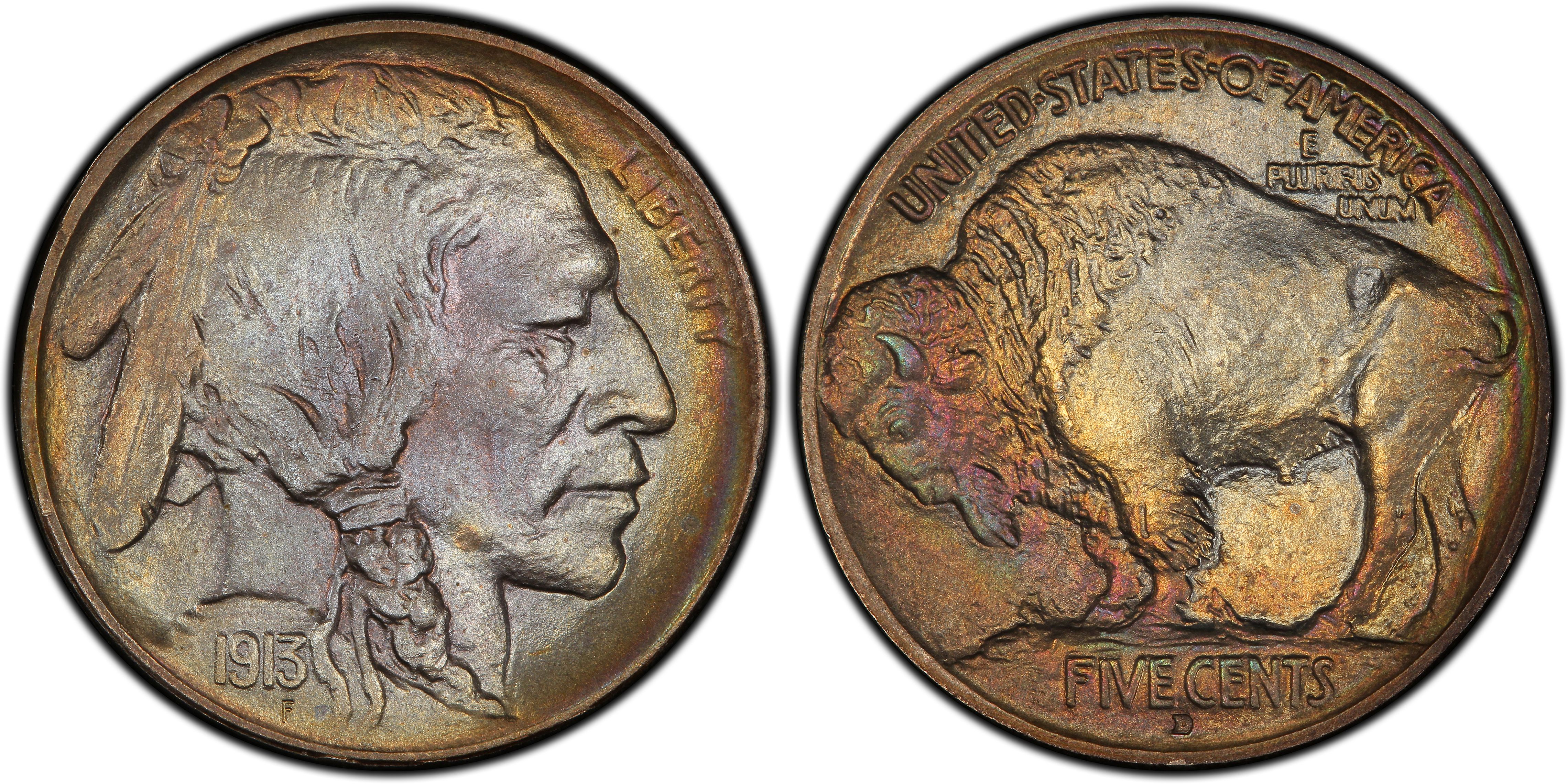 #3 MS67+ PCGS grade
Malibu Collection (PCGS Set Registry) |
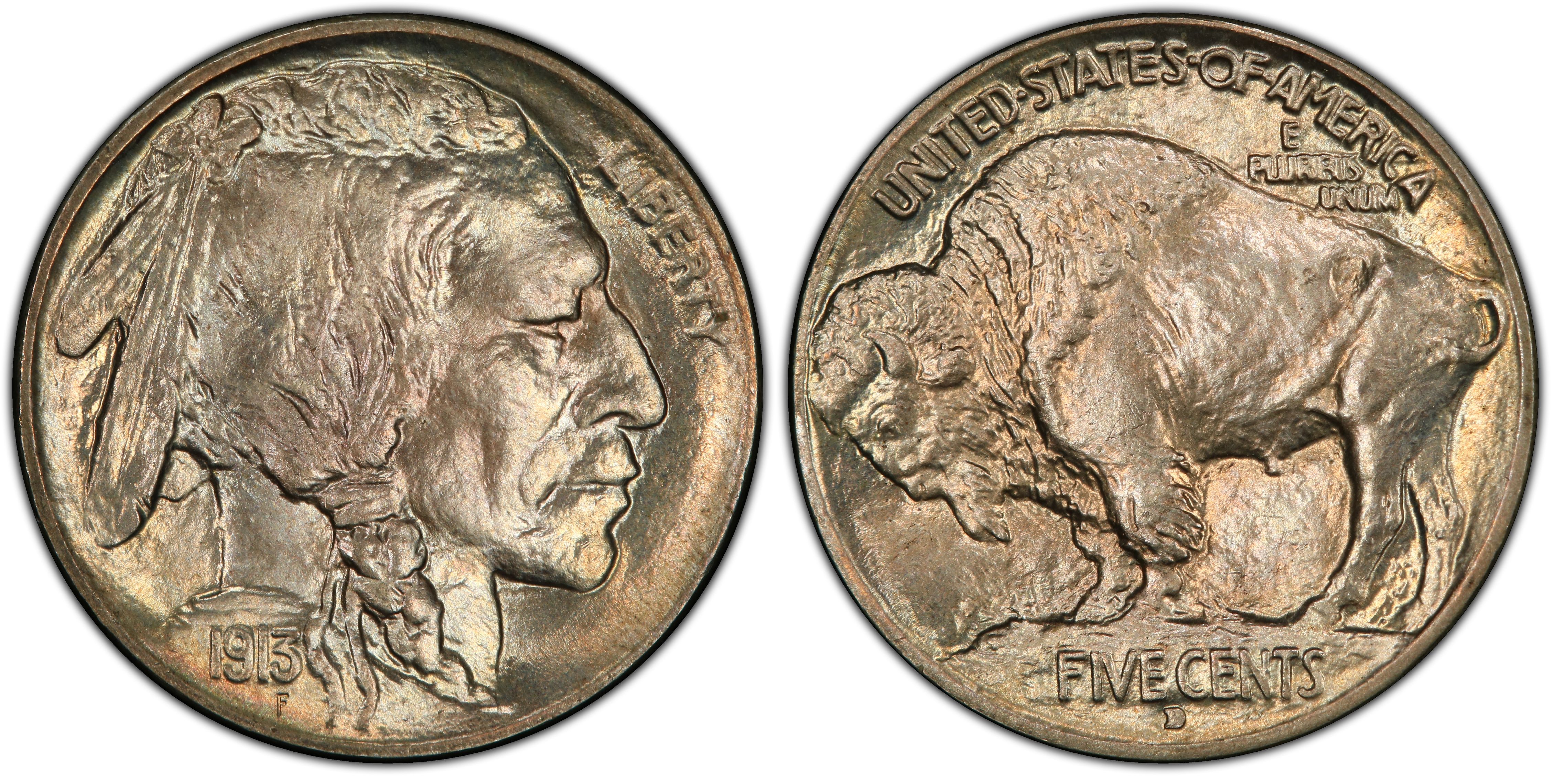 #3 MS67+ PCGS grade
Heritage 8/2017:3363, $10,281 - East Coast Collection (PCGS Set Registry) |
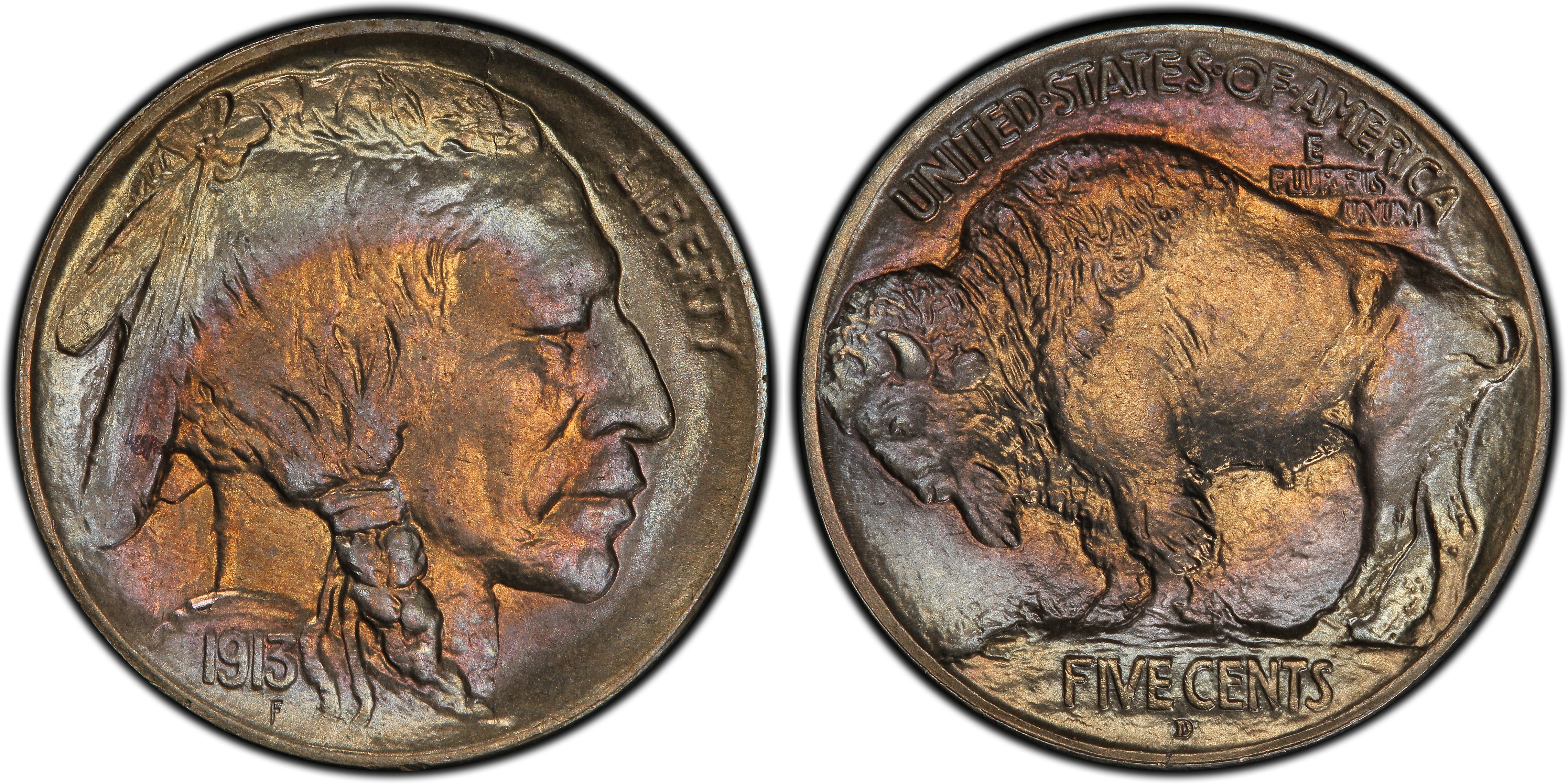 #3 MS67+ PCGS grade
Legend Rare Coin Auctions 12/2016:56, $8,812.50 |
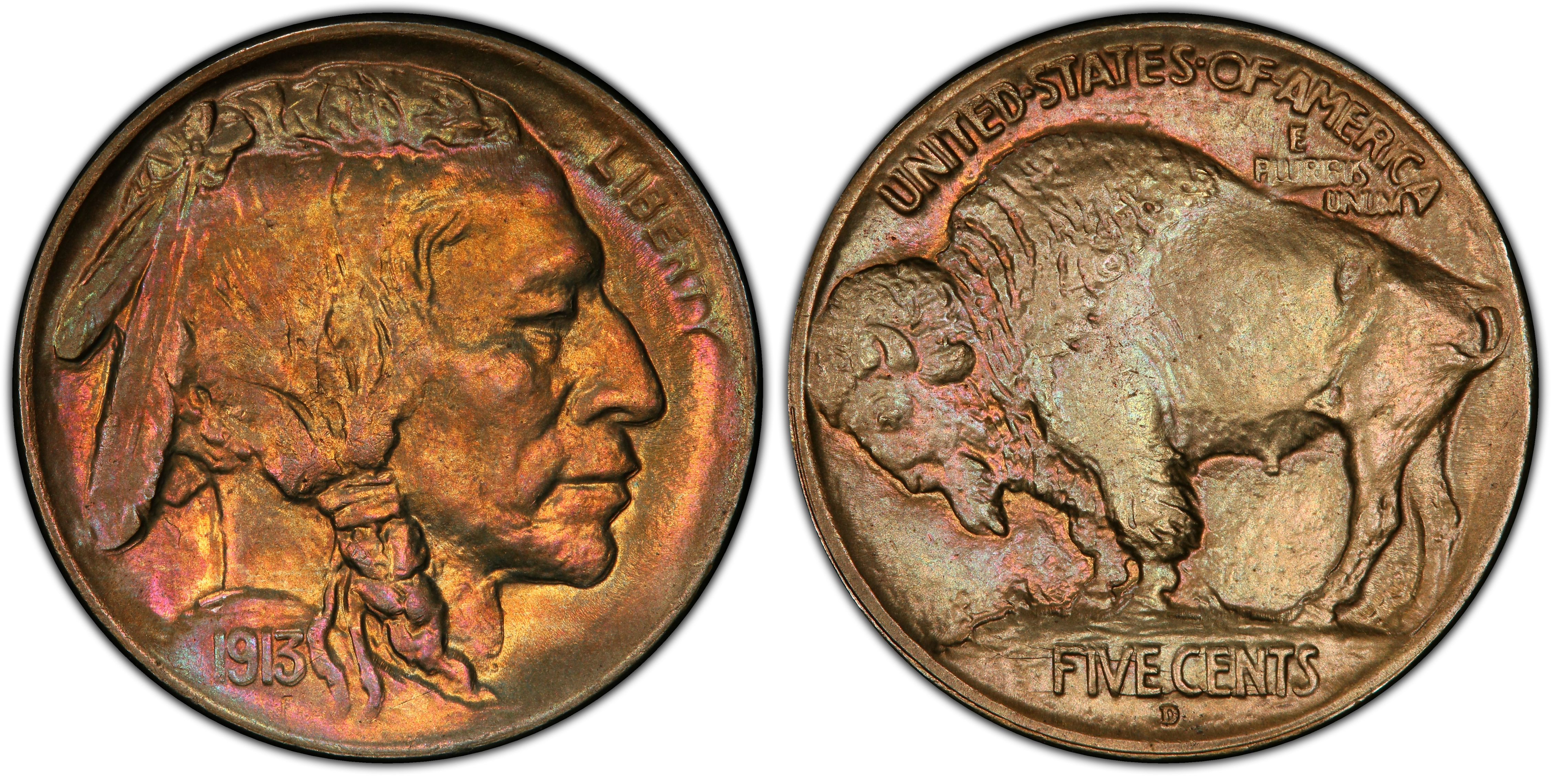 #3 MS67+ PCGS grade
|
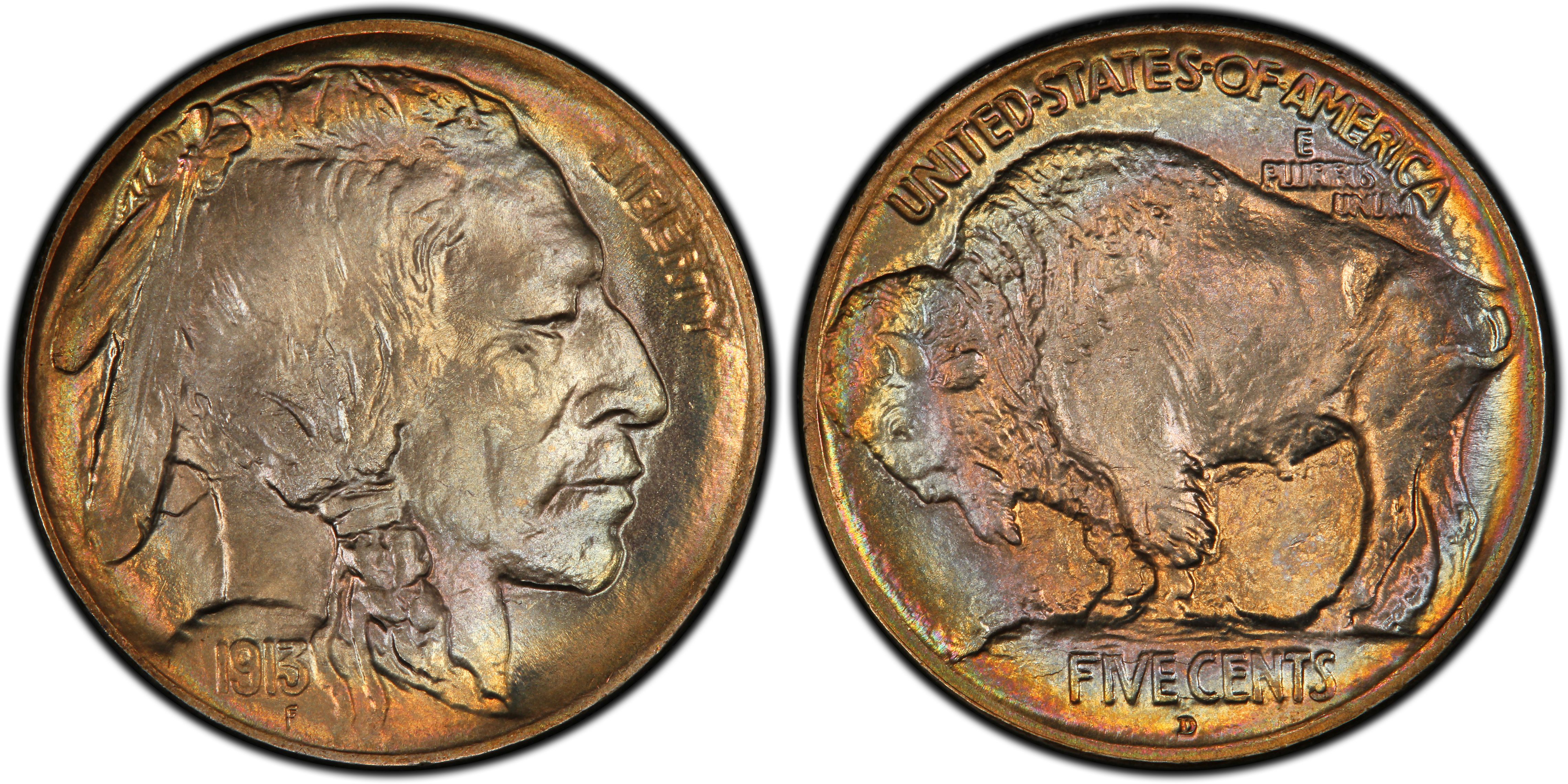 #3 MS67+ PCGS grade
|
 #9 MS67 PCGS grade
|
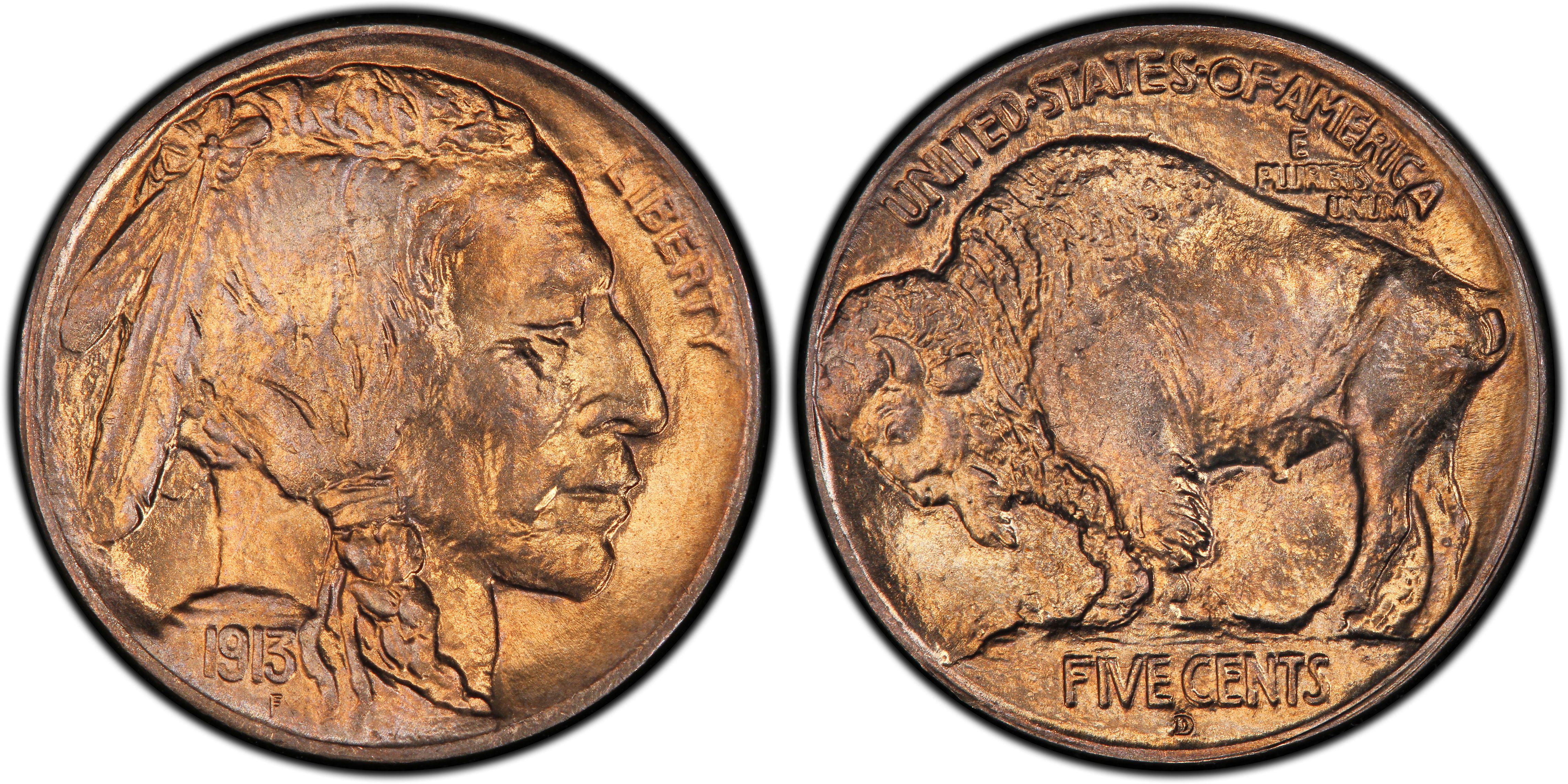 #9 MS67 PCGS grade
|
David Hall:
The 1913-D Type I Buffalo is much rarer than the 1913 Philadelphia. It's about 5 to 10 times rarer in mint state and probably 20 times rare in circulated grades. Still, the 1913-D Type is one of the more available early date Buffalos. This is generally a well struck issue. Luster typically ranges from dull to bright satiny.