

PCGS MS66+

PCGS MS66+
- PCGS #:
- 3858
- Designer:
- Charles E. Barber
- Edge:
- Plain
- Diameter:
- 21.20 millimeters
- Weight:
- 5.00 grams
- Mintage:
- 20,426,797
- Mint:
- Philadelphia
- Metal:
- 75% Copper, 25% Nickel
- Auction Record:
- $18,800 • MS67 • 06-29-2012 • Stack's Bowers
Major Varieties
- 1897 5C
Rarity and Survival Estimates Learn More
| Survival Estimate | |
|---|---|
| All Grades | 40,000 |
| 60 or Better | 1,500 |
| 65 or Better | 250 |
| Numismatic Rarity | |
|---|---|
| All Grades | R-2.6 |
| 60 or Better | R-4.8 |
| 65 or Better | R-6.6 |
| Relative Rarity By Type All Specs in this Type | |
|---|---|
| All Grades | 15 / 32 TIE |
| 60 or Better | 14 / 32 TIE |
| 65 or Better | 11 / 32 TIE |
| Relative Rarity By Series All Specs in this Series | |
|---|---|
| All Grades | 15 / 33 TIE |
| 60 or Better | 14 / 33 TIE |
| 65 or Better | 11 / 33 TIE |
Condition Census What Is This?
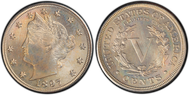 #1 MS67 PCGS grade
|
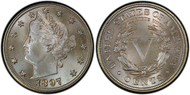 #2 MS66+ PCGS grade
|
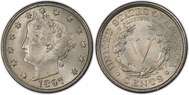 #3 MS66 PCGS grade
Club 33 Collection (PCGS Set Registry) |
 #3 MS66 PCGS grade
|
| #3 MS66 PCGS grade |
| #3 MS66 PCGS grade |
| #3 MS66 PCGS grade |
| #3 MS66 PCGS grade |
| #3 MS66 PCGS grade |
| #3 MS66 PCGS grade |
In 1897, the Philadelphia Mint boosted production of Liberty Nickels and struck more than 20 million of them -- and amount that had not been seen since 1868. As a result of this large mintage, and the care and protection of collectors over the years, the 1897 Nickel remains a common coin. The vast majority of certified Mint State examples fall into the MS64 level, though MS63 examples are common, also. Gems are easy to obtain (in a relative sense), but MS66 examples become scarce. The finest example certified by PCGS is a single MS67.
This date shows a variety of strike characteristics, ranging from flatly struck to fully struck stars, and several iterations in between. The best struck examples are most likely to be found in the highest graded holders.