

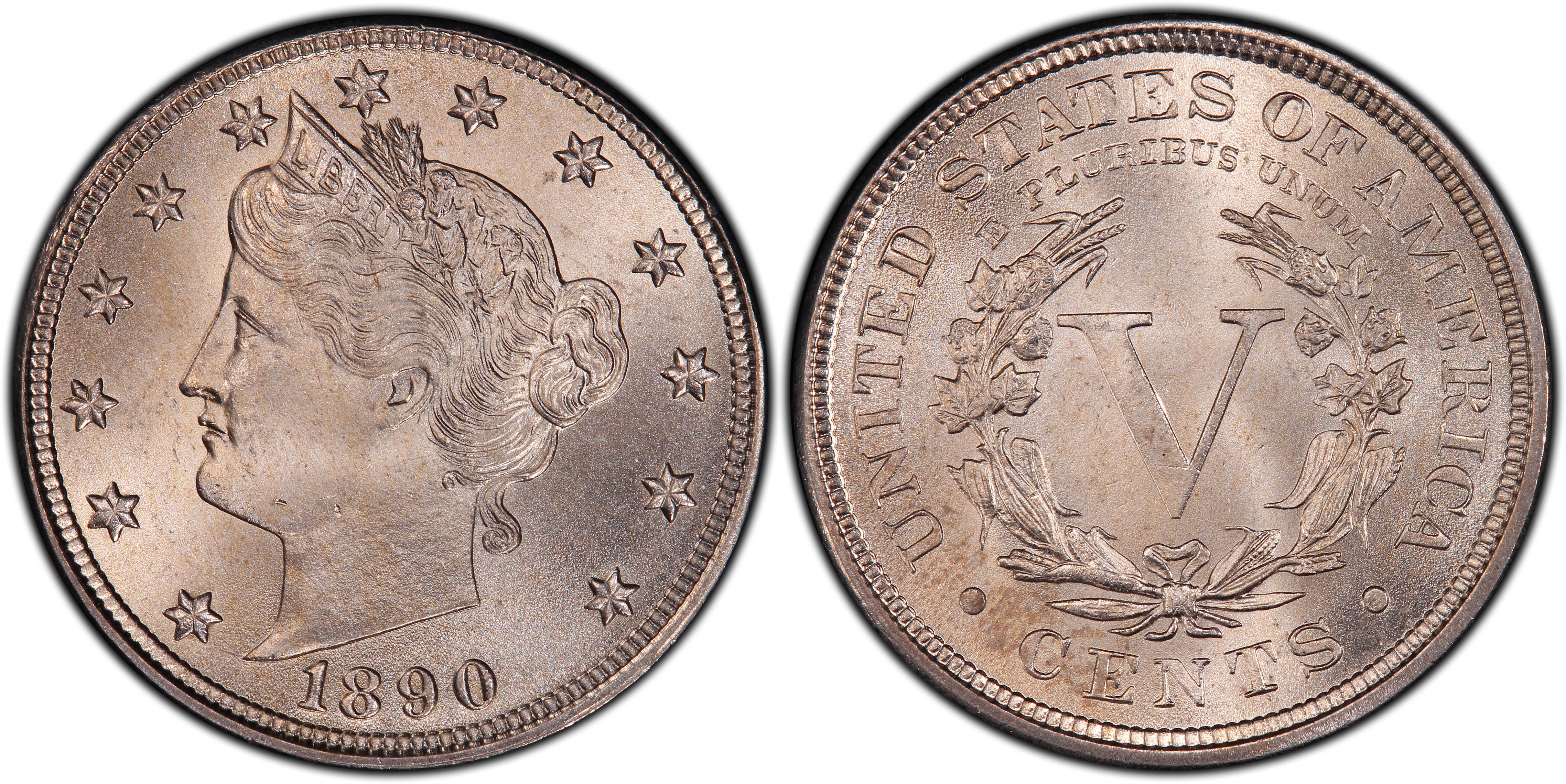
PCGS MS67
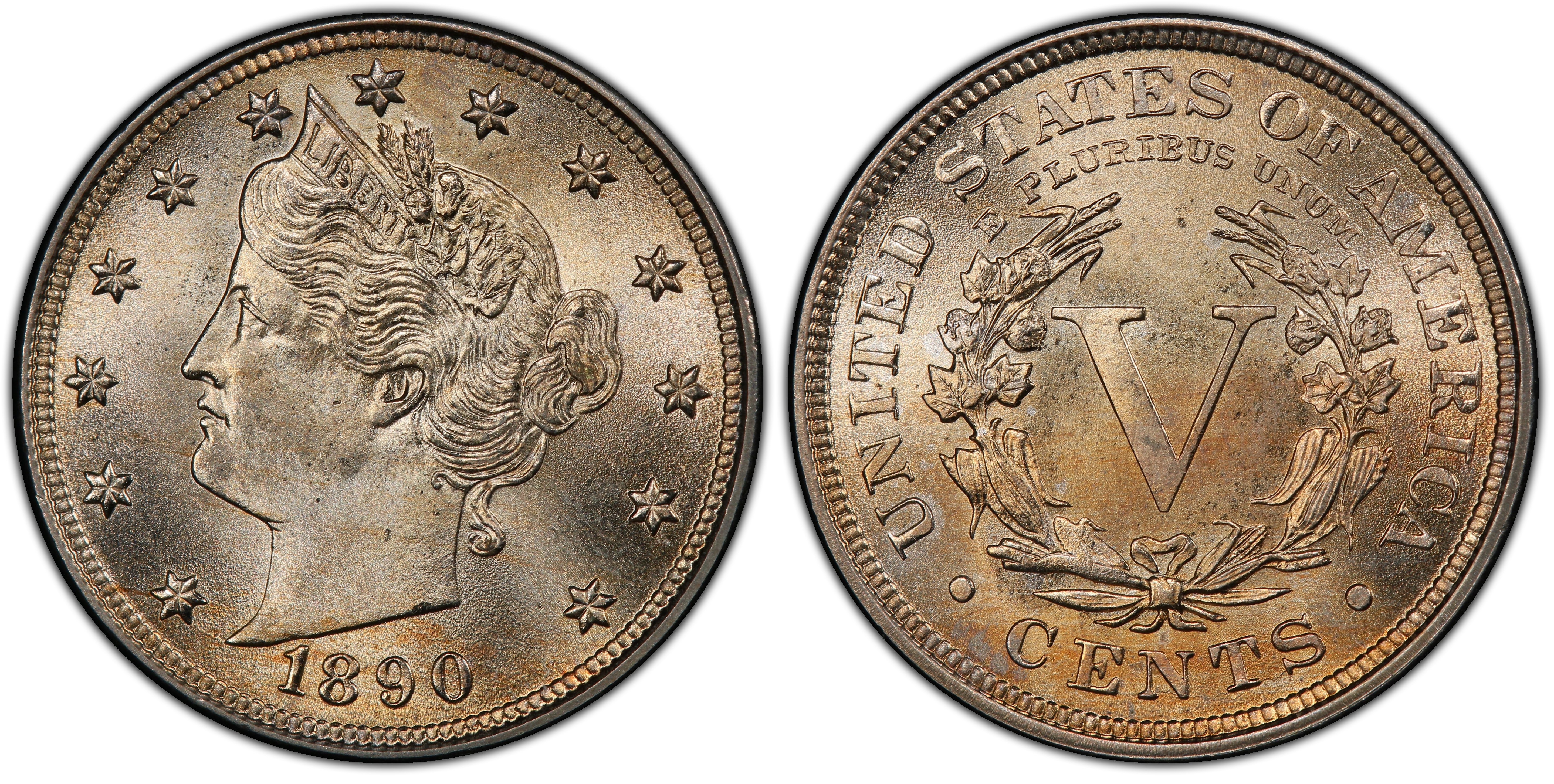
PCGS MS67
- PCGS #:
- 3851
- Designer:
- Charles E. Barber
- Edge:
- Plain
- Diameter:
- 21.20 millimeters
- Weight:
- 5.00 grams
- Mintage:
- 16,256,532
- Mint:
- Philadelphia
- Metal:
- 75% Copper, 25% Nickel
- Auction Record:
- $18,000 • MS67+ • 05-04-2025 • Heritage Auctions
Major Varieties
- 1890 5C
Go To Grade
Current Auctions - PCGS Graded
Current Auctions - NGC Graded
For Sale Now at Collectors Corner - PCGS Graded
For Sale Now at Collectors Corner - NGC Graded
Rarity and Survival Estimates Learn More
| Survival Estimate | |
|---|---|
| All Grades | 25,000 |
| 60 or Better | 1,000 |
| 65 or Better | 150 |
| Numismatic Rarity | |
|---|---|
| All Grades | R-2.7 |
| 60 or Better | R-5.0 |
| 65 or Better | R-7.5 |
| Relative Rarity By Type All Specs in this Type | |
|---|---|
| All Grades | 7 / 32 TIE |
| 60 or Better | 6 / 32 TIE |
| 65 or Better | 2 / 32 TIE |
| Relative Rarity By Series All Specs in this Series | |
|---|---|
| All Grades | 7 / 33 TIE |
| 60 or Better | 6 / 33 TIE |
| 65 or Better | 2 / 33 TIE |
Condition Census What Is This?
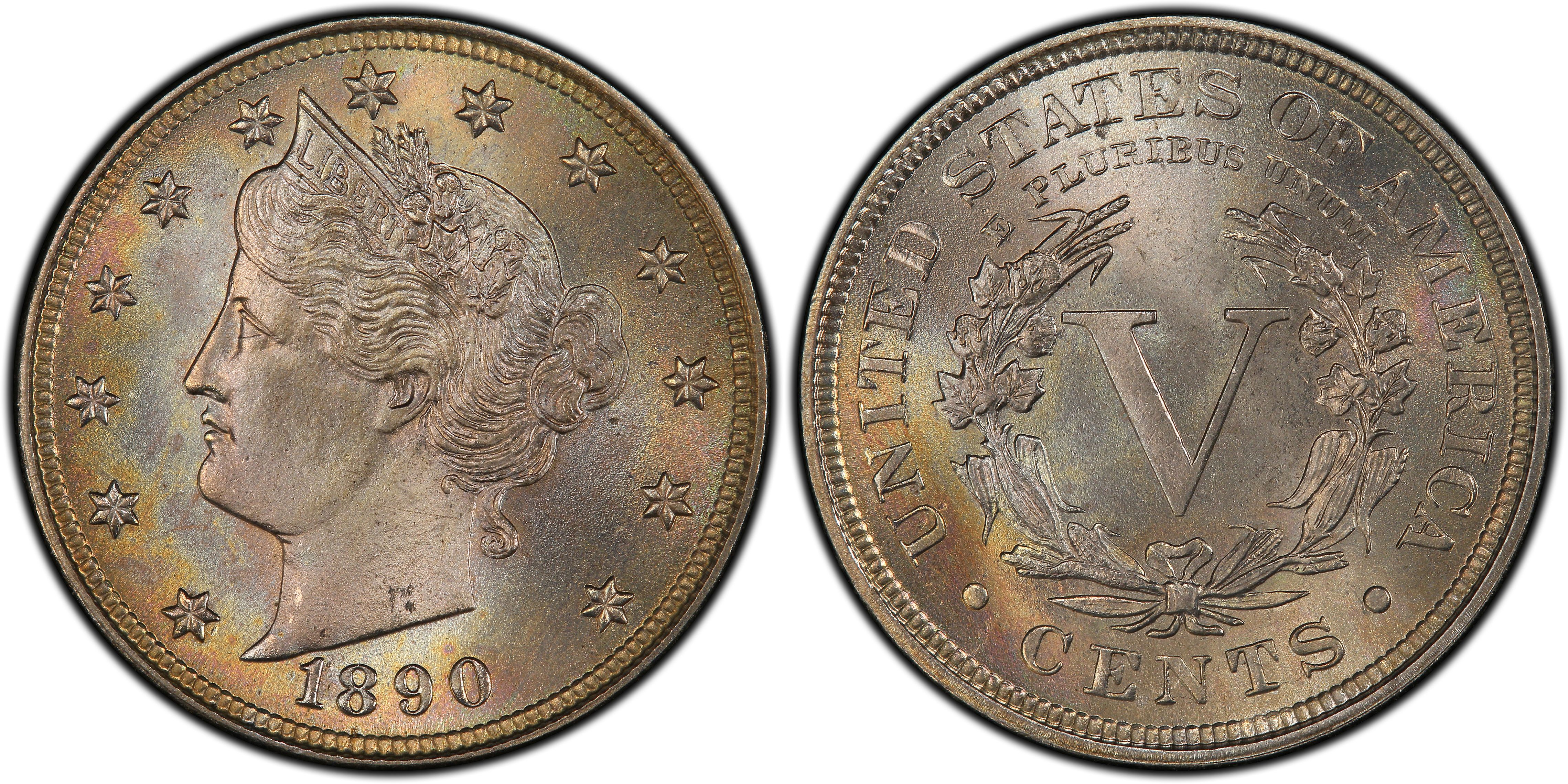 #1 MS66+ PCGS grade
|
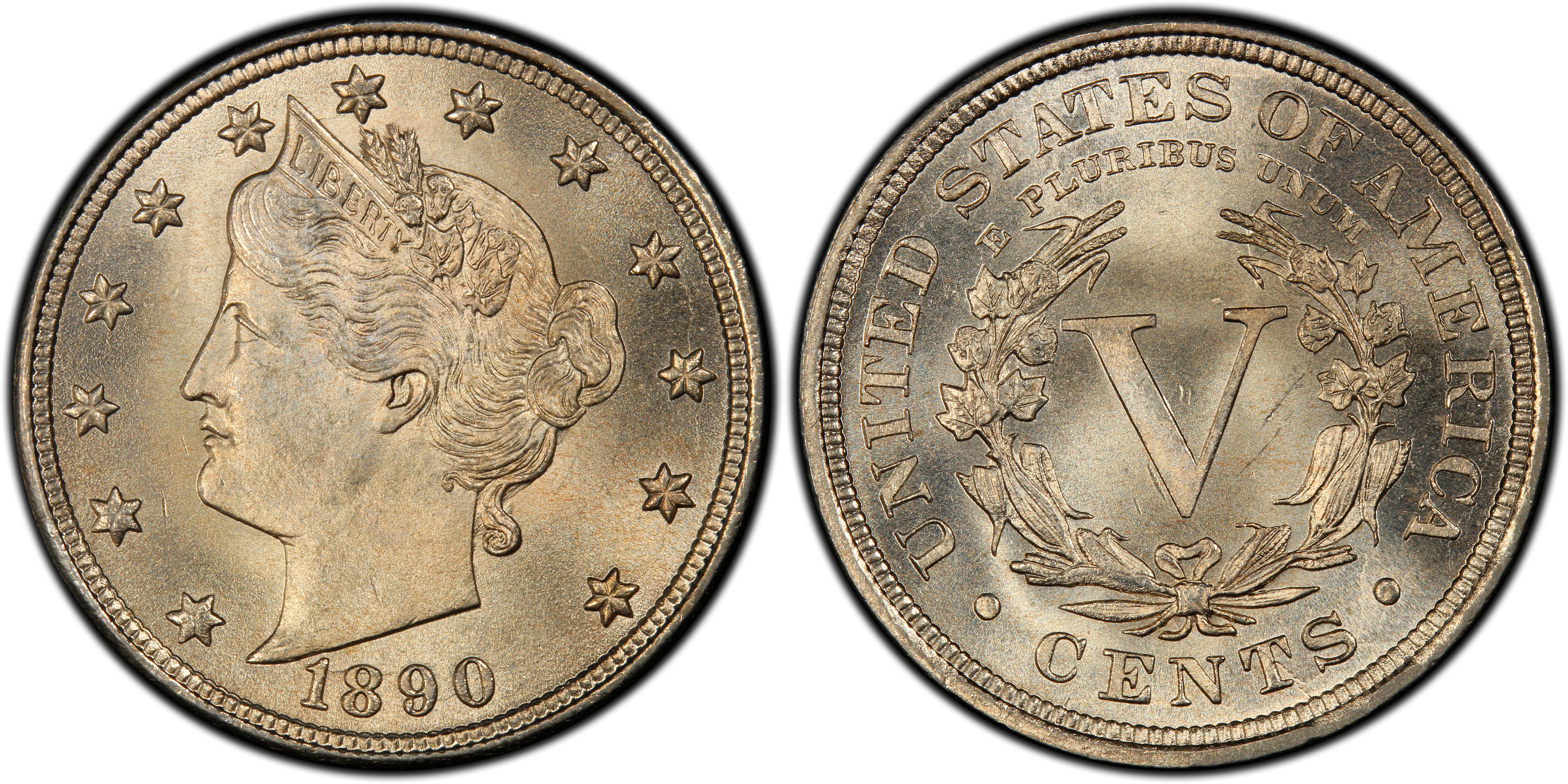 #2 MS66+ PCGS grade
|
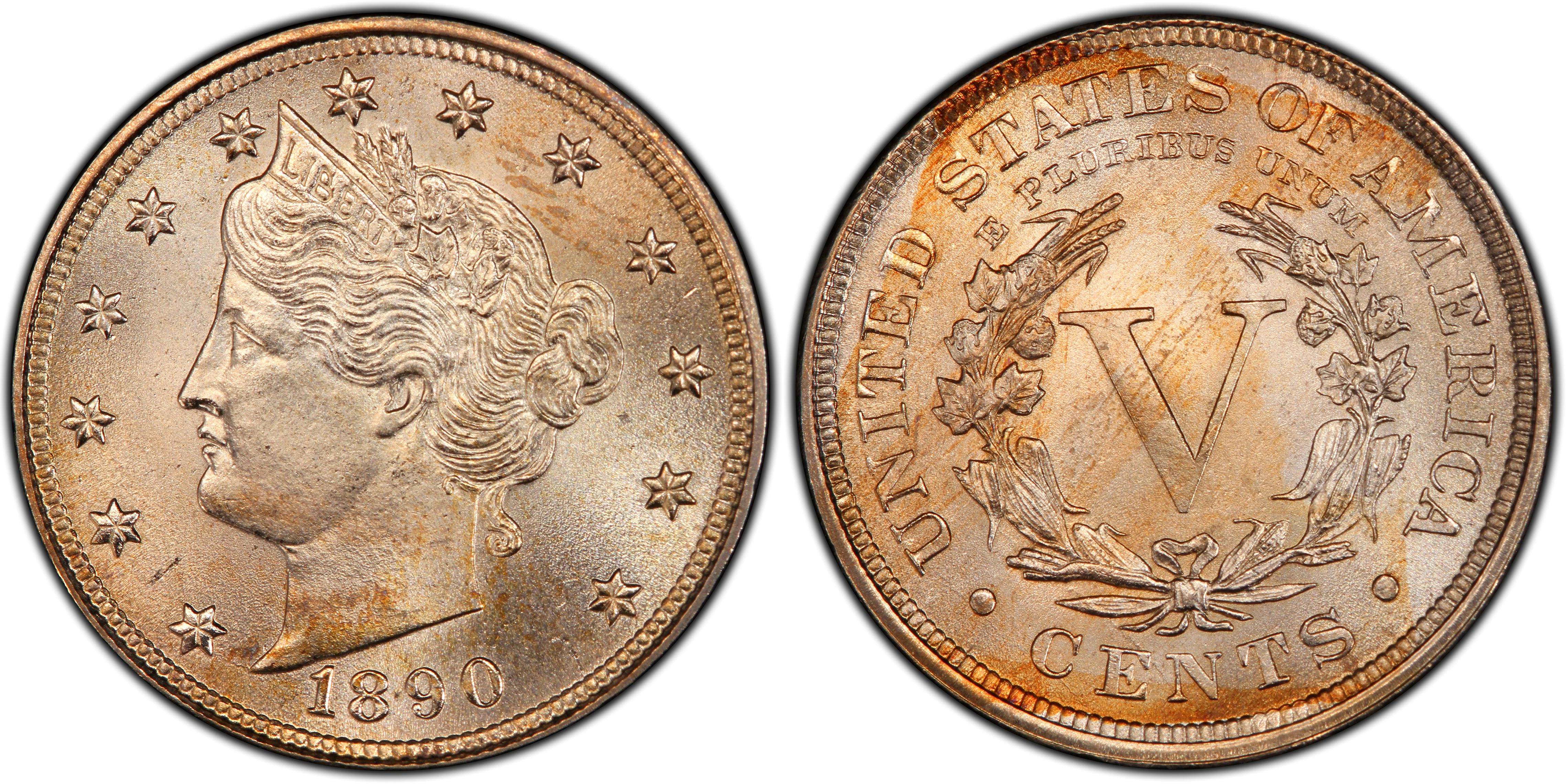 #3 MS66 PCGS grade
|
 #3 MS66 PCGS grade
|
| #3 MS66 PCGS grade |
| #3 MS66 PCGS grade |
| #3 MS66 PCGS grade |
| #3 MS66 PCGS grade |
| #3 MS66 PCGS grade |
| #3 MS66 PCGS grade |
Ron Guth:
Though none of the Philadelphia-produced Liberty Nickels are rare (with the unusual exception of the 1913), the 1890 Liberty Nickel is slightly less common than most and is on par with the 1895 and 1896. The 1890 Nickel is easy to find in circulated grades and in Mint State grades up to MS-64. Gems (MS-65) are semi-scarce and the optimal grade (per the PCGS Population Report as of September 2011) is MS-66. The finest example certified by PCGS is a single MS-66+.