1865 2C Fancy 5, RB (Regular Strike)
Series: Shield Two Cents 1864-1872
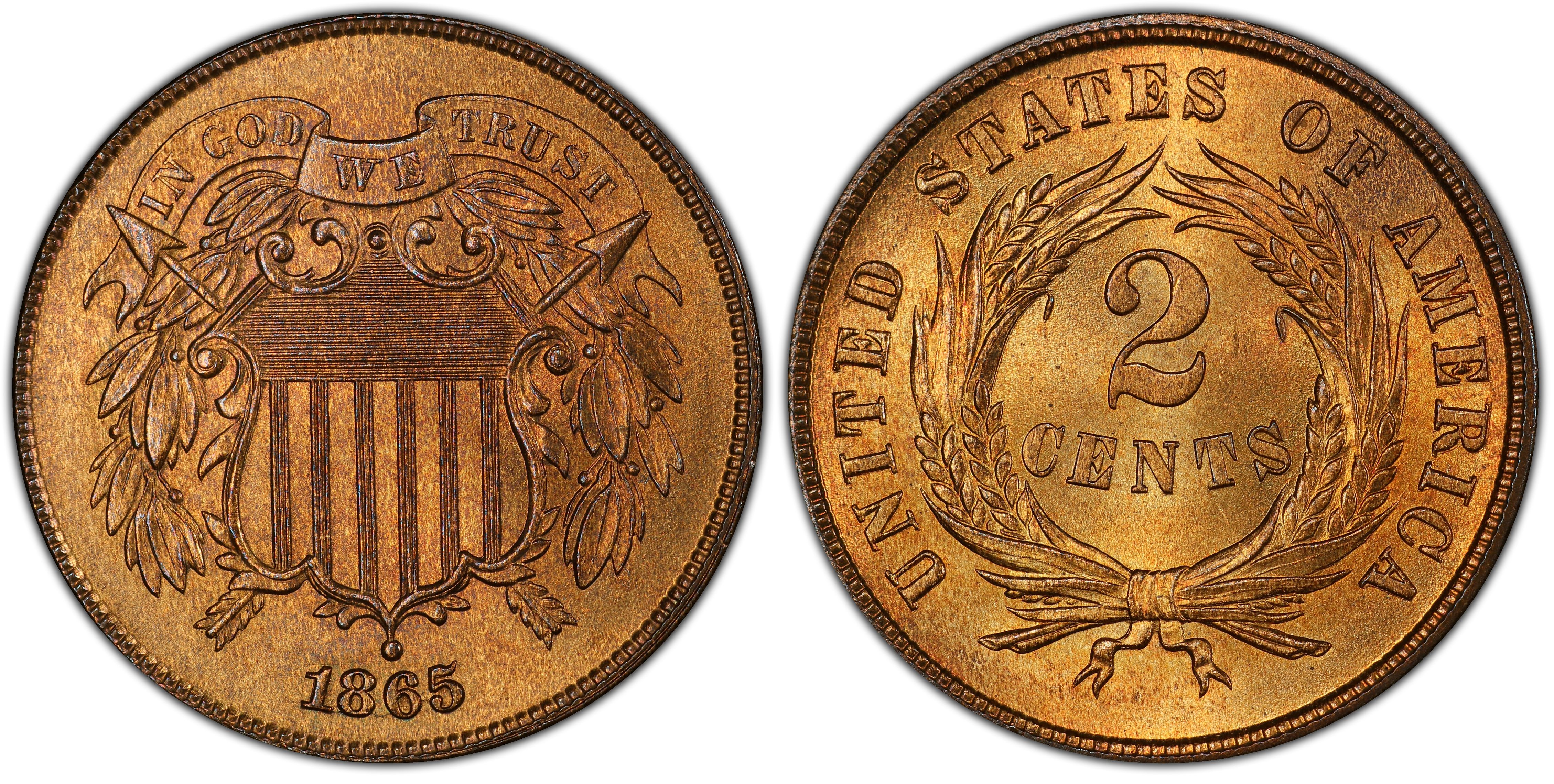
PCGS MS66+RB
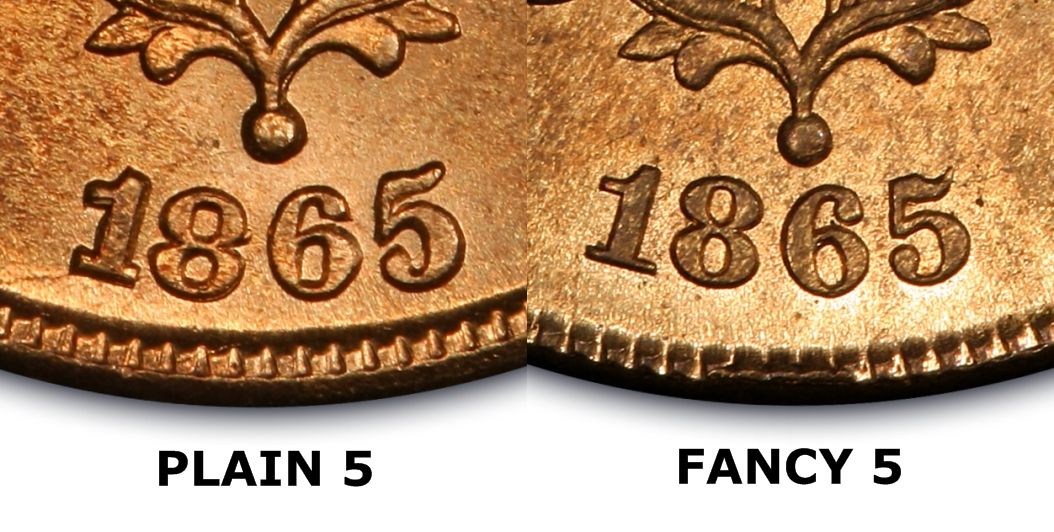
DATE COMPARISON

PCGS MS66RB
- PCGS #:
- 38257
- Designer:
- James Barton Longacre
- Edge:
- Plain
- Diameter:
- 23.00 millimeters
- Weight:
- 6.22 grams
- Mintage:
- 13,640,000
- Mint:
- Philadelphia
- Metal:
- Bronze
- Auction Record:
- $6,300 • MS67RB • 03-02-2025 • Heritage Auctions
Major Varieties
Die Varieties
- 1865 2C RPD FS-1301 (002.5), BN
- 1865 2C RPD FS-1301, RB
- 1865 2C RPD FS-1301, RD
- 1865 2C Fancy 5, RPD, FS-1302, BN
- 1865 2C RPD FS-1302, RB
- 1865 2C RPD FS-1302 (002.7), RD
- 1865 2C RPD, FS-1303, BN
- 1865 2C RPD FS-1303, RB
- 1865 2C RPD FS-1303, RD
- 1865 2C MPD FS-1304, BN
- 1865 2C MPD FS-1304, RB
- 1865 2C MPD FS-1304, RD
- 1865 2C MPD FS-1305, BN
- 1865 2C MPD FS-1305, RB
- 1865 2C MPD FS-1305, RD
Condition Census What Is This?

Here's how to tell the difference between the Plain 5 and Fancy 5 1865 Two Cent pieces:
Plain 5: the top edge of the 5 appears flat or slightly curved
Fancy 5: the right half of the top edge of the 5 dips dramatically, creating a distinctive "flip" to the point of the 5.
Sources and/or recommended reading:
"Getting Your Two Cents Worth" by Kevin Flynn
"Two Cent Piece - An 1864 Attribution Guide" by Frank Leone
"Cherrypickers' Guide, Fifth Edition, Volume I" by Bill Fivaz and J.T. Stanton
The 1865 Two-Cent Piece, Fancy 5
First struck in 1864 to alleviate the nationwide coin shortage caused by the Civil War, the Two-Cent Piece ultimately struggled to gain long-term traction. The coin, identical in diameter to the deprecated half-cent but slightly heavier, was conceived as an instrument to increase the circulation of small change in the Northeast and Midwest. For a few years, the coin fulfilled its purpose; however, a glut of base-metal issues—specifically the Indian Head Cent, the Three-Cent Nickel, and the Shield Nickel five-cent coin—eventually crowded out the "double cent."
This eventuality was not yet apparent in 1865. For the second year of the series, the Philadelphia Mint struck 13,640,000 pieces, representing a 31% decline from the inaugural year. This downward trend accelerated in 1866, with mintage falling by another 77% before stabilizing briefly over the following two years.
The Fancy 5 Variety
For completionists, the 1865 Two-Cent Piece offers two major varieties: the Plain 5 (PCGS #38247) and the Fancy 5 (PCGS #38256), along with several Cherrypickers' Guide varieties. These descriptors refer specifically to the style of the numeral "5" in the date.
The Plain 5 is the primary date style for the 1865 issue and is characterized by a straight, horizontal crossbar at the top of the digit. In contrast to the Fancy 5—which features a distinctively curved or "flipped" flag—the Plain 5 presents a more utilitarian, geometric profile. Within the Plain 5 family, collectors often hunt for several popular sub-varieties, including:
- Repunched Date: FS-301 (#38259-#38261), FS-302 (#38262-#38264), FS-303 (#38265-38267).
- Misplaced Date: FS-304 (#38268-38270), FS-305 (#569403-#569405).
* * *