1882 3CN (Regular Strike)
Series: Liberty Head Three Cent Nickels 1865-1889
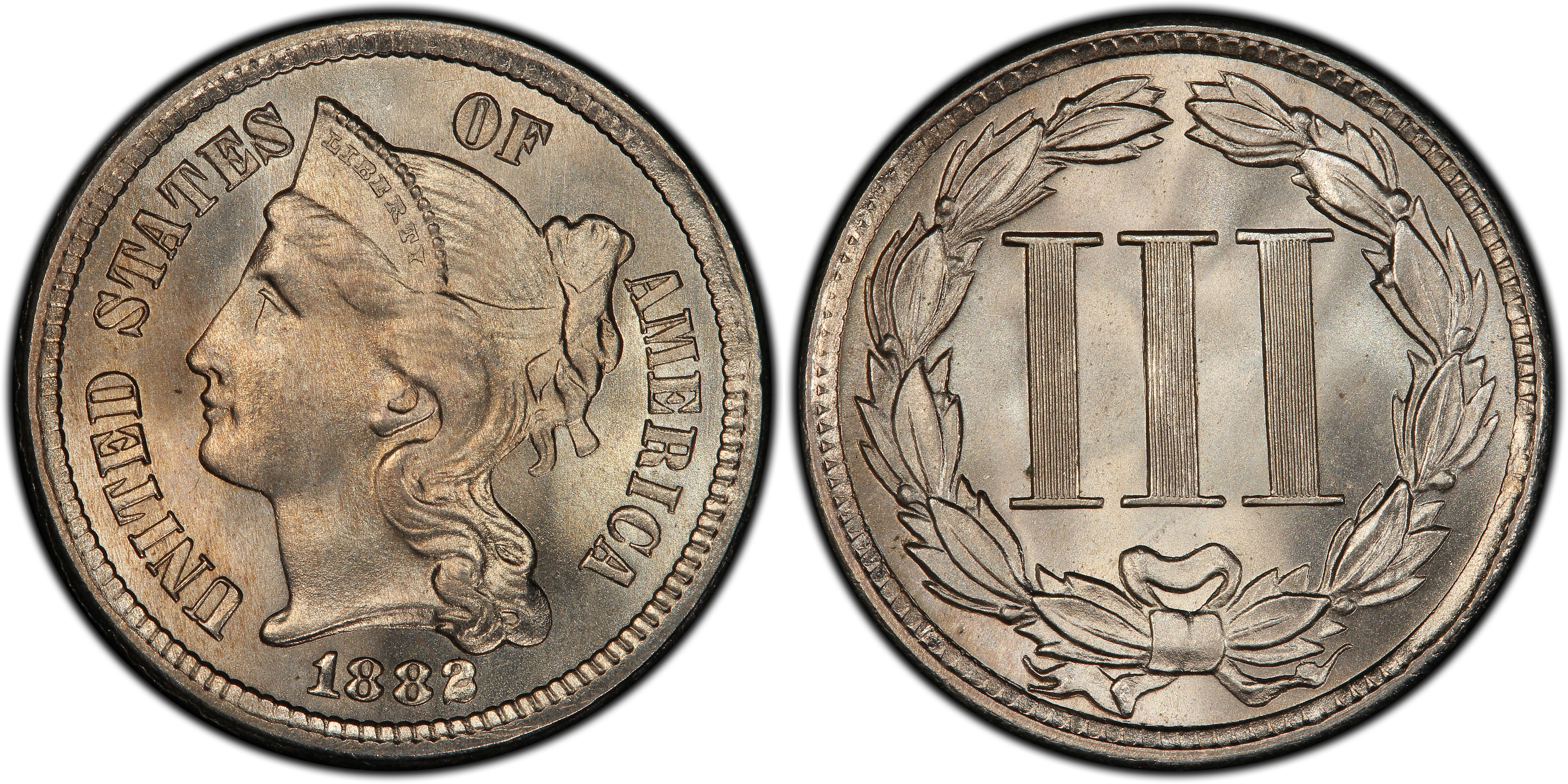
PCGS MS67+

PCGS MS67
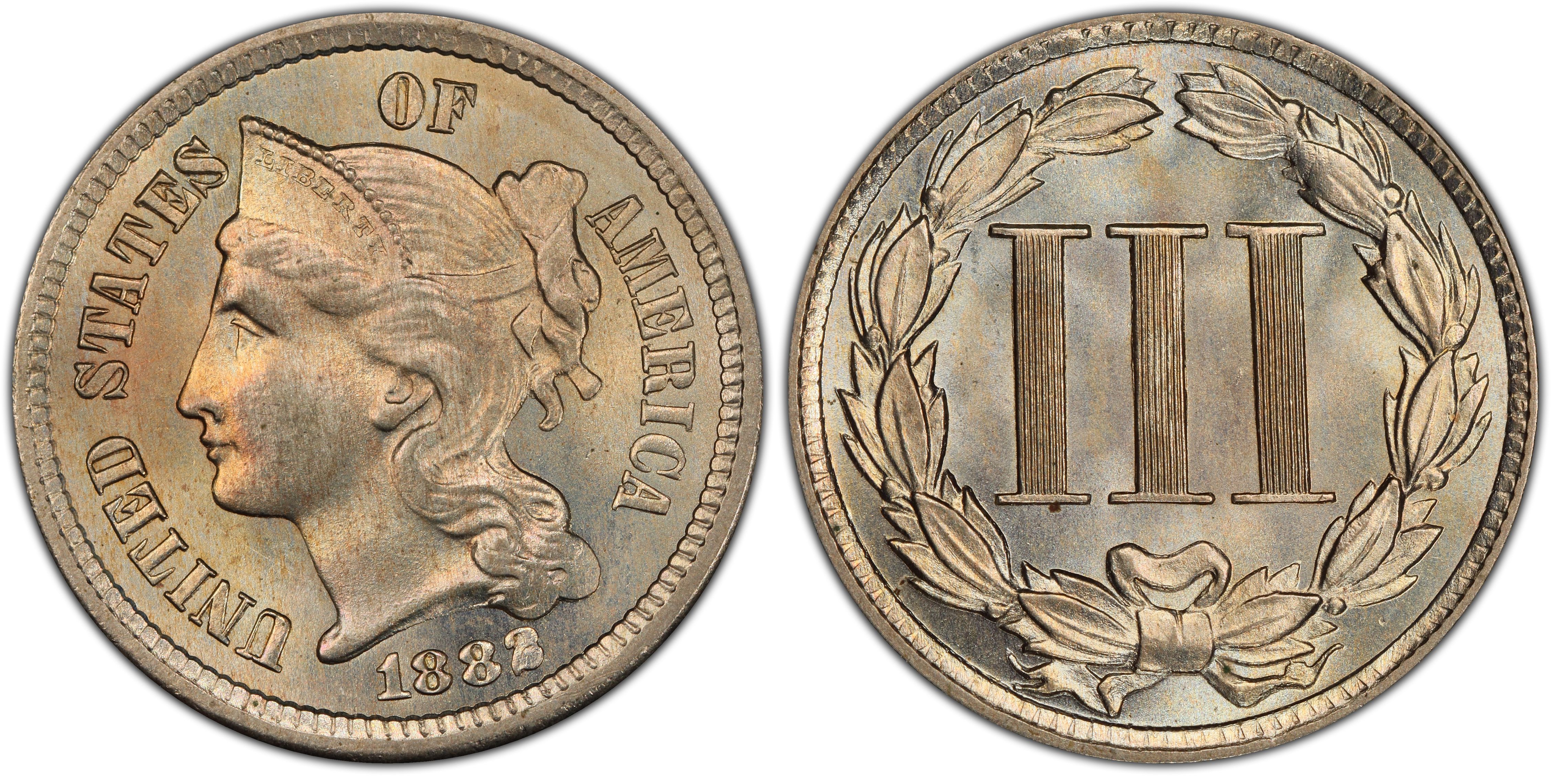
PCGS MS66+
- PCGS #:
- 3750
- Designer:
- James Barton Longacre
- Edge:
- Plain
- Diameter:
- 17.90 millimeters
- Weight:
- 1.94 grams
- Mintage:
- 22,200
- Mint:
- Philadelphia
- Metal:
- 75% Copper, 25% Nickel
- Auction Record:
- $14,950 • MS67 • 06-02-2005 • Heritage Auctions
Major Varieties
- 1882 3CN
Go To Grade
Current Auctions - PCGS Graded
Current Auctions - NGC Graded
For Sale Now at Collectors Corner - PCGS Graded
For Sale Now at Collectors Corner - NGC Graded
Rarity and Survival Estimates Learn More
| Survival Estimate | |
|---|---|
| All Grades | 600 |
| 60 or Better | 250 |
| 65 or Better | 100 |
| Numismatic Rarity | |
|---|---|
| All Grades | R-5.8 |
| 60 or Better | R-6.6 |
| 65 or Better | R-8.0 |
| Relative Rarity By Type All Specs in this Type | |
|---|---|
| All Grades | 3 / 23 TIE |
| 60 or Better | 6 / 23 |
| 65 or Better | 6 / 23 TIE |
| Relative Rarity By Series All Specs in this Series | |
|---|---|
| All Grades | 3 / 23 TIE |
| 60 or Better | 6 / 23 |
| 65 or Better | 6 / 23 TIE |
Condition Census What Is This?
| #1 MS67 PCGS grade |
| #1 MS67 PCGS grade |
| #1 MS67 PCGS grade |
| #4 MS66 PCGS grade |
| #4 MS66 PCGS grade |
| #4 MS66 PCGS grade |
| #4 MS66 PCGS grade |
| #4 MS66 PCGS grade |
| #4 MS66 PCGS grade |
| #4 MS66 PCGS grade |
Ron Guth:
The 1882 Three-Cent Nickel is a scarce, low-mintage issue that is difficult to locate in any condition, even in grades as low as Good. In fact, it would seem that more Proof examples have survived than Mint State versions, which is the opposite of the vast majority of U.S. coins.
Among the 84 Mint State examples certified by PCGS (as of September 2012), the most "common" grade is MS-64. The finest examples are eight MS-67s (which gives several people an opportunity to own a Top-Pop coin).