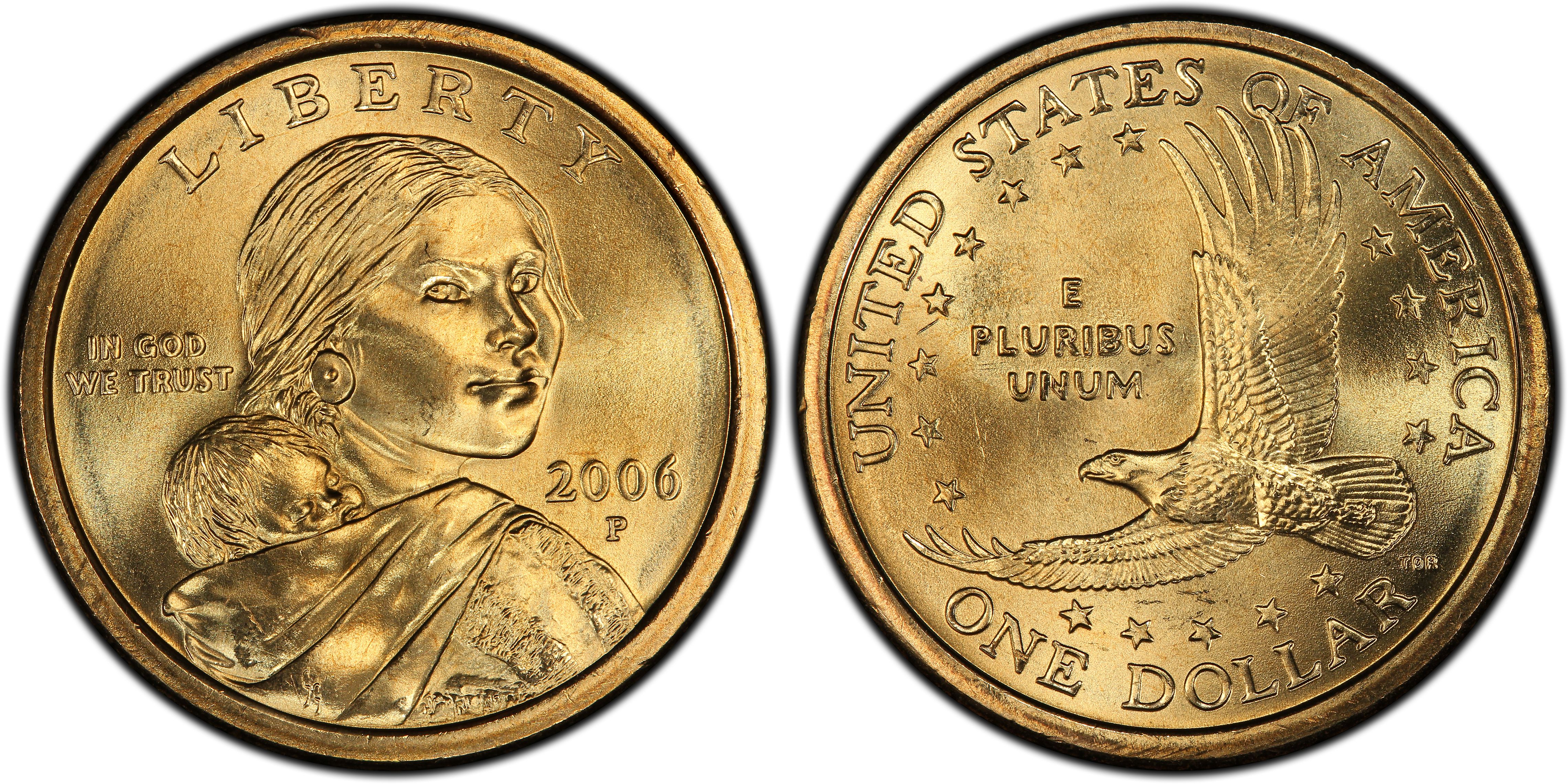
PCGS MS67
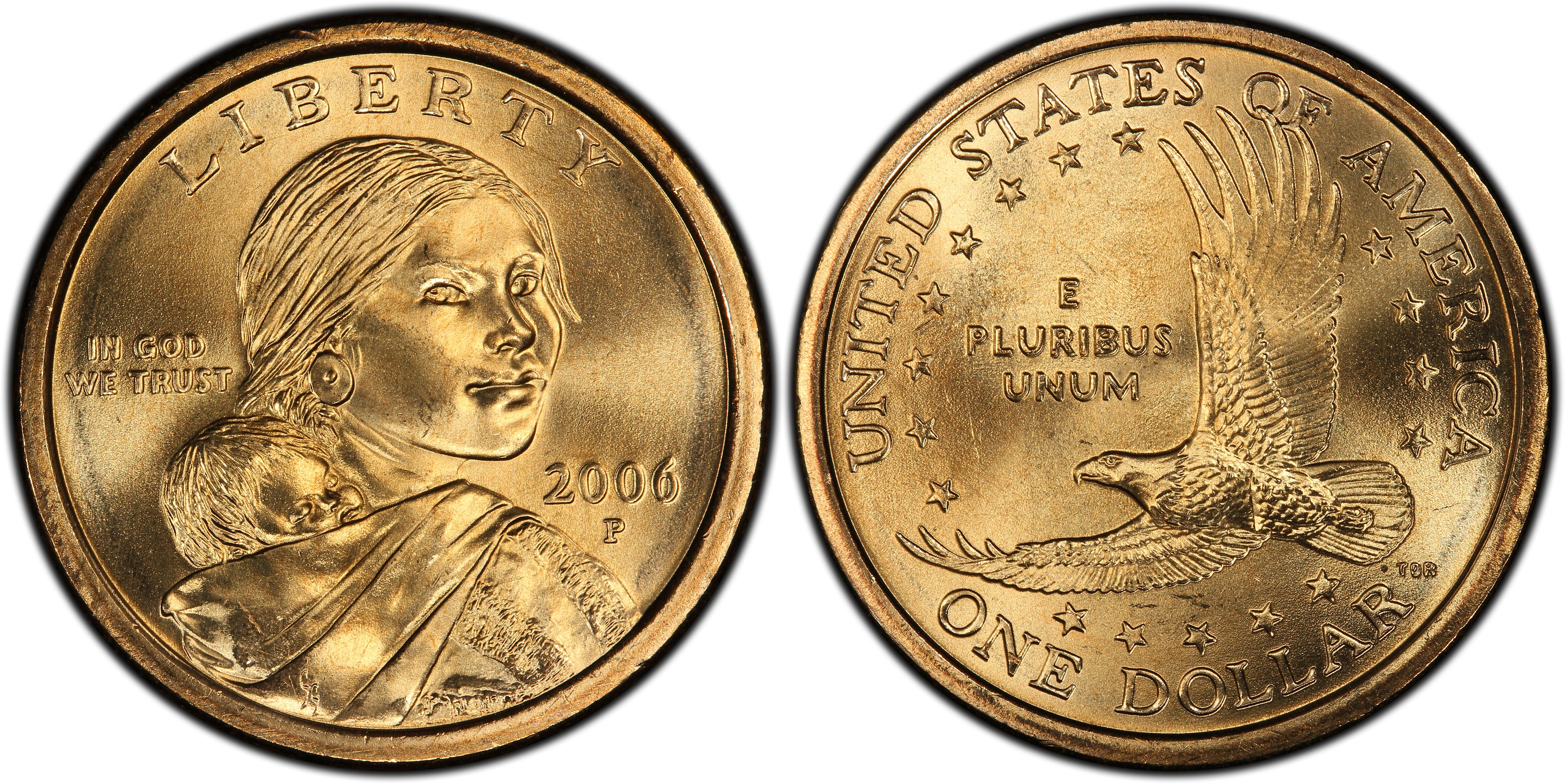
PCGS MS67
- PCGS #:
- 15022
- Designer:
- Glenna Goodacre/Thomas D. Rogers Sr.
- Edge:
- Plain
- Diameter:
- 26.50 millimeters
- Weight:
- 8.10 grams
- Mintage:
- 4,900,000
- Mint:
- Philadelphia
- Metal:
- 88.5% Copper, 6% Zinc, 3.5% Manganese and 2% Nickel
- Auction Record:
- $1,028 • MS68 • 01-04-2017 • Heritage Auctions
Major Varieties
- 2006-P SAC$1
Go To Grade
Current Auctions - PCGS Graded
Current Auctions - NGC Graded
For Sale Now at Collectors Corner - PCGS Graded
For Sale Now at Collectors Corner - NGC Graded
Rarity and Survival Estimates Learn More
| Survival Estimate | |
|---|---|
| All Grades | 4,655,000 |
| 60 or Better | 4,655,000 |
| 65 or Better | 4,417,500 |
| Numismatic Rarity | |
|---|---|
| All Grades | R-1.0 |
| 60 or Better | R-1.0 |
| 65 or Better | R-1.0 |
| Relative Rarity By Type All Specs in this Type | |
|---|---|
| All Grades | 1 / 13 TIE |
| 60 or Better | 1 / 13 TIE |
| 65 or Better | 7 / 13 TIE |
| Relative Rarity By Series All Specs in this Series | |
|---|---|
| All Grades | N/A |
| 60 or Better | N/A |
| 65 or Better | N/A |
Condition Census What Is This?
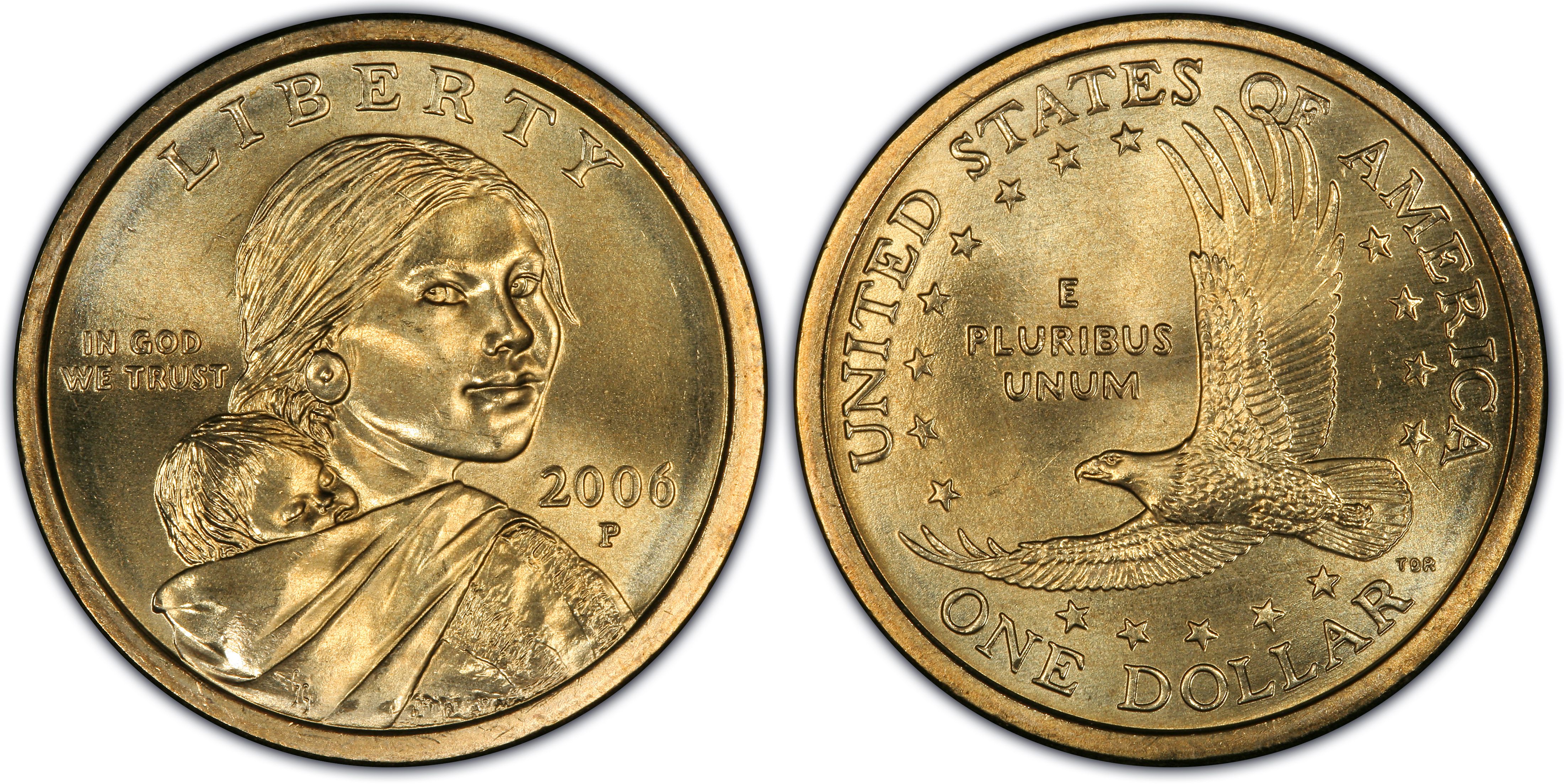 #1 MS68 PCGS grade
|
| #1 MS68 PCGS grade |
| #1 MS68 PCGS grade |
| #1 MS68 PCGS grade |
| #1 MS68 PCGS grade |
| #1 MS68 PCGS grade |
| #1 MS68 PCGS grade |
| #1 MS68 PCGS grade |
| #1 MS68 PCGS grade |
| #1 MS68 PCGS grade |
Jaime Hernandez:
The 2006-P Sacagawea Dollar carries the same design that was used on Sacagawea Dollars from 2000 to 2008. In 2009 the Mint changed the reverse designs to depict different themes designs on the reverse of the coins. The 2006-P Sacagawea Dollars are common in all circulated grades all the way up to MS63. In MS64 to MS65 condition they can be found in rolls or bags without much effort. In MS66 condition they are now somewhat scarce and a lot of searching is required. In MS67 it is very hard to come by and these are probably the scarer and nicer examples that were found in rolls and bags. In MS68 it is very scarce with less than two dozen known and none being finer.