
1909-S VDB Lincoln Cent, PCGS MS67RD. Image is courtesy of Heritage Auctions, www.HA.com. Click image to enlarge.
You may have seen a variety of letter pairings attached to the grades of some copper coins and wondered what those acronyms mean. These two-letter abbreviations include “RD,” “RB,” and “BN” and are grading designations that tell something about the surface color of the copper coin to which the grade corresponds. But what do those letters mean, and why are they important to coin collectors?
Everything is Science
For decades, coin collectors have pursued copper coins not just on the basis of their numerical or adjectival grade, but also the color of the surface. Copper, after all, is a moderately reactive metal. It begins oxidizing the moment it hits air. When copper coin planchets are new, they have an orangish to orange-reddish hue – one that may appear very bright or warmer in color, depending on the quality of the copper and its composition.
This scientific phenomenon certainly isn’t unique to coin planchets. Why, even the copper-skinned Statue of Liberty – the seafoam green monument standing proud in New York Harbor – once appeared dull brown, similar to an aging Lincoln cent. Of course, when the Statue of Liberty was erected in 1886, color photography as we know it today didn’t exist, so there are no photos that distinctly show the statue in color during its early years.
But over the course of the 30 years following her completion, the 305-foot-tall monument changed color – no surprise, given the assault of salty sea water, air pollution, wind-driven particulates, and seasonal temperature changes. So, let’s pivot this information back to coins…
Color-Keyed Copper Coinage
Just as the Statue of Liberty, copper coins that are exposed to the elements will change color over time. It’s not so much a matter of if, but more a matter of when. This is especially true for copper coins that are exposed to warm, moist settings – these may include an open-air coin collection residing in the humid Southeast United States, an attic or basement in any climatological region, or collections stored near leaky doors and windows; surely there are many other storage scenarios in which a copper coin may be highly susceptible to changing in color.
And while copper coins range the gamut in color, numismatists have broken the natural color spectrum of copper coinage down to three major categories. These include Red (“RD”), Red-Brown (“RB”), and Brown (“BN”). These binarily abbreviated color designations can theoretically be attached to the grades of all copper coins, though they are perhaps most relevant – and varied – with copper coins grading in the Mint State range.
While circulated copper coins are virtually always “BN” due to their exposure to air, perspiration, and other contaminants, uncirculated coins that have not been exposed to as many atmospheric elements are more often found in the RB to RD color spectrum. That does not mean there aren’t any BN uncirculated copper coins. In fact, uncirculated copper coins warranting the BN designation are by far the most common, save for the most recently minted copper coins.
So, what’s the difference between BN, RB, and RB, and what do copper coins with these designations look like? Let’s survey these copper-specific grade designations further, using the official PCGS grade definitions:
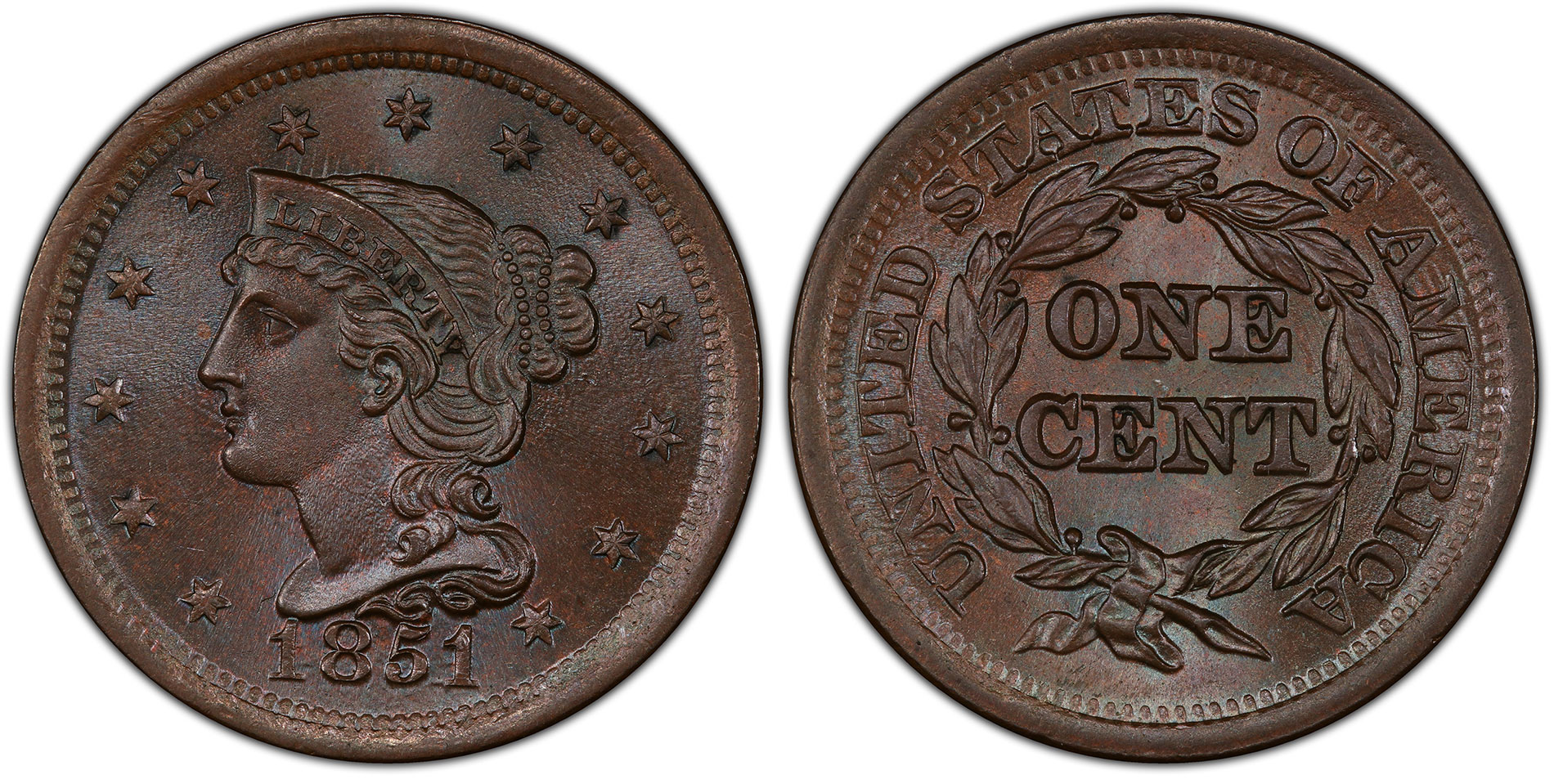
Braided Hair Cent, 1851 1C, BN, PCGS MS66+BN. Click image to enlarge.
Brown (BN): PCGS designates Brown for copper coins that have less than 5% of their original mint red color.
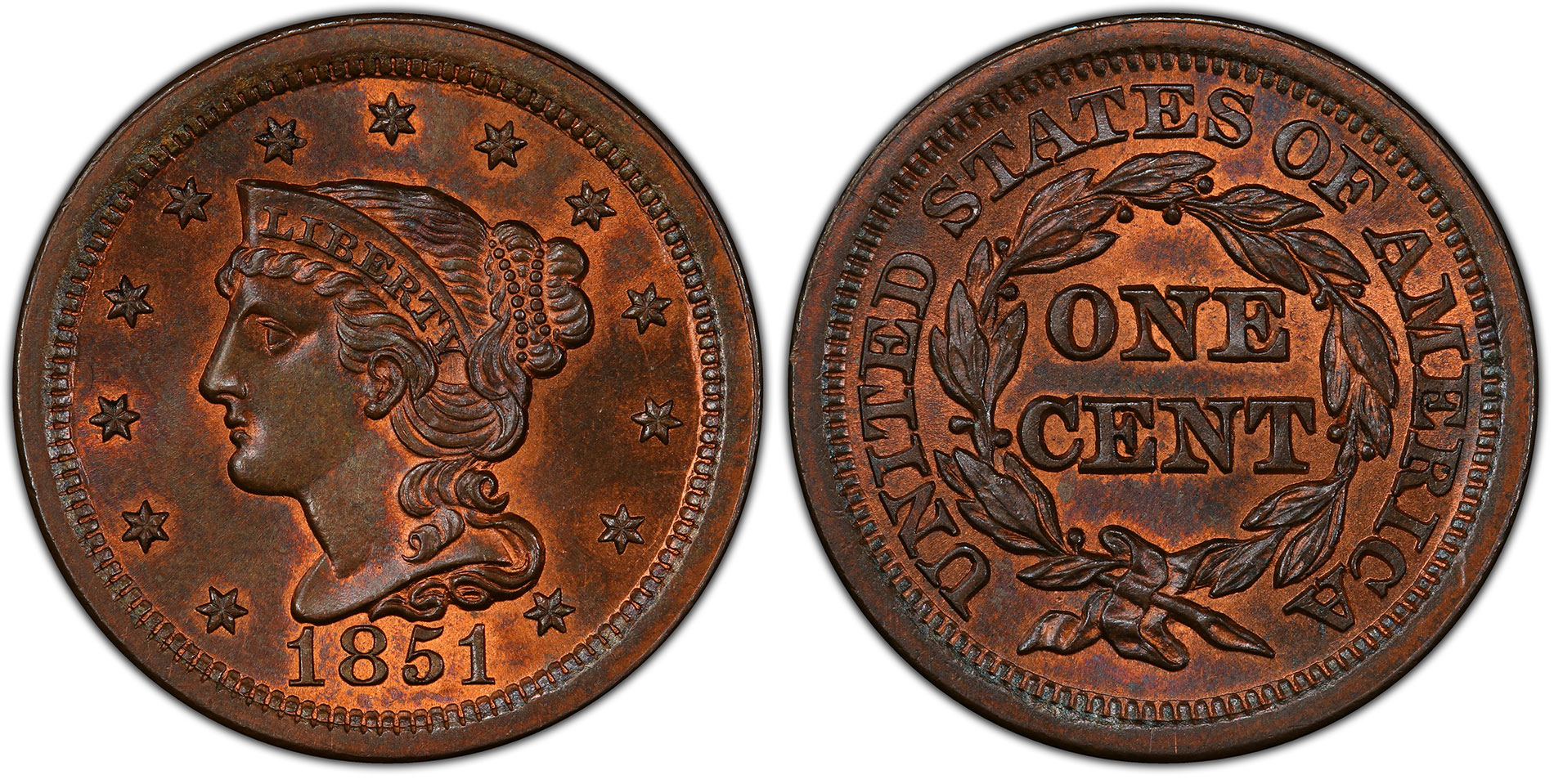
Braided Hair Cent, 1851 1C, RB, PCGS MS66RB. Click image to enlarge.
Red Brown (RB): PCGS designates Red and Brown for copper coins that grade MS60 or better and show between 5% and 95% of their original mint red color.
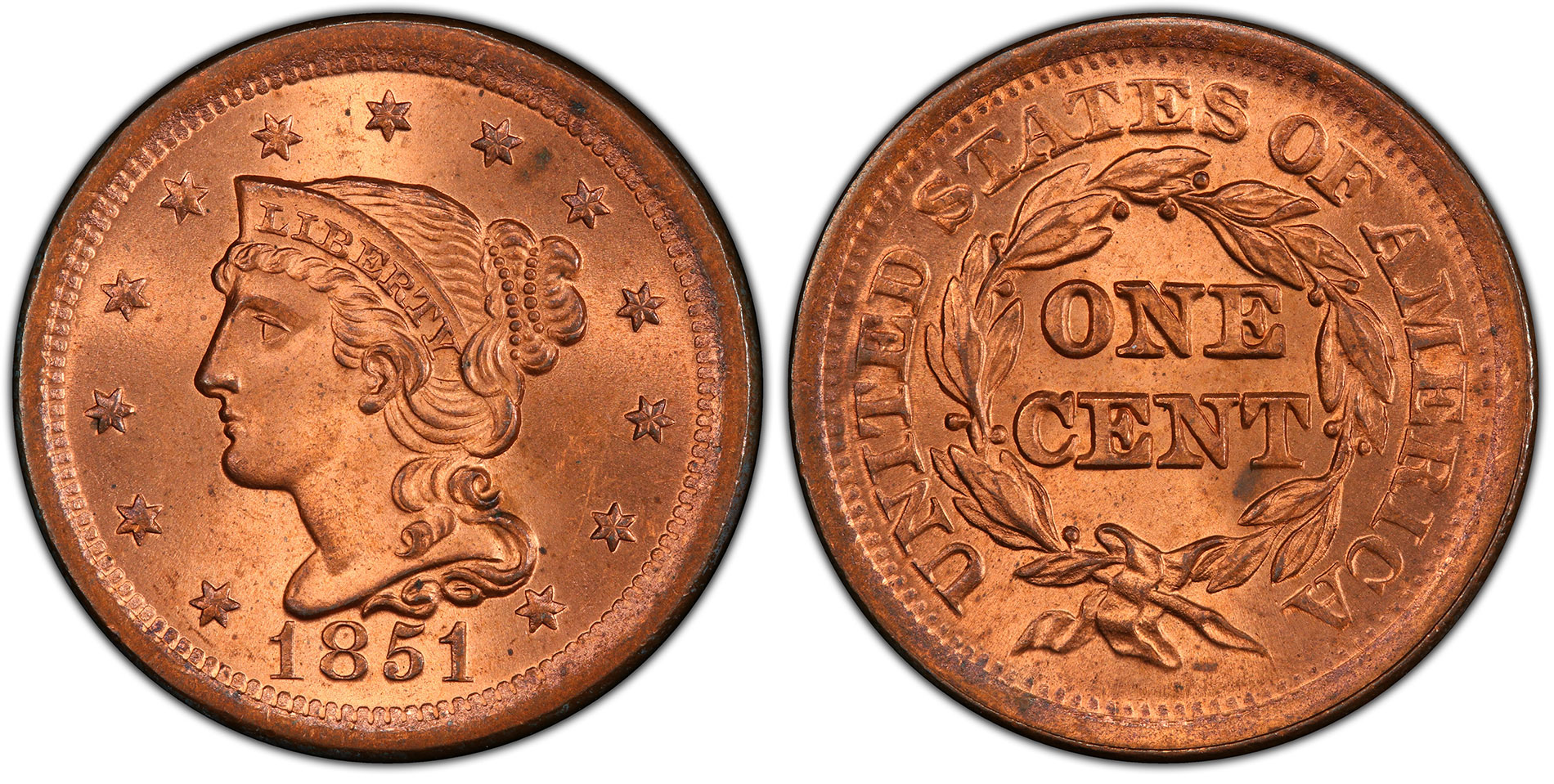
Braided Hair Cent, 1851 1C, RD, PCGS MS65+RD. Click image to enlarge.
Red (RD): PCGS designates Red for copper coins that grade MS60 or better and show 95% or more of their original mint red color.
Color Implications on Desirability & Value
Beauty is in the beholder, right? But in the numismatic marketplace, there is a general preference for certain types of coins, and in the world of uncirculated copper coins, Red is usually the tops. Red-Brown? So-so… And brown – meh. Not that anyone is turning down a BN 1793 Flowing Hair AMERI. Chain Cent – one of the rarest and most desirable early dates around. But, if given the option (and money is no object), many collectors with the funds in hand will go for uncirculated copper coins with Full Red (RD) color.
That’s not to say Brown and Red-Brown copper coins are veritable rejects. In fact, when it comes to circulated copper coinage, Brown is the color that collectors want to see. It’s the hue of a naturally toned and wholly unadulterated circulated specimen. The more chocolatey the better. And Red-Brown copper coins? Some are just absolutely impeccable… In fact, there’s a legion of collectors who swear by toned coins for their color and character. A Red-Brown example may be just the look a collector wants for their vintage copper coinage; it may appear more natural in the eyes of some collectors that a century-old Lincoln Cent show shades of toning rather than to shimmer in a bright and orangey glow, as if the coin just rolled off the mint’s presses yesterday.
Ultimately, color is a matter of choice – and in the subjective world of coin collecting one person’s preference for a RD-designated copper coin may be just as strong as another’s desire for BN and RB coinage. Still, color will affect pricing, and because RD specimens represent a much smaller share of copper coins – at least among vintage pieces – it’s the RD coinage that will usually fetch the most money. In some cases, RD specimens are extremely rare – often virtually unobtainable. That’s the case most especially with early copper coins as well as some 20th-century Lincoln Cent varieties that are scarce in top grades or were not generally preserved in inert environments.
Collectors who wish to preserve their copper coins in the best possible condition should store their collection in a cool, dry location. That describes the ideal storage setting for any collectible coin, by the way – regardless of its metallic composition. Another method for keeping coins in as close to their original state as possible is to have them graded and encapsulated by PCGS, which has always used the safest plastics and sealing methods available. The latest PCGS holders use a proprietary polymer formula made from a blend of scratch-resistant plastic that is 99.99% chemically inert. Furthermore, PCGS holders are sealed with no seam and are virtually airtight to provide the maximum protection against environmental damage to the coins within. Talk about a gold standard… But, of course, that’s a coin of a different color.


 Copper & Nickel
 Silver Coins
 Gold Coins
 Commemoratives
 Others
 Bullion
 World
World
 Coin Market
 Auctions
 Coin Collecting
 PCGS News