Silver Dollars & Trade Dollars of the United States - A Complete Encyclopedia
Q. David Bowers
F.M. Rose points out the chopmarking was a time-honored tradition in China, particularly in Hong Kong, where it was legally recognized by a proclamation by the governor published in the Gazette of October 21, 1865, as Local Ordinance No. 10. Certain merchants were said to have chopmarked every coin coming into their possession, and would readily take back any coin bearing one of their earlier marks. However, some chicanery took place, and numerous counterfeit coins were chopmarked in addition to the genuine ones. Some coins, including United States trade dollars, were so heavily chop marked that they became distended in shape, and the original designs were mostly obliterated.
Among F.M. Rose's more interesting comments is this one (p. 23): "I believe that ... many millions of United States trade dollars are still hidden in China,just waiting for the right time to come out of hiding." Among the illustrations in the Rose book is one of a Liberty Seated dollar, with this caption:
"This 1849 has so many large chops on its obverse that they can't be counted. Note [also] the many chops on the reverse [of this] battered poor old liberty."
The same writer went on to rate the rarity of trade dollars with chopmarks, noting that rarest of all is the 1878-CC, followed in order by the 1873 (nearly as rare as the 1878-CC), 1874, and 1876. Further:
There are 17 combinations of date and mintmark for a full set of circulation strike trade dollars. Collecting a full set of chopmarked trade dollars will be a challenge, even to the wealthy collector, because the key and semi-key coins do not come on the market very often.
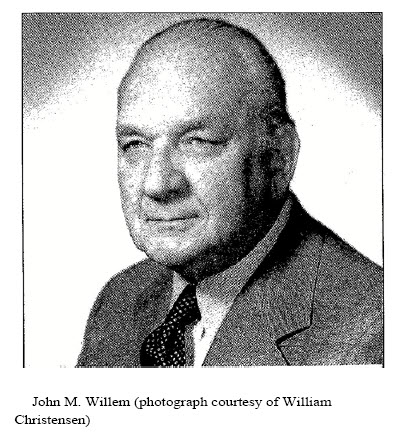
Interestingly, John M. Willem (life dates: November 1, 1909 -December 15, 1979), who rightfully can be called the father of trade dollar collecting, considered the chopmarked coin specialty to be the most challenging and worthwhile way to assemble a set of the series. Chopmarked specimens exist of all business strike dates and mintmarks 1873-1878. A complete set of these attracted attention at the 1985 ANA Convention in Baltimore.
As of the early 1990s, collecting chopmarked trade dollars is a virtually untouched field, and I suspect that fewer than a dozen numismatists have this specialty. Much of the rarity/availability data on chopmarked coins is highly conjectural. Here is a field awaiting additional research.
No.4: Collecting Proofs
Proof coins were issued for collectors beginning in 1873 and ending in 1883. These are all available today, although the earlier issues, particularly those dated 1873 and 1874, are rare and underrated, as will be explained later in the present study.
The formation of a set of 11 different dates of Proofs is not difficult to do, the main requisite being a checkbook with a substantial balance on deposit. In recent years, particularly since the mid-1970s, strong emphasis has been placed on Proofs in higher grade categories, especially Proof-65, a situation which has resulted in a strong premium being placed on this grade level Cherrypickers (and all serious numismatists should be such) win pick and choose, and among Proof-63 and Proof-64 coins they may well find some of beautiful aesthetic appearance, at a price which may be a fraction of that of Proof-65 coins.
The 1884 and 1885 trade dollars were probably produced by Mint officers as a favor to William Idler, a Philadelphia coin dealer, presumably after Idler promised to keep them a secret (although Carl W.A. Carlson, for one, has suggested that the 1884s were made under regular procedures). Their existence was not known outside of the Idler family until 1907 and was not published until 1908. More information concerning the 1884 and 1885 trade dollars is given under their respective headings.
No.5: A Complete Collection
For the numismatist really wanting to specialize in trade dollars, Collection No.5 could comprise each of the specialties described earlier: a set of business strikes including Type I and II varieties for 1875 and 1876, all of the Proofs from 1873 through 1883, and a separate collection of chopmarked coins.