
A French Connection
The city of Troyes, France, may not be as familiar as the French megalopolis known as Paris. However, the British traded with the French merchants in Troyes starting in the 9th century. This was the city where the term “troy” was derived that’s commonly used today as a measure for gold and silver. Fast forward 700 years to 1527, and Great Britain developed the troy pound as a standard monetary weight for both silver and gold. A troy pound of silver is equal to 12 troy ounces of silver. Each troy ounce is equivalent to 480 grains, and a grain is an ancient unit of measure equivalent to a kernel of barley.

Around the same time period, there also was a troy ounce in Bremen, Germany, that was equal to 480.1 grains. Nowadays, we are more familiar with a troy ounce being measured in grams and equivalent to 31.1 grams. The first bolt-and-screw press used to manufacture coins was invented by the British in 1661. This technology was refined in the ensuing years. By 1732, Mexico received its first screw press, which they called “de balacin” and began minting coins for the Spanish Empire. Mexico has historically been rich with silver ore, and they are the largest global producer of silver today.
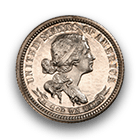
In 1936, the Banco de México produced a medal commemorating 400 years of coinage, as shown above. The obverse of the medal was designed by Manuel Luna Negrete, whose initials can be seen at the bottom left of the bolt-and-screw press, which is the central design. The reverse shows a modern steam press that was used at the time.
Mexico had first conceived the idea of minting a bullion coin in 1947, and the first “Onza Troy” (or one-ounce silver coin) was coined as a pattern. Struck in a proof finish, this coin uses the same design as the Negrete medallic issue from 1936. Collectors in Mexico distinguish between the “Onza Troy” minted from 1949 through 1980 and “Onza Libertad,” which was struck from 1983 through the present.
The Onza Troy
In 1949, the Banco de México issued a silver one-ounce coin struck in a circulation finish, and it was the first silver bullion coin issued by a government. This 1947 pattern issue was the predecessor for the 1949 Onza Troy bullion issue, which has the same design. The total mintage was 1,000,000 coins. This issue also displays the bolt-and-screw press with the remainder of the obverse displaying the date 1949. The legend reads “CASA DE MONEDA DE MEXICO.”

Our reverse displays “LEY .925,” which is the purity of the silver, “480 GRANOS OF PLATA,” and this translates to 480 grains – equivalent to one troy ounce. These coins were bullion that was traded between banks and were equivalent to about one U.S. dollar per coin. A PCGS MS65 1949 Mexico Onza would cost a collector about $250 nowadays.
The 1949 onza coins were traded similarly to how United States Morgan dollars were being traded in bags with the exception that the Mexican Onza Troy is one ounce of pure silver. Once the price of silver began to rise in the 1960s, silver was less frequently used in coinage, and withdrawing silver from circulation became a worldwide trend. The use of non-precious materials such as copper-nickel became more widespread for coining.
Silver reached about $2.50 per ounce in 1968, and then it hit $1.30 in 1971. Soon, the 1970s energy crisis pushed silver along for the ride to about $3.00 per ounce by 1973. This was the same year that two brothers in Texas, named Nelson Bunker Hunt and William Herbert Hunt, bought 35 million ounces of silver. The brothers began to dabble in the silver market on the Commodity Exchange (COMEX) as well as in the form of “futures”; futures are a contractual agreement to buy a commodity at a future date and at a set price.
For example, one may purchase a contract, which represents 5,000 ounces of silver for the date September 21, 2025, for a fixed currency amount. One may exercise the contract and take physical delivery of the silver or outright sell the contract at a profit or a loss. In 1974, the Hunt Brothers inherited a large fortune worth billions from their father, who was in the oil business. They began to dabble in futures contracts and continued to accumulate millions and millions of ounces of silver over the next several years.
Silver’s Crescendo
In 1978, the Banco de México saw an increase in demand for silver bullion and issued its first onza coin in over 29 years. The design was similar to the 1949 issue, but the reverse now displayed a balance and scale on the back. Two varieties exist for the 1978 issue: Type 1 has wide spacing between “DE MONEDA,” and Type 2 has close spacing between “DE MONEDA.” Both of these varieties command about $250 in a PCGS Mint State grade.
The 1978 date had a mintage of 280,000 coins. The 1979 coin also has two varieties that exist. On the Type 3 1979 there is close spacing between “DE MONEDA,” the left scale points to the U in “UNA.” Type 4 1979, there is close spacing between “DE MONEDA,” the left scale points between the U in “UNA.” Both of these varieties sell for about $120 each in a PCGS MS65 grade.

At the beginning of 1979, the price of silver stood at about $6 per troy ounce. The mintage for these coins was 4,508,000 and Banco de México sold them between $5.94 and $32.20 per coin. Prices would continue to rise into the next year as well. By this time, the Hunt Brothers had accumulated a massive position in physical silver and futures contracts. Their belief had been that silver would rise due to inflationary pressures.
The Banco de México issued Onza Troy coins in 1980, yielding three date-based varieties: 1980, 1980/9, and 1980/79. The scarcest is the 1980/9 variety, and the other two are of about equal scarcity. In the PCGS MS65 grade, all three of these varieties will trade between $100 and $150. The Banco de México produced 6,104,000 of the Onza Troy coins in 1980, selling them for between $10.89 and $49.25 per coin, plus a premium for coining.
The year 1980 was when the Hunt Brothers had cornered the silver market. With several years of accumulating physical silver and futures contracts, the Hunts controlled about one-third of the global supply of silver that was not held by government institutions. On January 7, 1980, the COMEX introduced the “Silver 7 Rule,” which placed heavy restrictions on buying silver commodities on margin.
The COMEX also feared that if the price of silver fell, people who had borrowed funds to speculate on the price of silver, which is called margin, would not be able to meet their financial obligations. Margin accounts are used to borrow money from financial institutions/brokers to buy futures contracts or even stocks. For example, if an investor wants to buy 5,000 troy ounces of silver, they may borrow half of the money from their broker as a loan, and pay half the money upfront, which is called the cash requirement. In this case, the cash requirement is 50% and you essentially double your buying power as long as the commodity does not fall below 50% in value. If the value does fall below 50%, the investor would receive a margin call, meaning the speculator would need to add cash to the account to maintain a 50% cash position.
Silver’s Rise & Fall
The speculation in silver continued to be rampant. On January 18, 1980, silver futures traded at a record high of $50.53 per troy ounce! Government regulators and COMEX officials knew of the heavy accumulation of silver contracts by the two brothers from Texas, and they were not the only speculators betting on silver. There was strong evidence that the Hunt Brothers were manipulating the price of silver.

On March 27, 1980, which was known as “Silver Thursday,” the Hunt Brothers received a margin call of $100 million. They were unable to meet the financial requirements, and the price of silver fell from $21.62 per ounce to $10.80. Years of speculating endeavors forced the Hunt Brothers to file for bankruptcy. Their losses amounted to billions. Over the next decade, they had to testify before Congress, arrange for financing to meet their financial obligations, and pay all of their creditors. Even though the Hunt Brothers lost billions, they remained wealthy.
The “Onza Troy” series has four dates: 1949, 1978, 1979, and 1980. However, completing the following PCGS Registry Set known as Mexican Onza Troy Silver with Varieties, Circulation Strikes (1949-1980) will be challenging for members to complete. This is especially so for a set in a PCGS MS66 grade, since the fields on both sides of these coins are open and more prone to dings. Colorful or toned examples of these coins will sell for premiums depending on the color scheme and attractiveness.
Collectors may notice the mintages are fairly high for all the years. By analyzing the PCGS Population Report, this series compared to others seems quite low and affordable, which may become more noticed by collectors of Mexico. In 1981, the Banco de México did not strike a Troy Onza, possibly because the premiums they once collected per ounce of silver had disappeared. Keep in mind also that the price of silver had dropped during the entire year of 1981 and finished at a year low in December. However, in 1982, a newly designed one-ounce bullion coin was released by Banco de México: the Onza Libertad.




 Copper & Nickel
 Silver Coins
 Gold Coins
 Commemoratives
 Others
 Bullion
 World
World
 Coin Market
 Auctions
 Coin Collecting
 PCGS News