Silver Dollars & Trade Dollars of the United States - A Complete Encyclopedia
Q. David Bowers
Historical Prices
Historical Market Prices for Early Dollars
The following survey of prices realized at selected auction sales and offerings in fixed price lists and advertisements shows the changes in descriptions for varieties and the advance of values over a long period of years from the 1850s to modern times. This is not a comprehensive listing. Rather, it illustrates early silver dollars that have been part of various American cabinets over the years. An effort has been made to include numerous "average" or "typical" collections rather than only important ones. The list of important sales could be expanded considerably to include Parmelee, Winsor, and others, but to be truly all-encompassing such a list would be a book in itself. Under the specific listings of silver dollar varieties later in the book, the category "Notable Specimens" includes memorable examples of certain die varieties, a listing drawn from many sources, including many not represented in the present "Historical Prices" section.
In each instance, coins are listed in order by date and variety. In the actual auction catalogues the order may have been different. There were no grading standards in effect during the nineteenth century, and one cataloguer's Extremely Fine (EF) might be equal to another's Uncirculated (Unc.). In general, coins listed as Poor, Fair, or Good would be designated higher grades today. However, at the other end of the scale the opposite is true for coins listed as Unc.; today, many would be called EF or AU.
As is readily apparent from the auction, fixed price, and advertising listings, there was no such thing as a standard price for a given early silver dollar sold during a particular time. Prices varied, often greatly. Valuations given later in the book in the charts under individual dates and major varieties 1794-1803 represent averages and what I believe to be educated guesses; as noted, actual sale prices may have been higher or lower. Some data in these charts are from the auction data below.
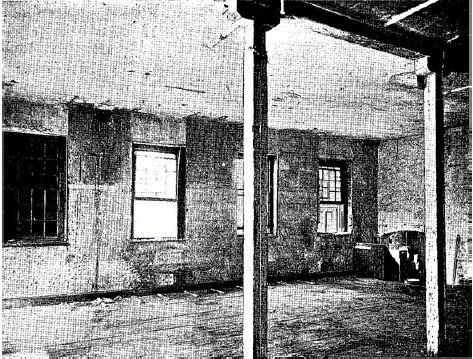
An interior room of the first United States Mint photographed when Frank H. Stewart owned it during the early 20th century, by which time it had been used for numerous other purposes in the intervening years. (From History of the First United States Mint by Frank H. Stewart.
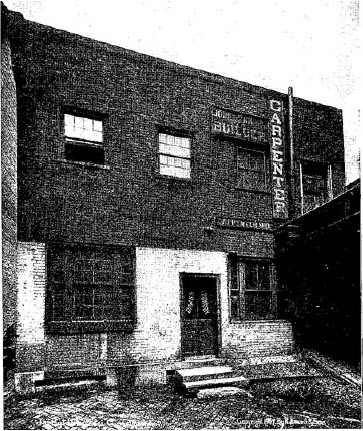
Photograph of one of the buildings used as part of the first United States Mint, as shown in a photograph taken in the early 20th century. (From History of the First United States Mint by Frank H. Stewart.