



Black Cat - Experimental Dime Patterns (1863-1869) Coin Album
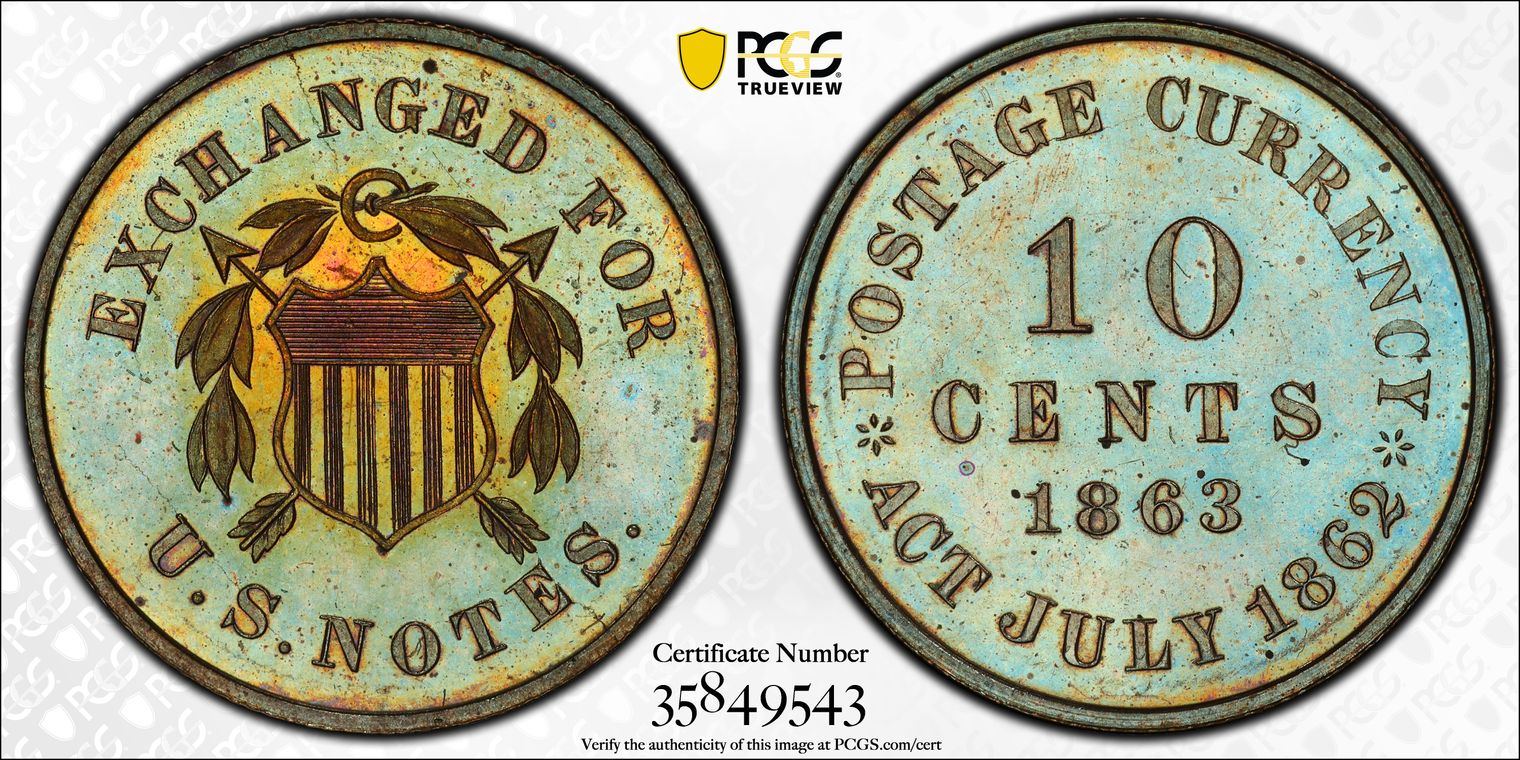
CAC - High R7 - Struck in Copper with a Reeded Edge. The obverse bears a central shield with intersecting arrows behind and a ring atop, from which depends on an inverted laurel wreath framing the shield left and right. EXCHANGED FOR / U.S. NOTES occupies the periphery. The reverse shows two rosettes separating POSTAGE CURRENCY and ACT JULY 1862, with 10 CENTS 1863 on three lines in the center. Mirrors beam intensely from all over. The mirrors are very clean and have remarkably clarity. Phenomenal totally original iridescent colors of pale lime/purple/violet/tangerine/gold colors swirl all over. Every detail is fully struck and appears boldly.
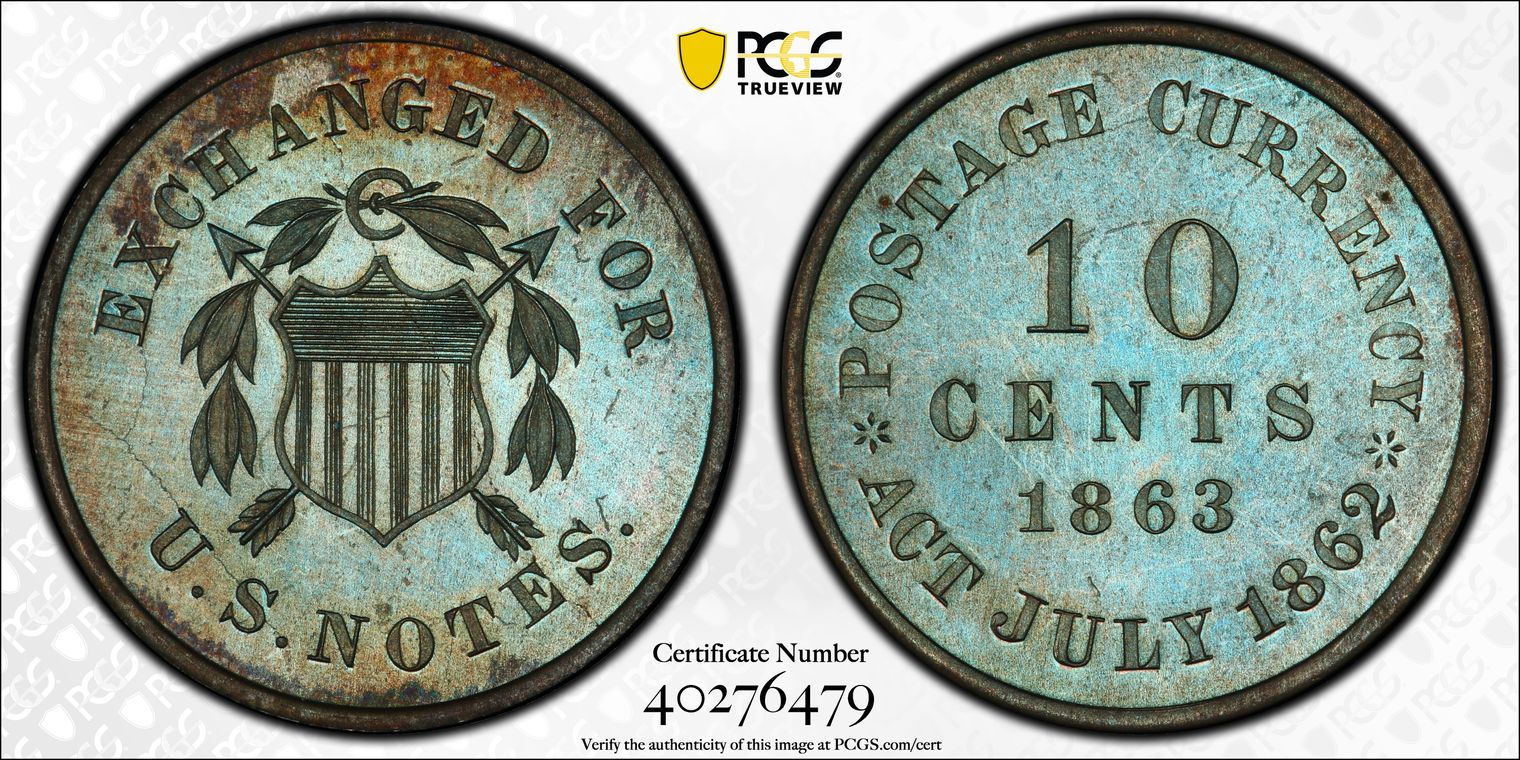
R8 - Only 3 pieces known. Struck in copper with a plain edge. "Both sides showcase magnificent ice-blue patina with golden-olive accents. A rarity with perhaps just three pieces known." Ex: The Bob R. Simpson Collection, Part III

CAC - Low R.6 - Struck in 100% tin. 21.14 grains. Standard Postage Currency obverse and reverse. The surfaces are exceptionally bright and reflective with a rippling effect in the fields. No toning is present. Ex: Massachusetts Historical Society and Appleton Collection Harry Bass Collection, Part I; David Cassel Collection.
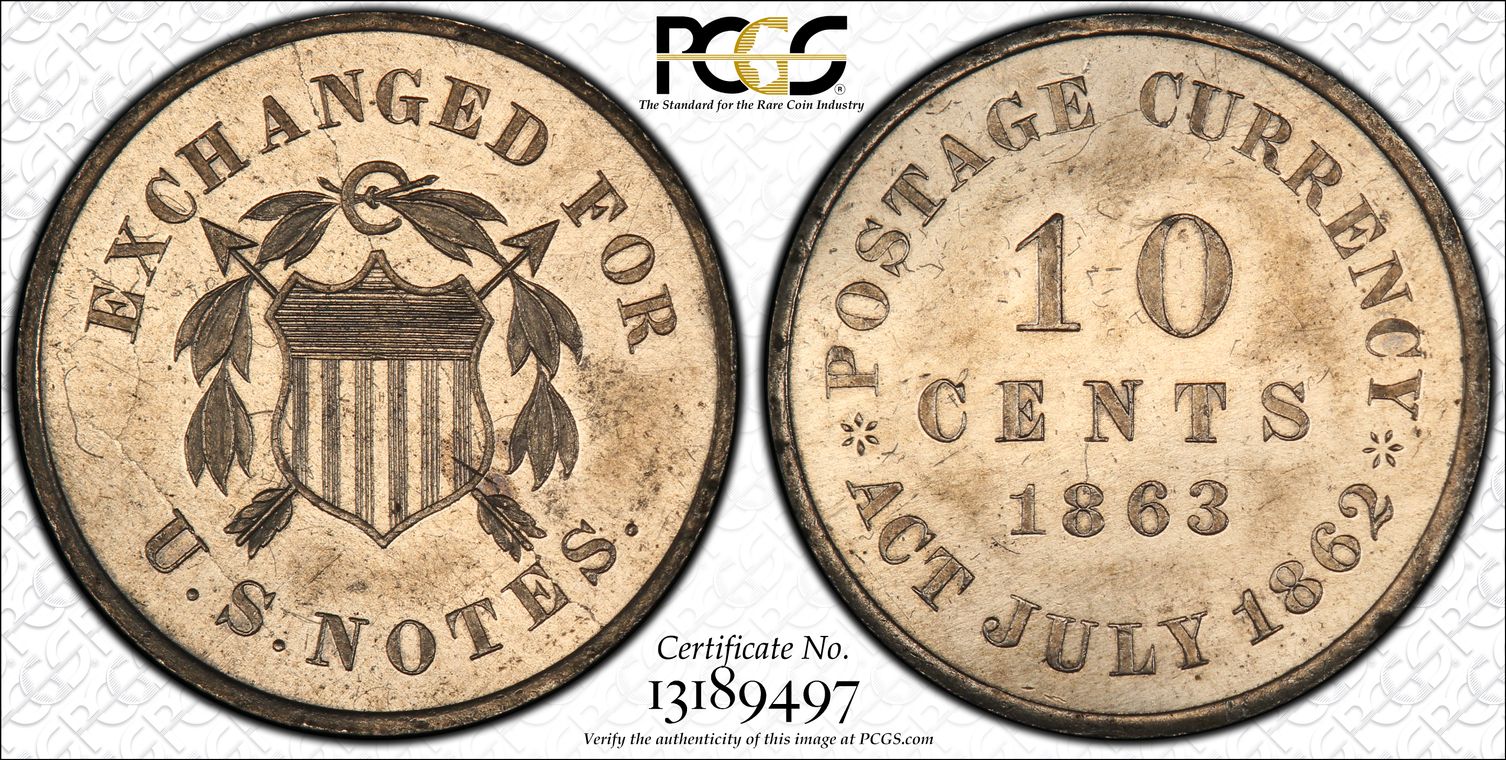
CAC - Low R.6 - Struck in tin (mostly) with a plain edge. The stated composition of this piece is: 97% tin and 3% copper. The tin surfaces are bright and virtually undiminished by toning. The strike is strong throughout and there are a number of lint marks impressed into the reverse, debris that obviously adhered to the die by static electricity after the die was wiped by the coiner.
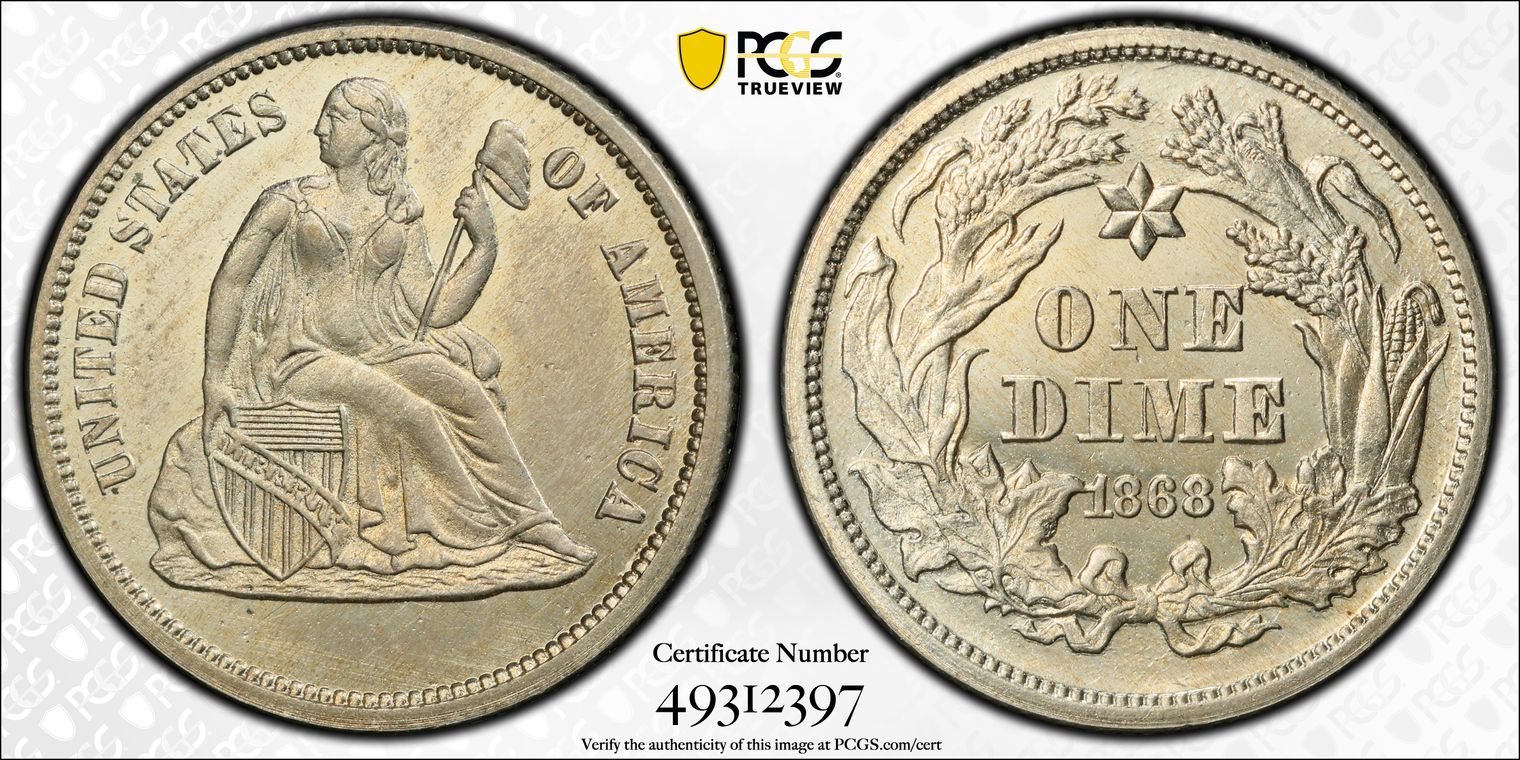
CAC - Low R.7 - Struck in copper-nickel alloy with a reeded edge. Was in an NGC holder - Judd-641A Unique. Years ago SEM-EDX testing was conducted by Ledoux & Company on NGC certificate number 581886-002. That testing revealed the composition of this piece as: 76% copper, 23% nickel, 0.3% cobalt, 0.2% iron, and 0.1% silicon. "The fields show the expected die polishing marks, and they are exceptionally mirrored. Additionally, the devices display significant mint frost, giving the coin considerable field-device contrast on each side. Just a hint of pale golden-rose toning is present across each side. The devices are fully struck in all areas."
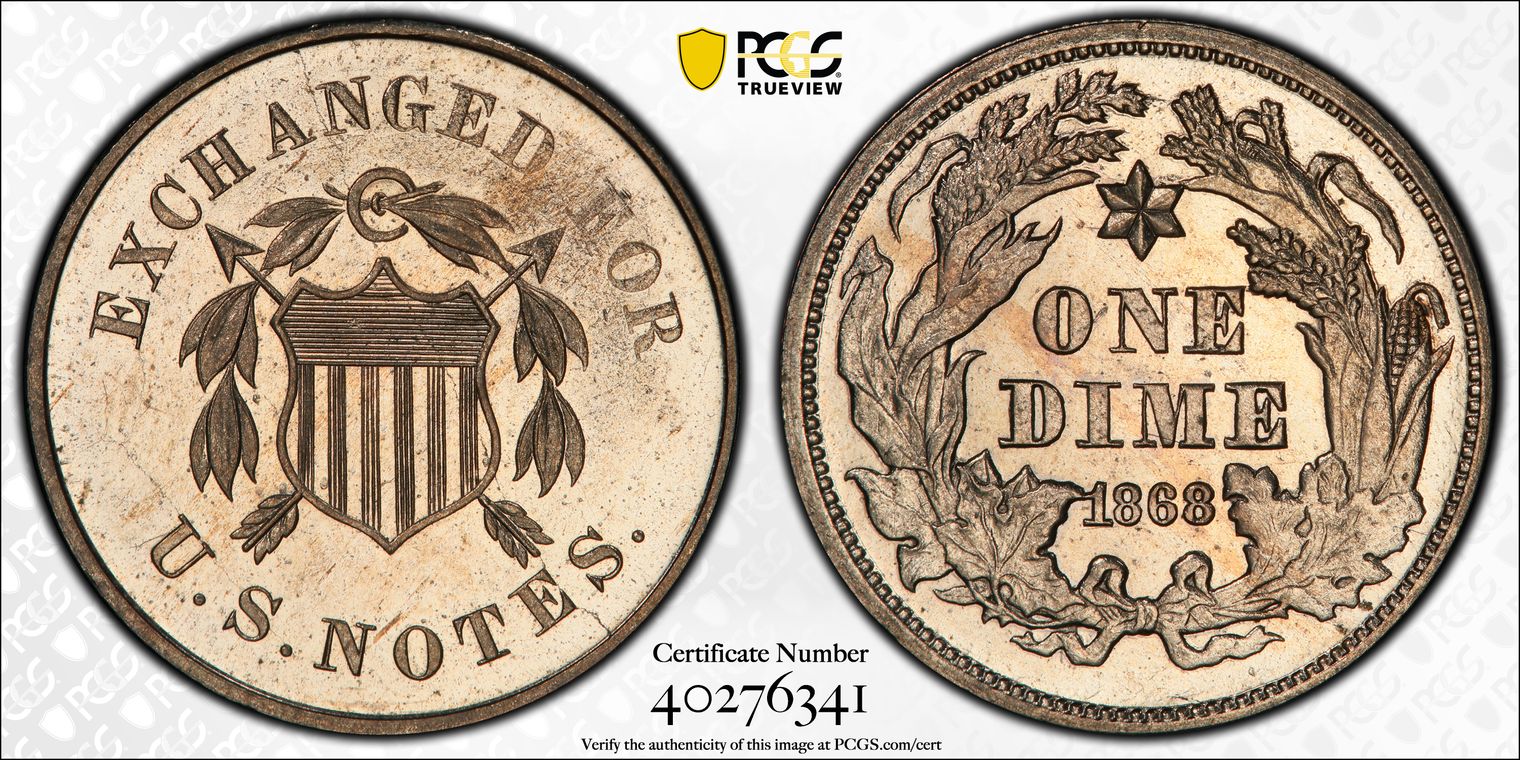
Low R.7 - Struck in nickel with a reeded edge with about half a dozen known. This is the finest certified. A Postage Currency related pattern, dated 1868. "This is a brightly mirrored piece that shows only slight golden toning on each side." Ex. Bob R. Simpson Collection, Part IV, The Distinguished Gentleman of the O.C. Collection.
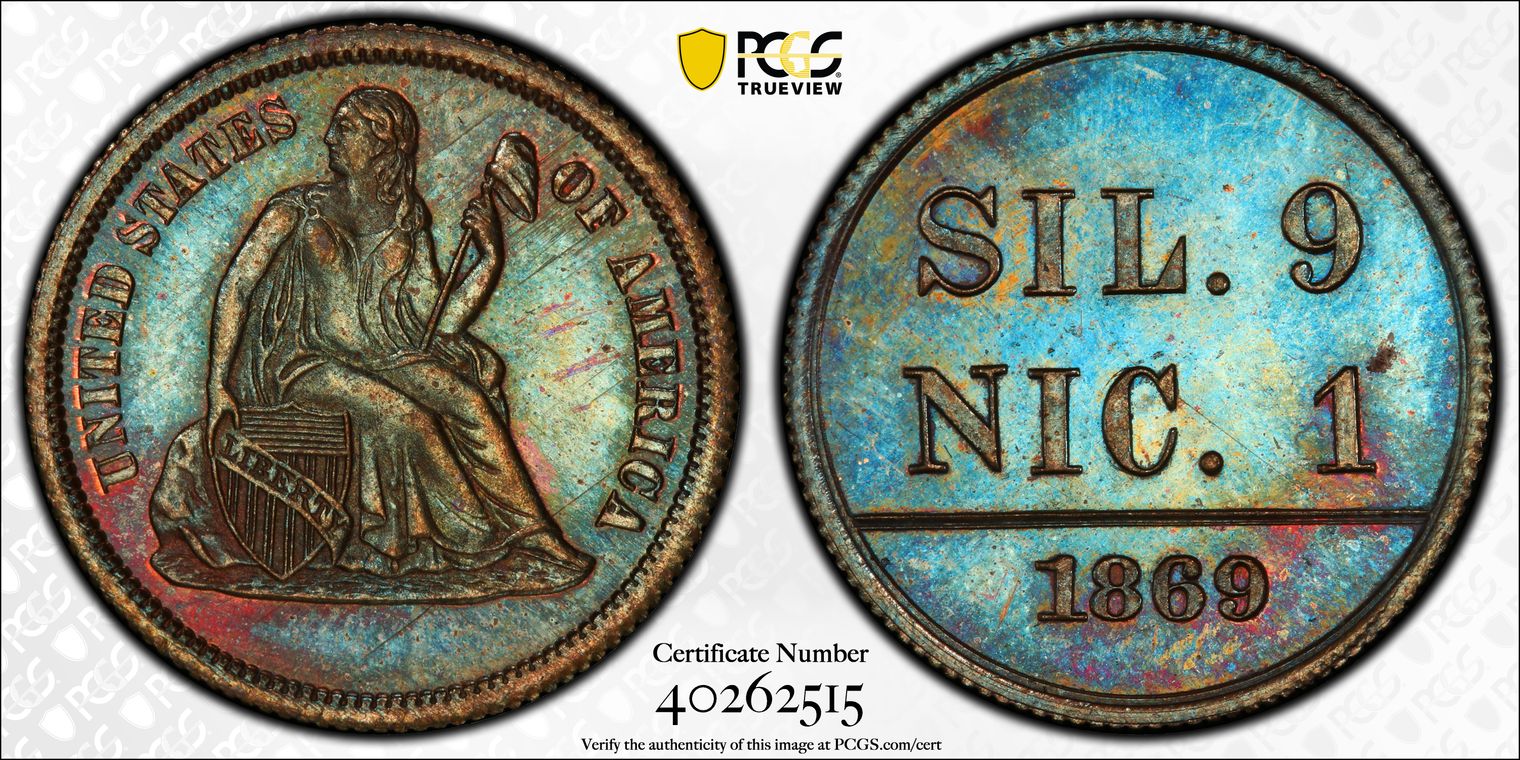
CAC - R.7 - Struck in copper with a reeded edge. ..."well struck and lustrous with rich apple-green, ocean-blue, and rose-red toning." Ex. Louis E. Eliasberg, Sr. Collection / Simpson
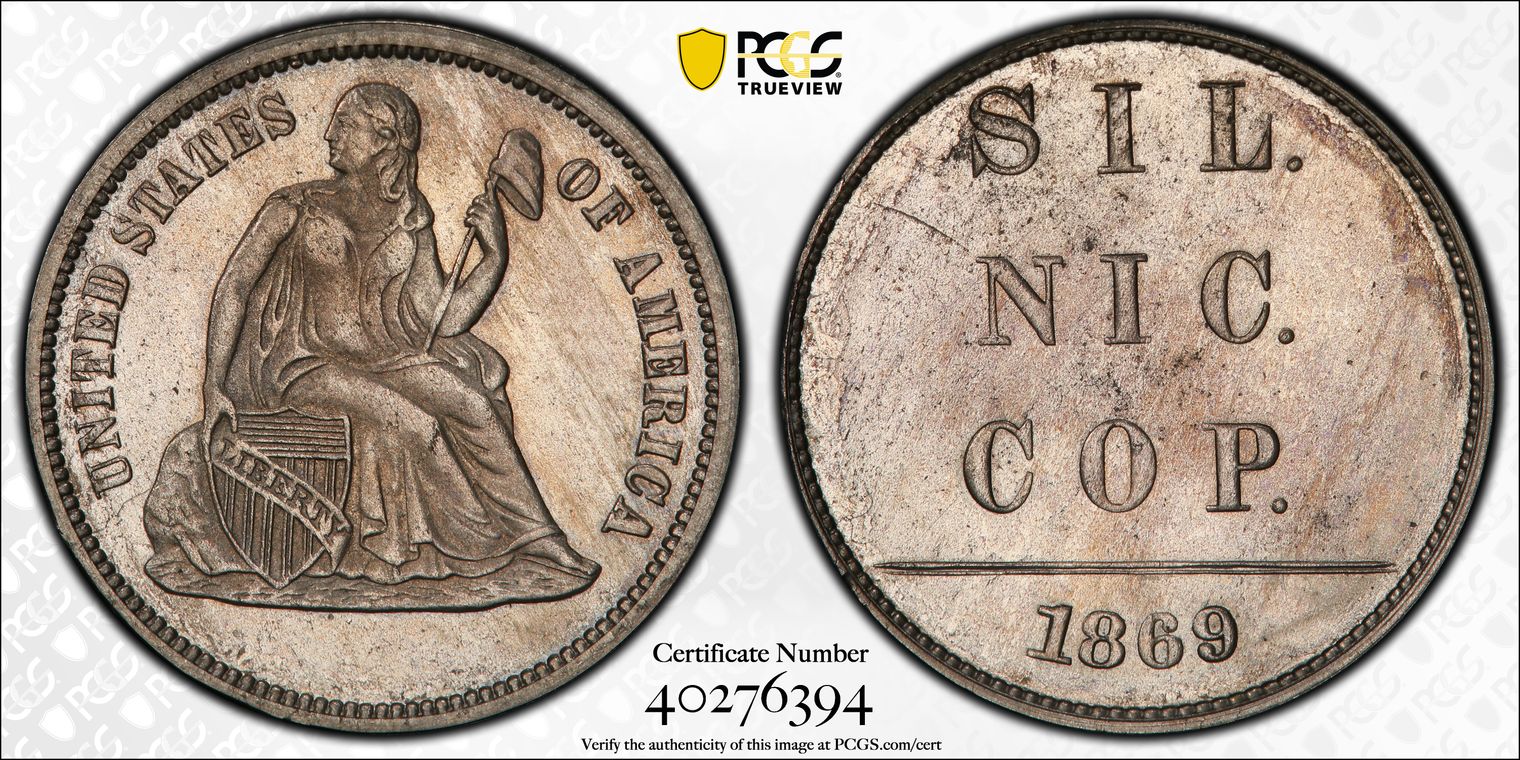
High R.6. Allegedly struck in "Koulz's" alloy, a variant of German silver. "The surfaces appear nickel-gray with splashes of golden patina". Ex: The Bob R. Simpson Collection, Part II
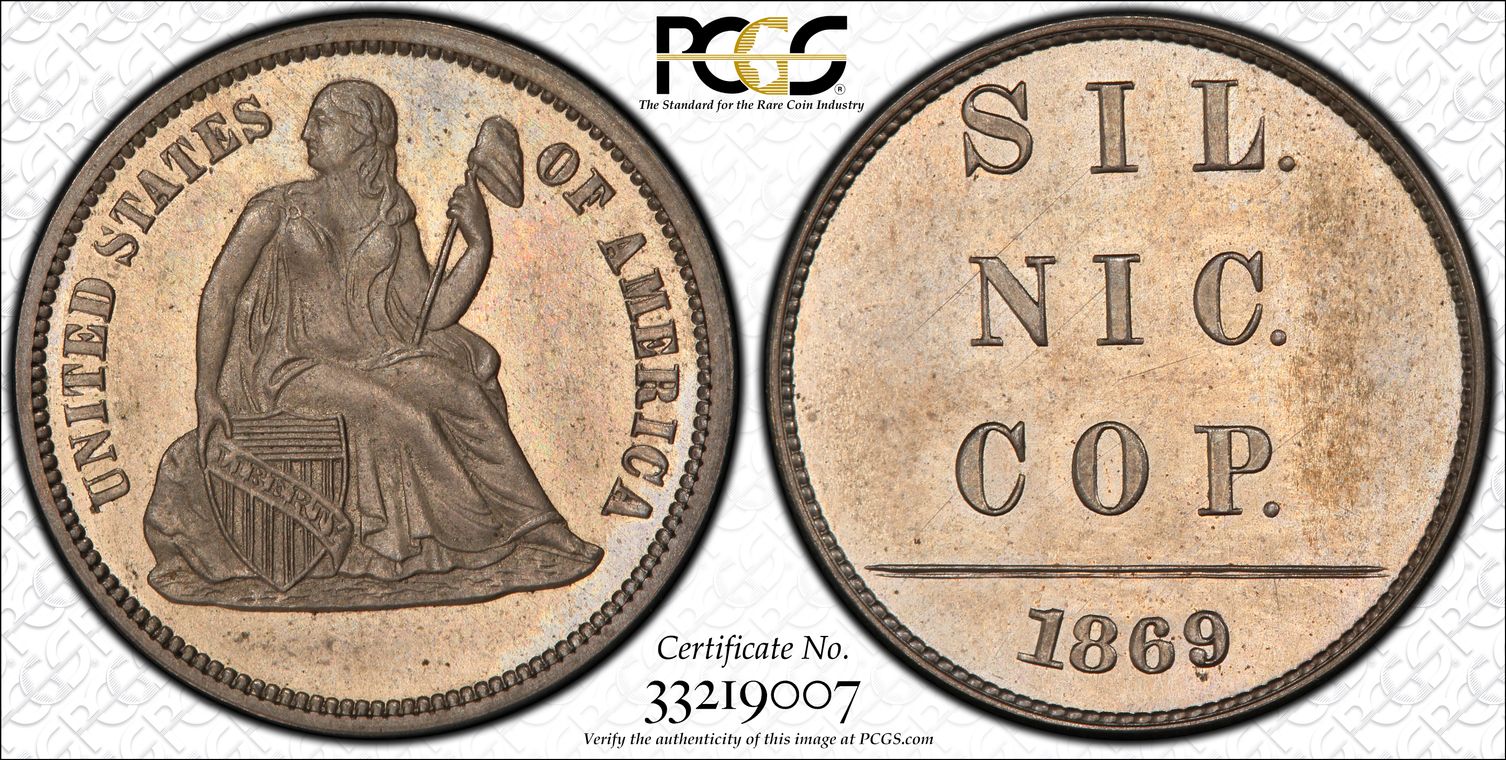
CAC - High R.7 - Struck in Cupro-Nickel with a plain edge - Only CAC Example. The obverse is similar to the regular issue, but without the date in exergue. The reverse has SIL. / NIC. / COP. with the date slightly curved below and in a smaller font. The bright nickel-gray fields show light oil-slick iridescence that is most attractive, and the devices are especially well-struck considering the hardness of the alloy.