



The Gypsy Collection Coin Album

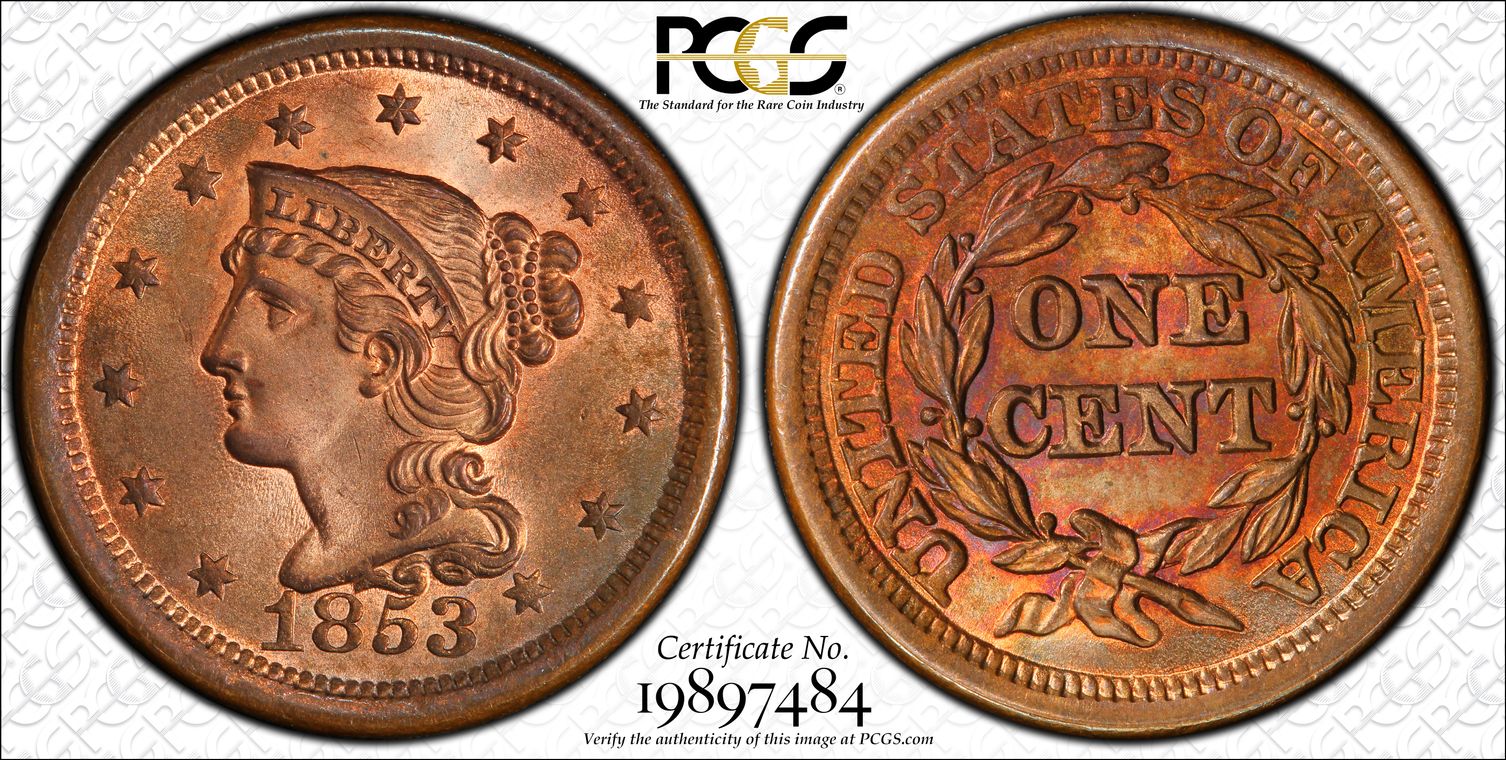
CAC. O-131, R.2. The obverse with die line above the LI of LIBERTY, the reverse with "Leaning 0" in the denomination. This is a gorgeous near-Gem that is ideal for the type collector seeking a high-end Bust half. The strike is solid, if a trifle incomplete on the highest design elements, and the luster is warm silver overall with gold and violet elements at the borders. Purchased as MS65 - Non CAC.
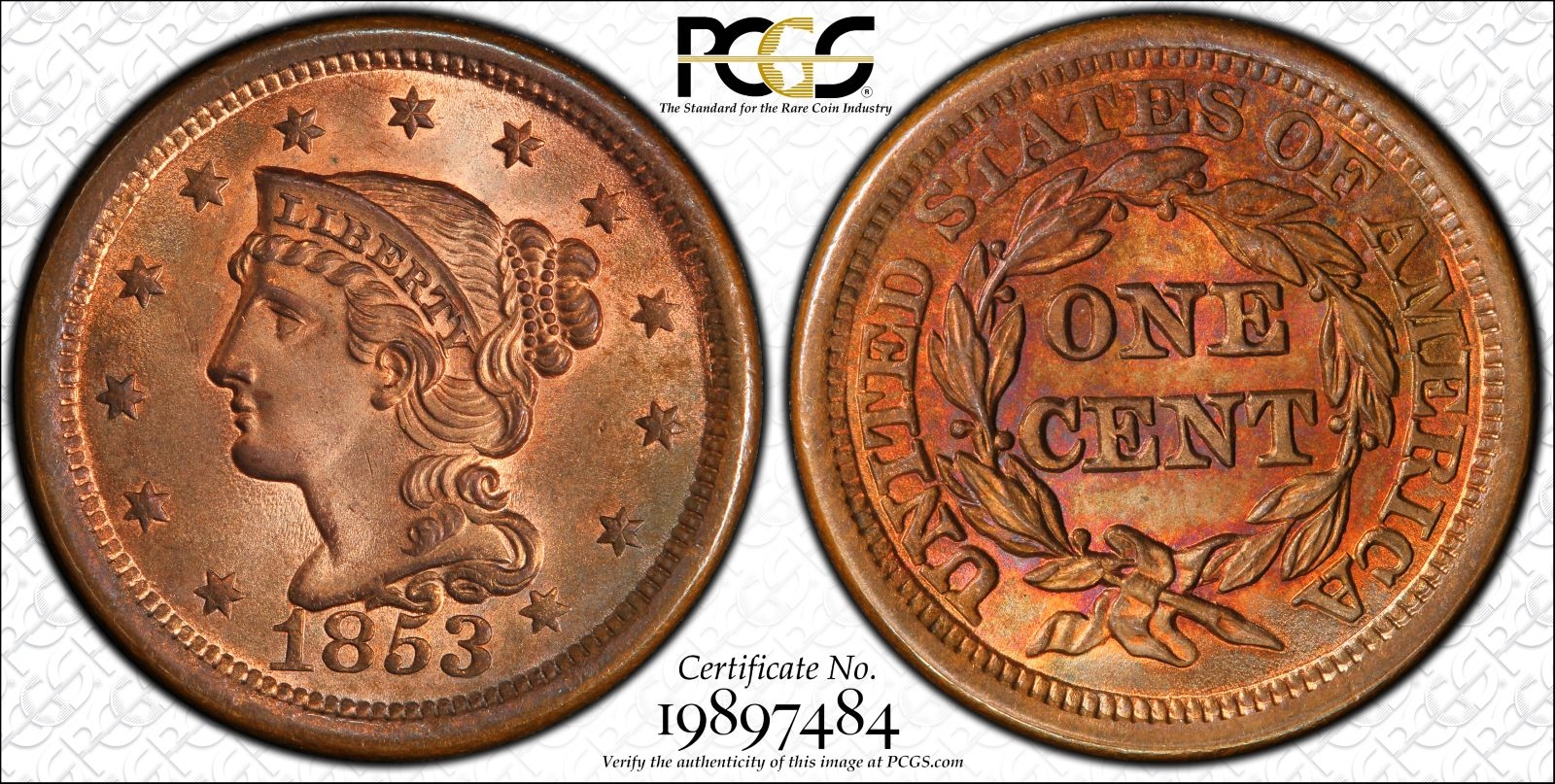
CAC. O-131, R.2. The obverse with die line above the LI of LIBERTY, the reverse with "Leaning 0" in the denomination. This is a gorgeous near-Gem that is ideal for the type collector seeking a high-end Bust half. The strike is solid, if a trifle incomplete on the highest design elements, and the luster is warm silver overall with gold and violet elements at the borders. Purchased as MS65 - Non CAC.

CAC. You do not have to tilt this coin to see all its beautiful colors. Warm shades of violet/golden brown/amber blaze from both sides (on the image the coin may appear slightly speckled-it is not). Overall, the surfaces are extremely clean and radiate with an intense luster. Every detail is sharply struck and appears boldly. No matter how picky you are, this coins quality and color WILL impress you! Not an easy date to find in true problem free GEM. PCGS 51, NGC 71. PCGS has graded only 8 coins higher.
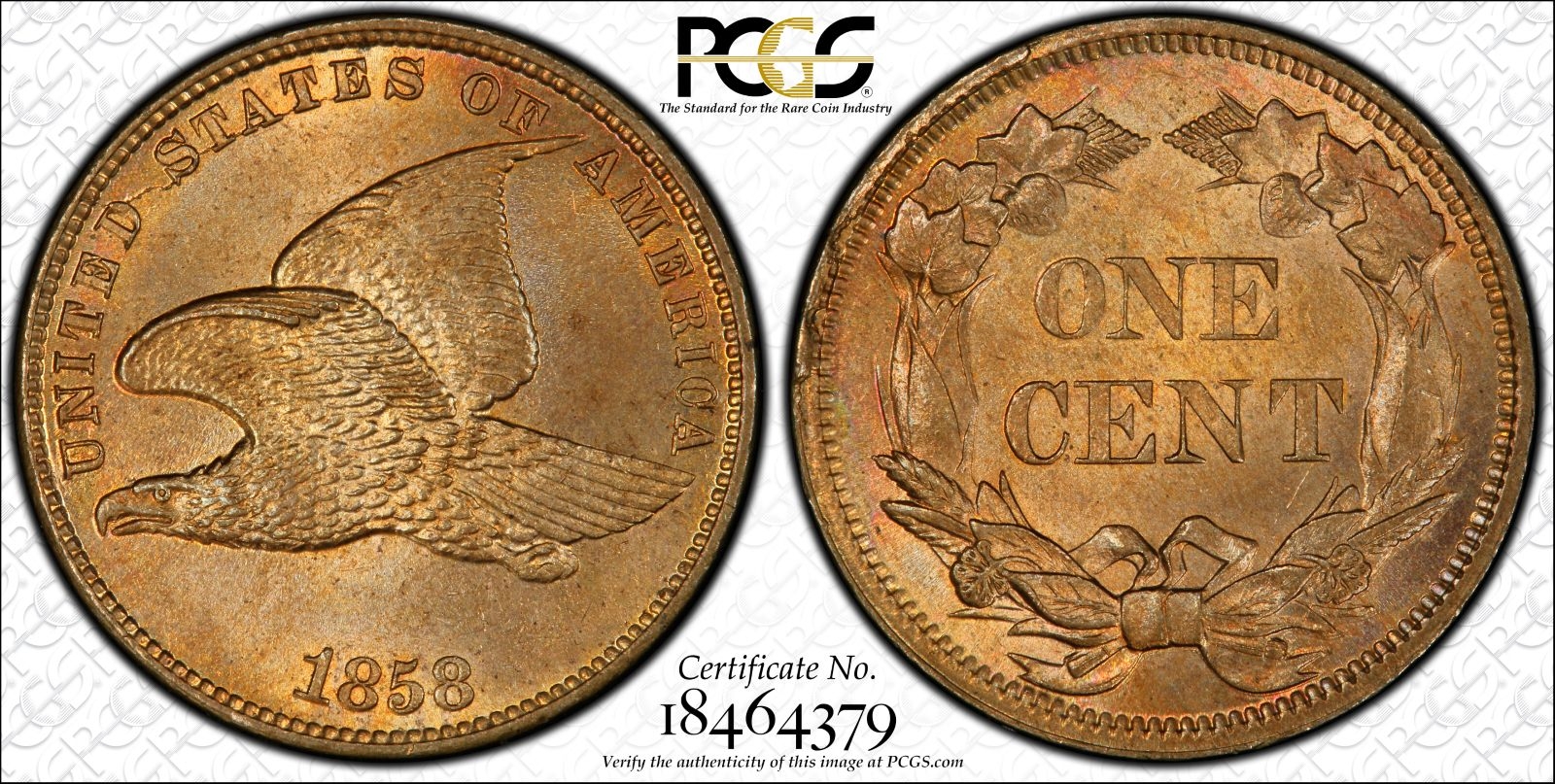
CAC. You do not have to tilt this coin to see all its beautiful colors. Warm shades of violet/golden brown/amber blaze from both sides (on the image the coin may appear slightly speckled-it is not). Overall, the surfaces are extremely clean and radiate with an intense luster. Every detail is sharply struck and appears boldly. No matter how picky you are, this coins quality and color WILL impress you! Not an easy date to find in true problem free GEM. PCGS 51, NGC 71. PCGS has graded only 8 coins higher.
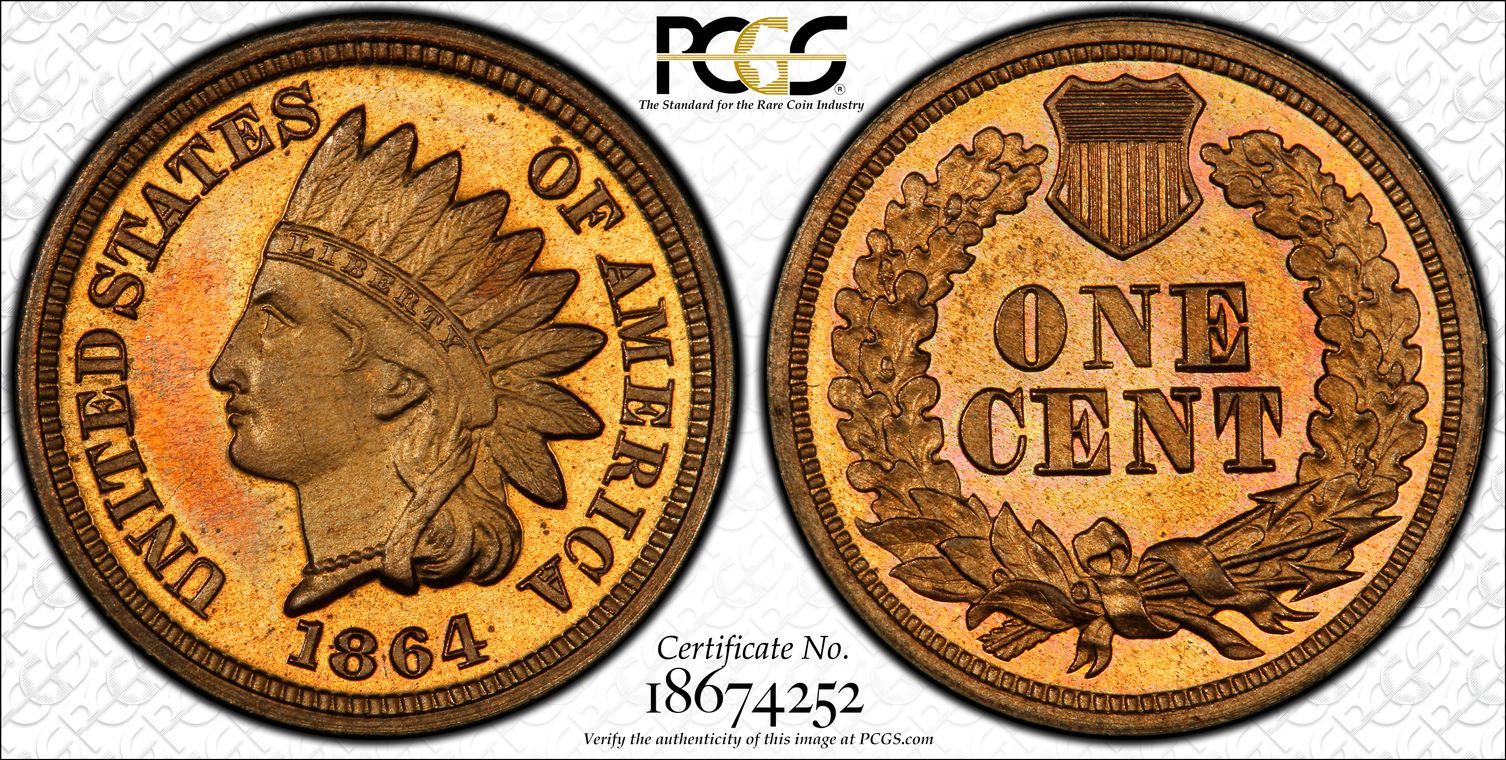
CAC. A honey-gold and rose obverse with a solid gold reverse combined with a rare PR66 Cameo make this Indian head cent a beautiful coin. PCGS 5/1 (12/09) PCGS 6/1 (05/15) EX: Five Point Collection
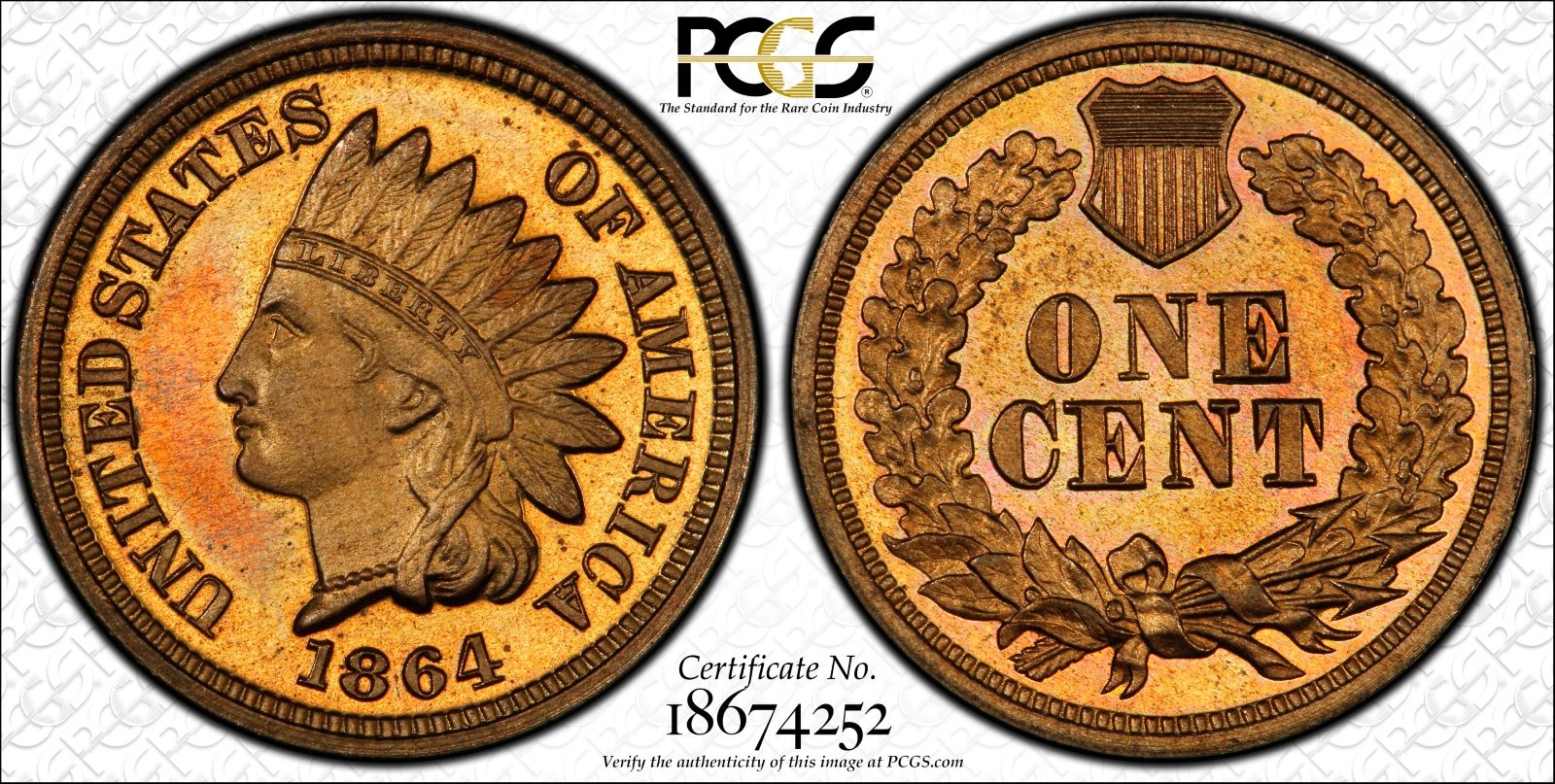
CAC. A honey-gold and rose obverse with a solid gold reverse combined with a rare PR66 Cameo make this Indian head cent a beautiful coin. PCGS 5/1 (12/09) PCGS 6/1 (05/15) EX: Five Point Collection
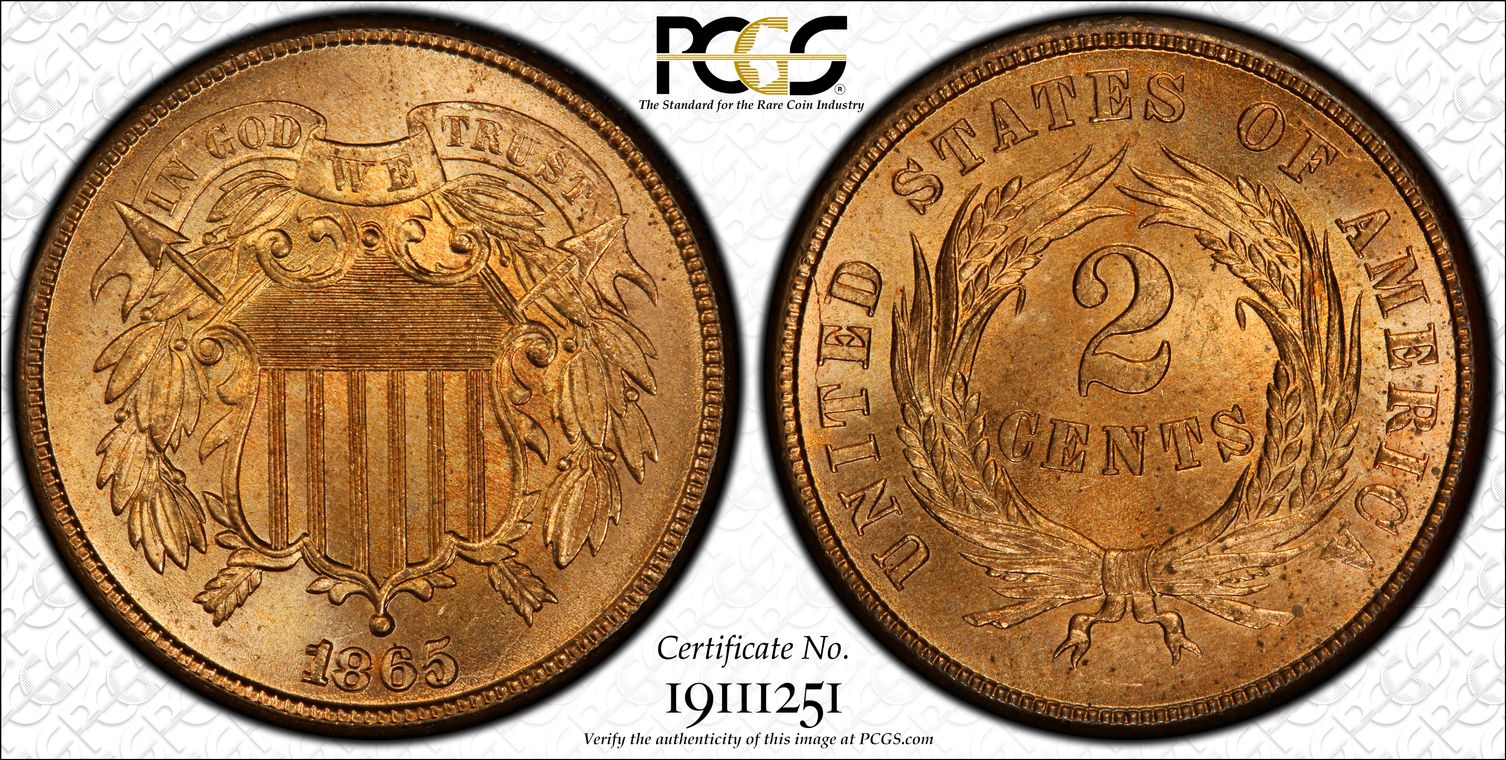
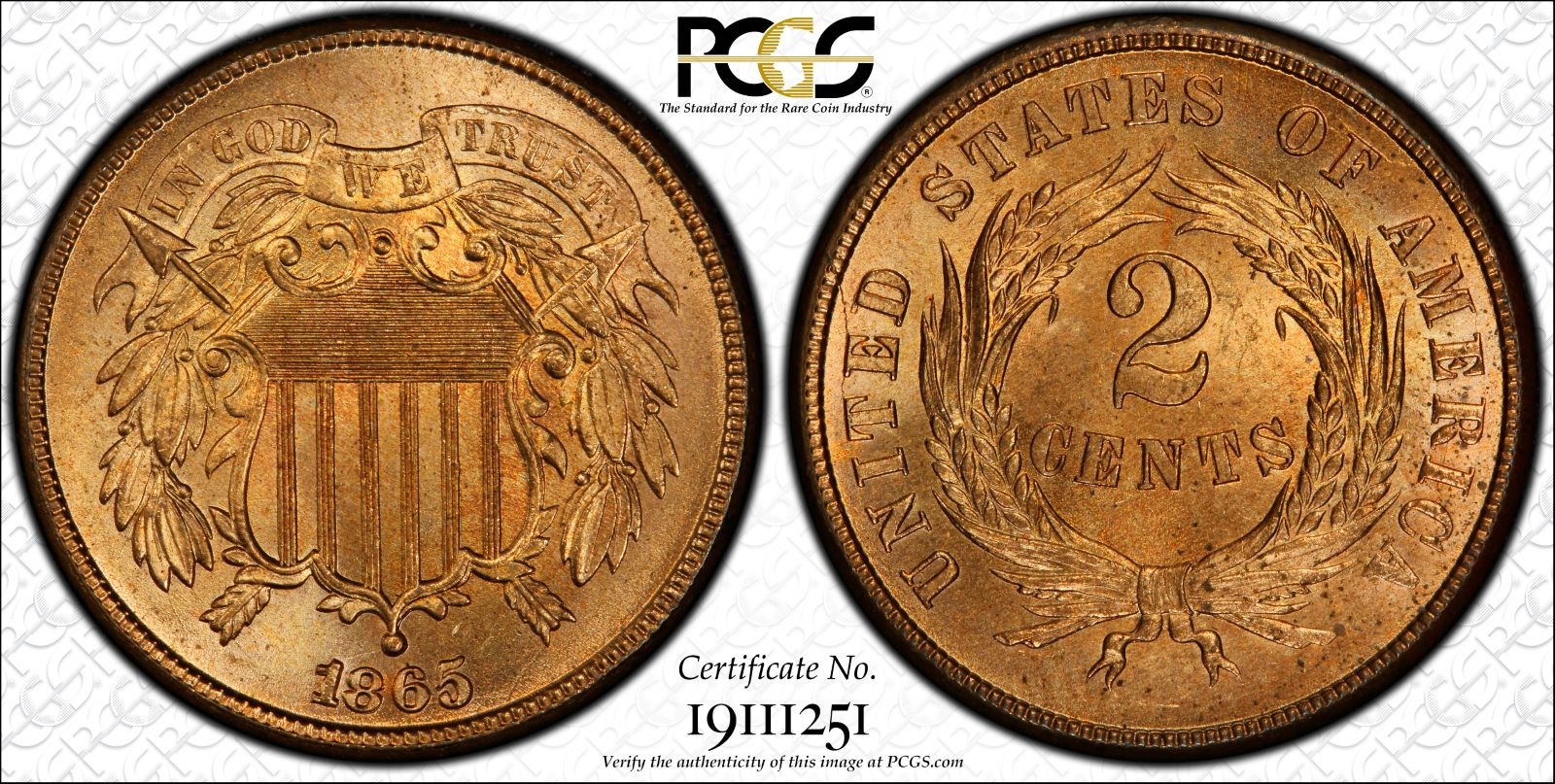
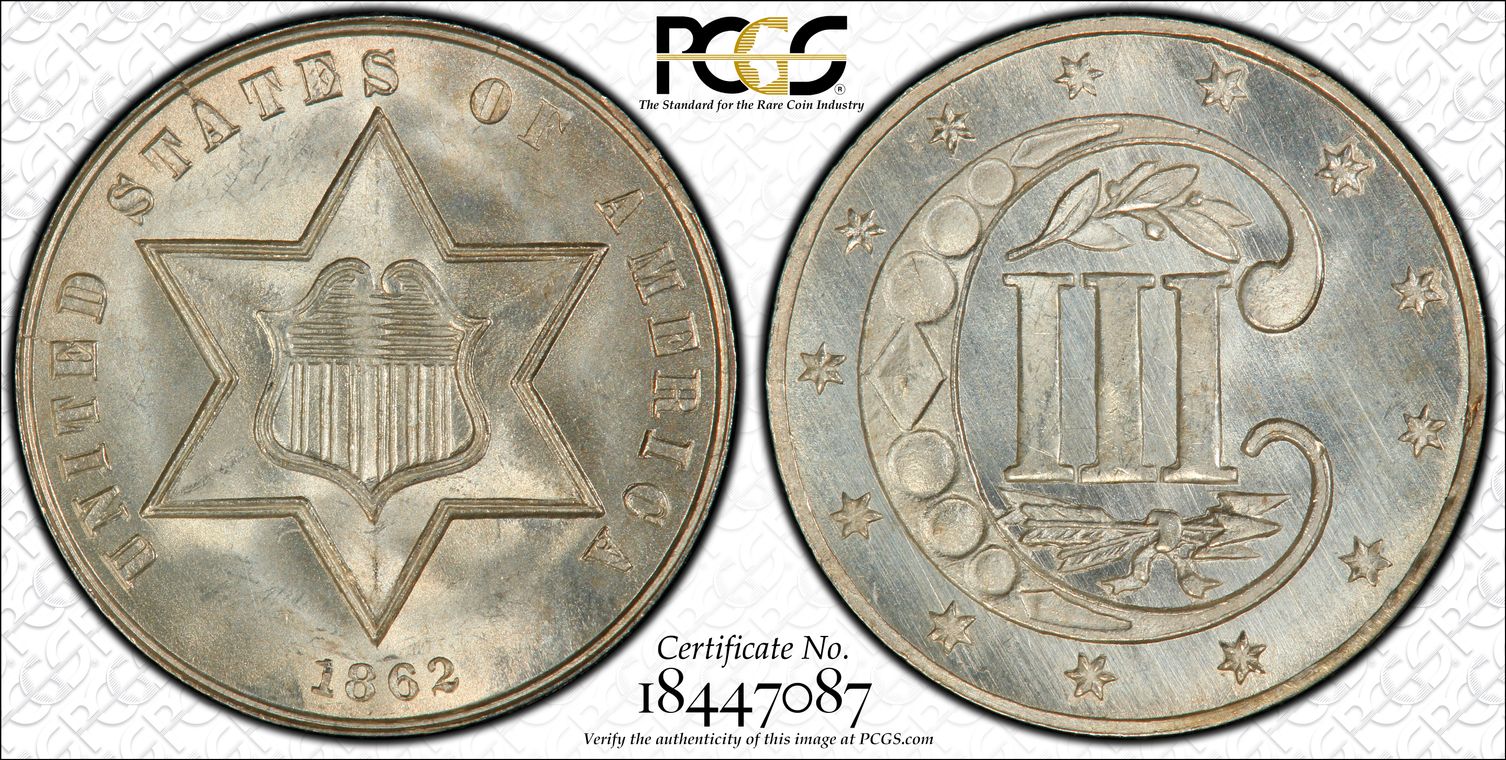
CAC. This Civil War Premium Gem has mildly prooflike fields and only a hint of tan toning. No marks are visible, and the strike is decidedly above average. PCGS has certified just 11 pieces finer (10/09).
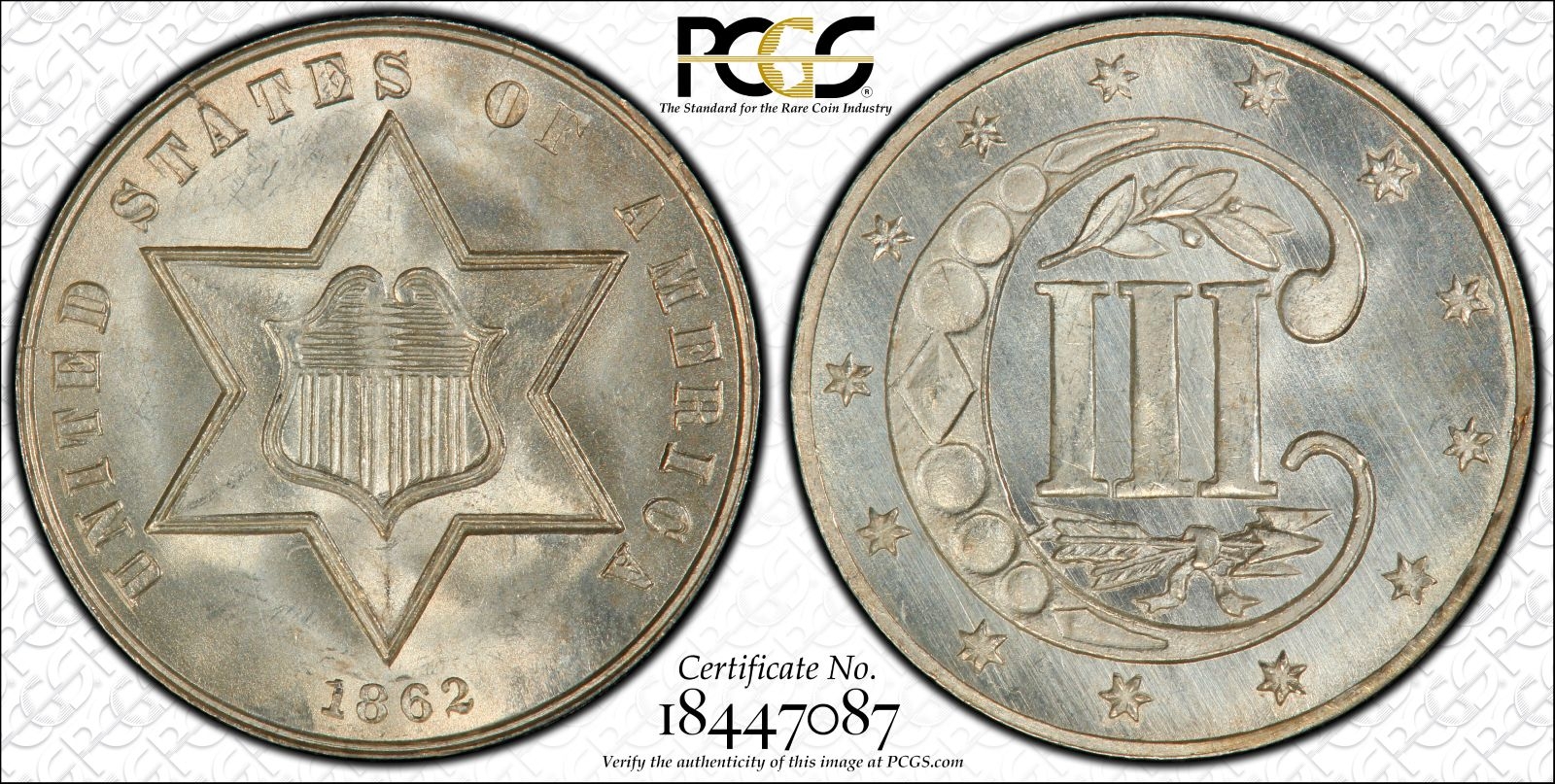
CAC. This Civil War Premium Gem has mildly prooflike fields and only a hint of tan toning. No marks are visible, and the strike is decidedly above average. PCGS has certified just 11 pieces finer (10/09).
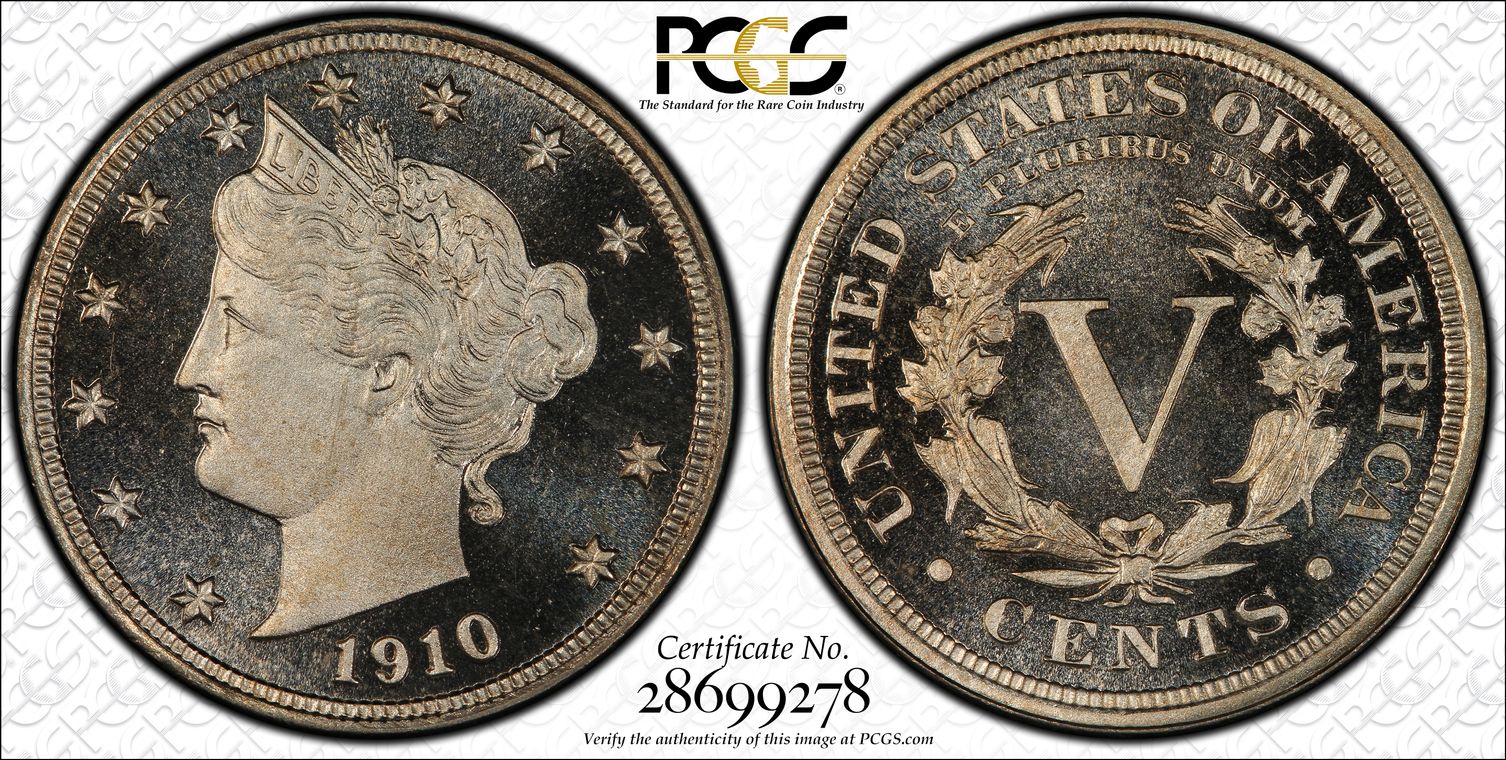
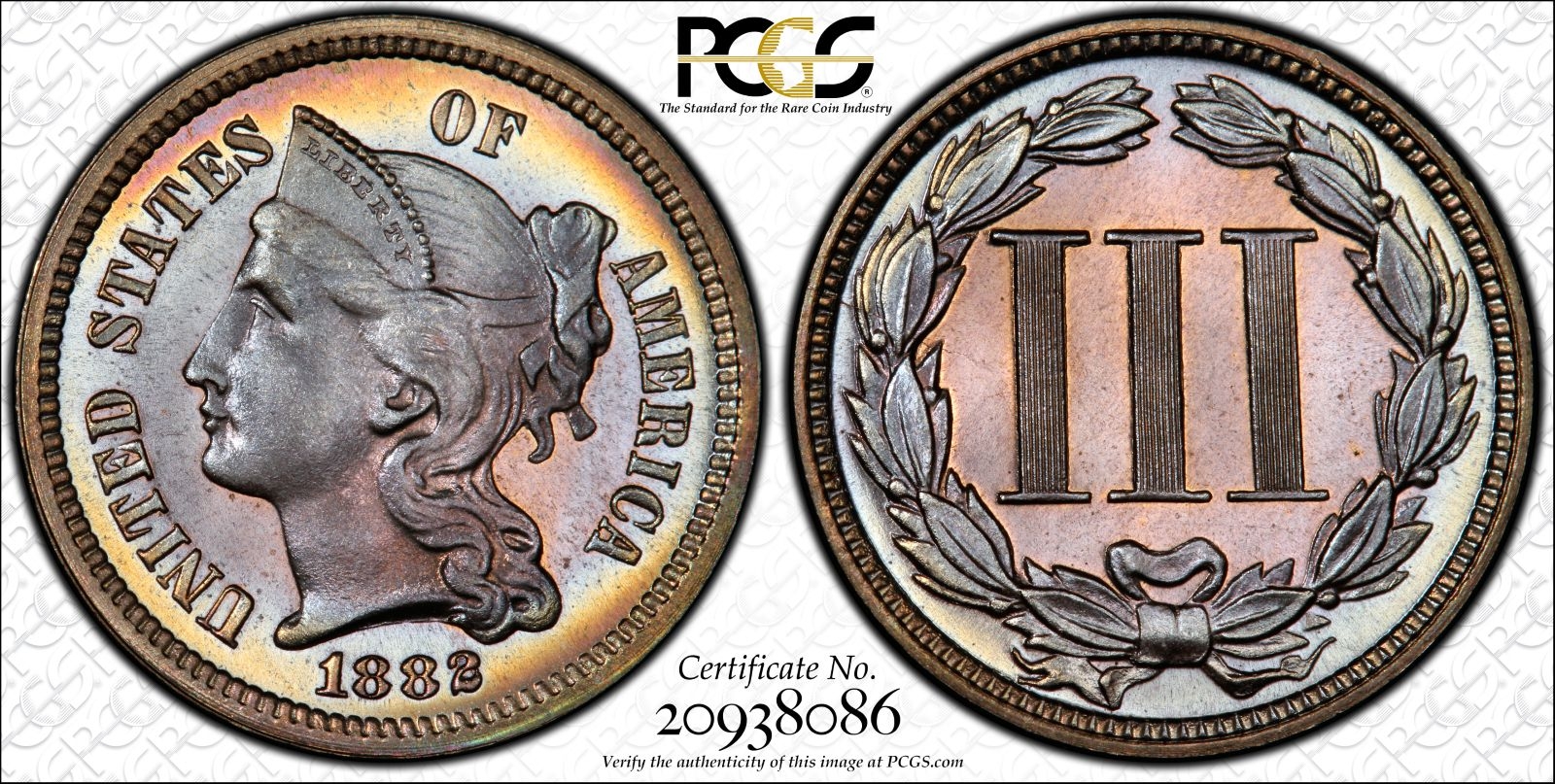
CAC. 1/0 (12/13) This example has bold design elements with pristine surfaces, deeply mirrored fields, highly lustrous devices, and only a hint of delicate champagne toning.
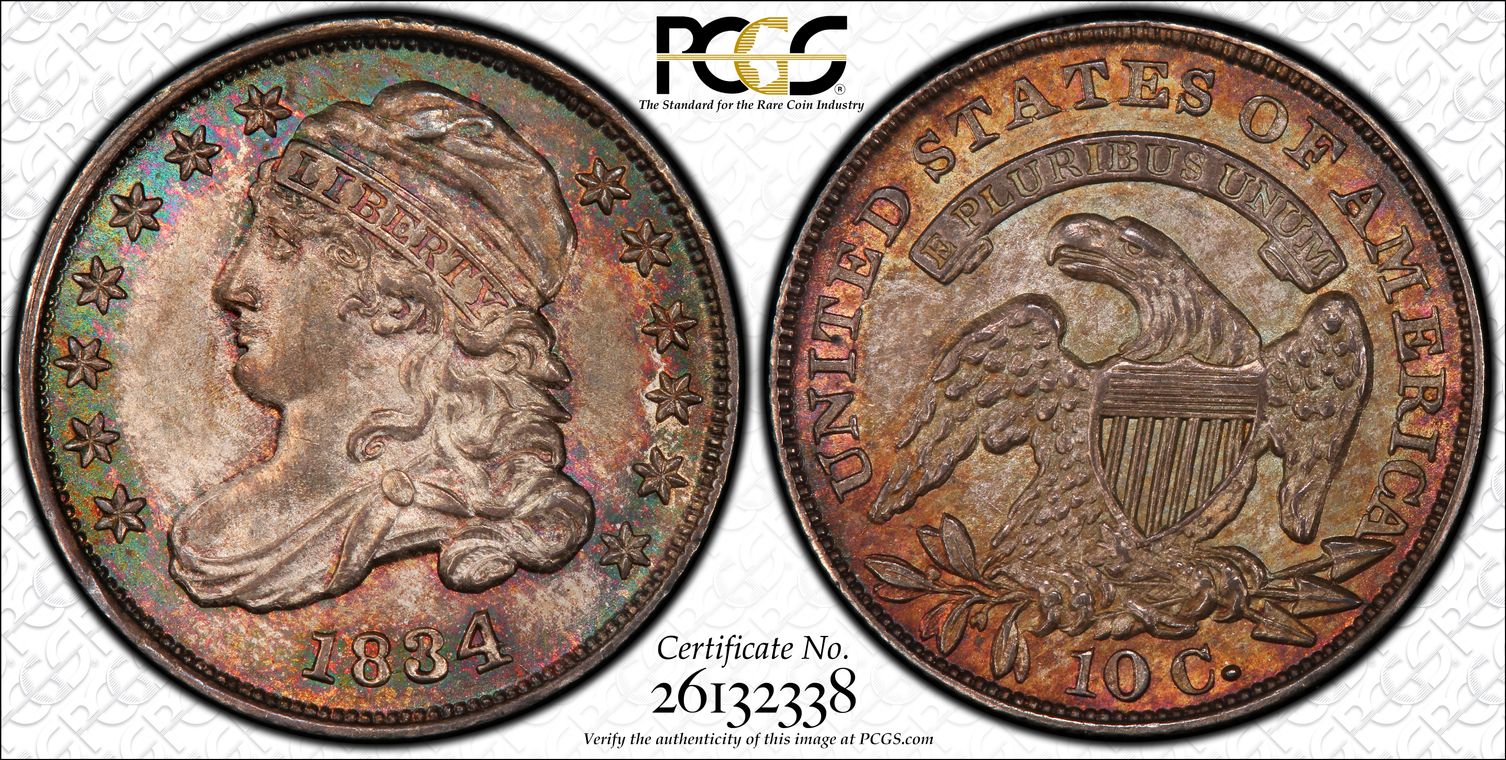
CAC. JR-5, R.1. The 4 in the date shows the crossbar partially broken off, with a sharp pointed fragment still visible. On the reverse, the last A in AMERICA is joined to the C and to the arrowhead. The lustrous surfaces of this near-Gem display splashes of forest-green and lavender, more extensive and deeper on the obverse. This sharply struck piece has been well cared for. Population: 18 in 64, 11 finer (11/11).
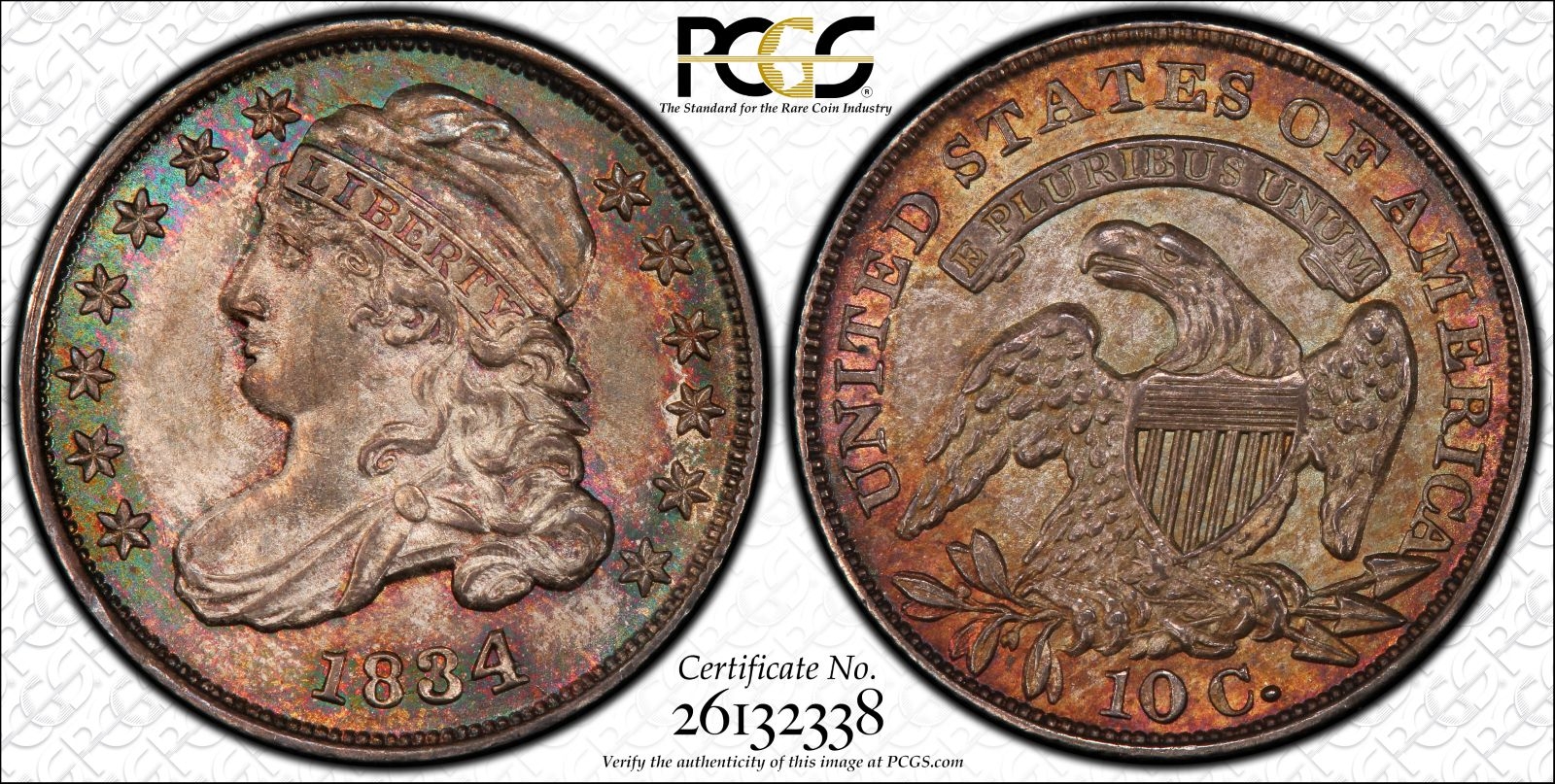
CAC. JR-5, R.1. The 4 in the date shows the crossbar partially broken off, with a sharp pointed fragment still visible. On the reverse, the last A in AMERICA is joined to the C and to the arrowhead. The lustrous surfaces of this near-Gem display splashes of forest-green and lavender, more extensive and deeper on the obverse. This sharply struck piece has been well cared for. Population: 18 in 64, 11 finer (11/11).
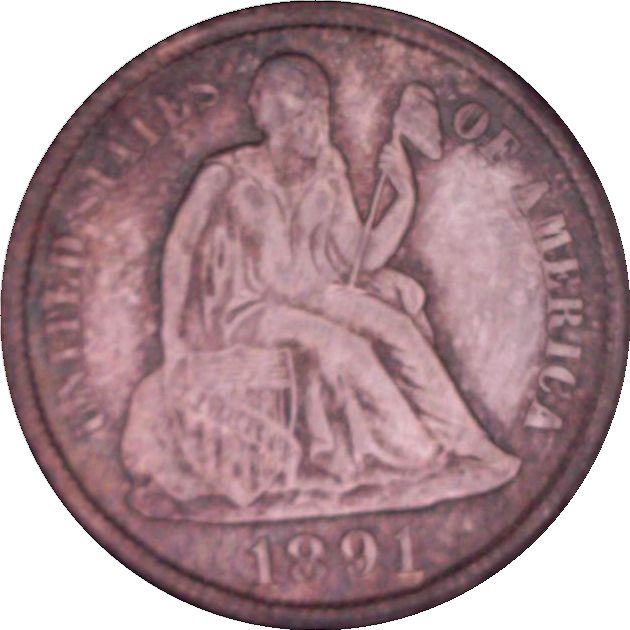
CAC. Ex: Eliasberg. The obverse die is worn and the reverse die is crisp with evidence of a repunched mintmark. This splendid Premium Gem has attractive medium gold toning over frosty luster. Population: 7 in 66, 2 finer (8/10). Ex: Chapman Brothers (5/1900); J.M. Clapp; Clapp Estate; Louis E. Eliasberg, Sr.; Eliasberg Estate (Bowers and Merena, 5/1996), lot 1239.
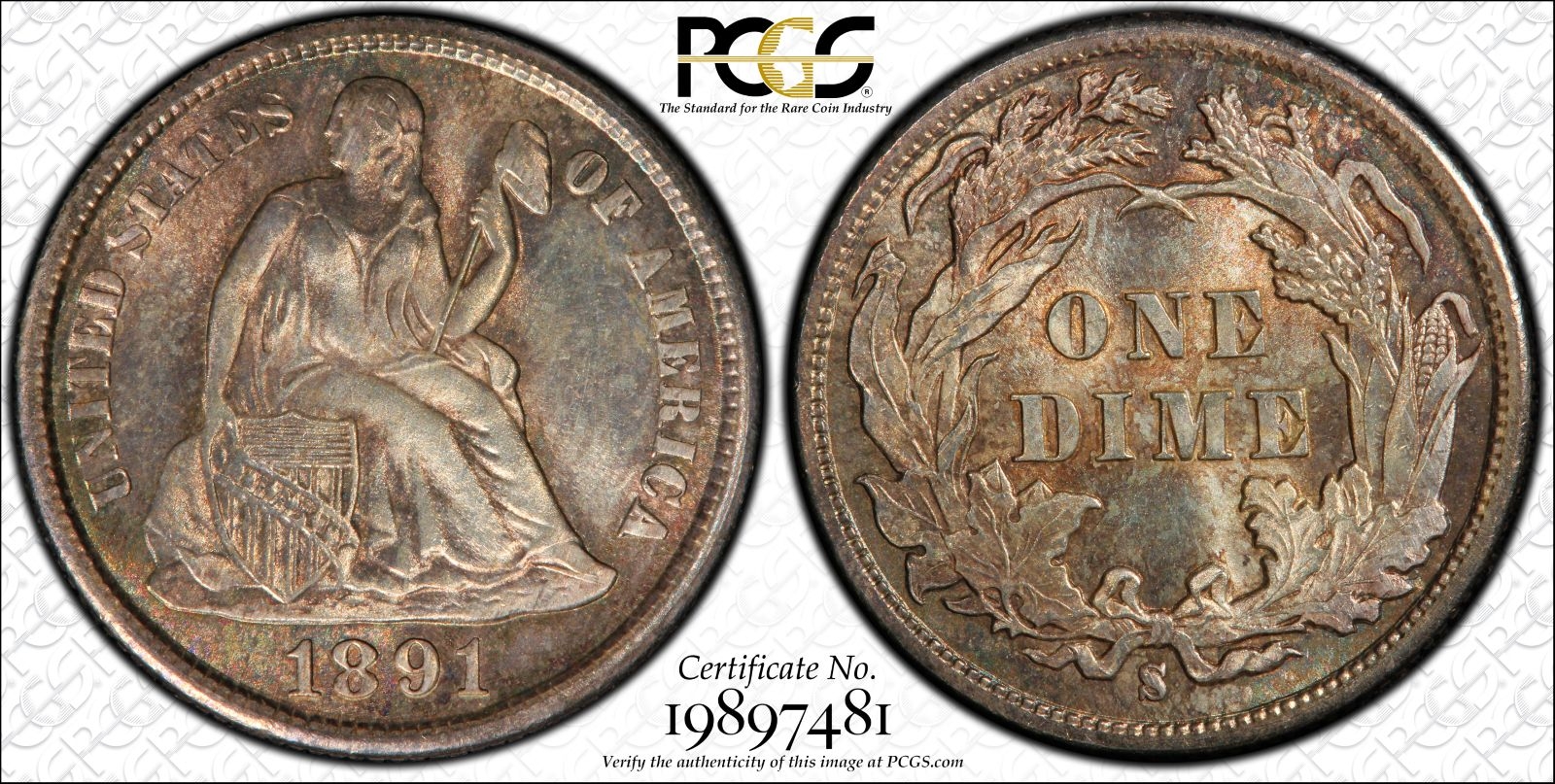
CAC. Ex: Eliasberg. The obverse die is worn and the reverse die is crisp with evidence of a repunched mintmark. This splendid Premium Gem has attractive medium gold toning over frosty luster. Population: 7 in 66, 2 finer (8/10). Ex: Chapman Brothers (5/1900); J.M. Clapp; Clapp Estate; Louis E. Eliasberg, Sr.; Eliasberg Estate (Bowers and Merena, 5/1996), lot 1239.

CAC. Ex: Eliasberg. The obverse die is worn and the reverse die is crisp with evidence of a repunched mintmark. This splendid Premium Gem has attractive medium gold toning over frosty luster. Population: 7 in 66, 2 finer (8/10). Ex: Chapman Brothers (5/1900); J.M. Clapp; Clapp Estate; Louis E. Eliasberg, Sr.; Eliasberg Estate (Bowers and Merena, 5/1996), lot 1239.
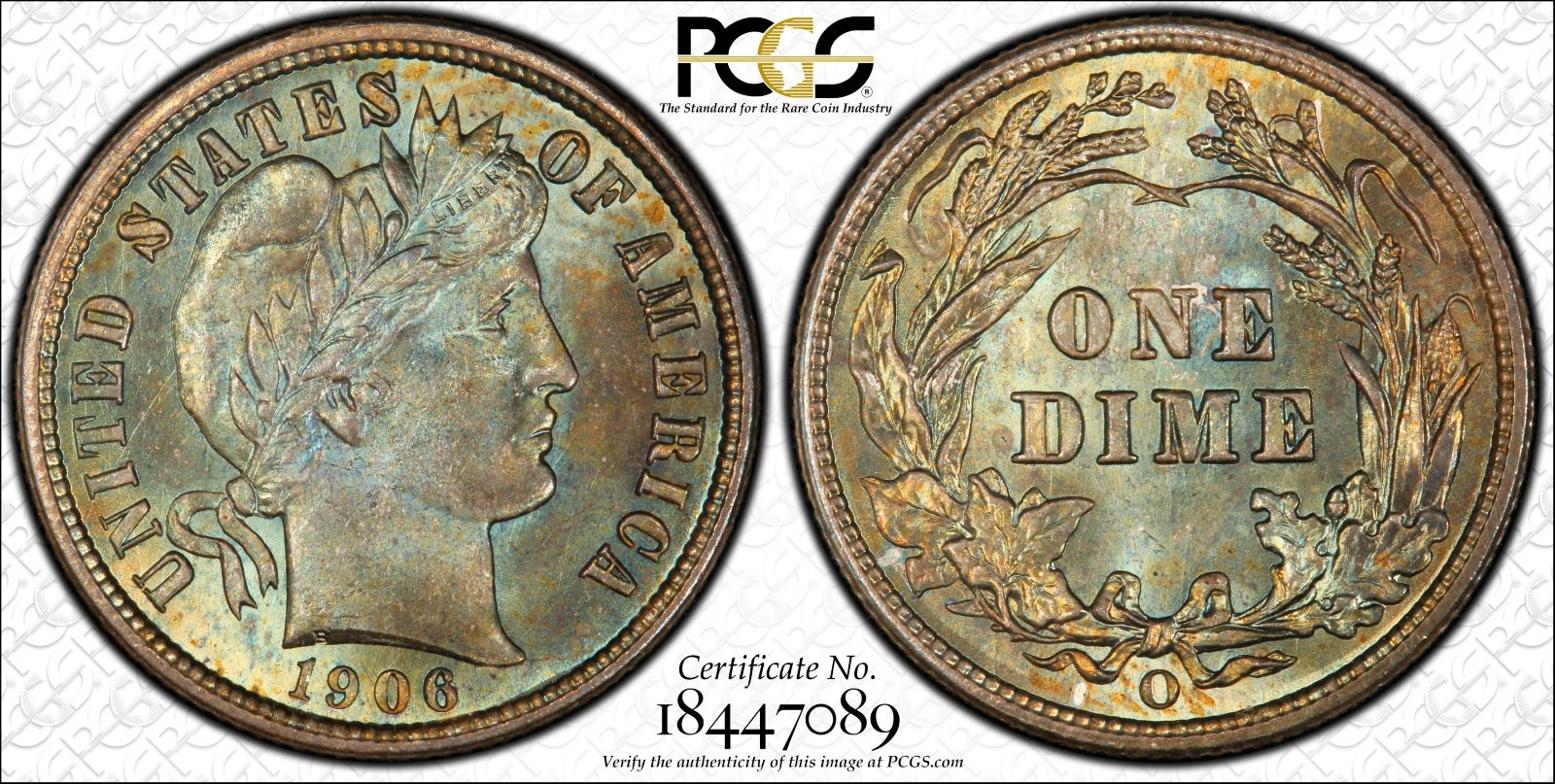

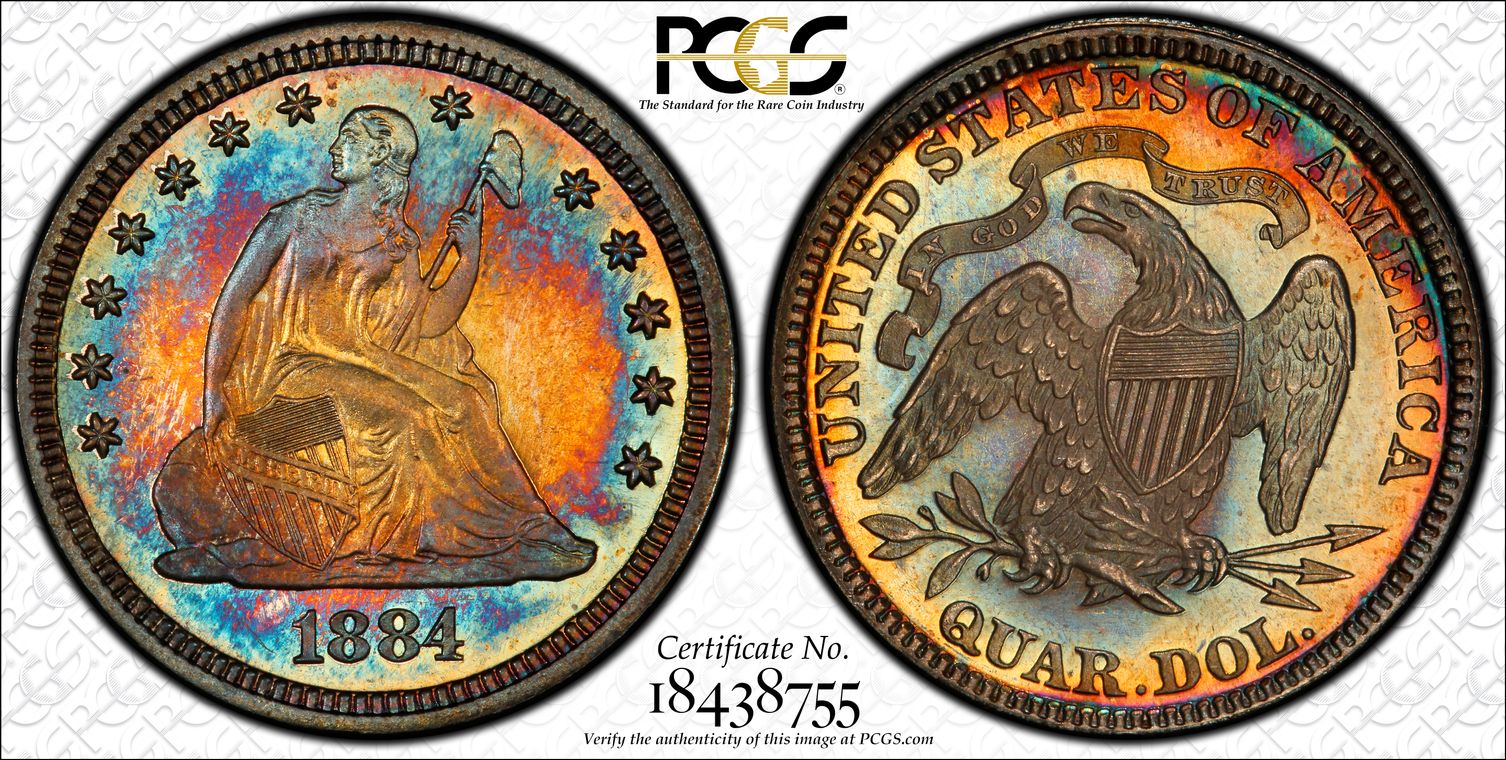
CAC. An absolutely incredible Gem proof that has gorgeous gold, violet, and blue toning on each side. The devices are boldly defined and lustrous, with surrounding deep mirrored fields, creating excellent contrast. (Upgrade from PR65).
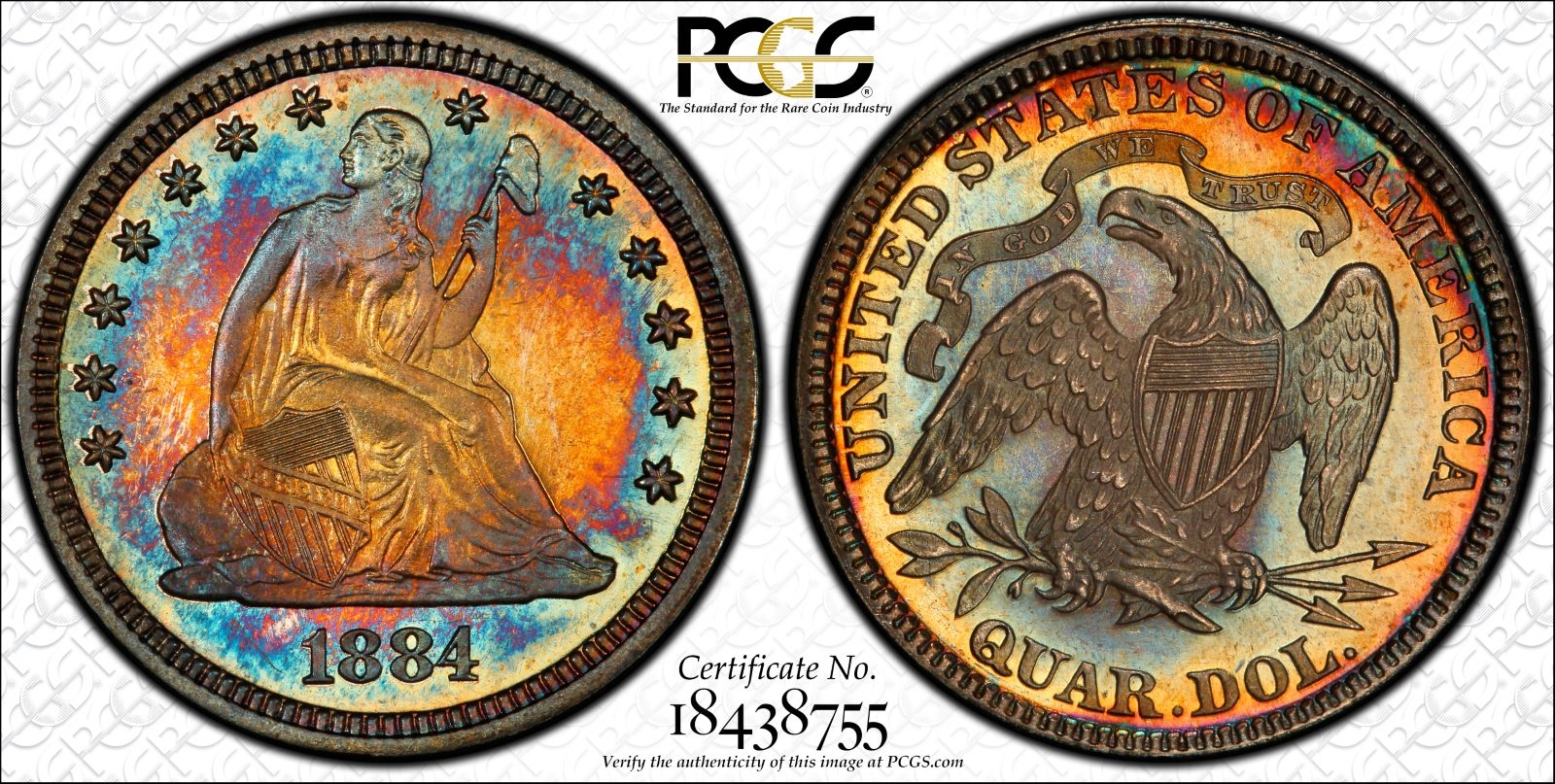
CAC. An absolutely incredible Gem proof that has gorgeous gold, violet, and blue toning on each side. The devices are boldly defined and lustrous, with surrounding deep mirrored fields, creating excellent contrast. (Upgrade from PR65).

CAC. The 1893 was considered an afterthought by many contemporary collectors, after the issuance of the first-year 1892. But the 1893 is equally well produced and makes a wonderful type coin. This piece appears to us to have enough frost over the devices to warrant a Cameo designation, but apparently PCGS disagreed. The centers are mostly untoned and the margins are accented with rich rose and cobalt-blue toning. Population: 1 in 66+, 18 finer (1/11)
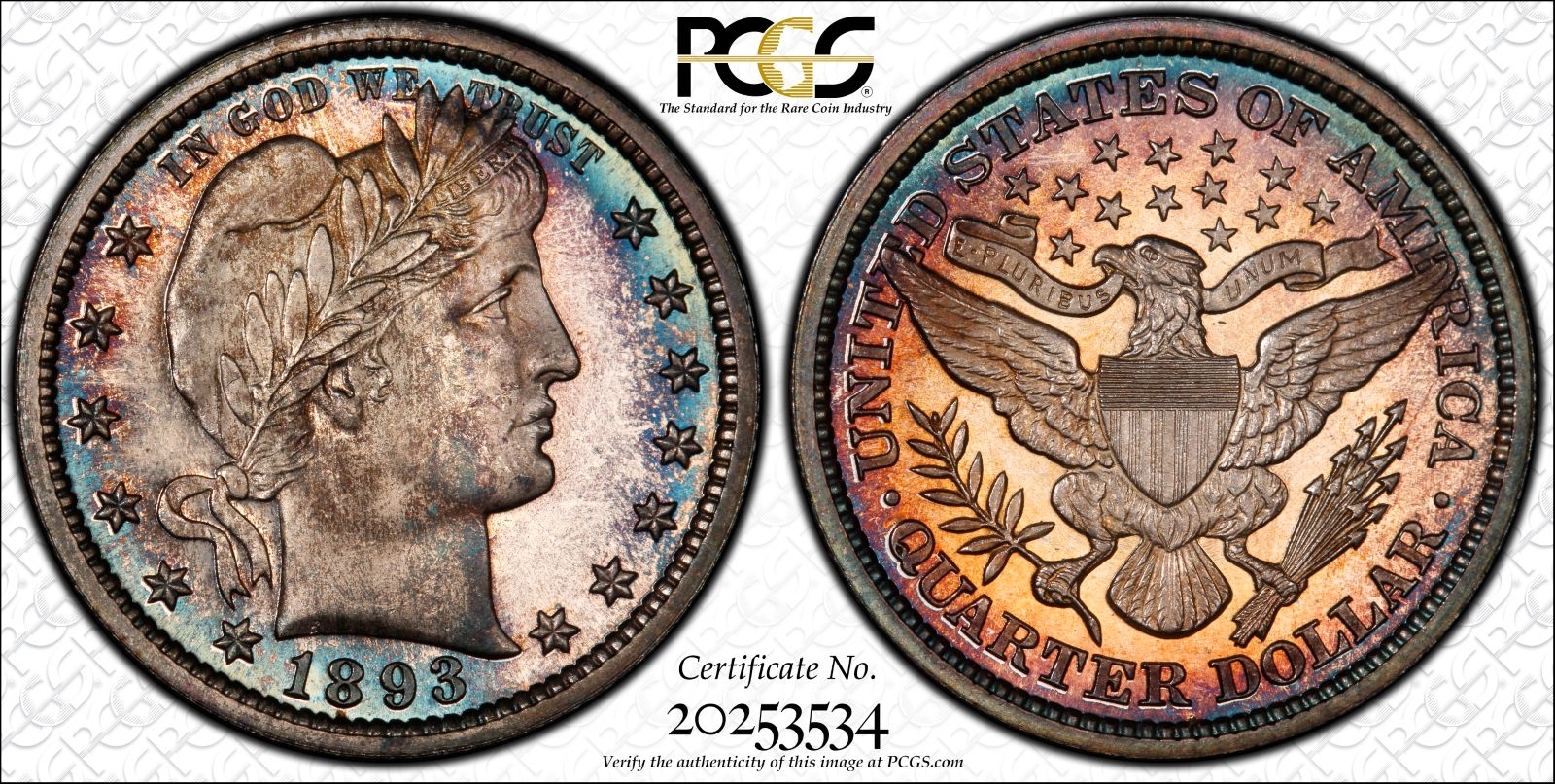
CAC. The 1893 was considered an afterthought by many contemporary collectors, after the issuance of the first-year 1892. But the 1893 is equally well produced and makes a wonderful type coin. This piece appears to us to have enough frost over the devices to warrant a Cameo designation, but apparently PCGS disagreed. The centers are mostly untoned and the margins are accented with rich rose and cobalt-blue toning. Population: 1 in 66+, 18 finer (1/11)
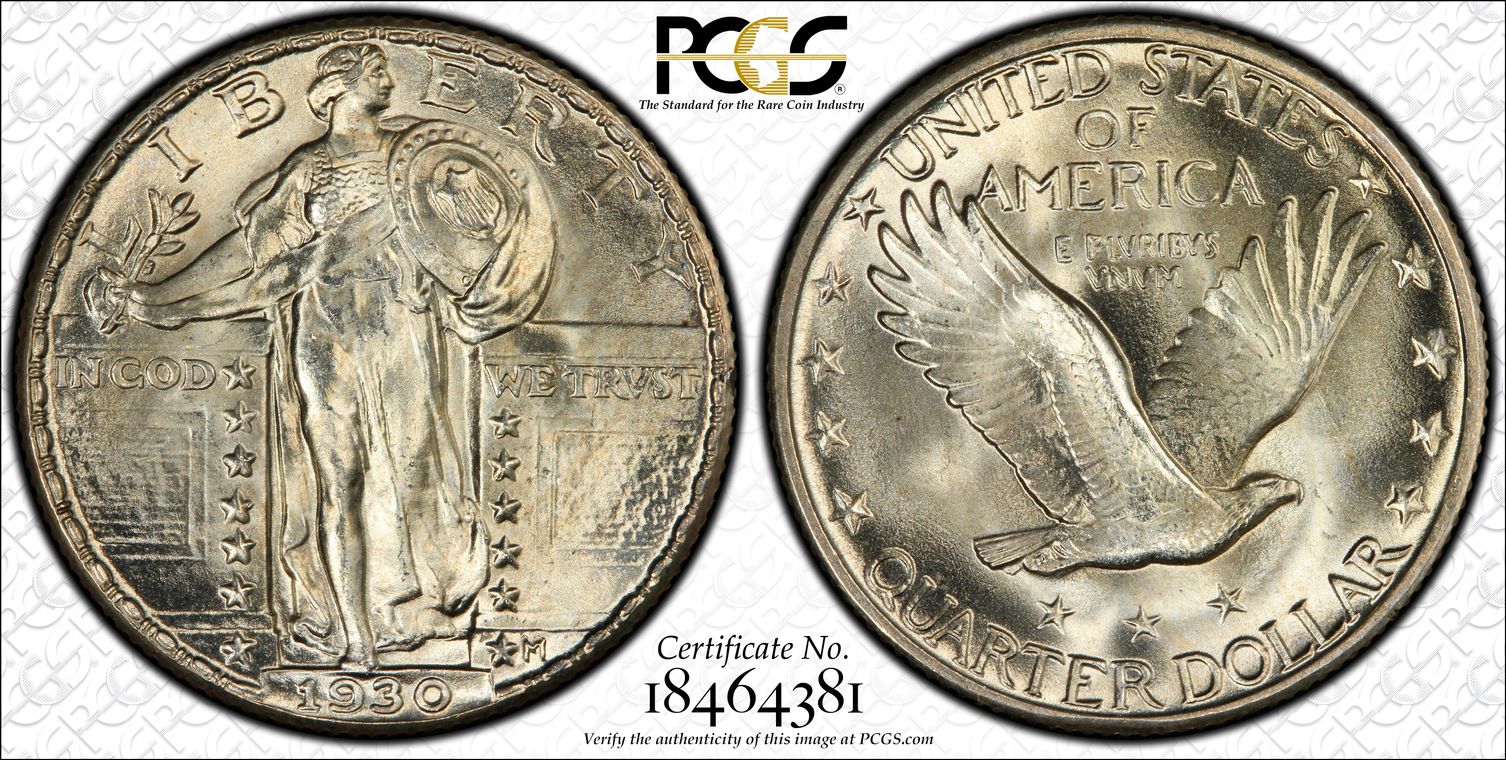
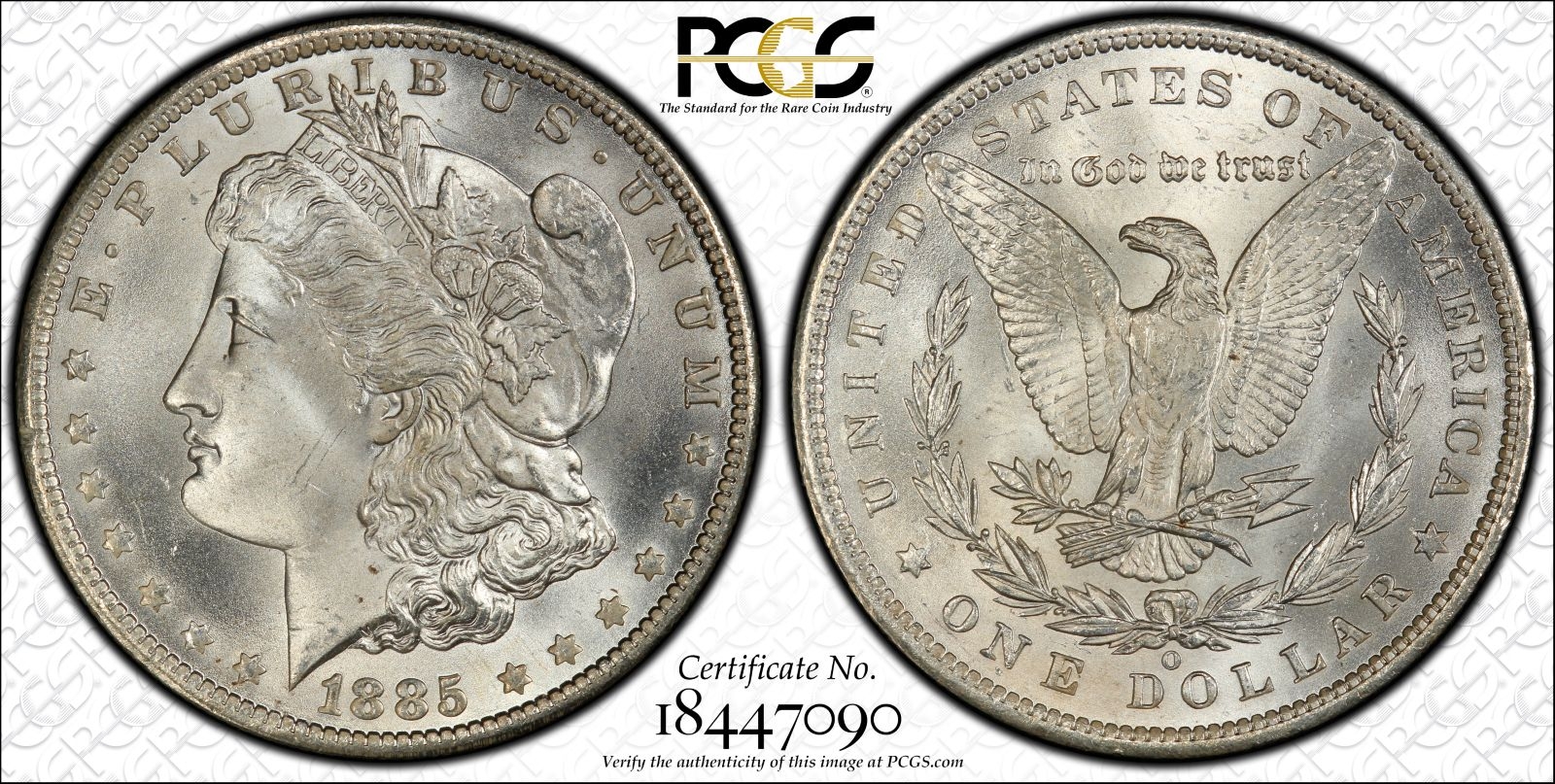
CAC. Brightly lustrous with just a hint of lemon-gold patina on each side. This Superb Gem is silver-white elsewhere with great eye appeal. Excellent definition on Liberty's head with the lower rivets of the shield showing the only elements of softness.
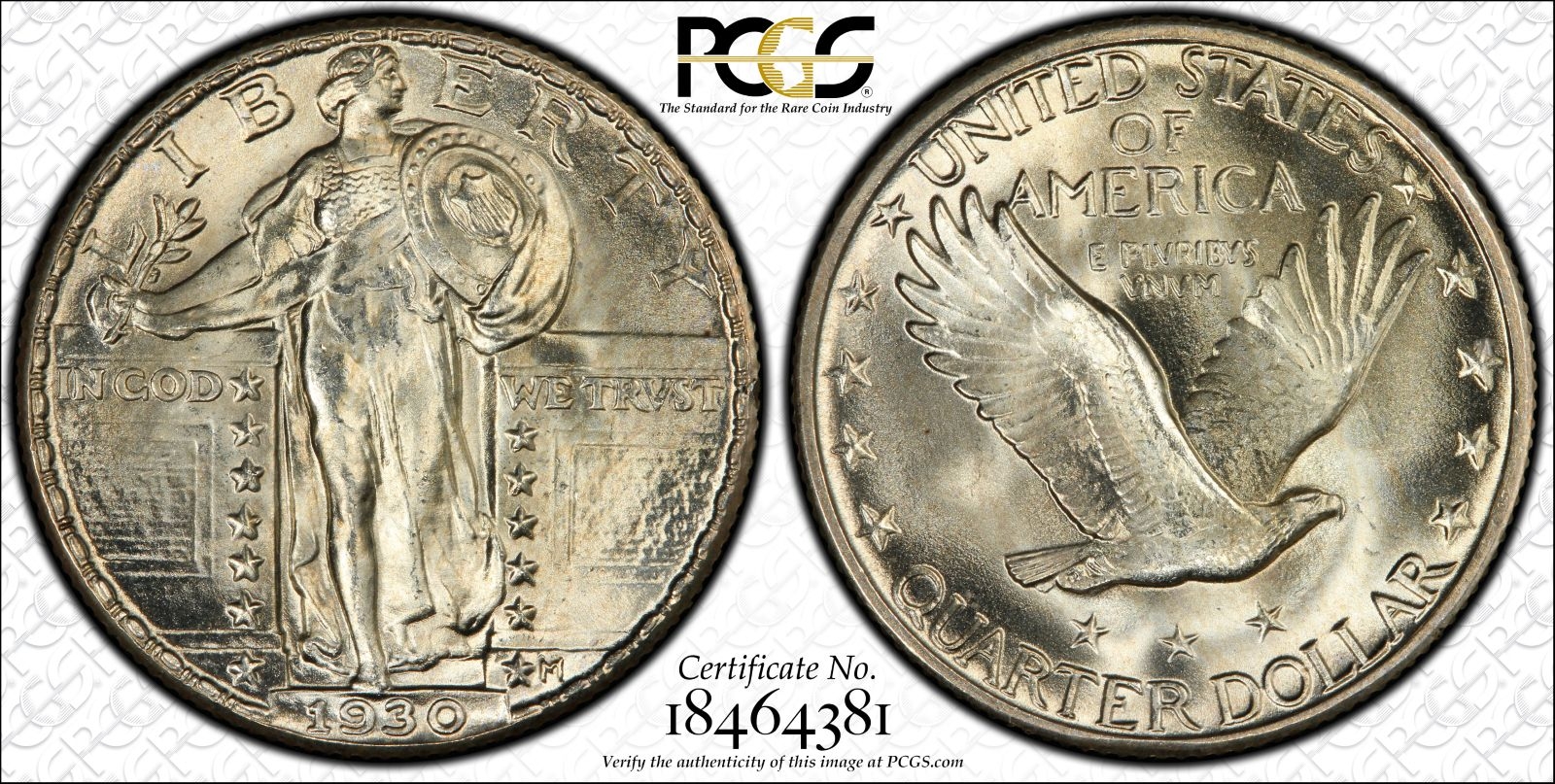
CAC. Brightly lustrous with just a hint of lemon-gold patina on each side. This Superb Gem is silver-white elsewhere with great eye appeal. Excellent definition on Liberty's head with the lower rivets of the shield showing the only elements of softness.
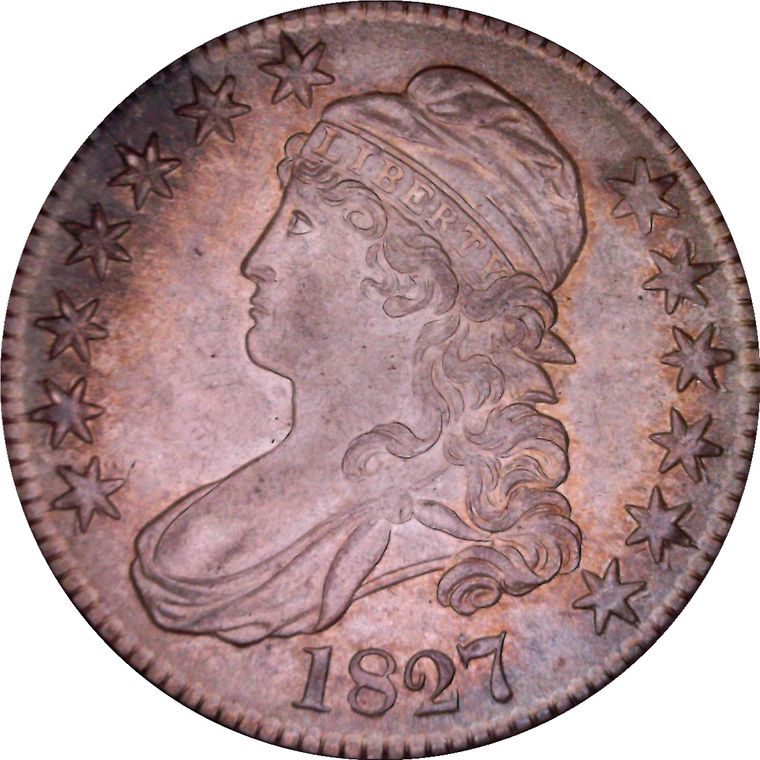
(CAC) O-131, R.2. The obverse with die line above the LI of LIBERTY, the reverse with "Leaning 0" in the denomination. This is a gorgeous near-Gem that is ideal for the type collector seeking a high-end Bust half. The strike is solid, if a trifle incomplete on the highest design elements, and the luster is warm silver overall with gold and violet elements at the borders. Purchased as MS64.

(CAC) O-131, R.2. The obverse with die line above the LI of LIBERTY, the reverse with "Leaning 0" in the denomination. This is a gorgeous near-Gem that is ideal for the type collector seeking a high-end Bust half. The strike is solid, if a trifle incomplete on the highest design elements, and the luster is warm silver overall with gold and violet elements at the borders. Purchased as MS64.
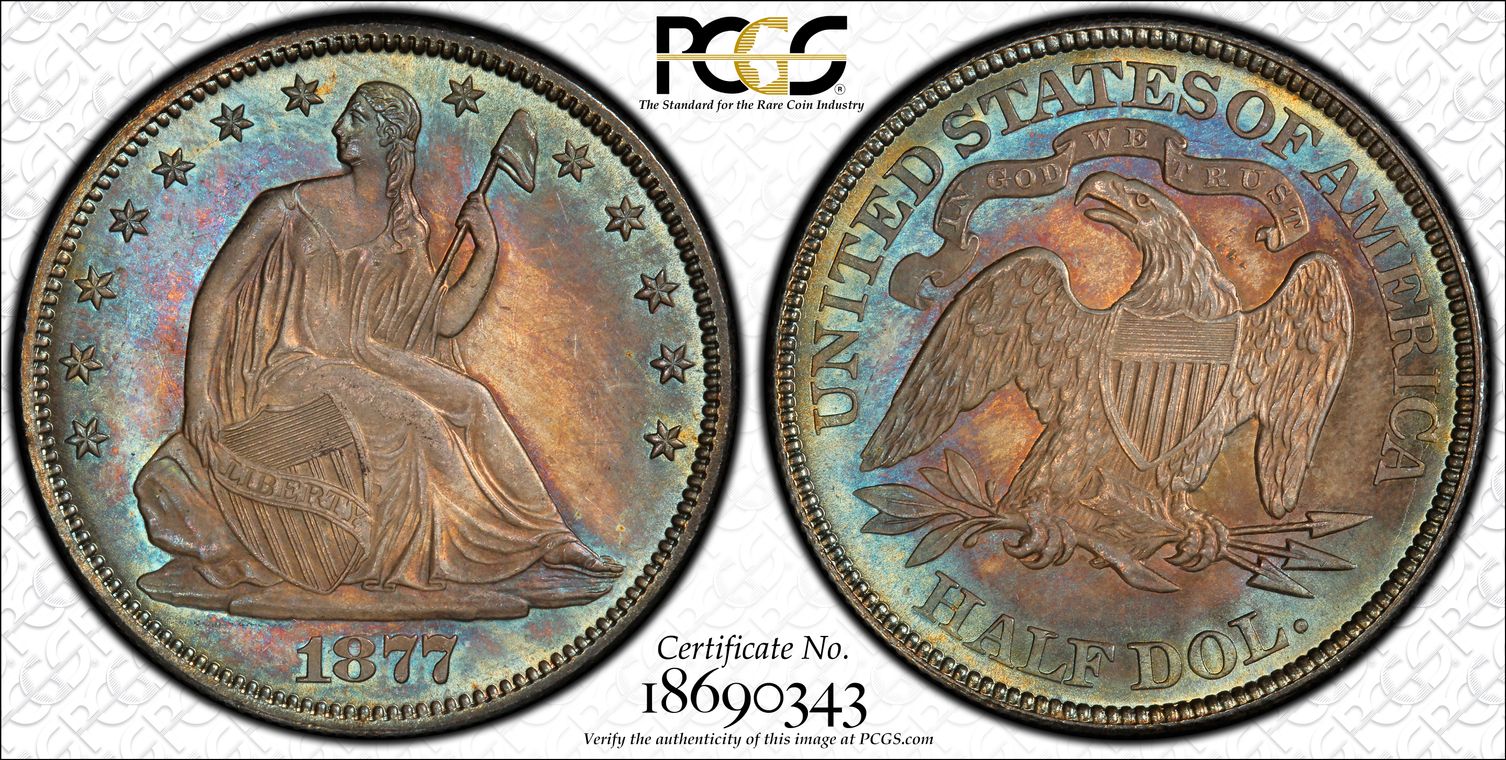
CAC. The luster highlights the killer ring of sea royal blue which opens into violet and fiery tangerine centers. Splashes of prooflike mirrors are vivid all over. Under the colors are a few OLD light marks, but nothing that's visible or detracting from the grade. Miss Liberty and the details are frosty and have full strikes.(Upgraded from MS65)

CAC. The luster highlights the killer ring of sea royal blue which opens into violet and fiery tangerine centers. Splashes of prooflike mirrors are vivid all over. Under the colors are a few OLD light marks, but nothing that's visible or detracting from the grade. Miss Liberty and the details are frosty and have full strikes.(Upgraded from MS65)
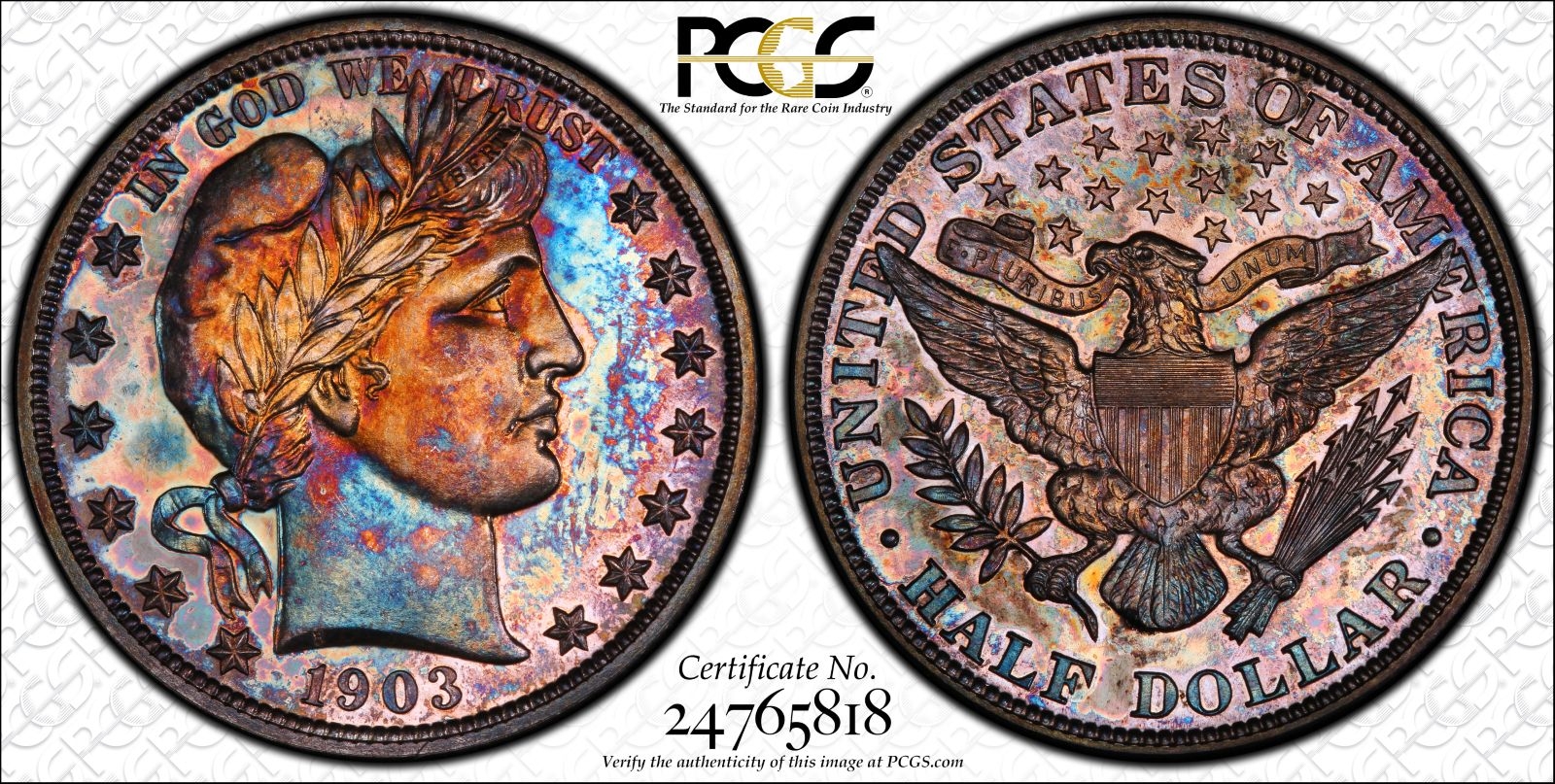
The mirrors are super clean, have amazing clarity, are deep, and of course have super strong reflectivity. They do appear glass like. A wild mix of ORIGINAL blue/navy/purple/violet/gold colors swirls all over. Miss Liberty and the details are sharply struck and do stand out. The eye appeal is terrific!

CAC. Patinated in vivid, iridescent shades of green, blue, and lavender, with deeply reflective fields beneath the toning. The boldly impressed devices ensure profound cameo contrast. Population: 31 in 63 Cameo, 25 finer (10/10).

CAC. Patinated in vivid, iridescent shades of green, blue, and lavender, with deeply reflective fields beneath the toning. The boldly impressed devices ensure profound cameo contrast. Population: 31 in 63 Cameo, 25 finer (10/10).
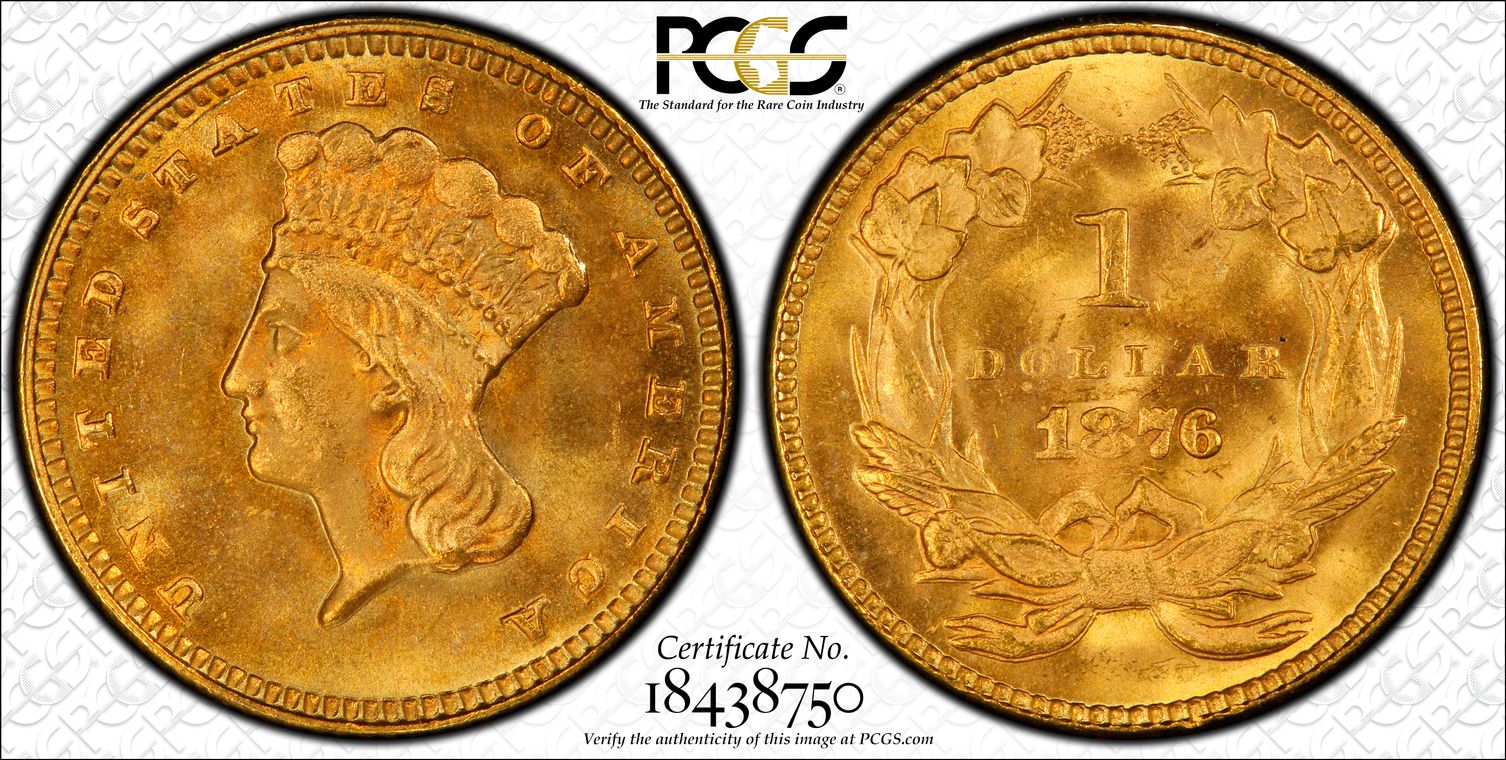
CAC. Orange-red and olive-green toning is beautiful, and the obverse appears immaculate.
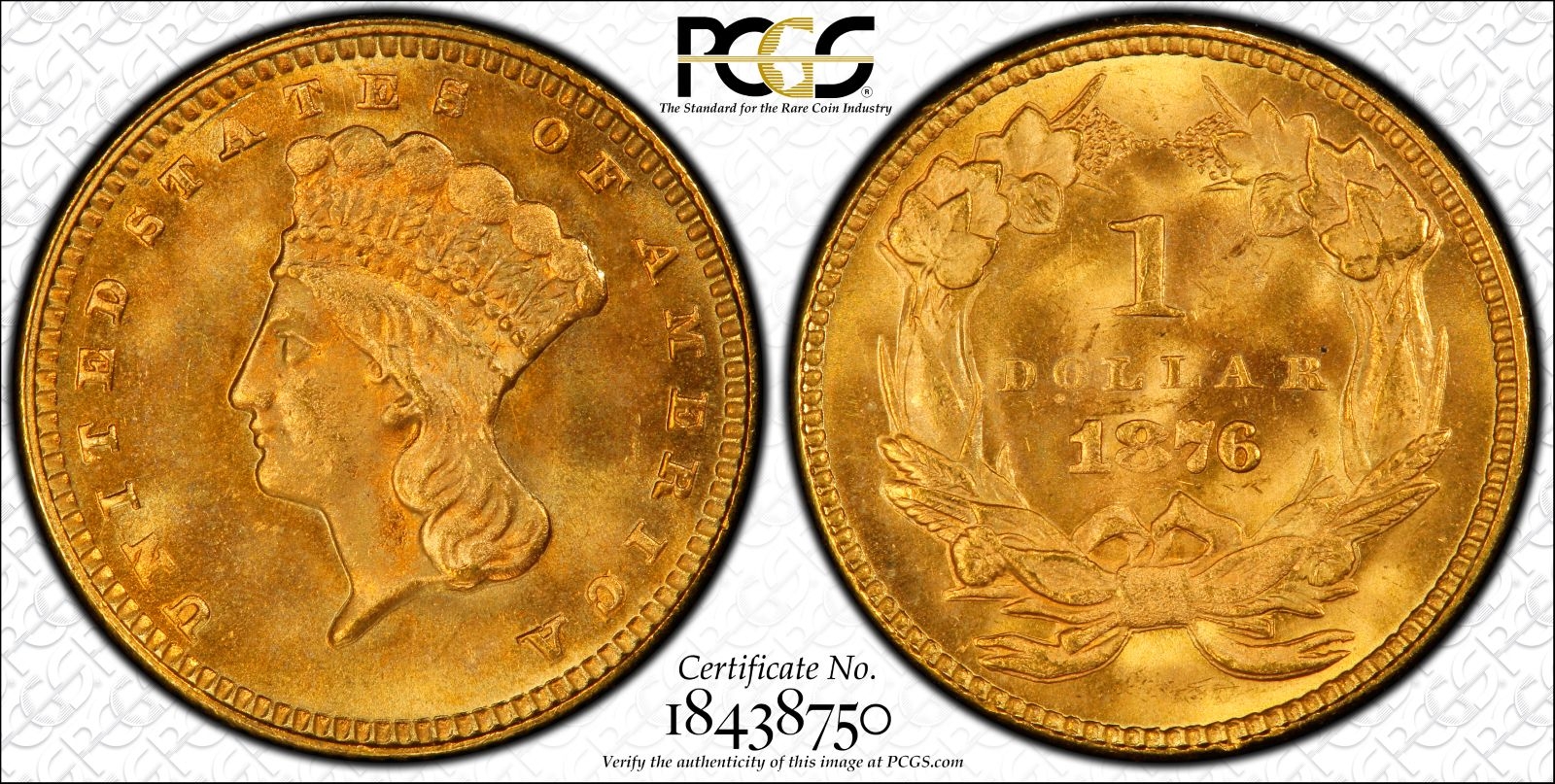
CAC. Orange-red and olive-green toning is beautiful, and the obverse appears immaculate.
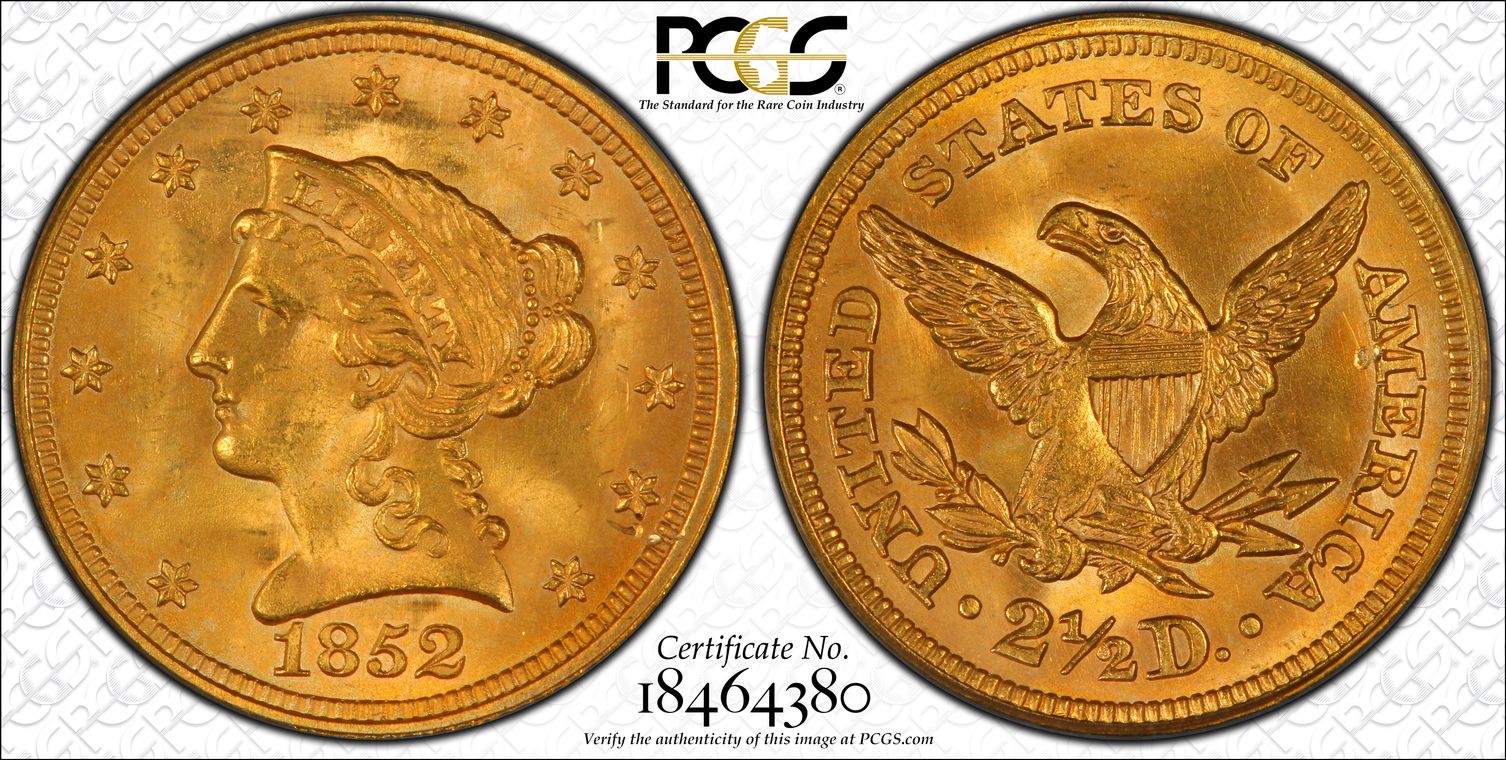
CAC. An intense luster shows off a subtle mix of brilliant yellow gold/orange gold colors.
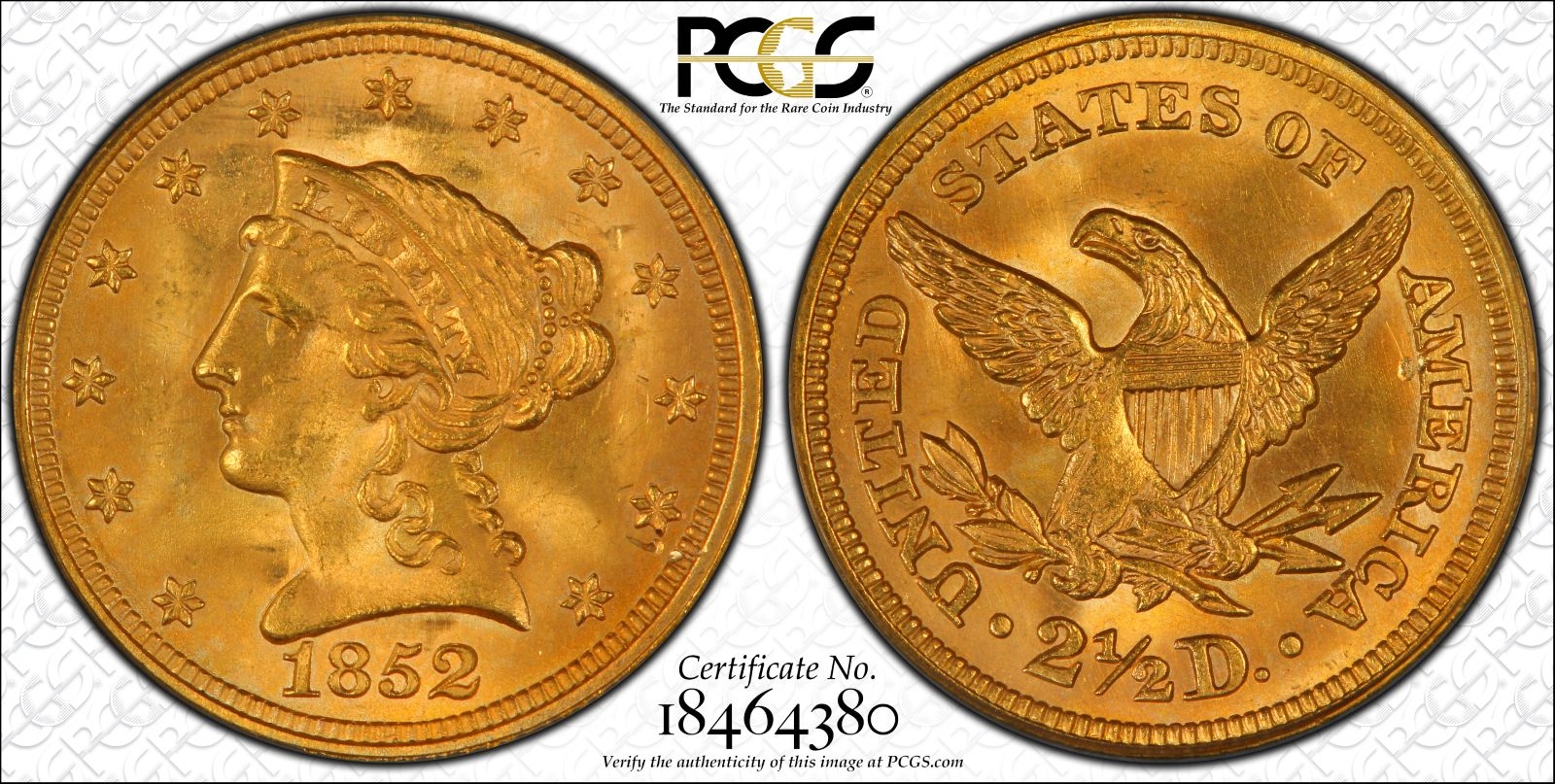
CAC. An intense luster shows off a subtle mix of brilliant yellow gold/orange gold colors.
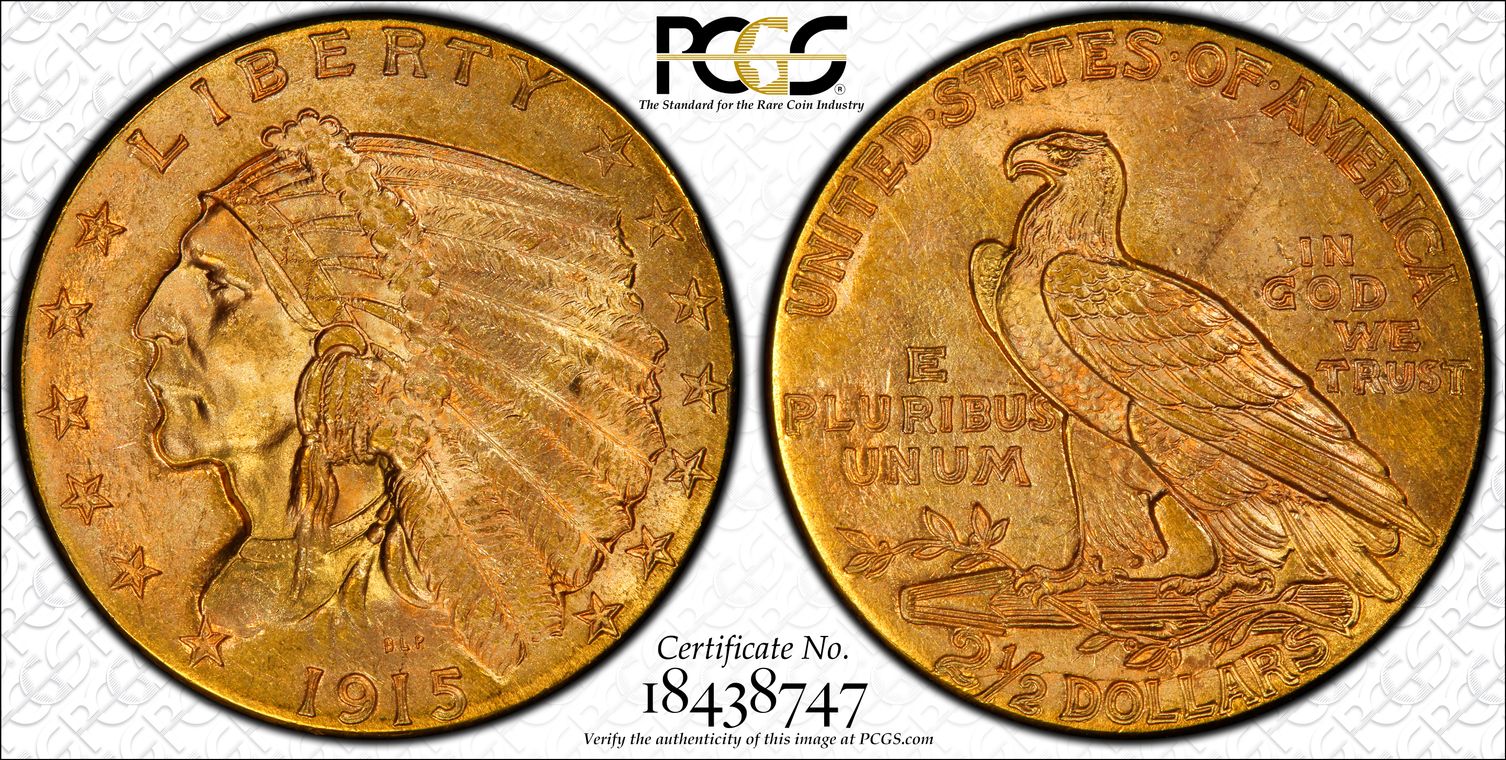
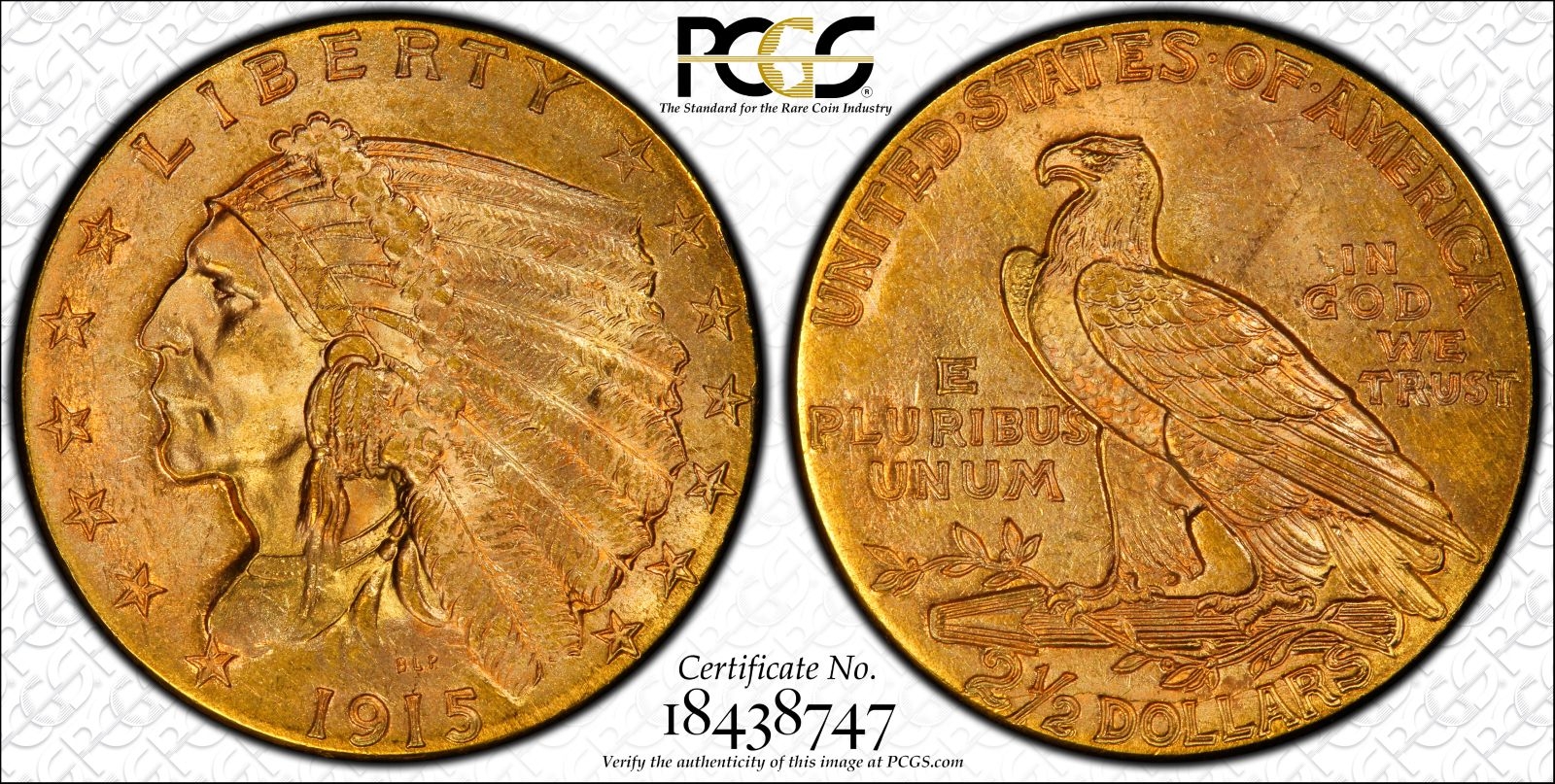
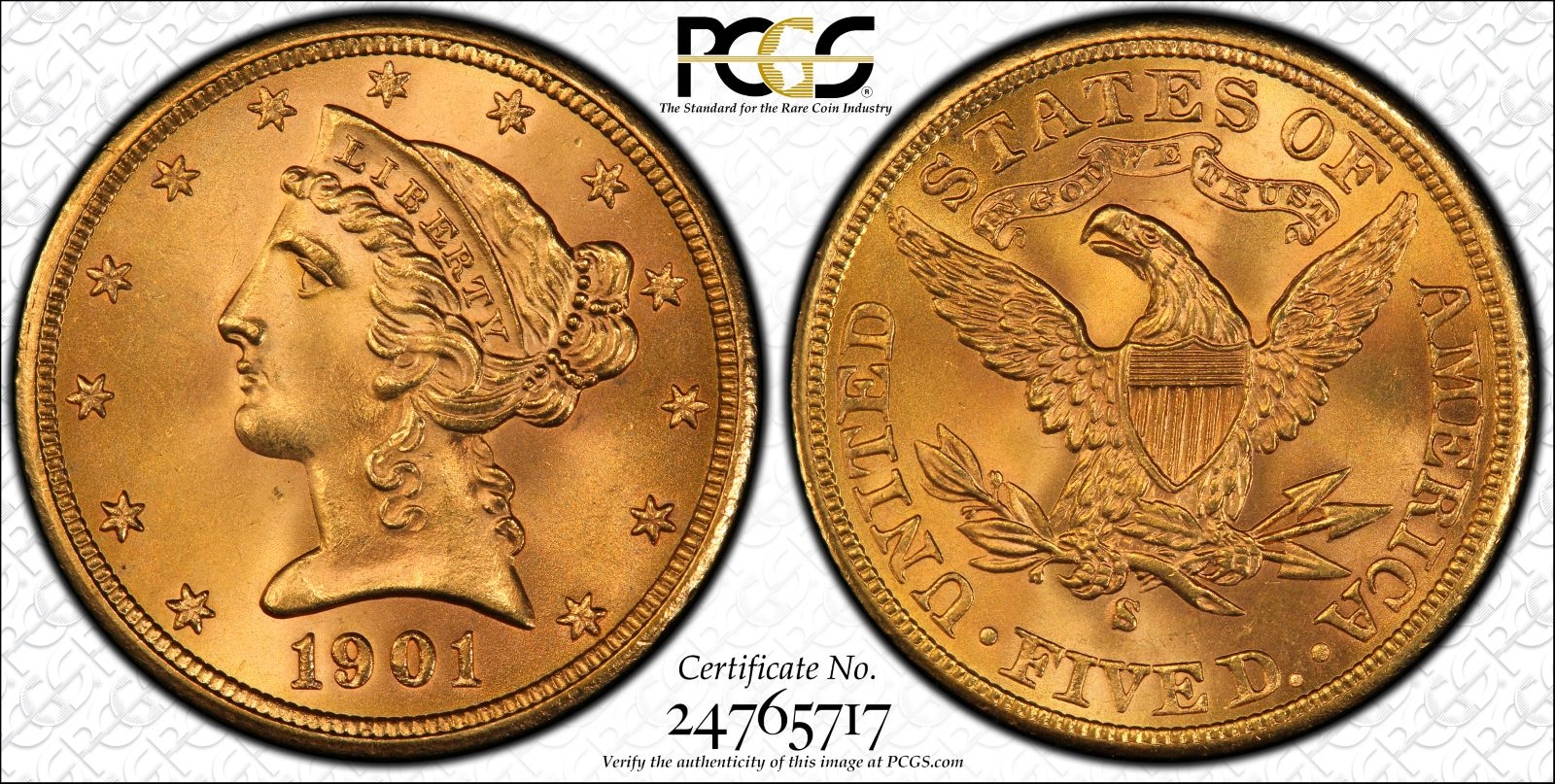
CAC. The 1901-S offers the twin appeals of the popular S mintmark and its status as probably the most common half eagle in high grades -- a status due as much to the large mintage as to the overall excellent production criteria. This remarkable Premium Gem displays those criteria in abundance, with a nearly full strike (save for a couple of obverse star centers), glorious luster, and attractive red-orange coloration. Abrasions are virtually absent. Population: 46 in 66, 2 finer (9/11).
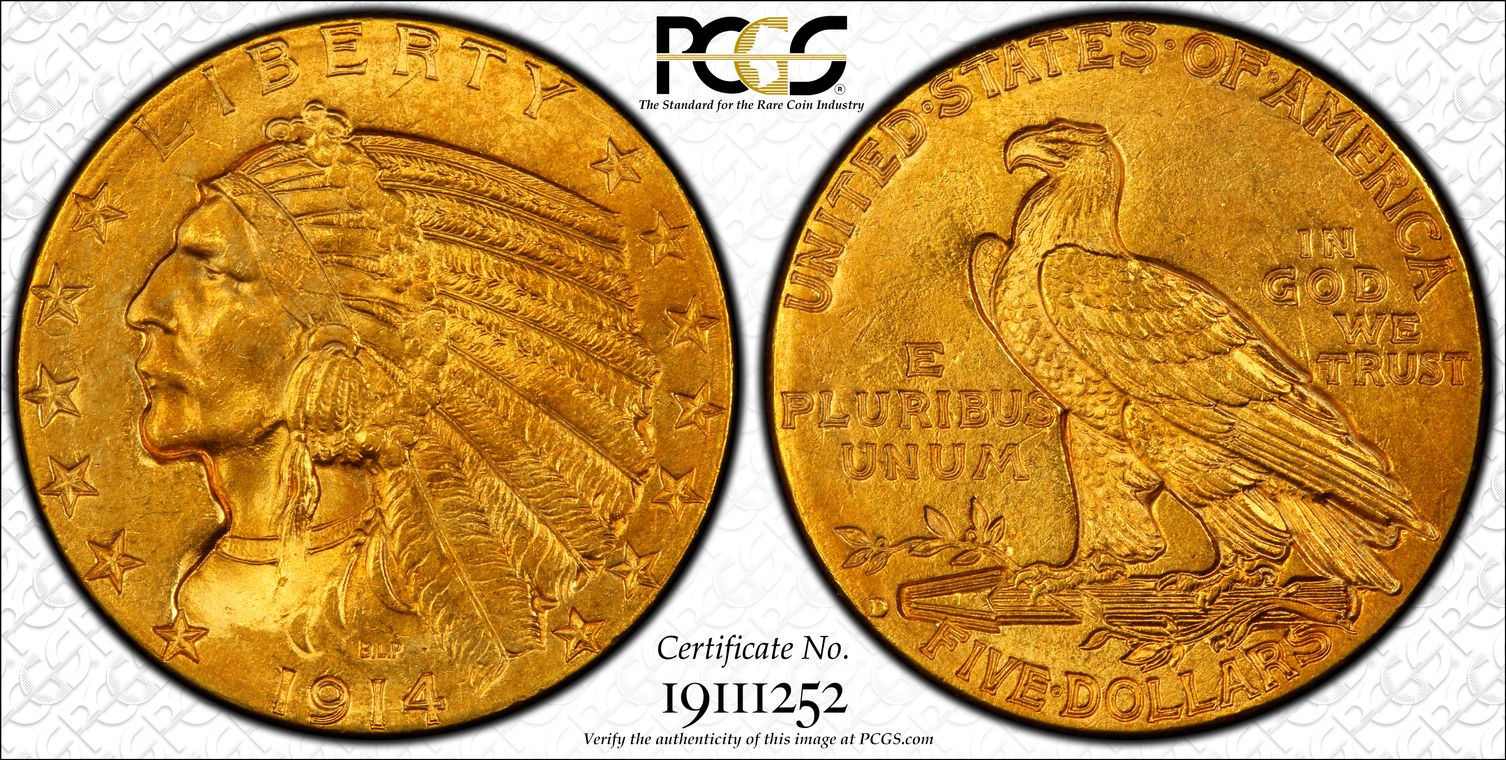
CAC. PCGS Secure. The 1914-D half eagle, with a mintage of 247,000 coins, is a rare issue in higher grades, as the population data reveals. This highly lustrous and frosty example has brilliant honey-gold luster with pristine surfaces. Only two 1914s of any grade have received a Plus designation. Population: 2 in 64+, 14 finer (7/10).
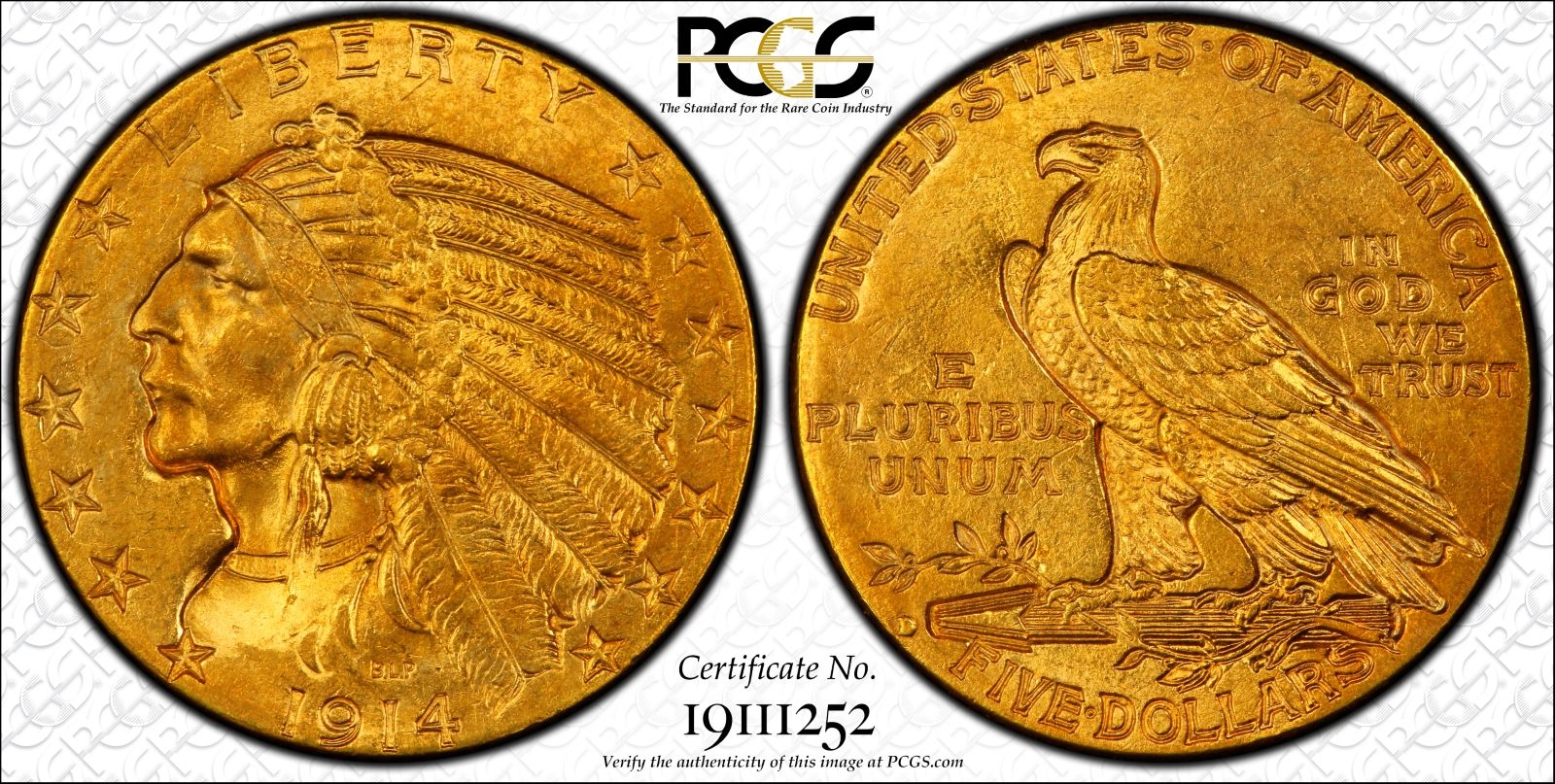
CAC. PCGS Secure. The 1914-D half eagle, with a mintage of 247,000 coins, is a rare issue in higher grades, as the population data reveals. This highly lustrous and frosty example has brilliant honey-gold luster with pristine surfaces. Only two 1914s of any grade have received a Plus designation. Population: 2 in 64+, 14 finer (7/10).
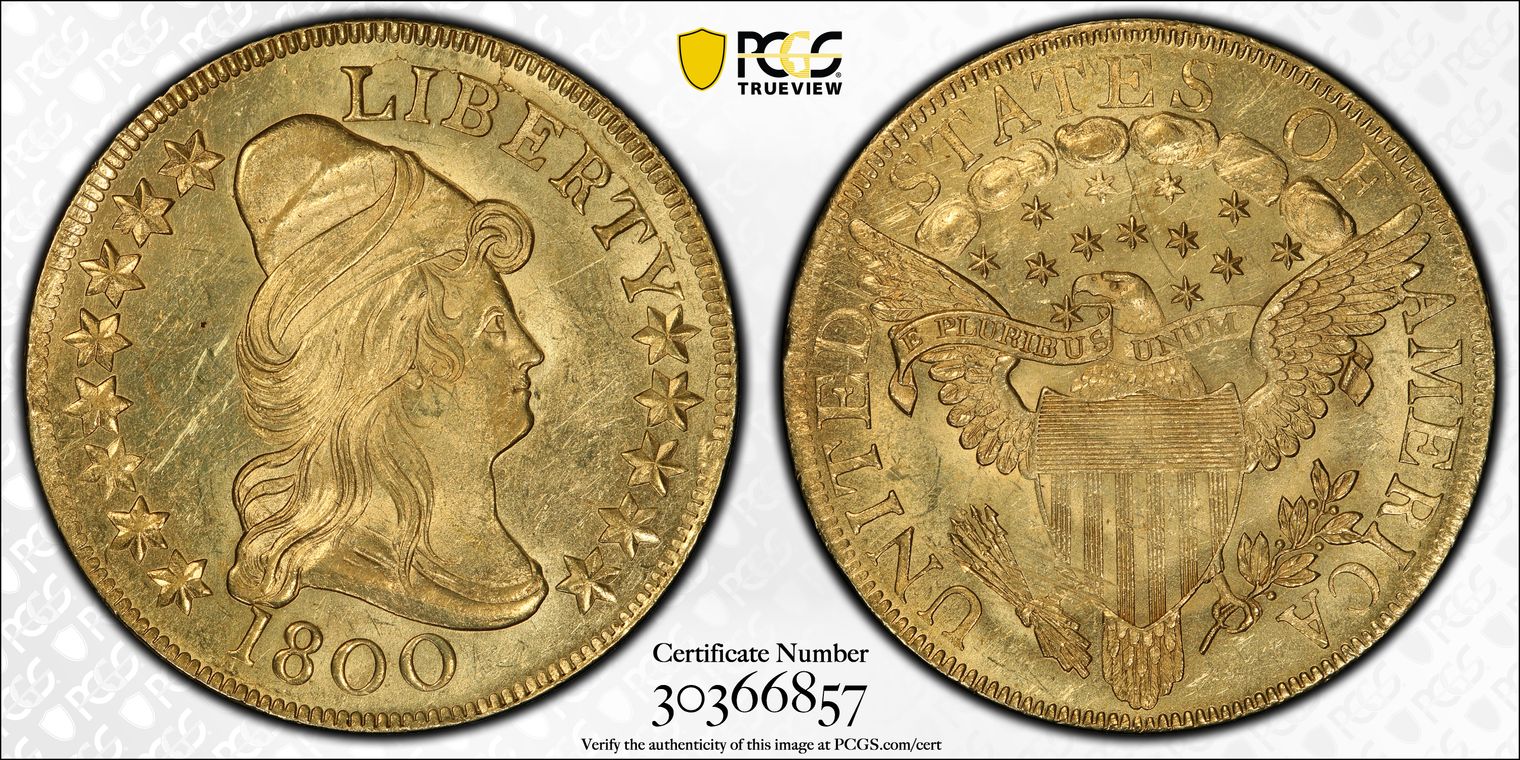
CAC. BD-1, High R.3. Sole die pair for the year. Bass-Dannreuther Die State c/e, the obverse plainly cracked at LIBERTY and the reverse showing subtle clash marks from obverse dentils that are most obvious atop the first T of STATES. This state of the BD-1 1800 eagle illustrates one of the greatest challenges to determining how many of which coins were struck in the Mint's earliest years: the obverse die was taken out of service, a number of coins dated 1801 struck, and then returned to service to make more eagles, this MS62 example included. Thanks to the remarriage, the 1800 eagle is, in the aggregate, one of the more accessible early eagle issues, as it is merely scarce rather than rare like most of its peers. Taking die states into account, however, more specifically the split between coins struck in 1800 and those produced in 1801, the two periods when divided create a pair of more challenging and intriguing issues. It is possible that the coins struck in 1801 will be considered their own variety in the future, much as die states for half dollars sometimes are marked with an "a" or "b" suffix. Even should that never come to pass, the 1800 eagle remains a popular issue, particularly in high grades such as MS62. This piece has broad lemon-gold luster with just a hint of green and good interior detail. The reverse shows sizable adjustment marks at the lower eagle and the right-side clouds, but these are as-made and do not influence the technical grade. Wispy flaws in the obverse fields largely account for the grade. Population: 16 in 62, 13 finer (11/13). CAC: (4 with one 64 CACd) - 19/13 (01/15)
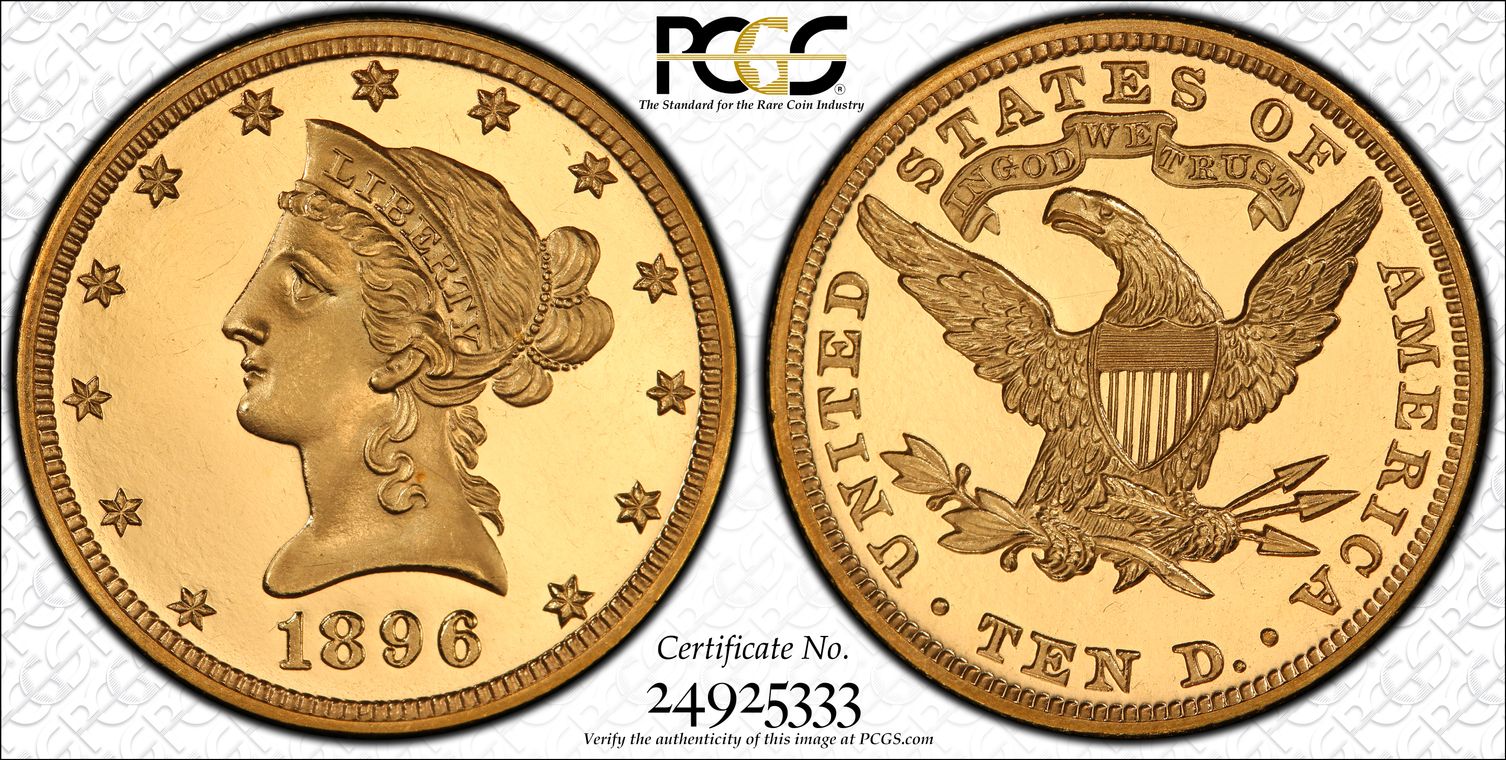
CAC. While the official mintage of 78 proof 1896 ten dollar coins might suggest that the date is relatively available, circumstantial evidence suggests that that output was an overreach. Not only were mintages of proof eagles lower in the next two years (69 and 67 pieces, respectively), but the estimated survival of the 1896 ten dollar proofs is close to that of the 1897, with the 1898 pieces seeing a spike in the survival rate despite a slipping mintage. PCGS suggests that 35 to 45 specimens survive for the 1896 and 1897 dates, compared to "40 to 50 known" for the 1898 issue. The PCGS Population Report lists 25 certification events for the 1896 ten dollar proof, 16 with Cameo contrast and nine labeled Deep Cameo. (It should be remembered that the period from 1896 to 1898 was a high-water mark for the cameo effect in U.S. silver and gold proof coinage.) A majority of the coins are in the PR64 range; among Deep Cameo pieces, this is one of just two certified by PCGS with three numerically finer as Deep Cameo, all graded PR66 (2/12). Effectively black-and-gold contrast is on display with this Deep Cameo Gem, thanks to sharply struck, thickly frosted devices paired with fields that combine so-called "orange-peel" texture with a great overall mirror finish. A thin, curving blemish just off the bridge of Liberty's nose and a depression to the left of star 9 are the most reliable pedigree markers. (Upgrade from 65). PCGS 65DCAM 2/3 (02/12) PCGS 65+DCAM 1/15 (05/15)
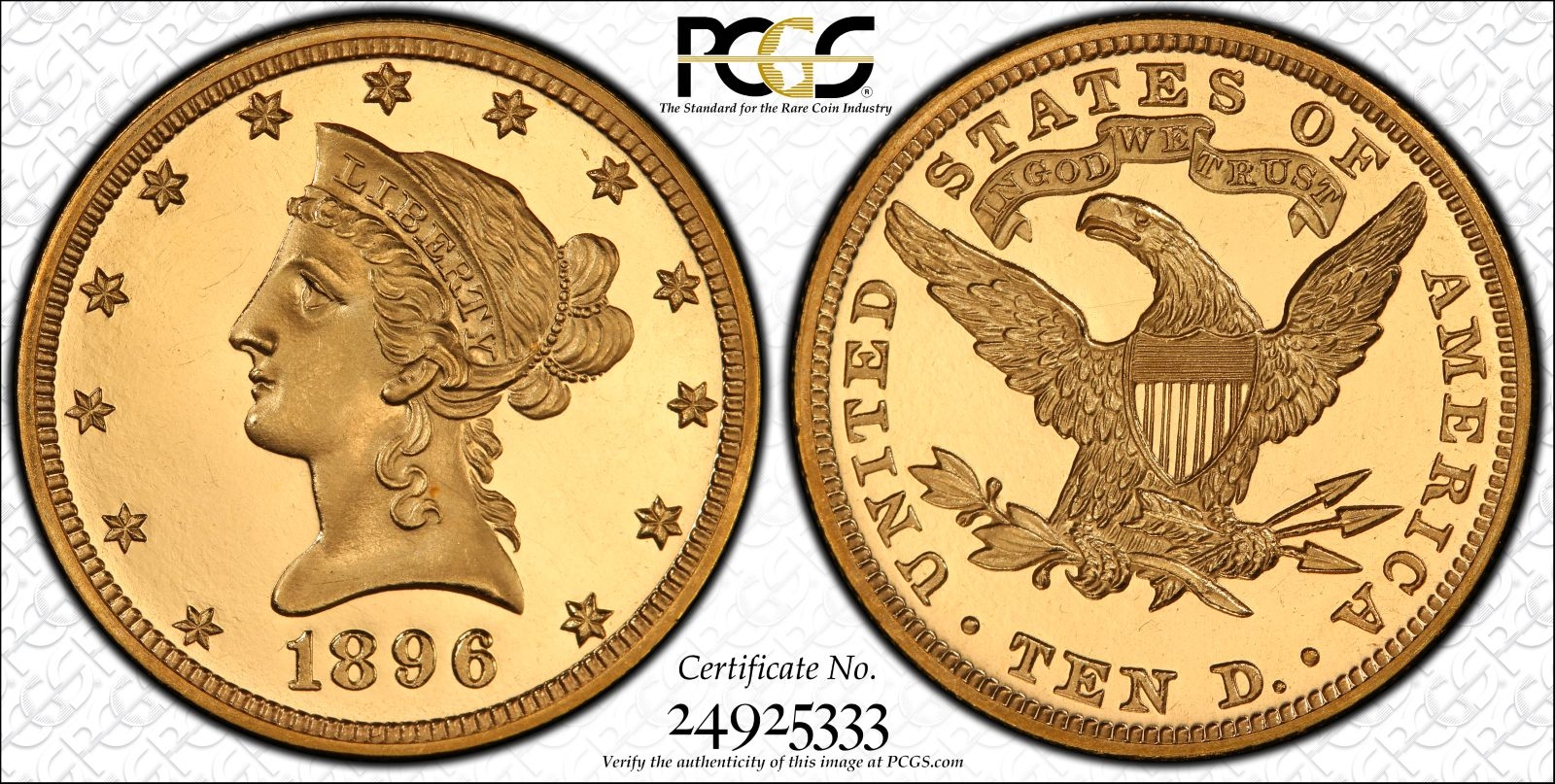
CAC. While the official mintage of 78 proof 1896 ten dollar coins might suggest that the date is relatively available, circumstantial evidence suggests that that output was an overreach. Not only were mintages of proof eagles lower in the next two years (69 and 67 pieces, respectively), but the estimated survival of the 1896 ten dollar proofs is close to that of the 1897, with the 1898 pieces seeing a spike in the survival rate despite a slipping mintage. PCGS suggests that 35 to 45 specimens survive for the 1896 and 1897 dates, compared to "40 to 50 known" for the 1898 issue. The PCGS Population Report lists 25 certification events for the 1896 ten dollar proof, 16 with Cameo contrast and nine labeled Deep Cameo. (It should be remembered that the period from 1896 to 1898 was a high-water mark for the cameo effect in U.S. silver and gold proof coinage.) A majority of the coins are in the PR64 range; among Deep Cameo pieces, this is one of just two certified by PCGS with three numerically finer as Deep Cameo, all graded PR66 (2/12). Effectively black-and-gold contrast is on display with this Deep Cameo Gem, thanks to sharply struck, thickly frosted devices paired with fields that combine so-called "orange-peel" texture with a great overall mirror finish. A thin, curving blemish just off the bridge of Liberty's nose and a depression to the left of star 9 are the most reliable pedigree markers. (Upgrade from 65). PCGS 65DCAM 2/3 (02/12) PCGS 65+DCAM 1/15 (05/15)
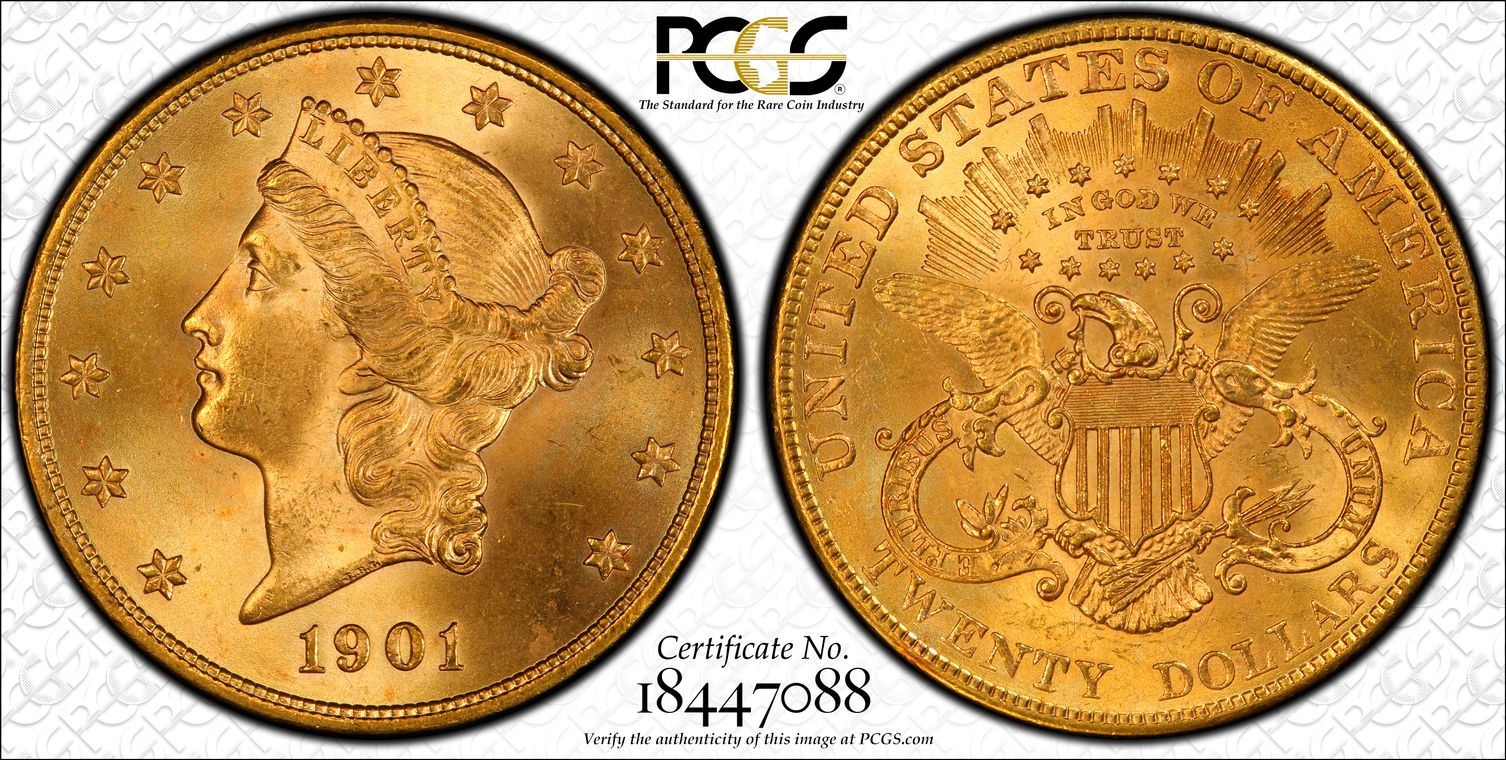
CAC. Purchased as MS65/CAC, upgraded to MS66/CAC, this elegant Gem survivor from this turn-of-the-century issue is sharply struck with vibrantly lustrous wheat-gold and mint-green surfaces and marvelous visual appeal. The portrait is especially clean, with only a handful of minuscule luster grazes away from the focal points. PCGS 4/0 (5/15)
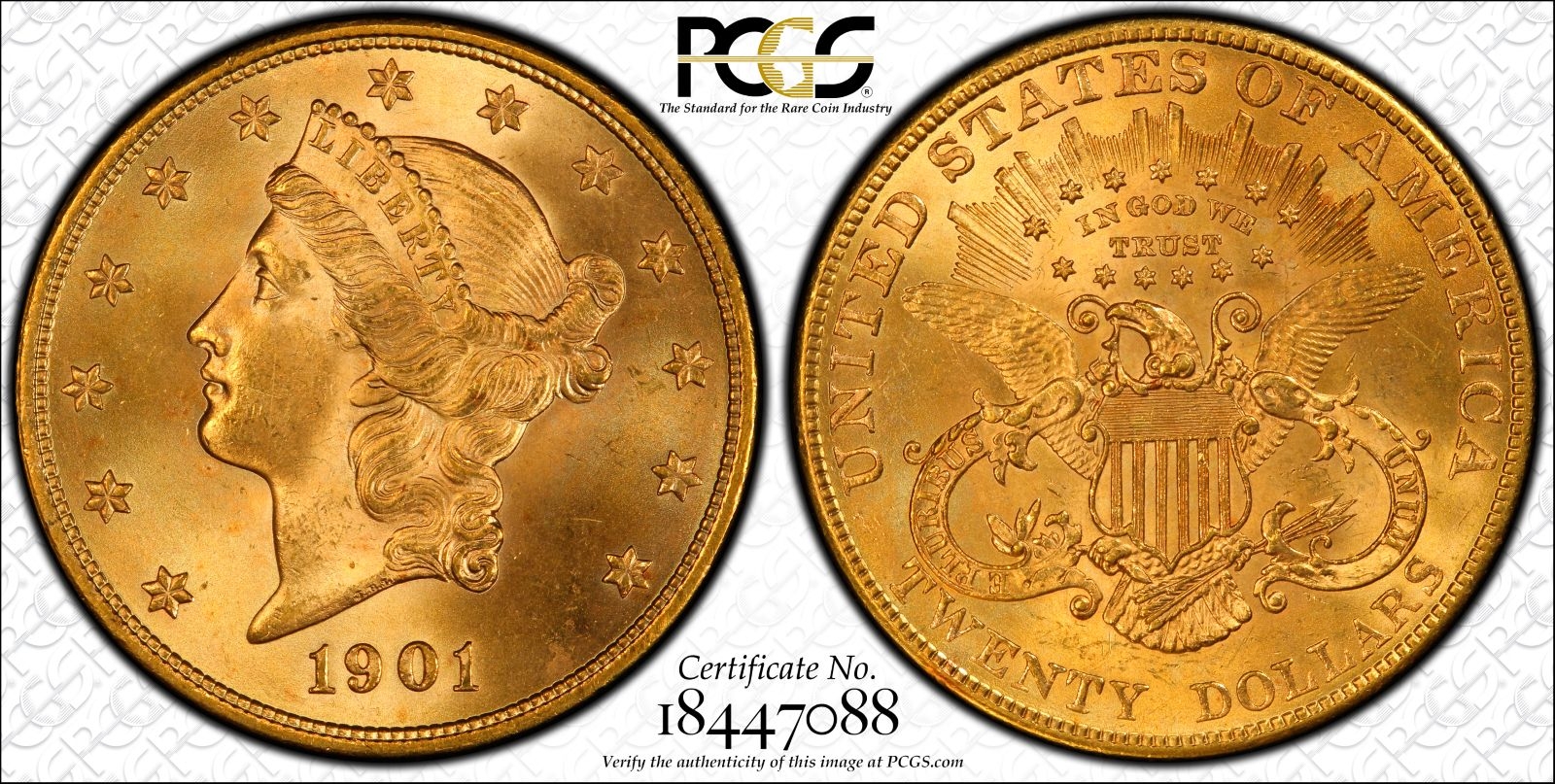
CAC. Purchased as MS65/CAC, upgraded to MS66/CAC, this elegant Gem survivor from this turn-of-the-century issue is sharply struck with vibrantly lustrous wheat-gold and mint-green surfaces and marvelous visual appeal. The portrait is especially clean, with only a handful of minuscule luster grazes away from the focal points. PCGS 4/0 (5/15)

CAC. The surfaces of this high-end Premium Gem are virtually pristine with no distractions visible to the naked eye. The design elements are sharply detailed in most areas, though a little softness is evident on the Capitol and lower stars. The surfaces display vibrant mint luster with outstanding eye appeal. Population: 11 in 66+, 5 finer (5/11)
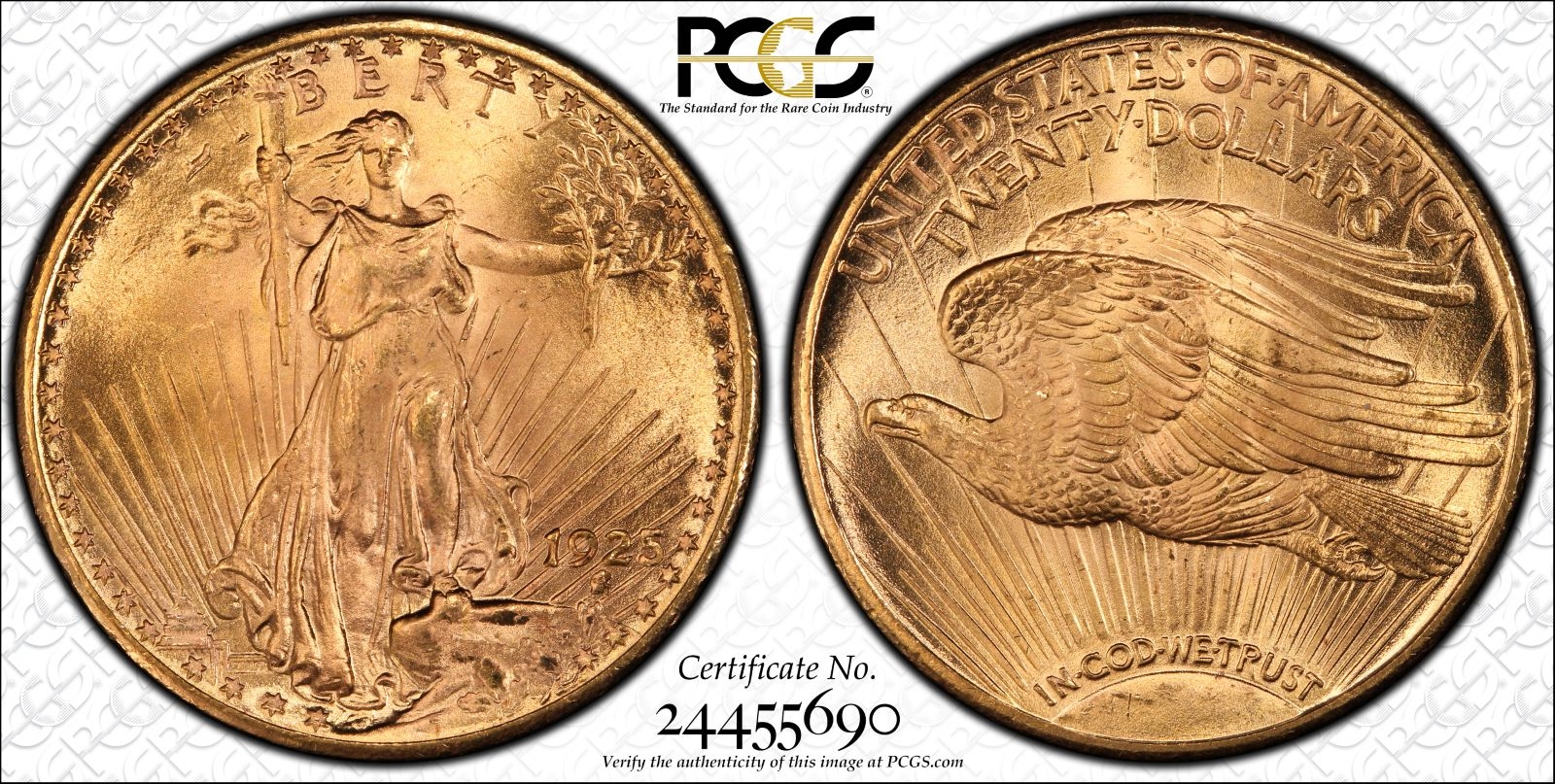
CAC. The surfaces of this high-end Premium Gem are virtually pristine with no distractions visible to the naked eye. The design elements are sharply detailed in most areas, though a little softness is evident on the Capitol and lower stars. The surfaces display vibrant mint luster with outstanding eye appeal. Population: 11 in 66+, 5 finer (5/11)