



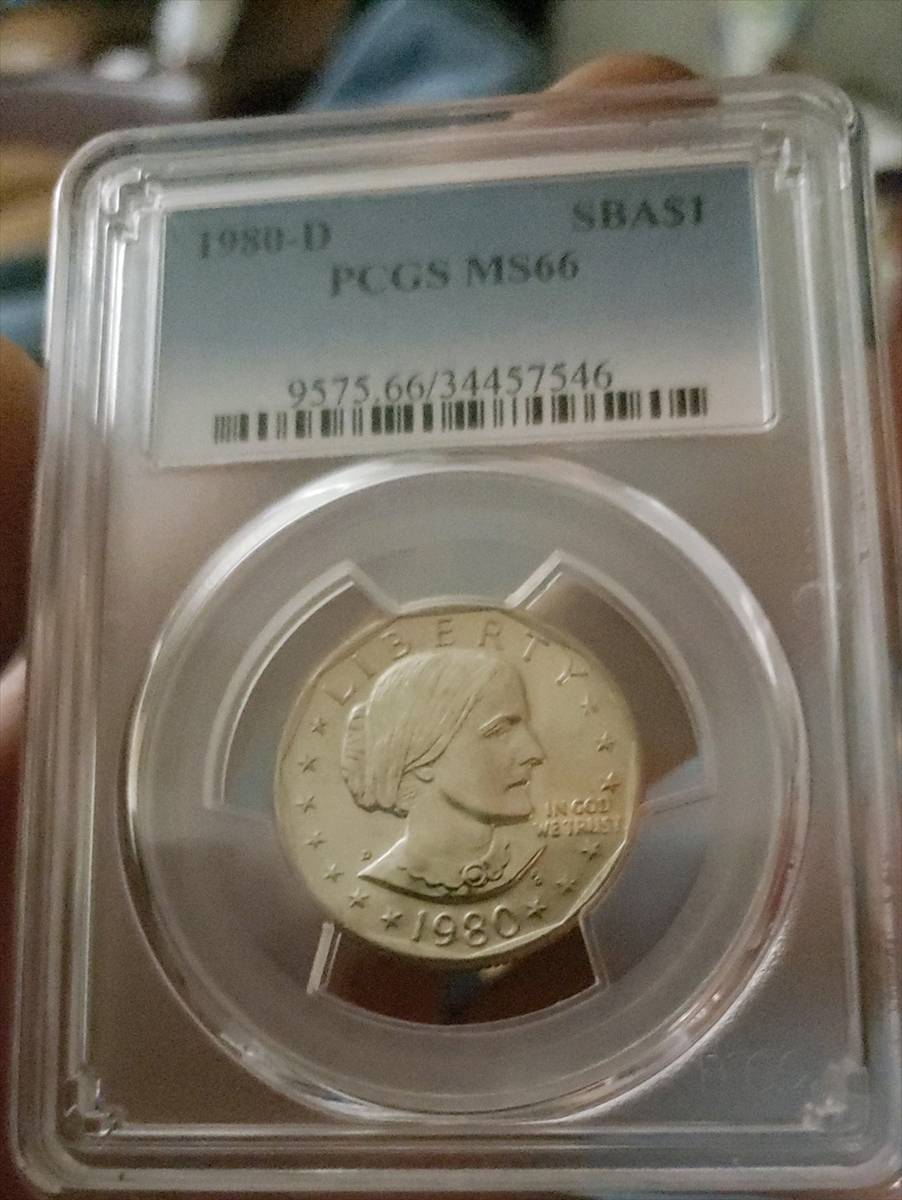
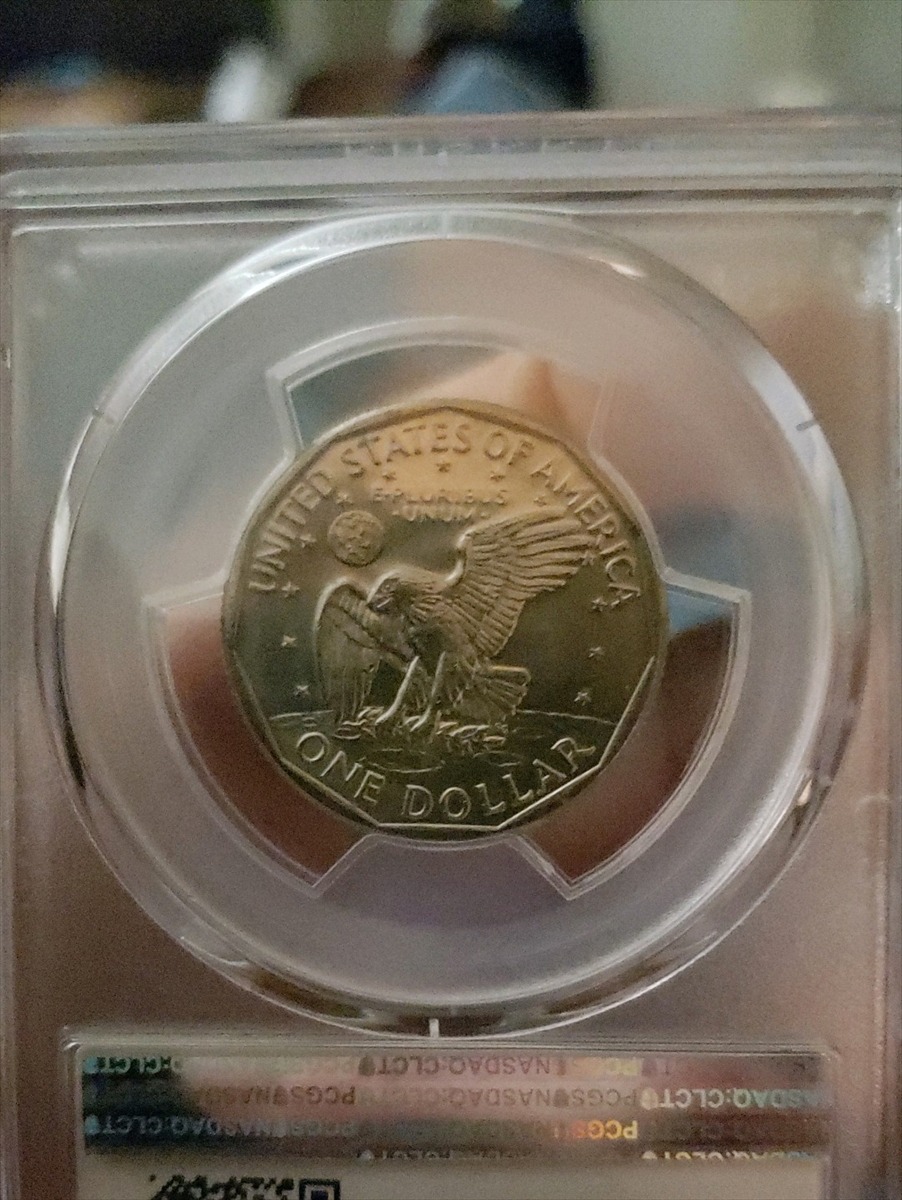
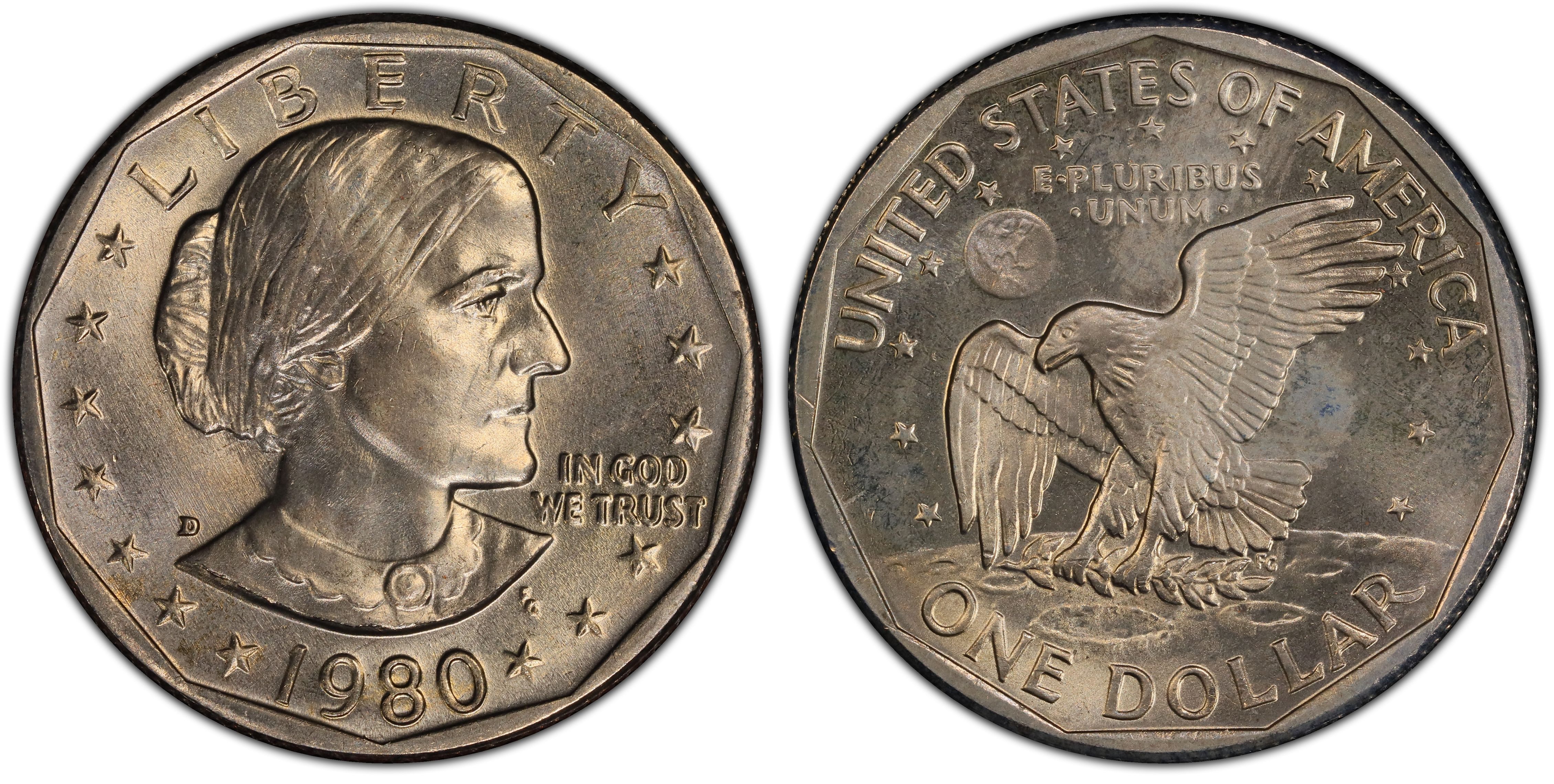
1980-D SBA$1 MS66 Certification #34457546, PCGS #9575
Expert Comments
Charles Morgan
The Rise and Fall of the "Susie B"
In 1979, the United States Mint launched the Susan B. Anthony (SBA) Dollar with immense fanfare. As the first circulating U.S. coin to feature a non-mythical woman, it was intended to circulate alongside the $1 bill and see heavy use in vending machines and other automated payment systems. Anticipating massive demand, the Treasury Department went all-in on the coin; the Philadelphia, Denver, and San Francisco mints struck a staggering 757,813,744 Susan B. Anthony Dollars in the first year alone.
Demand for the coin never materialized, and it quickly became a public relations disaster for the Carter Administration. Some in the media dubbed it "Carter's Quarter" to highlight how easily the small dollar coin–due to its size and color–was confused with the Washington Quarter.
By 1980, production plummeted to just 89,660,708 pieces—the 1980-D Susan B. Anthony Dollar (#9575) accounting for 41,628,708 of those.
Mint officials were blunt about the failure. Director Donna Pope and other officials noted that the public's rejection was so complete that "there is no way to overestimate how badly that coin was received." While a test market in Portland, Oregon, suggested that the coin might circulate if the $1 bill were withdrawn, the Treasury was unwilling to make such a bold move. Consequently, by the end of 1980, over 520 million coins sat unwanted in Treasury vaults. After the 1981 Susan B. Anthony Dollars were struck for Mint and Proof sets, the denomination was suspended indefinitely. It did not return to production until a surprise 1999 issue was authorized to meet demand just before the 2000 debut of the Sacagawea Dollar.
Collecting the 1980-D Susan B. Anthony Dollar
Because so many 1980-D dollars were stored rather than circulated—and with 2.8 million issued in official 1980 Uncirculated Coin Sets—'Mint State' examples remain incredibly common today. Since submitted coins are generally pre-sorted for quality, the typical grade in the PCGS Population Report falls between MS65 and MS66 (the same holds true for the 1980-P (#9574) and the 1980-S (#9576). To date, PCGS has graded none finer than MS67; however, it is likely that a Superb Gem specimen exists that could eventually break that barrier. While coins may be fully brilliant or exhibit natural toning from long-term storage, artificially toned examples are frequently offered on sites like eBay. Consequently, certification is highly recommended for any modern 'rainbow' toner.
* * *
Rarity and Survival Estimates Learn More
| 65 or Better | 41000000 |
| All Grades | 4100000 |
| 60 or Better | 205000 |
| 65 or Better | R-1.0 |
| All Grades | R-1.0 |
| 60 or Better | R-1.8 |
| 65 or Better | 2 / 12 TIE |
| All Grades | 5 / 12 TIE |
| 60 or Better | 9 / 12 |
| 65 or Better | 2 / 12 TIE |
| All Grades | 5 / 12 TIE |
| 60 or Better | 9 / 12 |
Condition Census Learn More
|
#1 PCGS MS67
GreatCollections, November 9, 2025, Lot 1931682 - $489.38; "The 20th Century Modern Type Set (1950-Present) JJA Collection" (PCGS Set Registry). |
|
#1 PCGS MS67
GreatCollections, September 21, 2025, Lot 1922952 - $292.50; "The Runnin_Texan Collection" (PCGS Set Registry). |
 #1 PCGS MS67
Heritage Auctions, April 22, 2008, Lot 9155 - $196; GreatCollections, April 20, 2025, Lot 1797313 - $174.38; "The Joseph Lyons Collection" (PCGS Set Registry). |
|
#1 PCGS MS67
GreatCollections, May 7, 2023, Lot 1243394 - $383.63. |
|
#1 PCGS MS67
GreatCollections, April 30, 2023, Lot 1355037 - $351; "The peter Collection" (PCGS Set Registry). |