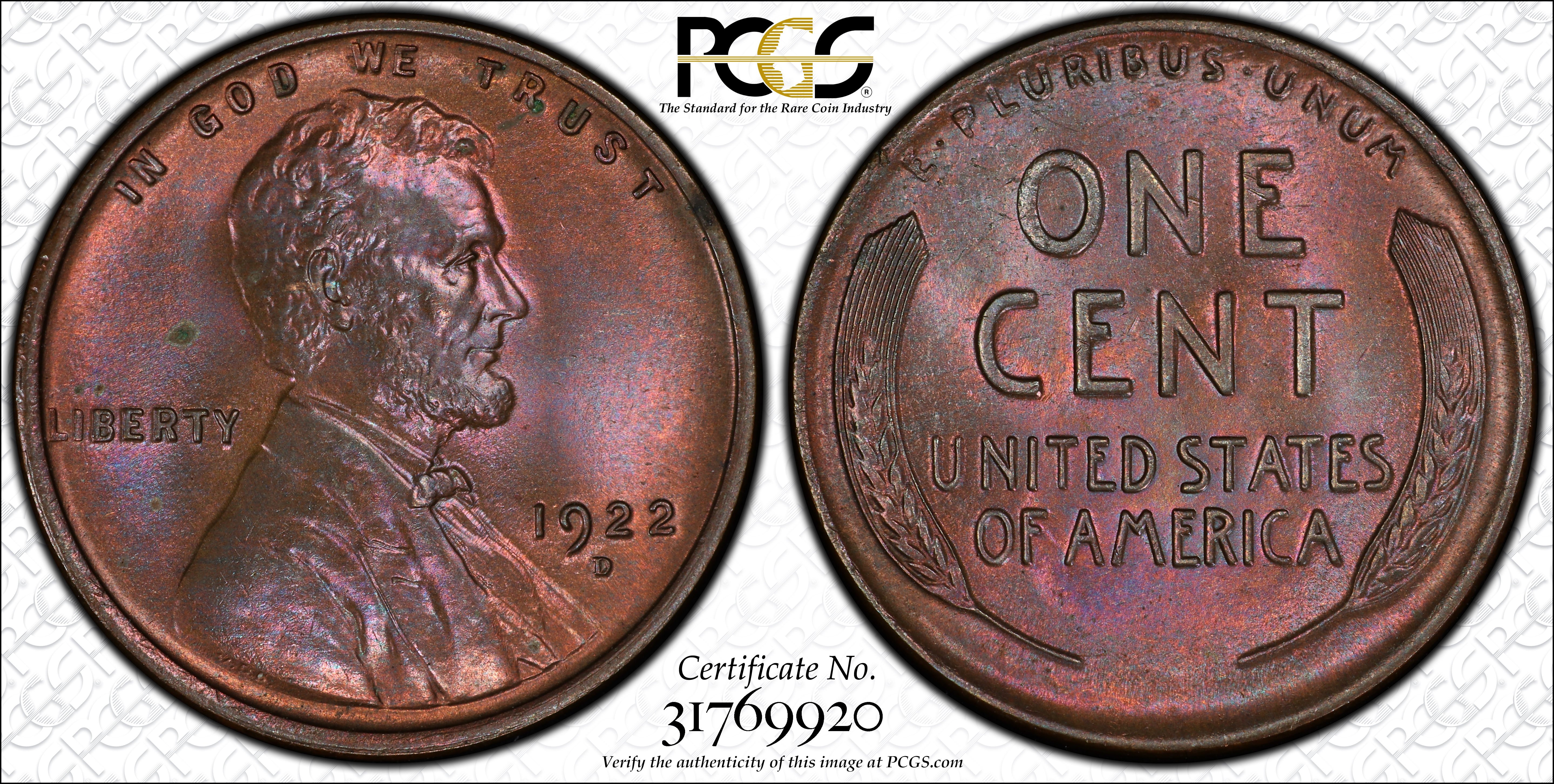
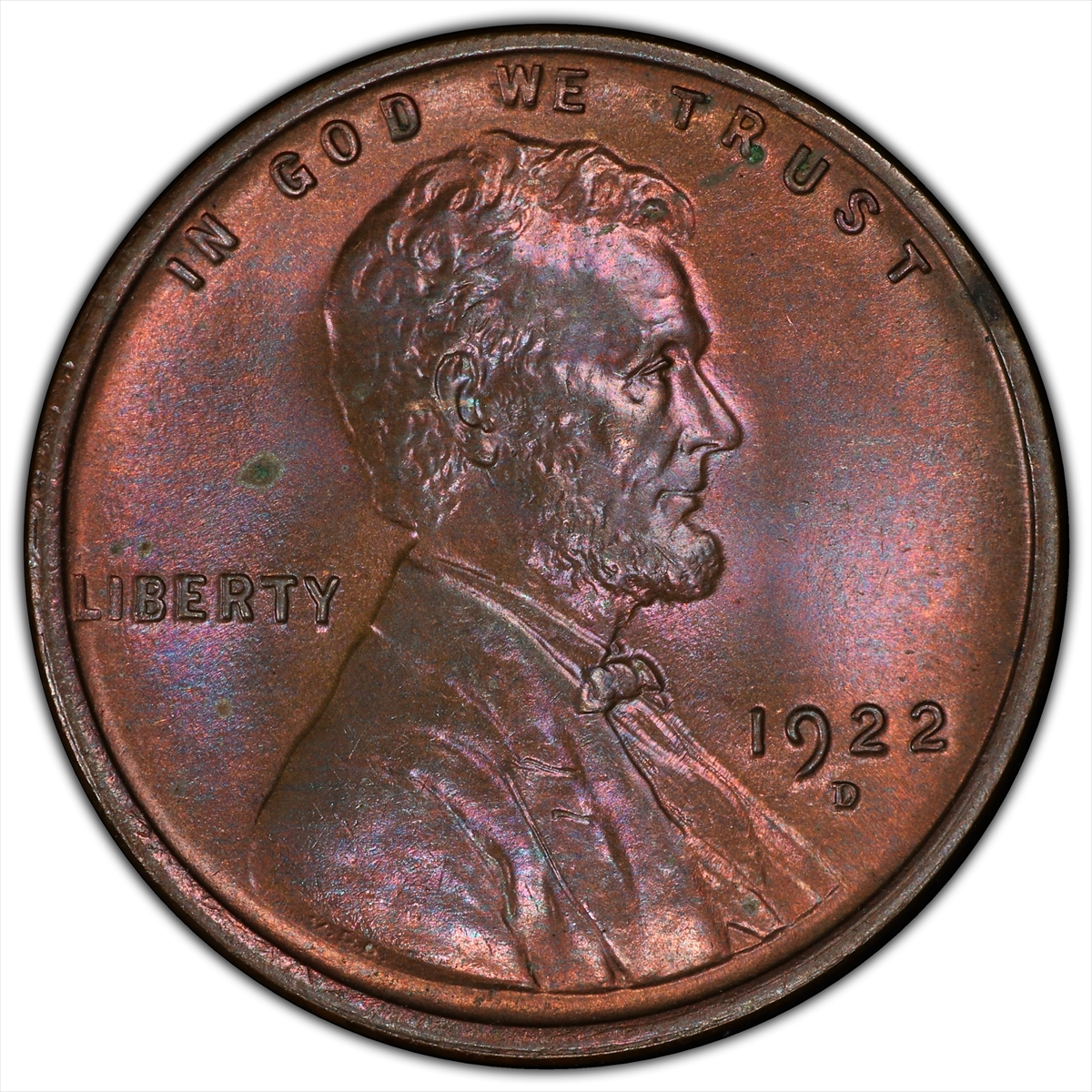
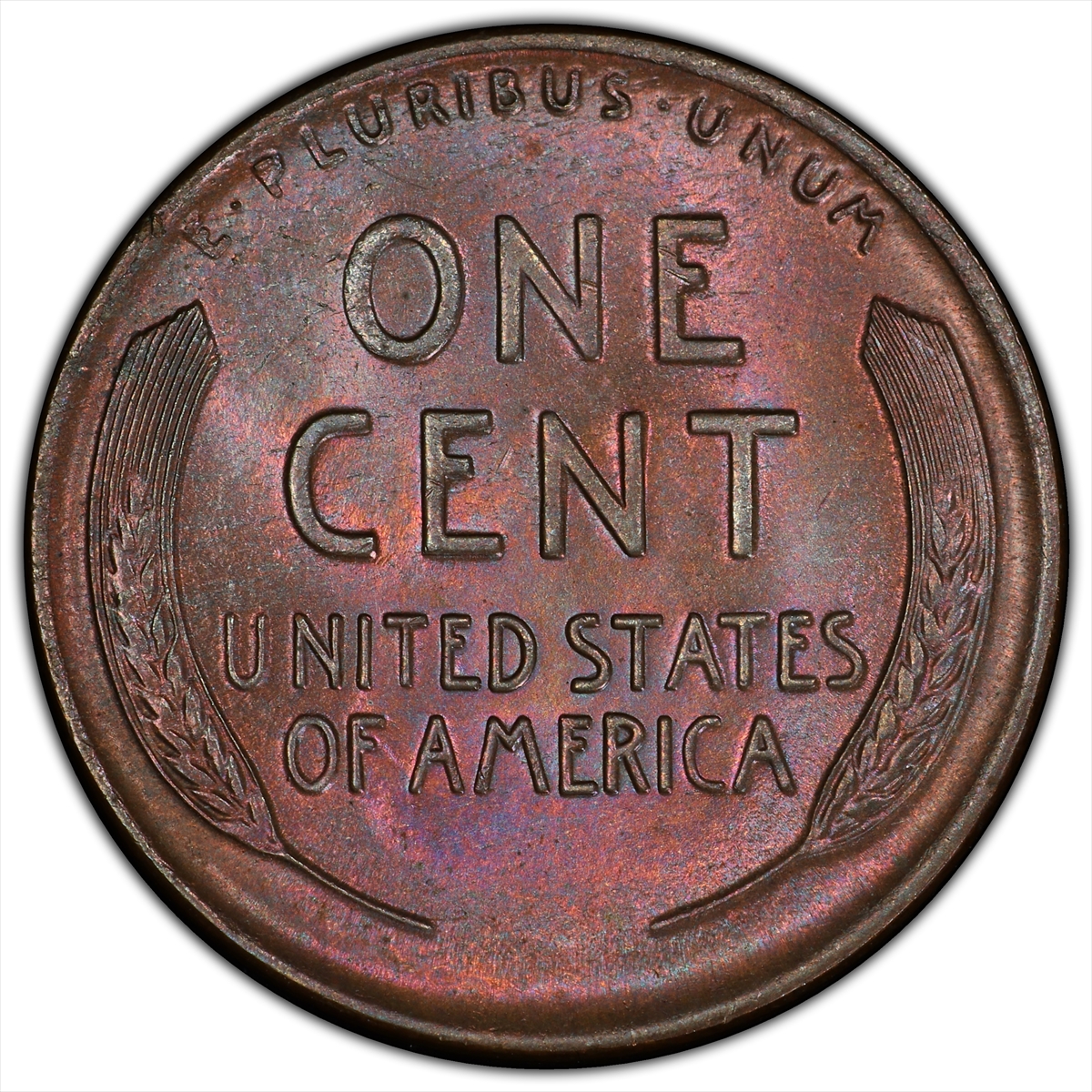
1922-D 1C, BN MS64BN Certification #31769920, PCGS #2537

Owner's Comments

1922-D Cent Semikey Issue, MS64BN PCGS 31769920. ‘Black Cherry' Blazer! $407 Non-CAC 11/23. An extremely sharp strike on the obverse, excellent luster, and wonderful black cherry surfaces characterize this near-Gem Brown 1922-D cent. A couple of tiny obverse flecks and a bit of chatter at the upper reverse are likely all that separate this piece from a full Gem grade (and a $1,000 price tag, given the popularity of Brown Lincolns recently). The 1922-D is a favorite Lincoln cent date, with three die pairs known for the issue. One (the Strong Reverse dies, Die Pair 2, as here) eventually produced the 1922 No D cents, while the other Die Pairs 1 and 3 produced alternatively 1922 No D and 1922 Weak D cents but with Weak Reverse as well and other distinguishing characteristics. This lovely cent boasts a strong strike throughout and no trace of weakness on the crucial D mintmark. No nickels, dimes, quarters, or half dollars were struck at the United States' three operating mints in 1922: Only silver dollars were, at all three operating mints. Only Denver struck the cents in 1922. The United States' minor coinage total for 1922 was the lowest since 1877—another crucial year for cent collectors.
Ex: JGD Collection of Toned Lincoln, Wheat Reverse Cents.
Expert Comments

Ron Guth

As a date, the 1922-D Cent is one of the most common of the 1920's, especially in terms of the number of certified examples.  However, the real interest in this date comes from the fact that no Cents were produced at Philadelphia or San Francisco in 1922.  Even better, this date is the "father" of the 1922 Plain (actually a 1922-D with a clogged mintmark). 

Collectors must be very careful with this date because of the degrees by which the mintmark disappears on some dies.  Collectors must discern between 1922-D Cents with bold mintmarks, weak mintmarks, "ghost" mintmarks, and coins that appear to have no mintmark at all.  The degree to which the mintmark disappears affects the value of the coin directly.  Visible mintmarks (strong or weak) carry the least premium.  "Ghost" mintmarks, where the mintmark is barely visible, qualify as "Weak Mintmarks", a die variant of the 1922-D, but one which carries a nice premium.  Finally, the "Plain" version is the most valuable, and the one with the strong reverse is the most desirable.

PCGS #
2537
Designer
Victor David Brenner
Edge
Plain
Diameter
19.00 millimeters
Weight
3.11 grams
Mintage
7160000
Metal
95% Copper, 5% Tin and Zinc
Pop Higher
39
Pop Lower
2267
Region
The United States of America
Price Guide
PCGS Population
Auctions - PCGS Graded
Auctions - NGC Graded

Rarity and Survival Estimates Learn More

Grades
65 or Better 700000 R-1.4 20 / 143 TIE 23 / 146 TIE
All Grades 2000 R-4.6 36 / 143 TIE 38 / 146 TIE
60 or Better 370 R-6.2 33 / 143 TIE 33 / 146 TIE
65 or Better 700000
All Grades 2000
60 or Better 370
65 or Better R-1.4
All Grades R-4.6
60 or Better R-6.2
65 or Better 20 / 143 TIE
All Grades 36 / 143 TIE
60 or Better 33 / 143 TIE
65 or Better 23 / 146 TIE
All Grades 38 / 146 TIE
60 or Better 33 / 146 TIE

Condition Census Learn More

Pos Grade Thumbnail Pedigree and History
1 MS65BN PCGS grade
1 MS65BN PCGS grade
1 MS65BN PCGS grade
1 MS65BN PCGS grade
1 MS65BN PCGS grade
#1 MS65BN PCGS grade