



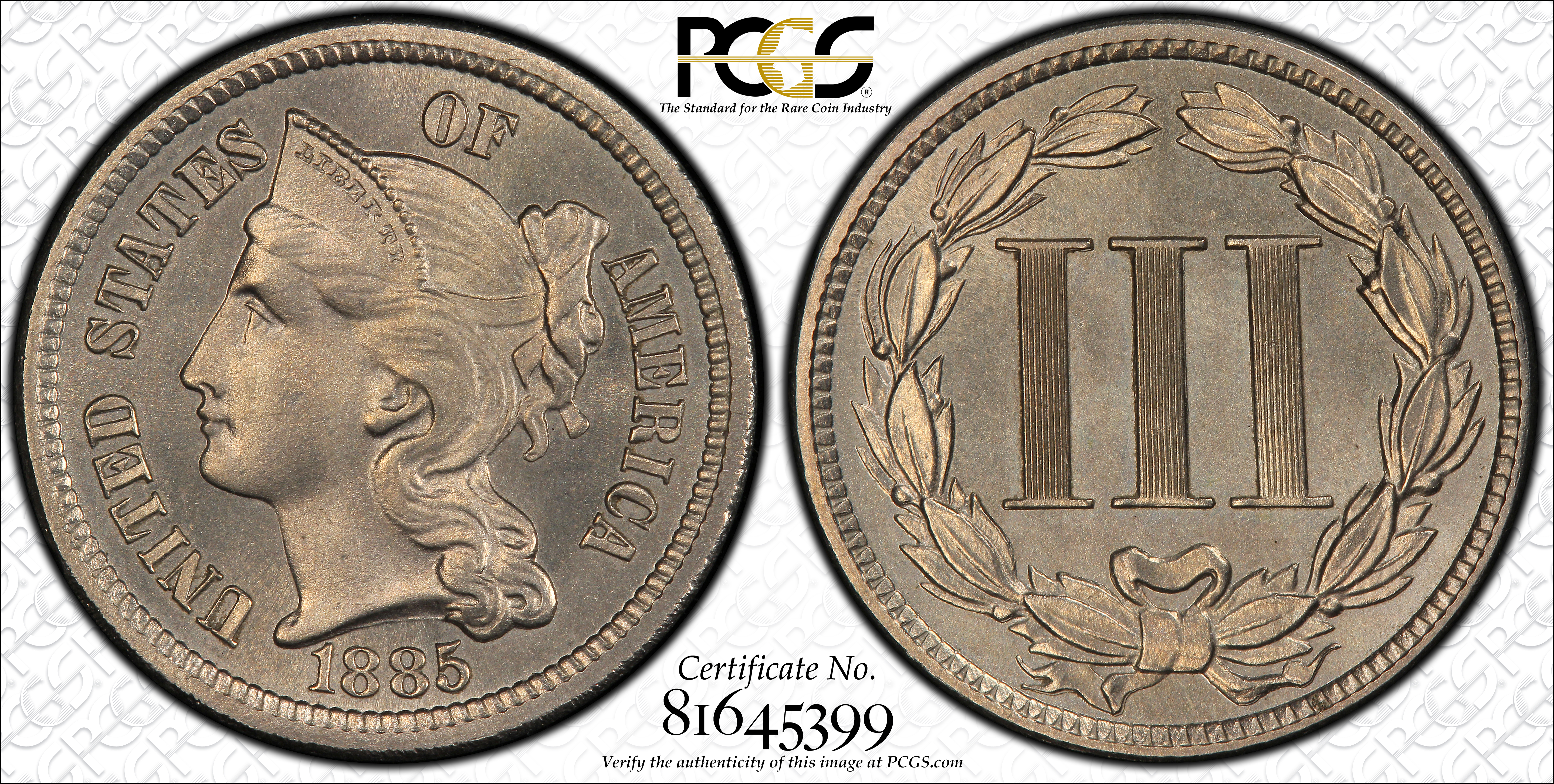
1885 3CN MS66 Certification #81645399, PCGS #3753
Expert Comments
Charles Morgan
For the third consecutive year, the Philadelphia Mint struck more Proof Three-Cent Nickels in 1885 than circulation issues. Following a million-coin mintage in 1881, additional emissions of this outmoded, "oddball" denomination became largely unnecessary. The paltry mintage of just 1,000 circulation strikes in 1885 feels even more minuscule when considering its total face value of only $30.
Of this original mintage, PCGS has likely certified the lion's share of extant Mint State examples. According to the PCGS Population Report, Mint State specimens account for nearly 40% of the total number of coins certified. While this high ratio may indicate that a significant quantity of circulated coins have not yet been submitted for grading, historical context suggests a more likely reason: the official recall of the series. When Congress discontinued the denomination after the 1889 release, the Treasury Department was instructed to withdraw the coin type from circulation and melt them for recoining. Assuming that approximately $2.40 to $2.70 in face value was saved in Mint State, and another $3.00 to $3.60 survived in various circulated grades, it is reasonable to conclude that the remainder of the original $30.00 face value emission was likely returned to the Mint and melted down. This melting of obsolete, unwanted coins may also explain why the 1884 issue (PCGS #3752)—despite its higher mintage of 1,700—survives at a much lower rate than expected.
* * *
Rarity and Survival Estimates Learn More
| 65 or Better | 600 |
| All Grades | 125 |
| 60 or Better | 60 |
| 65 or Better | R-5.8 |
| All Grades | R-7.7 |
| 60 or Better | R-8.4 |
| 65 or Better | 3 / 23 TIE |
| All Grades | 3 / 23 TIE |
| 60 or Better | 4 / 23 |
| 65 or Better | 3 / 23 TIE |
| All Grades | 3 / 23 TIE |
| 60 or Better | 4 / 23 |
Condition Census Learn More
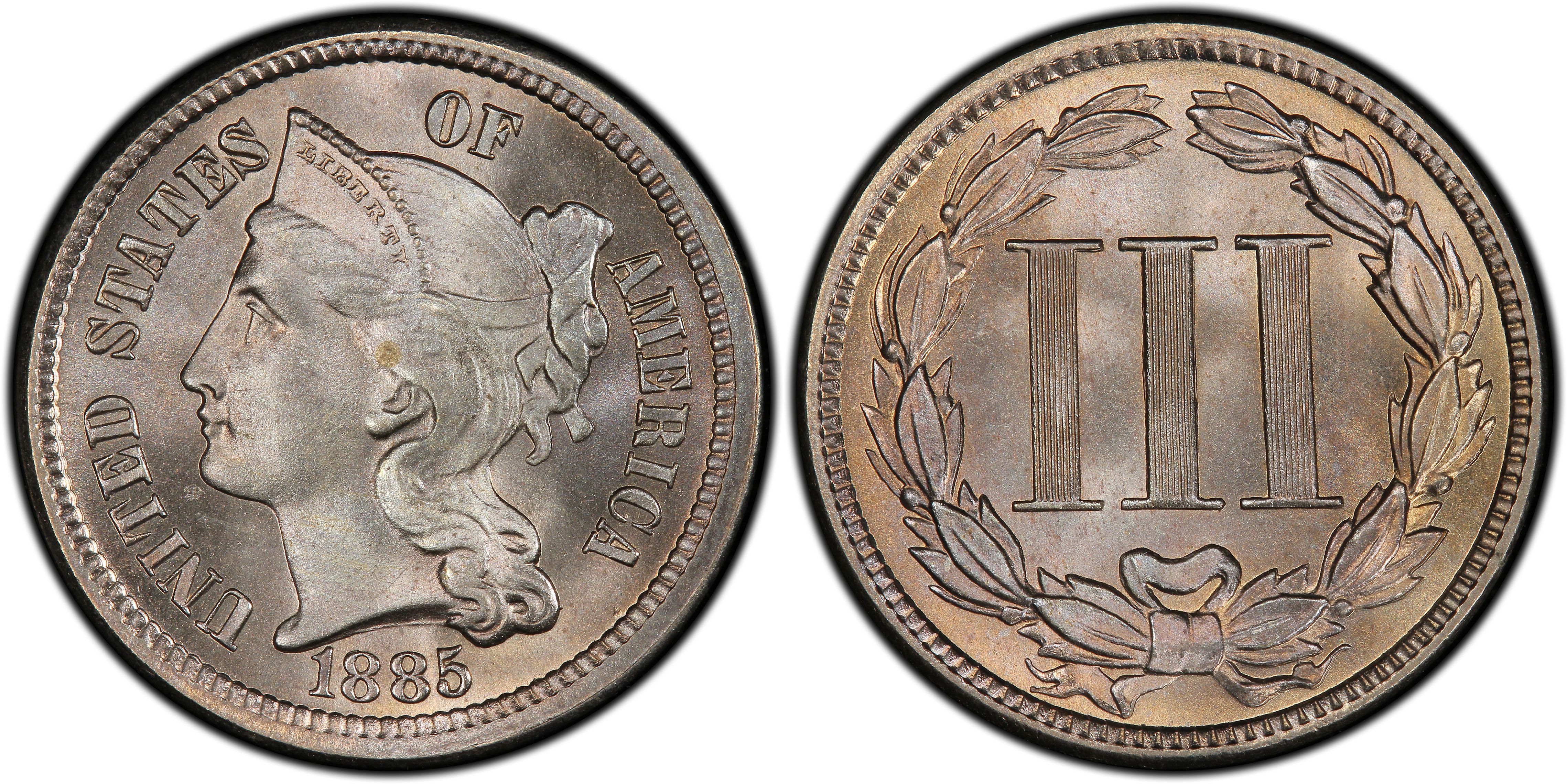 #1 PCGS MS67
“The Bruce Scher #1 All-Time PCGS Registry Set,” Heritage Auctions, February 24, 2005, Lot 4020 – $19,118.75; "The TDP Collection"; "The tompet38 Collection" (PCGS Set Registry). Gold toning spot above ear. Golden toning that is more intense on the reverse. |
| #1 PCGS MS67 |
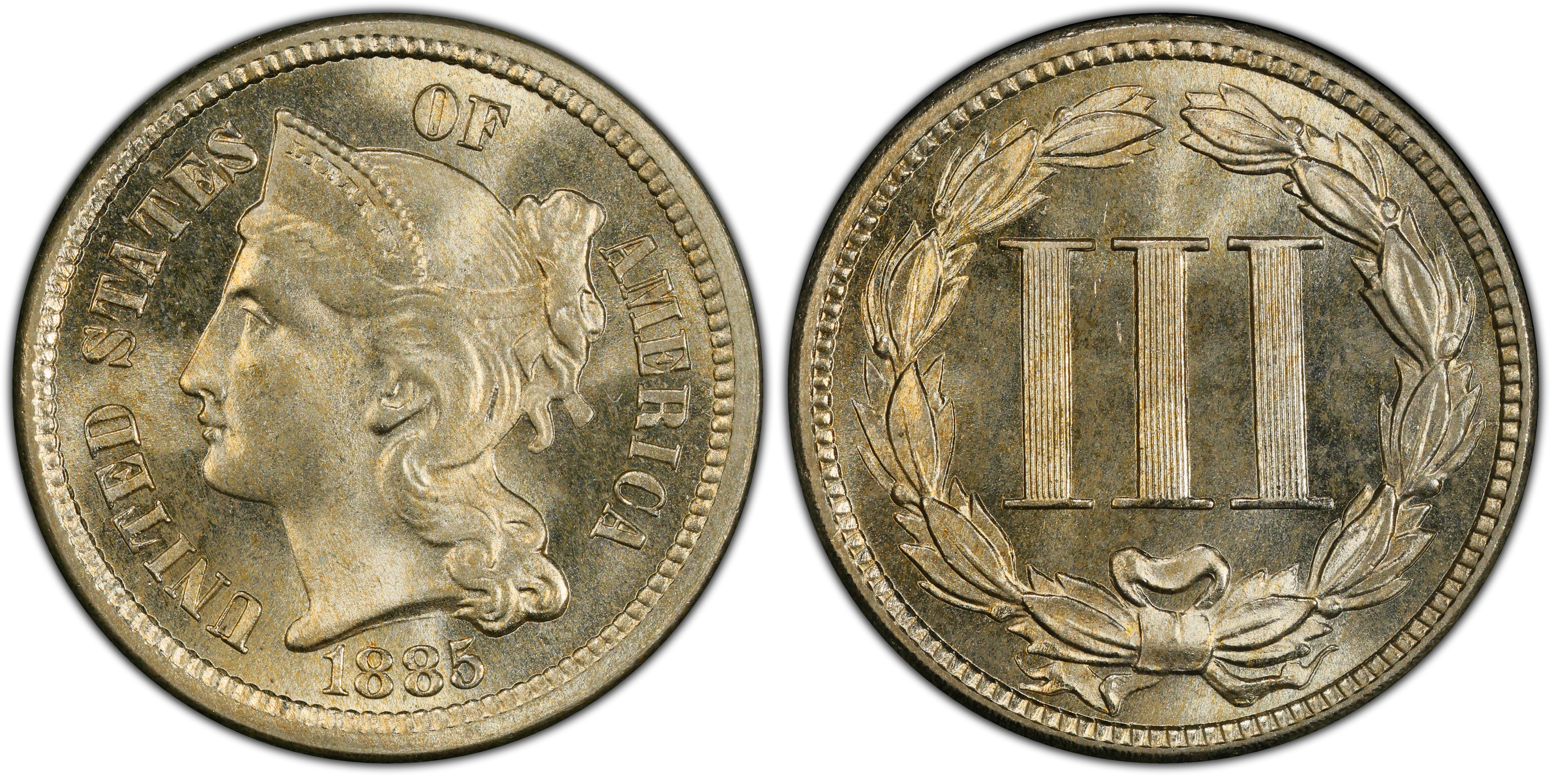 #3 PCGS MS66+
|
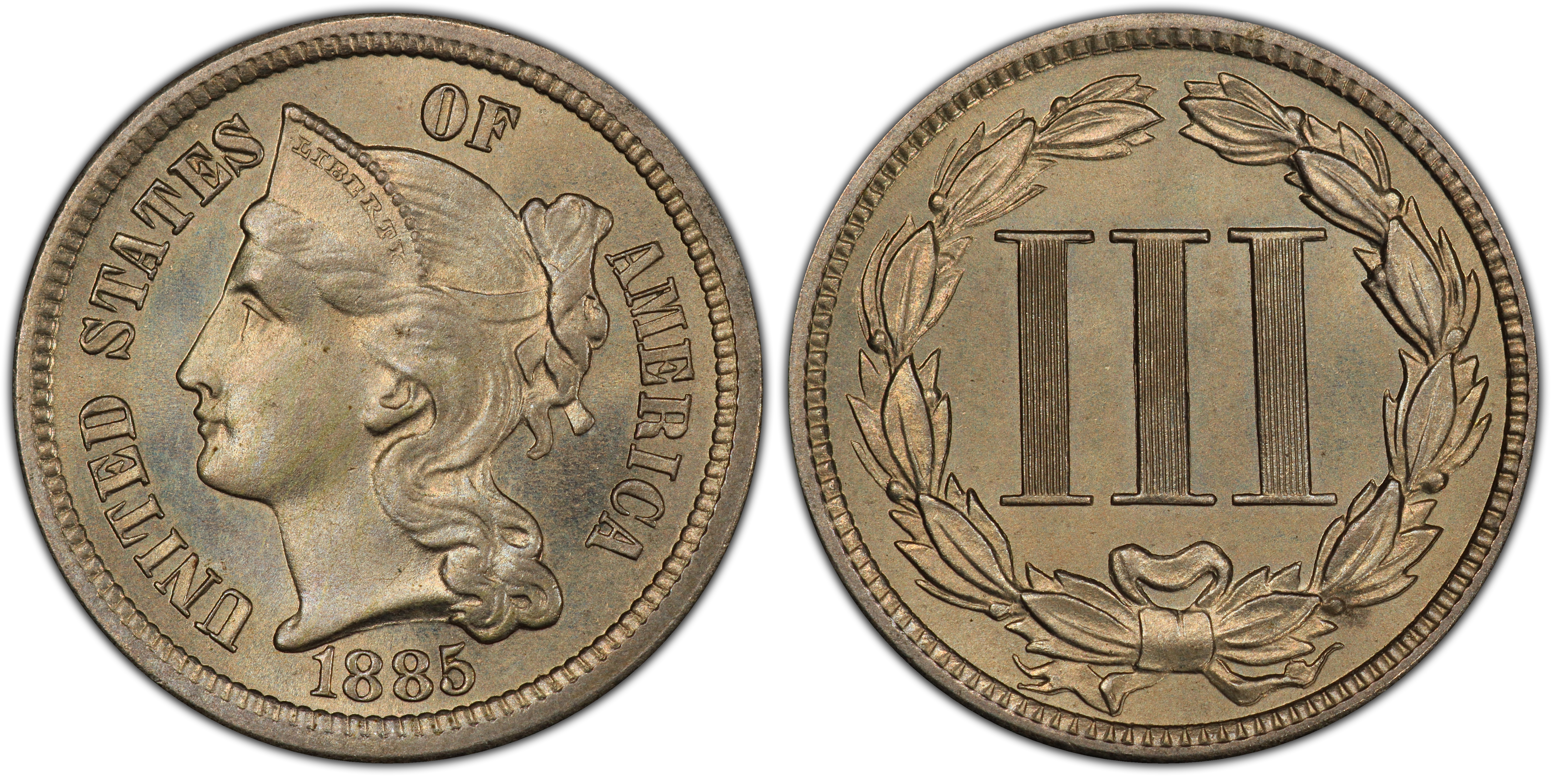 #3 PCGS MS66+
|
|
#5 PCGS MS66
Heritage Auctions, June 9, 2016, Lot 4308 – $16,450. Streaks of gold and peach toning grace the obverse. The reverse echoes these hues but adds shades of muted aubergine, with a small toning spot located to the right of the numeral "5." On the reverse, a faint toning spot is also visible near the denticles at the 3 o’clock position. |